Wooden St. Michael's Church, Kraynikovo
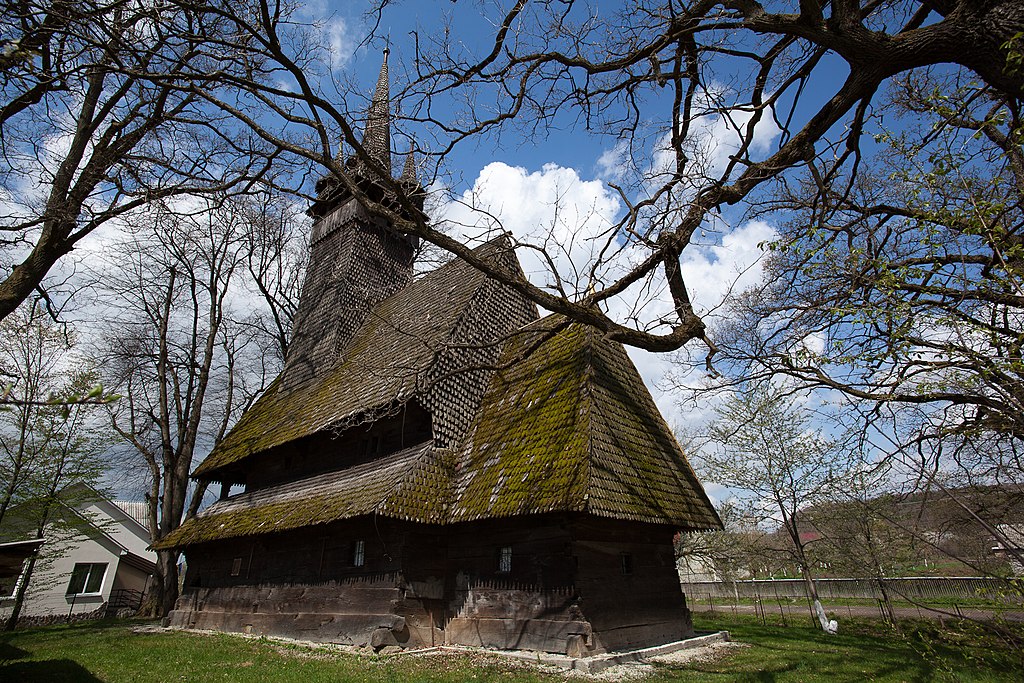
TheChurch of St. Michael the Archangel is a wooden church, a sample of Marmara Gothic style, located in the village of Kraynikovo, Khust district, Transcarpathian region. It is an architectural monument of national significance, protection number 217/1. The church is active and is used by a small Greek Catholic community.
Mykhailo Syrokhman writes about this church: "The Church of St. Michael is another ingenious work of wood, located here almost on a flat spot, on a clearing between oaks that are the same age as the church. According to legend, the first village was in the Goldy tract 2-3 km east of the present village, and the first wooden church stood on the Tserkyshche hill. People were dying from the plague epidemic and the village was reborn in a new place, where a church was built near the spring."
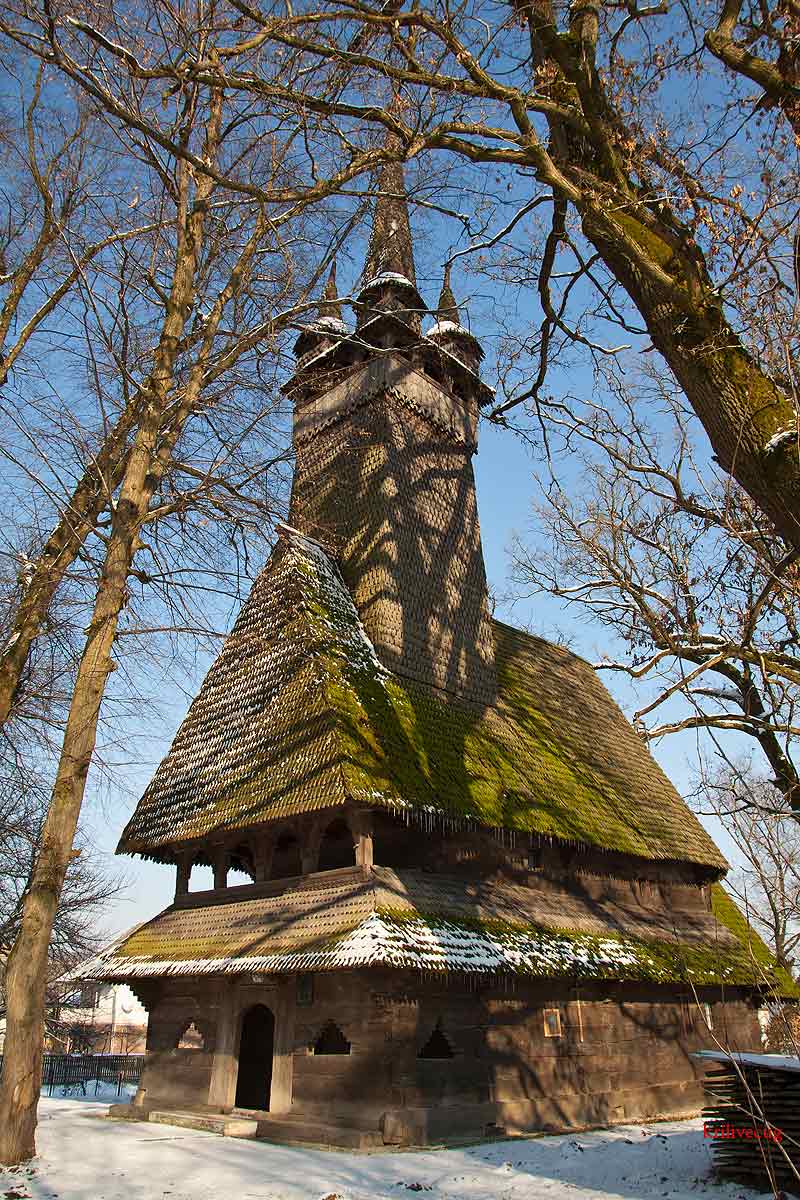
St. Michael's wooden church in the village of Kraynikovo was built in 1668 and is a unique example of Marmarosh wooden Gothic architecture of the XVII-XVIII centuries, built without a single nail, all on chops, is one of the oldest in the area and is one of the most original religious buildings in the region. The building of the church is Gothic, two-storey, three-tiered, with a smaller eastern log house. The church is 25 meters high and 14 meters long. The year of construction is indicated by an inscription on the narthex (narthex). The church is small (the dimensions of the altar are 7x8.5 cubits, and the equally wide log nave and narthex are 14x20 cubits; 3.22x3.95 m and 6.48x9.25 m). The church is three-dimensional with an equally wide narthex and nave and a narrower altar. The nave and chancel are covered by a steep four-pitched roof, and the altar has the same shape but a lower roof. The construction of the church plan is archaic. The church is built of tall oak beams connected by a buzzard with a hidden straight tooth. The windows are small, 26x37 cm and 36x37 cm. However, the architecture of this church has a new constructive technique that is absent in older churches and is very rarely found in the future: the porch-gallery is connected in the western wall into one common log of the narthex and nave. This technique is borrowed from the residential construction of Ukraine.
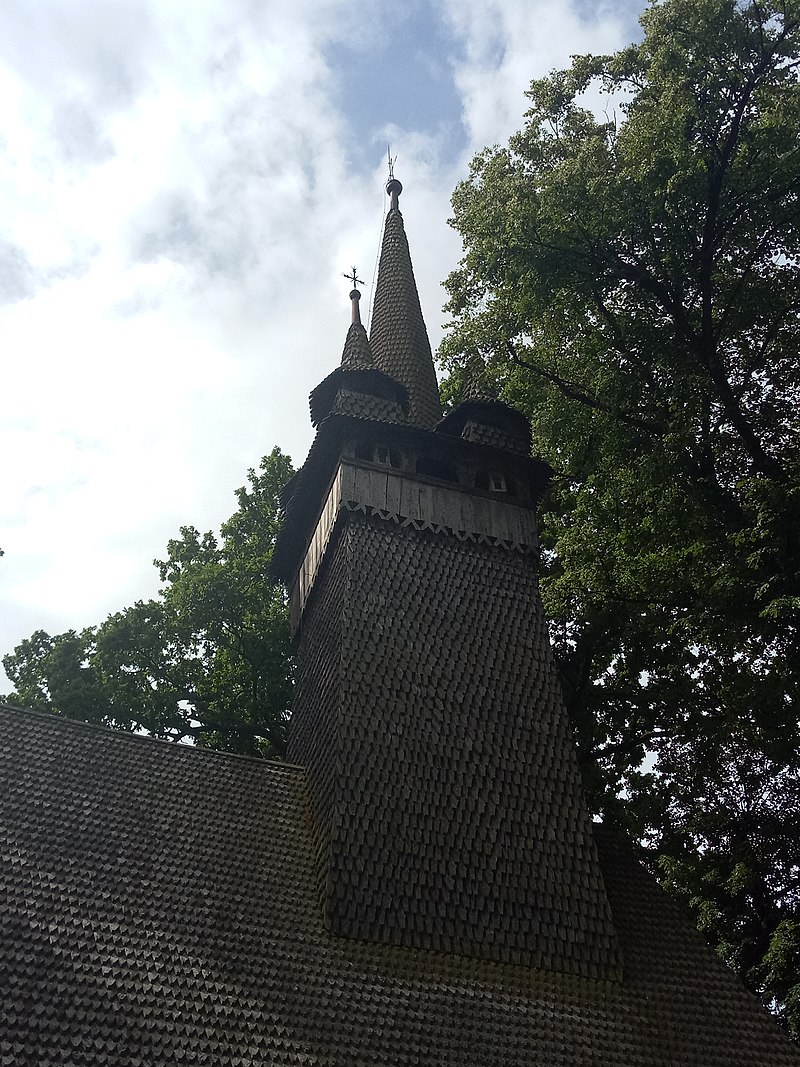
From the porch-gallery, there is a ledge that rests on the log cabin overhangs and passes into the roof of the altar. The windows of the nave's overhang are larger than the windows of the underhang. A rectangular, tall tower with a high spire ending and four small spires at the corners rises above the chancel. Under the roof of the porch, on the north wall of the narthex, there are black paint (soot) outlines of the apostles with inscriptions, and on the west wall of the Babinets there is also a picture of the archangel Michael.
Given some professionally created structural elements, it can be argued that the church was built by highly skilled craftsmen who specialized in church construction. Remarkable architectural and artistic details include the powerful gallery doorway decorated with a "rope" and the dates of construction - 1666-1668, the entrance door with a jamb ornamented with ancient sun symbols, the four-arch gallery above the narthex, small quadrangular windows and twin windows of the nave, the magnificent completion of the tower with arcades of bell towers and four small spires around the main spire.
The church is one of the few in Ukraine to have wall paintings on canvas glued to the smooth walls of a wooden log cabin. The painting, which imitates the iconostasis on the eastern wall of the nave, still retains its original color. The altar has a later graphic painting.
The oldest mural in the nave is preserved on the eastern wall, depicting the Apostles and Pantocrator with Mary and John the Baptist standing before them, and probably dates back to the construction of the church in 1668. The ctitorial inscription under the images of St. Nicholas (south wall) and the Archangel Michael (north wall) indicates that they were painted in 1771. These images are monochrome, made by a local master in the style of folk Transcarpathian painting.
The iconostasis, after the rebuilding of the vault, was redesigned in 1763-1768, as evidenced by the inscription under the icon of the Virgin Mary on the pedele, which was made by the painter Yavorsky from Vilk in 1766. The inscription on the deacon's door dates back to 1763. Unfortunately, the vestments are lost.
At the end of the eighteenth century, a primitive folk painter painted the altar for the Eucharist, the Starostas, and drew some figures of saints and martyrs.
The tall wooden frame bell tower that once stood near the church was moved along with the bells to the Orthodox church built in 1927. The church was restored in 1971.
Accommodation around Wooden St. Michael's Church, Kraynikovo:


Nearby hiking trails near Wooden St. Michael's Church, Kraynikovo:
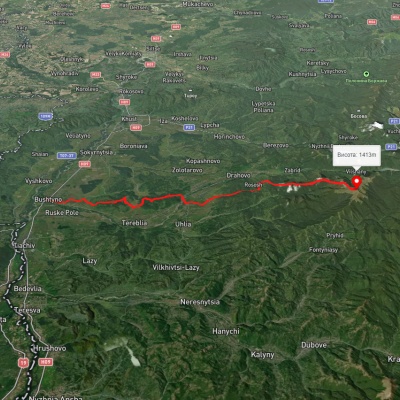
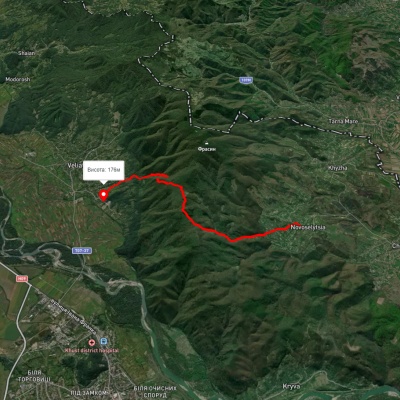
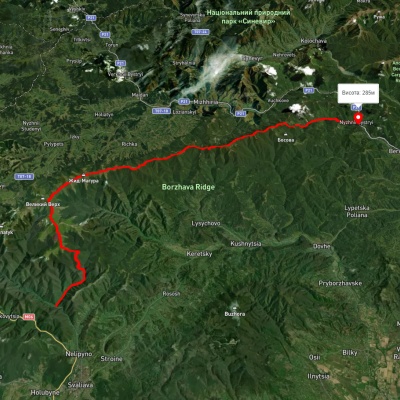
Which trails pass by Wooden St. Michael's Church, Kraynikovo?
We suggest these hiking trails through or near Wooden St. Michael's Church, Kraynikovo: Bushtyno, via Zanivka tract to Mount Manchul, Pyntia's Path, Vovchyi village, via Mount Stiy, Mount Zhyd-Mahura, Pryslip Pass, Kuk polonyna, Mount Korytyshche and Shyroke village to Nyzhnii Bystryi village, Skotarske village, via Borzhava polonyna and Palenyi Hrun polonyna to Nyzhnii Bystryi village, Skotarske village, via Borzhava polonyna and Palenyi Hrun polonyna to Vilshanske reservoir, Carpathian Tourist Trail