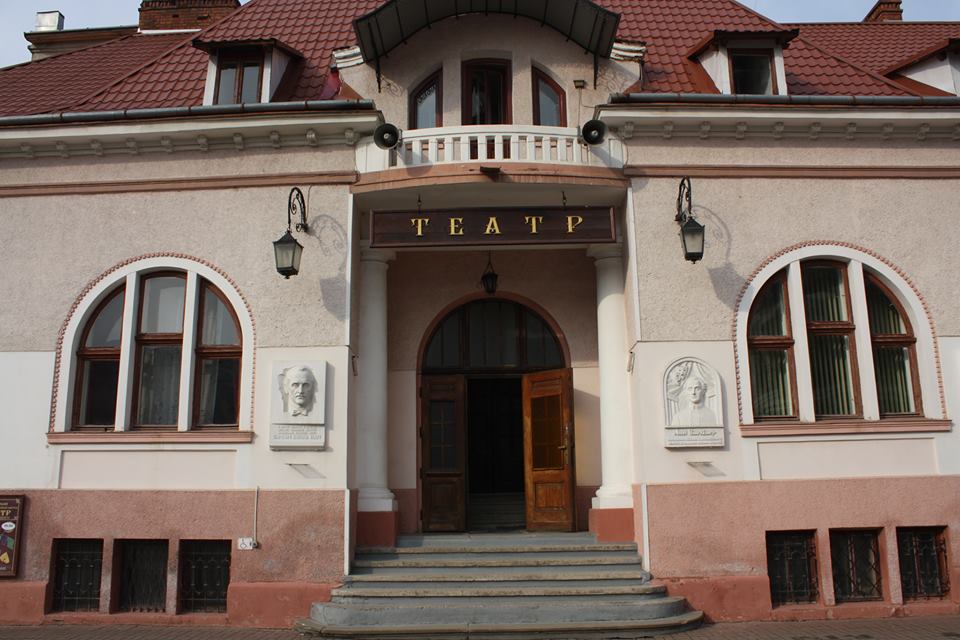
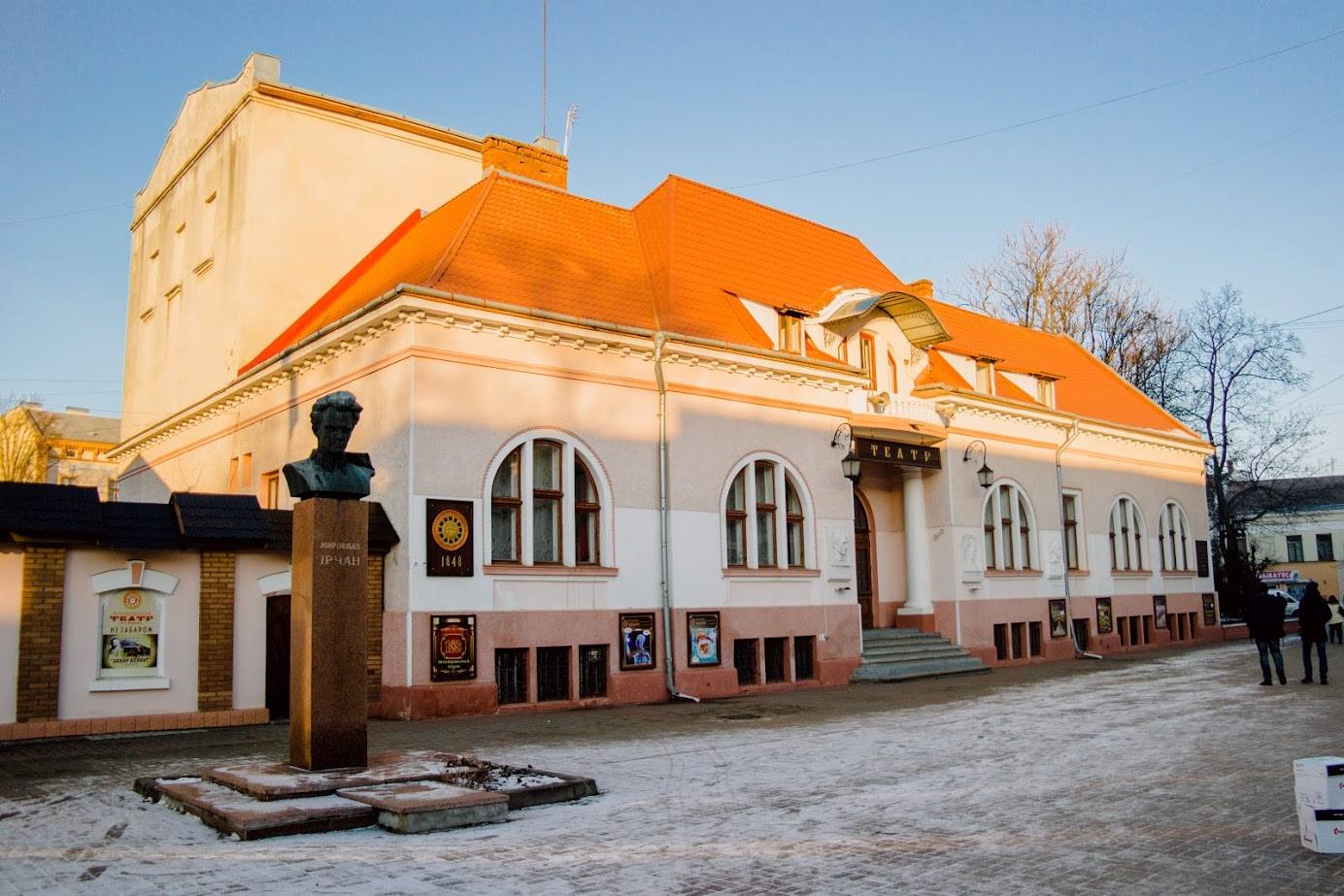
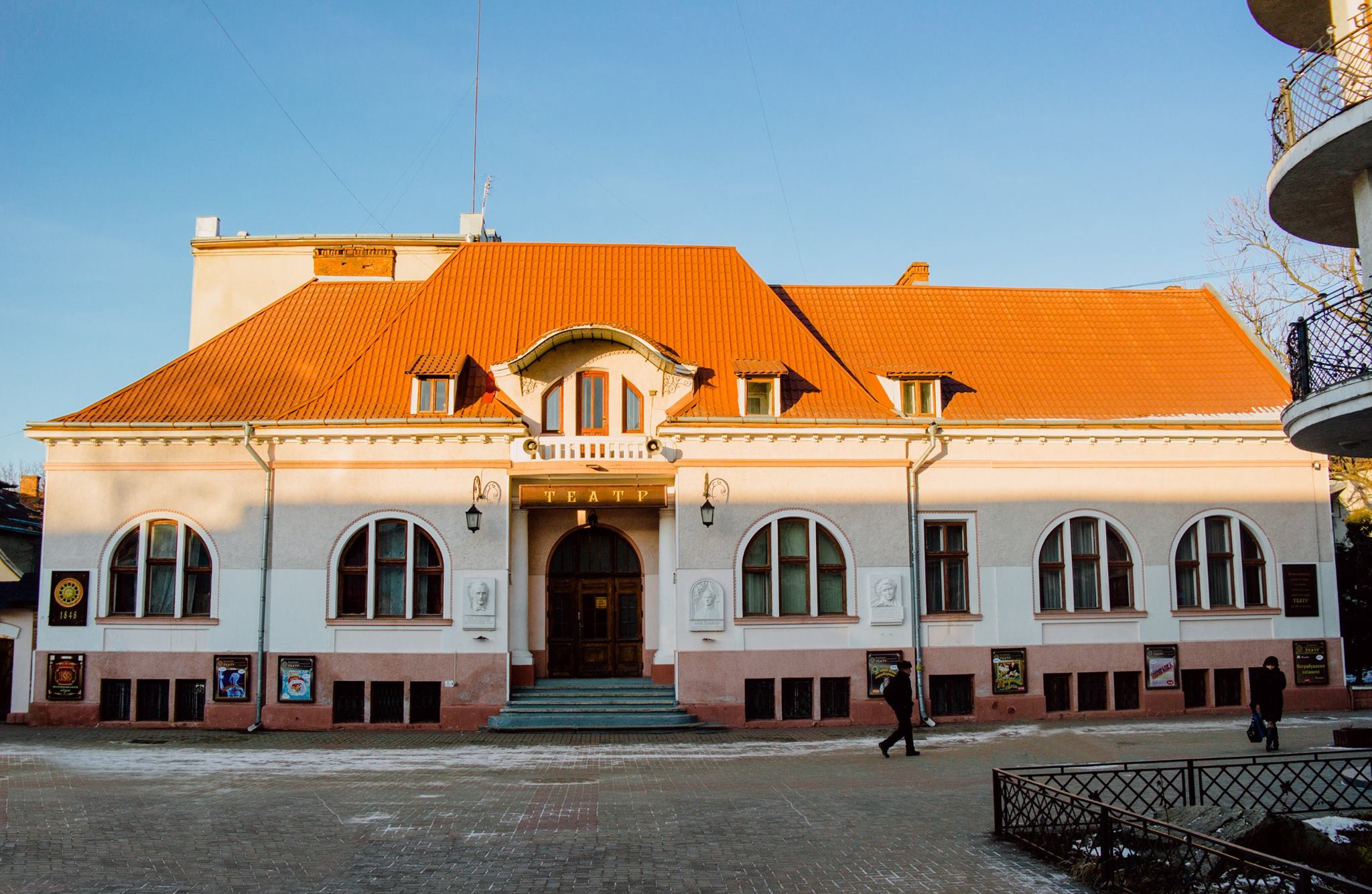
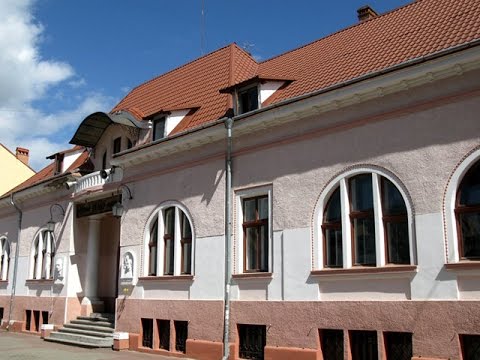
Ivan Ozarkevych Academic Regional Ukrainian Drama Theater, Kolomyia
If you come to Kolomyia, be sure to visit the local theater. The Kolomyia Drama Theater is the oldest Ukrainian theater in Galicia. It was founded in 1849 by cultural activist Ivan Ozarkevych. The main performance of the Kolomyia theater is the drama-mystery "Hutsul Year" by Ukrainian writer and composer Hnat Khotkevych. This production has been on the local stage for 26 years. It is also the theater's business card on tour. Therefore, not only Ukrainians, but also Romanians, Poles, and even the British have already seen it. To attend a local theater production, you can stay in the city for a few days. Not far away is the private estate "Marko", where it will be convenient to stay.
Kolomyia Academic Regional Ukrainian Drama Theater named after I. Ozarkevych is a theater established by the government of the Ukrainian SSR in late 1939 in Kolomyia as a state theater. As early as 1849, the first Ukrainian folk amateur theater was founded in the town of Kolomyia; it was one of the first theater companies in Galicia to give performances in Kolomyia and in the cities of Galicia. Therefore, the theatrical life in this Pokuttya town was very rich, and the Soviet authorities simply had to legalize the existing Pokuttya cultural traditions.
The theater bears the glorious name of Ivan Ozarkevych for a reason. This man is the founder of the first Ukrainian drama theater in Galicia. In 1848, on June 8, the first performance of the Kolomyia Theater premiered - "A Girl for Sale, or No Force for Admiration" based on the play by Ivan Kotliarevsky. Ivan Ozarkevych adapted the play to the life of Ukrainians in Pokuttya. According to Ivan Franko: "Ivan Ozarkevych wanted to present Kotliarevsky to the Galicians not in the original, but in a Pidhiria keptar." The same year, 1848, the first tour of the newly formed artistic group took place. On October 19, the Kolomyia theater performed the play "Maiden on the Run" in front of delegates to the Congress of Ukrainian Intellectuals held in Lviv. This event launched the Ukrainian theater movement in the city of Lviv, from where it spread to Przemyśl and Ternopil.
The year 1864 saw the revival of amateur theater in Galicia. In Kolomyia, the well-known Ukrainian couple Ivan and Ivanna Biberovych (who played the main roles, in particular, in the play Nazar Stodolya by Taras Shevchenko) successfully developed theater. This theater troupe successfully worked in the field of performing arts for many years, performing in Kolomyia and touring Galicia, thus forming the beginnings of theater culture in the Pokuttya and Galician environment. The seeds of the theater's sacrificial altar sprouted in the early 20th century. It was in 1920-1939 that the theater in Kolomyia became a prominent phenomenon in the social and artistic life of Galicians, a conductor of the Ukrainian national idea. Outstanding masters of Ukrainian theater performed on its stage: Mykola Bentsal, Volodymyr Blavatsky, Oleksa Skalozub, and Dmytro Nikolyshyn. The Kolomyia theater of this period became known as one of the best in Western Ukraine.
The beginnings of the current Kolomyia Academic Regional Ukrainian Drama Theater named after I. Ozarkevych date back to the late 20s and early 30s of the 20th century. Taking advantage of the weakening of the Polish government's reaction to Ukrainian social movements, Ukrainian communities in cities and villages began to develop the Ukrainian idea with even greater enthusiasm, and they were greatly assisted by the formation of house-reading rooms, educational and theatrical movements in society. At the forefront of the formation of the society and its cultural traditions of the time were traveling theaters made up of enthusiasts and associates of the Ukrainian movement. It was then that a stationary theater company was formed in the capital of the Hutsul region, consisting of young students of Oleksa Skalozub and Dmytro Nikolyshyn and part of the mobile touring theater. These traveling theaters chose Kolomyia for several seasons as a venue for permanent performances. The Ukrainian Folk Theater named after Ivan Tobilevych, the Ukrainian Young Theater "Zahrava," Komarovsky's Folk Theater, Ivan Kohutiak's Theater, and Bohdan Saramaha's Theater of Revue and Operetta toured frequently and stayed in Kolomyia for longer periods, keeping the theatrical life of the city and the entire region alive. Under the influence of the productions and actions of these theaters, a stationary theater was formed in the city from various amateur theater groups, which staged its performances and productions, uniting with traveling theater groups or attracting their artists to its ranks.
At the end of the 1930s, the Ukrainian community of Kolomyia was again at a crossroads, choosing a director for their theater. The pleiad of actors from the theater of Oleksa Skalozub and Dmytro Nikolyshyn eventually thinned out, some of them followed traveling theater companies on tour in Galicia, others went on trips to Central Soviet Ukraine, and several more performers were lured by Lviv theaters. There was a need for "fresh blood" and new productions and genre trends. At that time, there was a tendency for stationary troupes and touring theaters to coexist, where actors known in the region always liked to perform, and over the years they became attached to their team. At the same time, Ukrainian communities in the cities, taking care of their stationary theaters, were able to see new faces or popular actors from all over Galicia, and were able to select and encourage individual performers or entire traveling troupes to come to their theaters for a certain period or for the entire theater season.
This was the case with the theater company of Ivan Kohutiak, a follower of Bentsal, which had been delighting Galician residents with its productions for a decade, traveling to large cities and towns. Both well-known artists and beginners performed in this group. The Kolomyia community liked this group and invited them to the city for a season, and Ivan Kohutiak managed to combine his small team with a local theater company. Thanks to new productions and new and well-known faces, the Kolomyia Theater in 1939 once again stirred up the cultural life of the Hutsul capital. Even though the Soviets took over in Galicia, the theater continued to work and rallied Ukrainians around it. The Soviet leaders were not ready to take repressive actions against the favorites of the region, so, having accepted the Ukrainian cultural enclave, they were forced to recognize it officially and grant it the status of a state theater, although in this way they tried to influence the repertoire of the company. They partially succeeded, but it was quite difficult to exclude Ukrainian classics of drama and plays beloved by Kolomyia residents from the repertoire, and it took some time.
But this was significantly hampered by the Second World War, namely its echoes, the war between the German Coalition and the Soviet Union, and 1.5 years after their arrival, the Soviets retreated in 1941, and the German administration came to Kolomyia. The Kolomyia Theater, directed by the famous theater figure Ivan Kohutiak, continued its work. During the first six months of the war, a significant number of military formations and rear structures of the German armies, Magyar corps, and national (Soviet) formations under the German army passed through the capital of Galicia, so the then administration decided not to dissolve the theater in order to satisfy at least the minimal cultural needs of the Kolomyia community and the military personnel who were in the city. It was probably the only theater in the occupied territories at the time, and it was not afraid to have a repertoire that was banned by the German occupiers. It staged the historical drama Hetman Doroshenko by Liudmyla Starytska-Cherniakhivska and The Triumph of Prosecutor Dalsky by Kostia Hupal. These performances were enough to put the theater in a confrontational position with both the Germans and the Bolsheviks.
On September 29, 2008, the Collegium of the Ministry of Culture and Tourism of Ukraine granted the Kolomyia Theater the status of an academic theater. And for good reason: since 1989, the time of its revival, the ministers of the Kolomyia Melpomene, people without any high titles, regalia, or special education in this field of art, but artists who are truly folk, because they come from the people's midst, live the simple life of their people, have prepared more than 80 productions, given more than 3000 performances, and are about to welcome their millionth audience!
The defining chord of the anniversary year of 2009 was the First All-Ukrainian Theater Festival of Stage First Readings "Kolomyia Performances".
Accommodation around Ivan Ozarkevych Academic Regional Ukrainian Drama Theater, Kolomyia:


Which trails pass by Ivan Ozarkevych Academic Regional Ukrainian Drama Theater, Kolomyia?
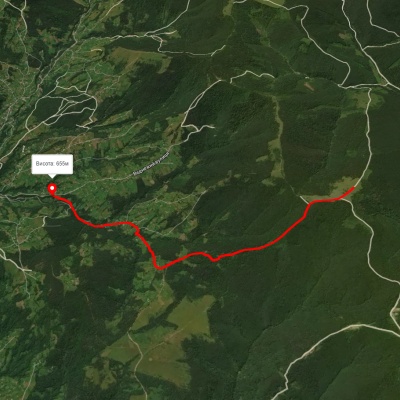
We suggest these hiking trails through or near Ivan Ozarkevych Academic Regional Ukrainian Drama Theater, Kolomyia: Sheshory – Rosokhata, Opryshky Road, Kosmach village, via Mount Rotylo, Mount Hrehit and Mount Bila Kobyla to Bukovets village, Mykulychyn village, via Mount Khorde and Mount Rotylo to Kosmach village, Medvezhyi tract – Mount Kuratul, Nimchych Pass – Protiate Kaminnia

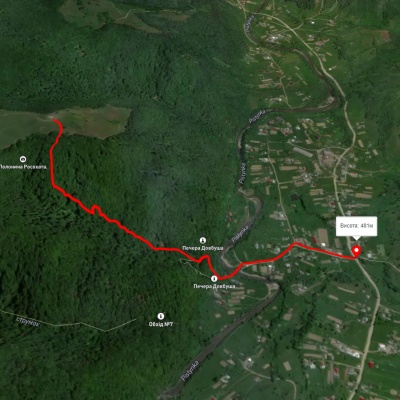
Sheshory – Rosokhata
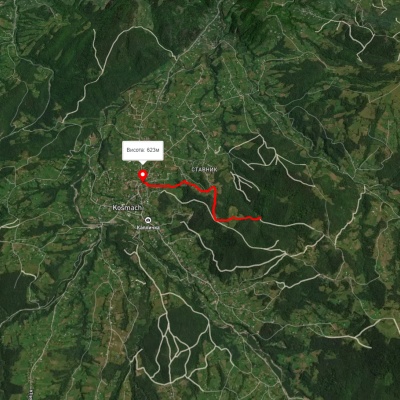
Opryshky Road
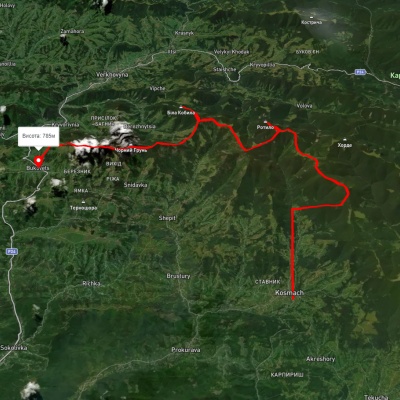
Kosmach village, via Mount Rotylo, Mount Hrehit and Mount Bila Kobyla to Bukovets village
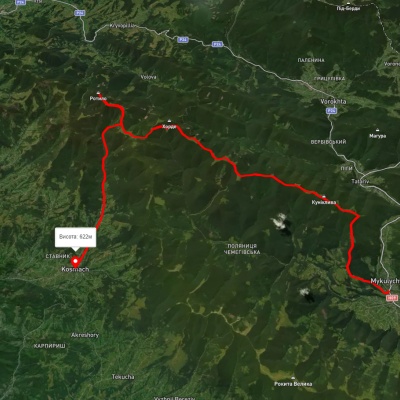
Mykulychyn village, via Mount Khorde and Mount Rotylo to Kosmach village