Church of St. Paraskeva, Chernivtsi
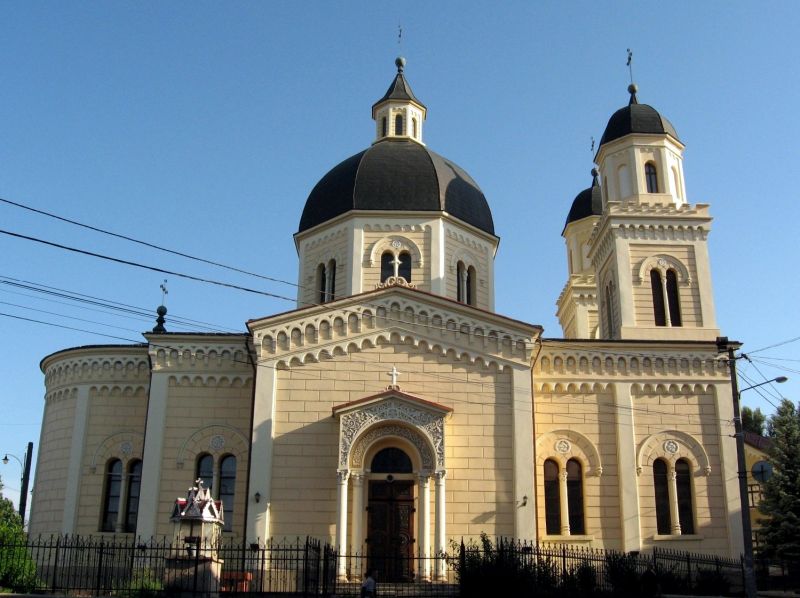
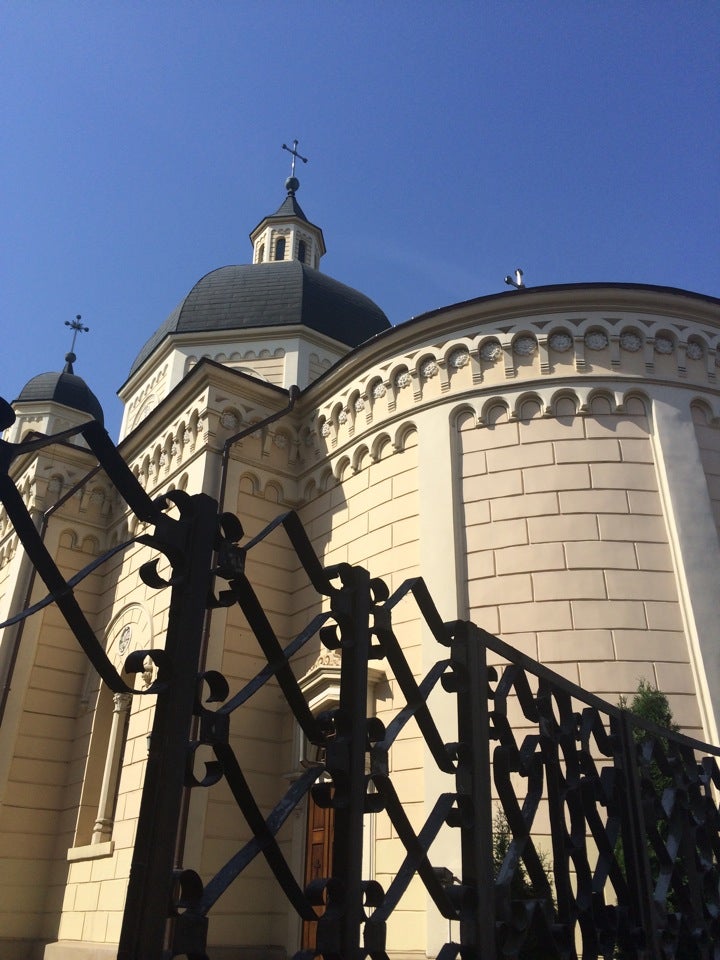
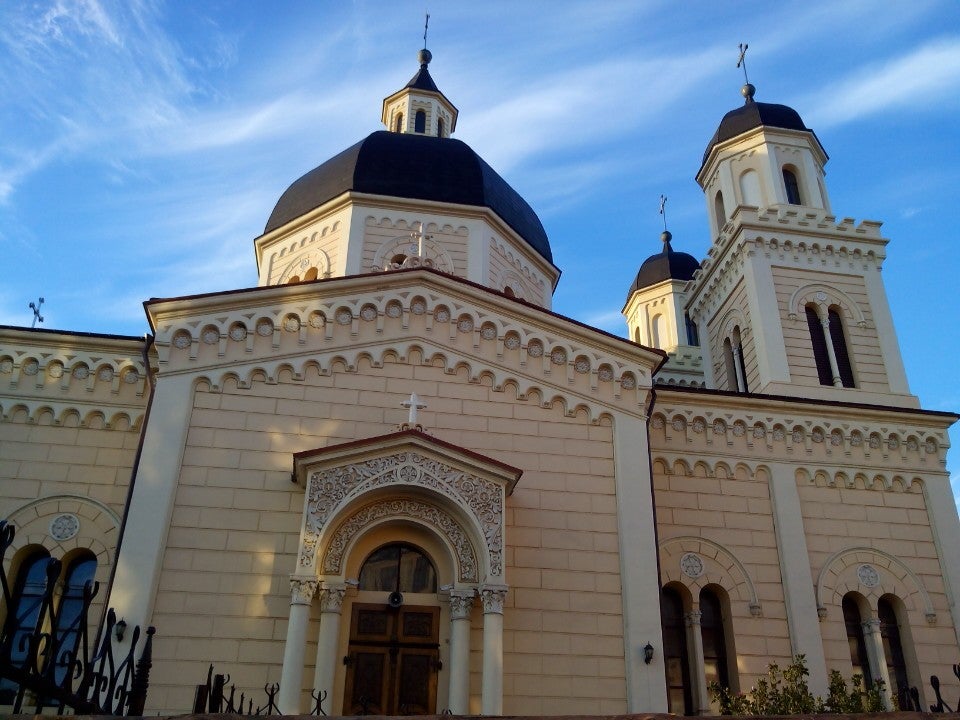
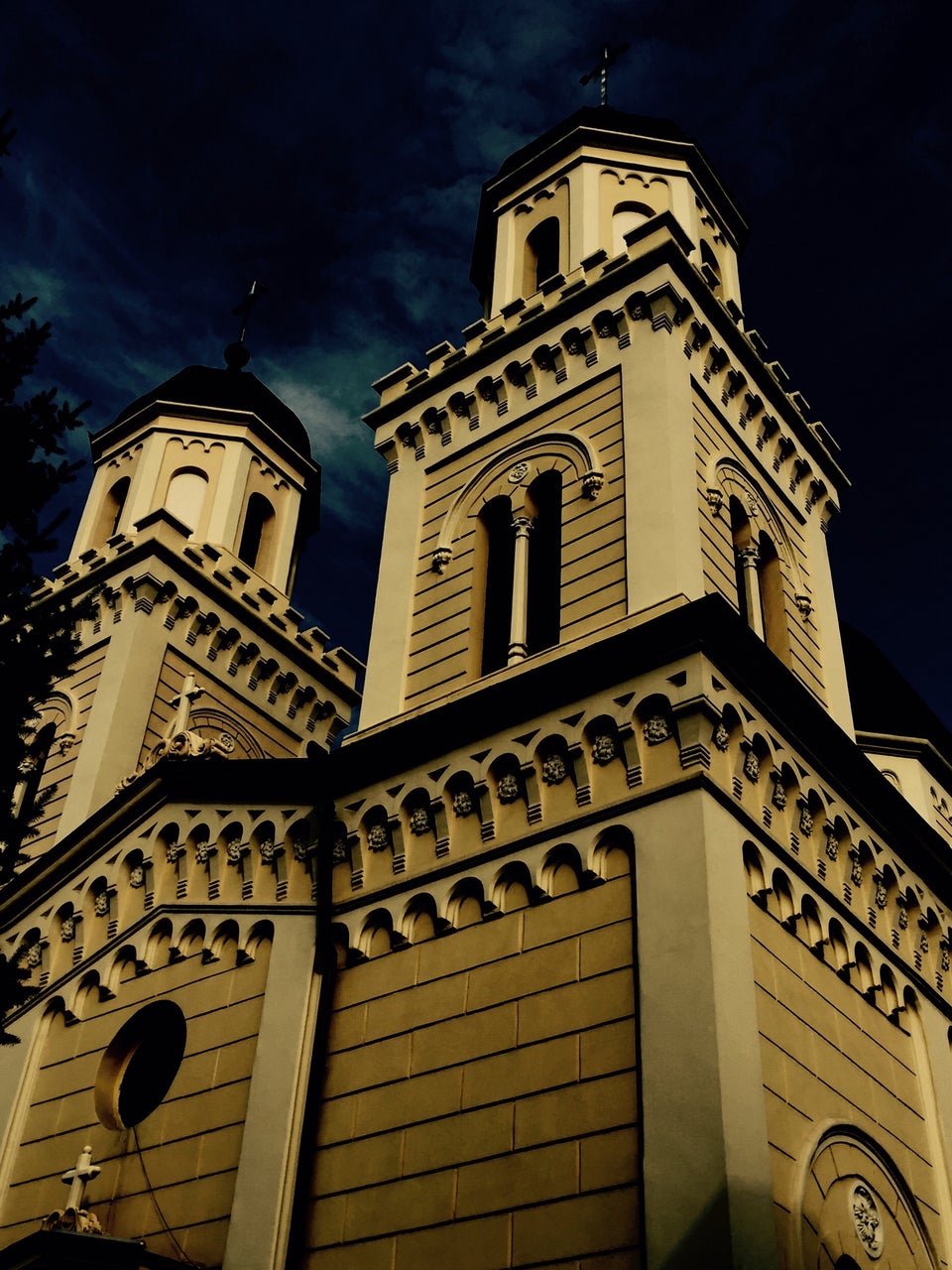
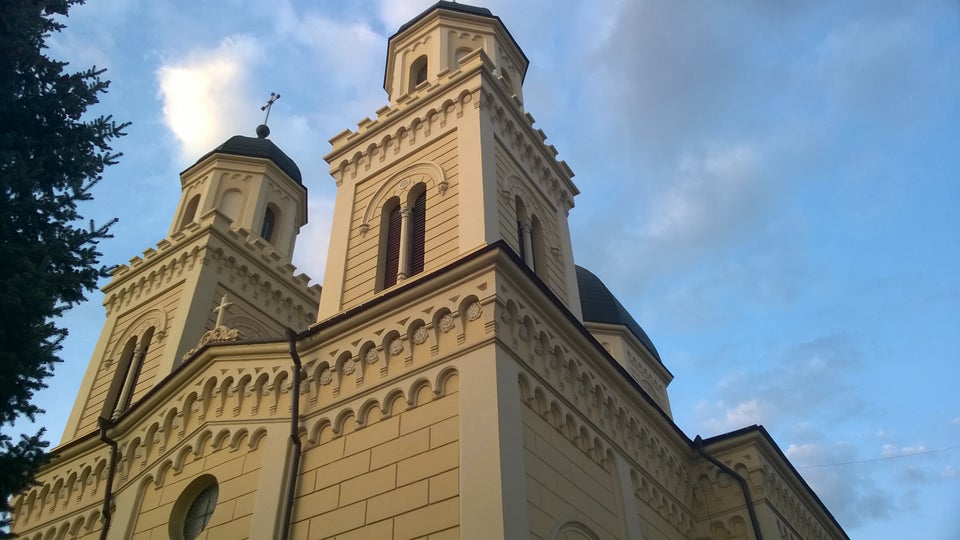
One of the largest Orthodox shrines in Chernivtsi is the Church of St. Paraskeva, which is under the jurisdiction of the Kyiv Patriarchate. At the same time, the church is a kind of business card of the city. It awaits tourists who walk up from the train station to the city center. The Church of St. Paraskeva of Serbia is one of the most beautiful religious buildings in Chernivtsi. It is the oldest brick church in the city (although the Church of the Nativity of the Blessed Virgin Mary on Horech is the oldest church within the current city limits).
The church was the first brick-built Orthodox shrine in the city. Its construction began in 1844 near an old wooden church (a few dozen meters to the south). Today, a cross stands on the site of the small church, opposite the large church. The sacred building was designed by local architect A. Pavlovsky. Special efforts were made by the then rector of the church, Andrii Vasylovych, who donated his own money to the pious cause. He brought the building up to the roof, but he lacked the money to continue the work. The Bukovyna Orthodox Religious Foundation helped complete the construction, which had been delayed for almost two decades.
However, the funds were not enough, and then Bishop Yevhen Hakman intervened and helped complete the construction. The church was consecrated on 5 (17) February 1862 by Bishop Yevhen Hakman in honor of St. Paraskeva of Serbia.
The church remained in operation until 1962, when the Soviet authorities decided to give the building to the city. At first, the church was turned into a warehouse, and in 1986 it became a chess club. Only in 1992 was the church returned to the Orthodox community. Since then, the church has become a cathedral and is the cathedral for the Chernivtsi Diocese of the UOC-KP.
The church became a landmark for Ukrainian life in 19th-century Chernivtsi. In 1864, a solemn liturgy commemorated the 3rd anniversary of Taras Shevchenko's death. It was the first time that Bukovinian Rusyns used the term Ukrainians, which was significant for the mental unification of Bukovyna and Ukraine. This idea was born among Ukrainian high school and seminary students in the city, who were introduced to Shevchenko's work by their teachers. Father Sidir Martynovych celebrated the anniversary service. Notably, the service was attended by both Orthodox and Greek Catholics of the city.
In Soviet times, the church was closed. For a long time, the church premises were used as a warehouse, and later turned into a chess club. At the same time, all the frescoes on the walls were destroyed and painted over. The church building was returned to the faithful during the perestroika years. At that time, only the central panikadil (lamp) and a large bell survived from all the church equipment.
The Orthodox community of St. Paraskeva Church was one of the first in Chernivtsi to come under the omophorion of Patriarch Mstyslav of Kyiv and All Ukraine. In 1992, the church temporarily acquired the status of a cathedral. Since then, this church has been the cathedral of the Chernivtsi Diocese of the Orthodox Church of Ukraine.
Today, services are regularly held in the Church of St. Paraskeva. On Sundays, three services are held here in a row. New bells are to be brought to the church by Easter 2012. The church has a Sunday school where all parishioners' children can take lessons in religious literature, church singing, and drawing.
The architectural style of the church is difficult to define. It has features of both classicism and empire. There are also influences of traditional Moldovan architecture. Inside, you will find paintings and an iconostasis from the 19th century. After a fire at the end of the century before last, they were restored by the masters Yevhen Maksymovych and Johann Pisler.
In an essay published in the Muscovite "literary and scientific journal" Rodymyi Lystok (Family Letter) in 1881, which was published in Chernivtsi, the author (who hid under the pseudonym G.Kr.) expresses his admiration for the church of Paraskeva, which has become a city landmark: "I like it even more than the cathedral; however, it is not as majestic and imposing as the latter, but it captivates everyone with its delicate building, with a single but high round dome in the middle, two symmetrical towers, and a beautiful porch from the entrance. Recently, it was surrounded by an iron lattice, and a society created in our city to beautify it laid out a kind of small park around it, so it sweetly greets everyone who, visiting Chernivtsi, climbs from the courtyard (i.e., the railway station) to the high mountain on which our city is so beautifully situated."
The Church of St. Paraskeva is located at 24 Zankovetska Street, on one side of which it adjoins Holovna Street, which leads from the train station to the historic center. Walking from the train to the city center, you will definitely see it.
Opening hours: the church is open all the time, but we recommend visiting it in the morning.
Chernivtsi is the capital of Bukovyna. One of the most beautiful and pleasant Ukrainian cities. There is one of the most beautifulrailway stations in the country, theChurch of St. Paraskeva of Serbia, the Church of the Exaltation of the Cross, the ship house, the City Hall (every day at 12:00 a trumpeter plays the melody of "Marichka" from the tower), the Art Museum, then Kobylianska Street, the German Folk House, the Armenian Church and the Assumption Church (the oldest stone Ukrainian Greek Catholic Church in Chernivtsi), the Theater Square and the Kobylianska Theater. Kobylianska Theater Square, Jewish People's House, Chernivtsi University (included in the UNESCO World Heritage List), Turkish Square (Chernivtsi has been a part of Turkey, Modova, Romania, Austria-Hungary, the USSR, Rus, and Ukraine), and a large rover,cozy streets and cobblestones, the so-called Drunken Church, Nazariy Yaremchuk's house, then another house-ship, two houses with the same number (Olha Kobylianska lived here), the house where Volodymyr Ivasyuk lived, the pink church - the Cathedral of the Holy Spirit.
Chernivtsi sights
- St. Nicholas wooden church (from 1607, restored in 1954);
- Stone Church of St. George on the Bitterroot (1767 in the Baroque style);
- the wooden Trinity Church in Muggles (one thousand seven hundred and seventy-four), moved in 1874 to Kłokuchka;
- wooden Assumption Church on Kaleczanka (1783);
- City Hall with a two-story, 45-meter-high Empire-style tower (1843-1847, architect A. Mykulych), now the City Council;
- Ukrainian Greek Catholic Church (1825-1830 in the Baroque style);
- Byzantine-style cathedral (1844-1864, architect Roll);
- Church of St. Paraskeva in the pseudo-Romanesque style, completed in 1662 (architect A. Pavlovsky);
- residence of Bukovyna metropolitans - since 1956 one of the buildings of Chernivtsi University);
- Armenian Gregorian Church (1869-1875, architect J. Hlavka);
- Chernivtsi University building (1874-1875);
- Jesuit church in the Neo-Gothic style (1893-1894);
- Railway station (1898-1903) in the Art Nouveau style;
- the City Theater (1904-1905, architects F. Fellner and G. Helmer) in the Viennese Baroque style with Art Nouveau elements (now the O. Kobylianska Music and Drama Theater), etc.
Location on the map
Comments
Places to stay nearby
All stays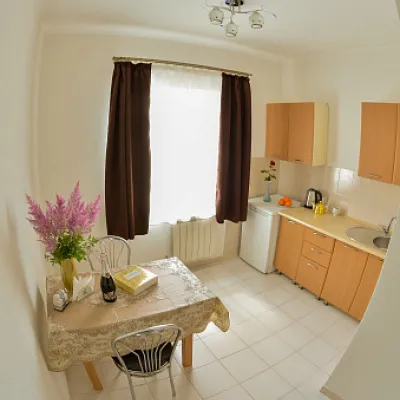 Hostel"Grand Hostel" Chernivtsi Prutska, 24Chernivtsiunder 1 km from Church of St. Paraskeva, ChernivtsiParkingWi‑FiTransferNearby: House-ship 900 mArmenian Church 1.5 km
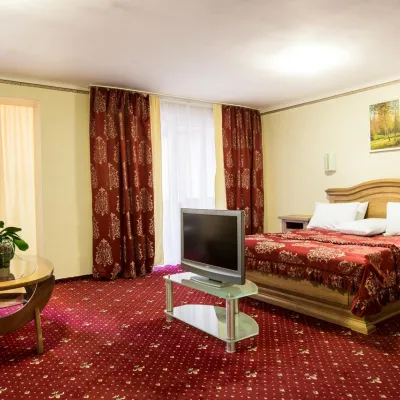 HotelHotel "Bukovyna" Chernivtsi ****Chernivtsi2.1 km from Church of St. Paraskeva, ChernivtsiPoolSaunaSPANearby: Armenian Church 1.3 kmSoborna Square 1.4 km
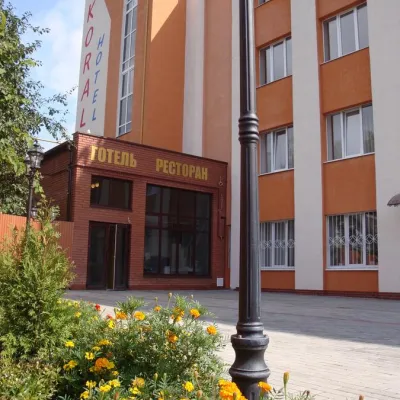 HotelHotel-Restaurant Complex "Koral" ChernivtsiChernivtsi3.1 km from Church of St. Paraskeva, ChernivtsiSaunaBBQParkingNearby: Armenian Church 2.8 kmSoborna Square 3.2 km
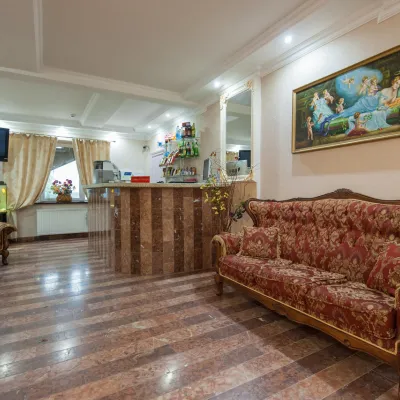 HotelHotel "LeoTon" ChernivtsiChernivtsi4 km from Church of St. Paraskeva, ChernivtsiParkingWi‑FiTransferNearby: Armenian Church 3.2 kmSoborna Square 3.4 km
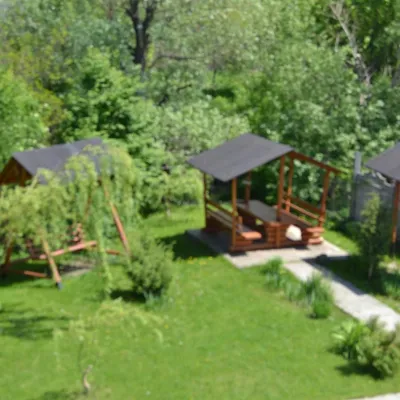 HotelHotel "Pride" MykulychynMamaivtsi9 km from Church of St. Paraskeva, ChernivtsiHotel "Pride" is located in the village of Mykulychyn, 9 km from Chernivtsi and 41 km from the "Myhovo" resort.Nearby: St. John's Church 1000 mChurch of St. John of Dukla 5.4 km
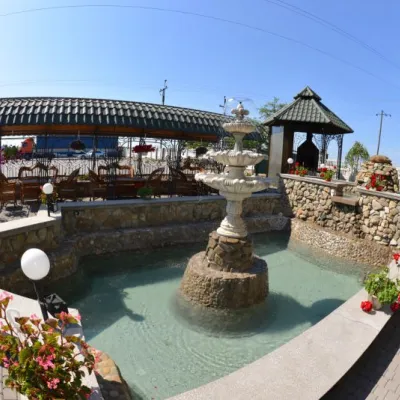 HotelHotel "Kolvik" MamaivtsiMamaivtsi12 km from Church of St. Paraskeva, ChernivtsiBBQKidsNearby: Assumption Church 2.2 kmChurch of St. John of Dukla 2.2 km
Nearby attractions
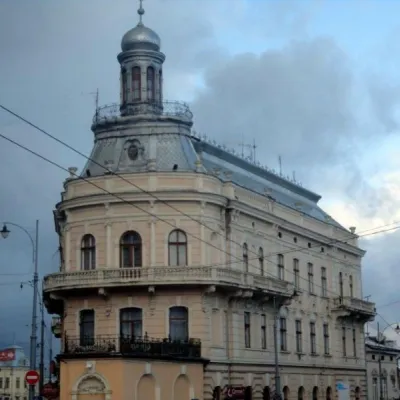 ArchitectureHouse-ship (Shifa), ChernivtsiChernivtsiunder 1 km from Church of St. Paraskeva, ChernivtsiTheship house is a highlight of all Chernivtsi's architectural monuments, located at the intersection of Holovna and Sholom Aleichem streets.
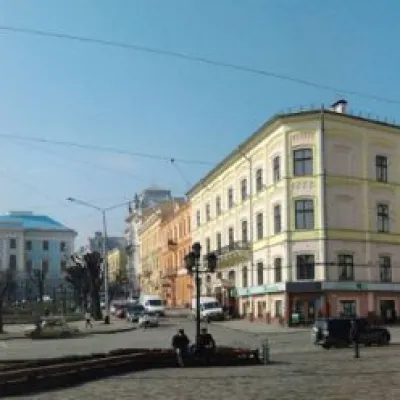 Historic siteCentral Square, ChernivtsiChernivtsiunder 1 km from Church of St. Paraskeva, ChernivtsiCentral Square (Chernivtsi) is the main square of Chernivtsi, the center of the city. The present-day Central Square of Chernivtsi was officially called Ringplatz ...
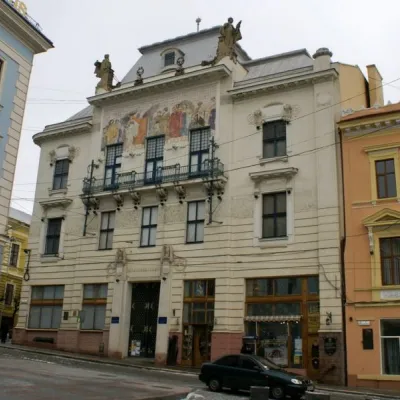 MuseumArt Museum, ChernivtsiChernivtsiunder 1 km from Church of St. Paraskeva, ChernivtsiOne of the best museums in Bukovyna today is the Chernivtsi Art Museum. Visiting it, you will be able to get acquainted with the art and folk art of the region,...