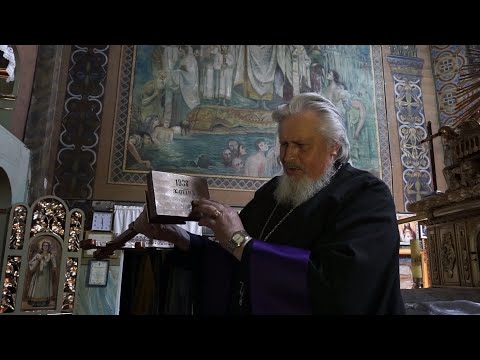
Church of St. Nicholas, Kalush
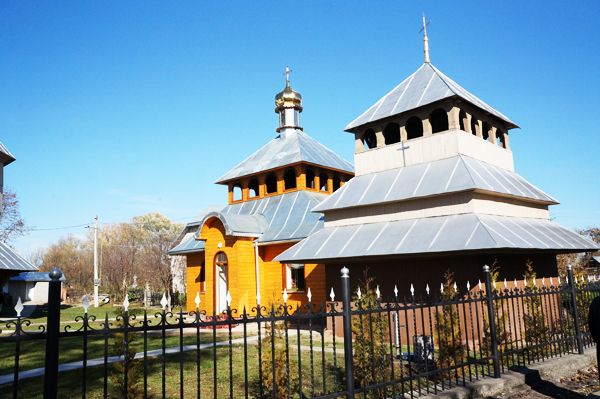
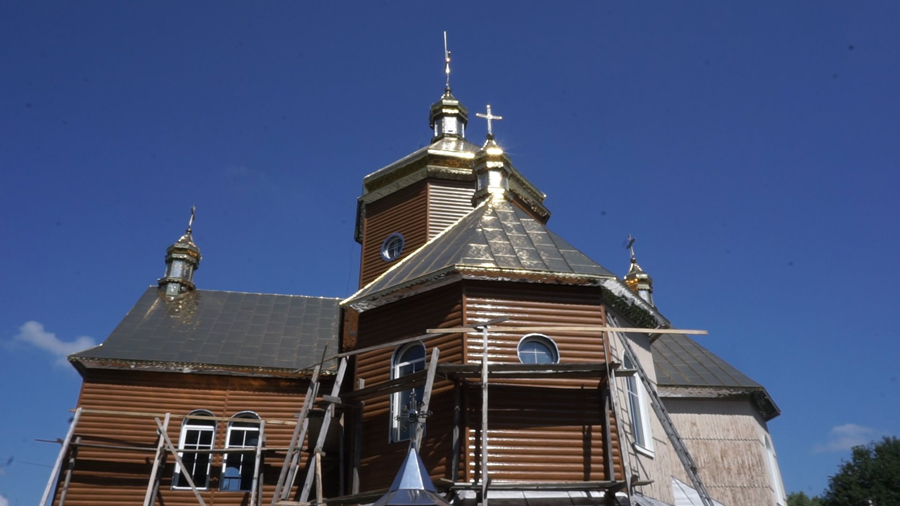
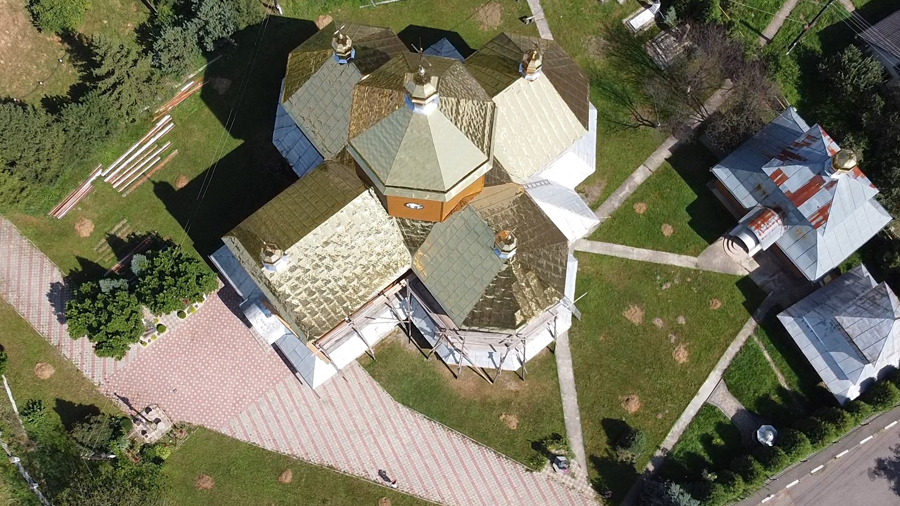
TheUkrainian Greek Catholic Church of St. Nicholas is one of the oldest wooden churches in Kalush, the main church of the Khotin neighborhood. It was built in 1888 as the main village church.
The church was built in 1888 by craftsmen from the village of Perehinske (Rozhniativ district), who 10 years later built a church in the neighboring village of Pidhirky. The bell tower was built at the same time as the church, and it still stands today. Three bells are kept in it-two small ones, cast before World War II, and a large bell, the Dmytro, donated by Janusz Felczynski in 1991. The 5 ancient bells (65, 52, 47, 32, 28 cm in diameter, 138, 57, 40, 17, 10 kg in weight, made in 1889, 1770, 1677, and 1782, respectively) were confiscated by the Austrian army in August 1916.
The church is decorated with an iconostasis and a kivot made by unknown craftsmen. In particular, the original icon "The Last Supper" on the iconostasis. Its peculiarity is that the table is depicted at an angle, not traditionally horizontally. The wall paintings were made in 1930 by local craftsmen (Nechai and others).
Before World War II, various organizations functioned at the church. These were the Youth Union, the Brotherhood of Sobriety, and others. An interesting fact is this: in 1885 (when another building of the Khotyn church was still standing), 300 people joined the Brotherhood of Temperance during the Holy Mission that was held in Khotyn at the same time. The population of the village then was just over 1000.
Several times Metropolitan Andrey Sheptytsky of blessed memory visited the church and celebrated services. In particular, he visited Khotyn in 1934 and 1938.
For a long time, the pastor of St. Nicholas Church was Father Hilariy Yanovych, an active public figure, patriot, and member of the Kalush District People's Committee during the November Uprising of November 1, 1918, when the Western Ukrainian People's Republic was established. After him, Father M. Yurkevych was the parish priest.
In 1946, after the Lviv "pseudo-council" of 1946, the church was transferred to the Russian Orthodox Church, and in 1961 it was closed to the faithful. In 1970, an atheist museum was opened in the church. Only in 1989 was the church returned to the parishioners. In December of that year, the community of Khotyn, together with its pastor, Father Dmytro Kysheniuk, joined the UGCC.
Today, the church houses the relics of St. Nicholas, brought by Metropolitan Andrey Sheptytsky in 1938, and the relics of St. Luke and St. Josaphat, which were brought in the 1990s. Outside the church gates is a symbolic grave for the fighters for the freedom of Ukraine.
Those who were the first to take an active part in the spiritual life of the church were also of great importance. Among them was Hnat Rozhansky, a Greek Catholic priest and Galician public figure in the Kalush region, who is known for his correspondence with Ivan Franko and Yurii Fedkovych and for translating Taras Shevchenko's works into Ukrainian. However, Hnat Rozhansky did not live to see the opening of the church, never having served a single service there. The rectors of the church were Fr. Hnat Rozhansky did not live to see the opening of the church, never having served a single service here.
In 2013, the church celebrated its 125th anniversary, an architectural monument of local significance No. 603. To celebrate the anniversary, a bell tower was built near the church and consecrated by Metropolitan Oleh Kaskiv, Protosnkel of the Ivano-Frankivsk Archeparchy of the UGCC. The construction was carried out by the joint efforts of the church rector, parishioners of the Khotin-Khlib LLC enterprise, local businessmen Myron and Mark Kravchuk, and active public figures.
In 2019-2020, the church was upholstered with false timber and covered with tin.
Nearby hiking trails near Church of St. Nicholas, Kalush:
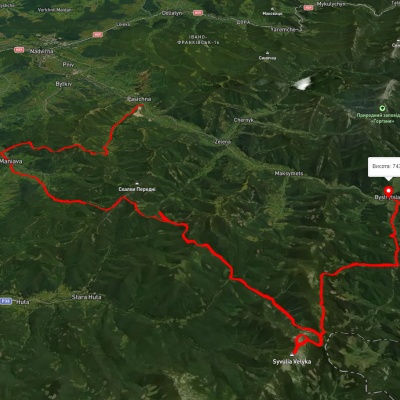
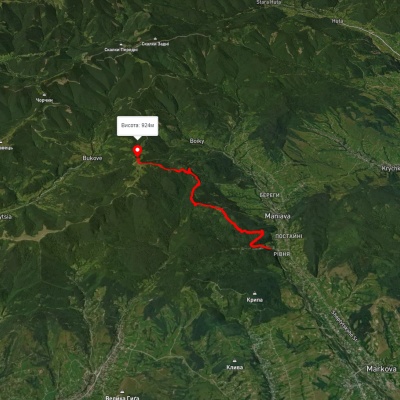
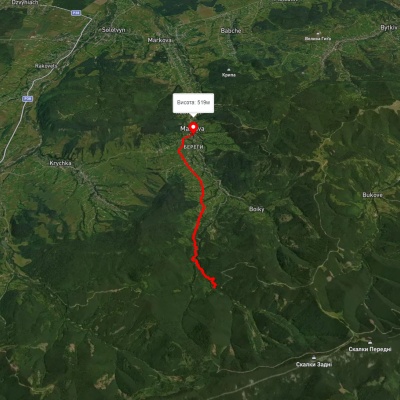
Which trails pass by Church of St. Nicholas, Kalush?
We suggest these hiking trails through or near Church of St. Nicholas, Kalush: Pasichna village, via Maniava village, Maniava Waterfall and Mount Velyka Syvulia to Bystrytsia village, Maniava village - Monastyretska polonyna, Maniava village – Maniava Waterfall, Huta village – Pasichna village, Huta – Poharchyna, Stara Huta village – Mount Ihrovets – Stara Huta village