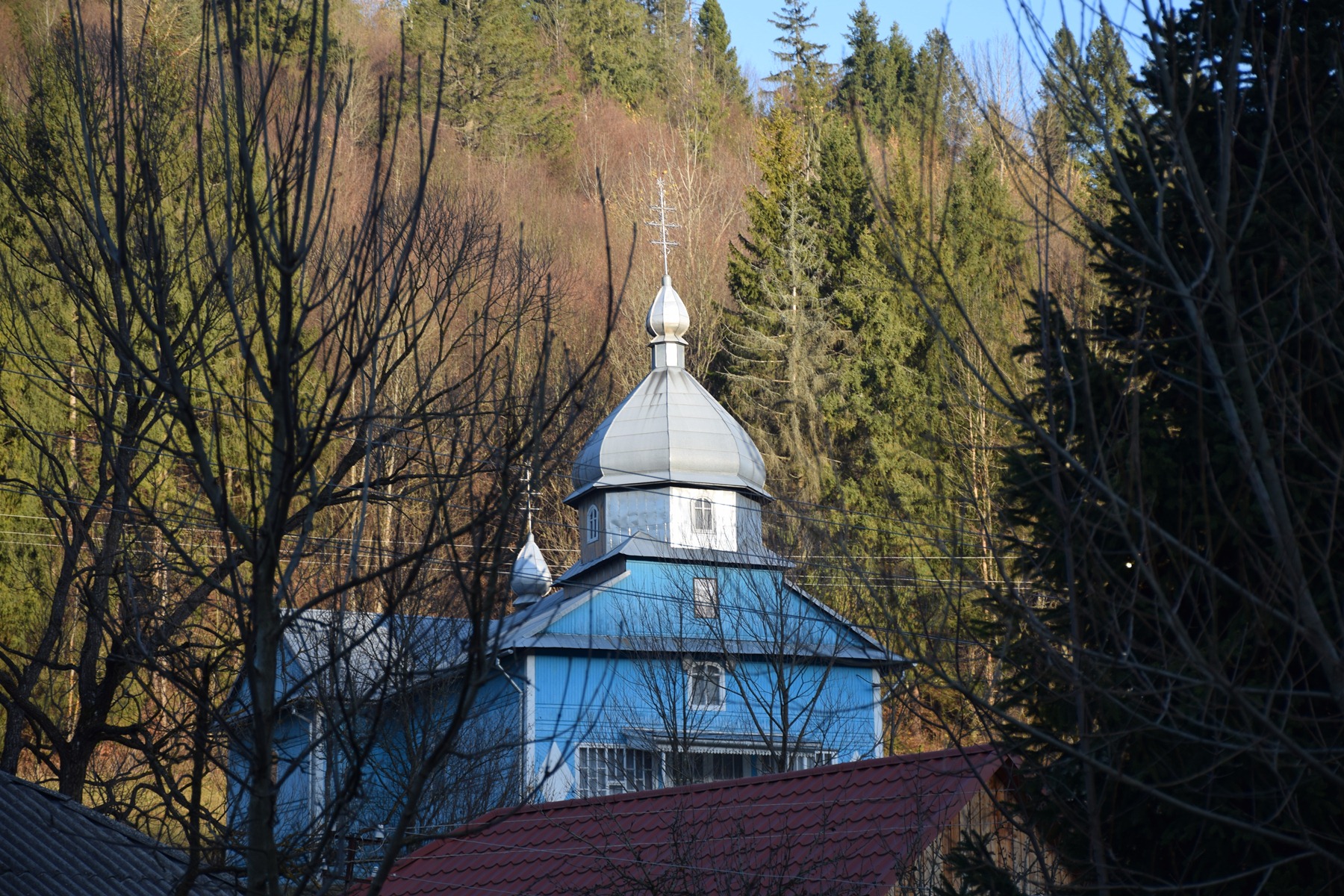
Church of the Presentation of the Blessed Virgin Mary (new and old), Roztoka
The Church of the Presentation of the Blessed Virgin Mary is a wooden church located in the village of Roztoka, Mizhhiria district, Zakarpattia region. It is the oldest and most perfect of the Mezhyhirya group of churches.
The church in the village of Roztoka is the oldest and most perfect of the Mezhyhiria group of churches. It probably struck the imagination of its contemporaries at the time and influenced the craftsmen who built churches in Podobovets, Pylypets, Bukovets, Izky, Torun, and Pryslip. Like other archaic Transcarpathian churches, its nave and chancel are of the same width, and only the square altar is slightly narrower. The first horizontal division of the Church of the Presentation is a wide bracketed fence that surrounds it on all sides. On the western façade, it is reinforced by a four-column porch. The second horizontal division is the roof of the porch, which also covers the tower above the cupola. The roofs of the nave and the altar seem to be merged: the transition from one log house to the other is hidden by shingle cladding. The tower above the narthex, which becomes narrower with each division in height, is crowned with a two-tiered top of exquisite pattern. Numerous horizontal lines of the church's shingle roof evoke involuntary associations with the silhouettes of centuries-old fir trees. If from the eastern side the church is perceived as rather motionless, then from the western side, on the contrary, it is all a play of masses, which is built on the contrast of the large shape of the unified nave, altar and graceful tower.
Given that the hillside where the Church of the Introduction is located is very steep, the bell tower was placed separately, closer to the top of the hill. If you climb up the hill, the church below can be seen in the gaps of huge trees against the background of the surrounding mountains and presents a magical picture.
The Church of the Assumption of the Blessed Virgin Mary, located on a steep slope and surrounded by trees of venerable age, has only its own proportions and artistic details. In the seventeenth century, it was a Boyko church with three tops that decreased upward with stepped bends. Perhaps in 1759, according to an inscription on the south door, the church acquired its modern Baroque appearance. Judging by the huge logs and the patina on the log house, the construction of the church can be dated to the seventeenth century. In the 18th century, probably, only a new crown of the tower was made. The presence of another entrance to the nave on the south side and the Gothic shape of the arches-cutouts on the sides of the large arch connecting the narthex and the nave also speak in favor of the church's older origin. The tower with the octagonal dome has a horizontal division. The once open porch has been transformed into a glazed veranda. The wooden bell tower, typical of the Transcarpathian Boikivshchyna, was built near the church in the eighteenth century. Such bell towers are common throughout the Mizhhiria region. They are similar in shape and design to the bell towers of the neighboring Volovets region, but the Volovets ones are much smaller.
The village says that the wealthy owners of Roztoka bought a church in neighboring Studenne and, having dismantled it, transported it by oxen over the mountains that separate the valleys of the two villages. According to another legend, the church was bought in one of the Galician Boyko villages and brought to the lower village, but wealthy people from Vyshniy Kintsi dragged the dismantled church to their part of the village by oxen at night.
There are inscriptions that tell us the names of the people who once took care of the church. These are Vasyl Dovhanych, who bought the icon of the Annunciation in 1709, Roman Tiaskailo, who "made" the image of the Virgin Mary, and Ilko Holovchyn, who carved the royal gate. An inscription on a plaque near the south door announces the death of the church's curate in 1800.
In 2001, the community sold the old iconostasis and many individual icons for a pittance, and used the money to equip a new wooden church, which was rather weak compared to the ancient beauty. The huge folk painting icon "The Last Judgment" was also moved to the new church. The old Vvedenskaya church remained empty, the roofing was in critical condition, and the threat of destruction of the magnificent monument was becoming more and more real. In the summer of 2005, craftsmen from Synevyrska Polyana, led by Ivan Rusnak, covered the roofs of the church with new shingles.
The interior is fully consistent with the style, character, and image of the exterior architecture. Everything in it is small - the archway, the doors and windows, and the magnificent iconostasis with numerous icons from different times hanging on the walls. While all the previous iconostases are dominated by a strict rectangular grid of horizontal and vertical divisions, in the Roztotskyi iconostasis all the upper tiers, except for the first, are arranged along a line broken upward, which achieves the dynamics and expression of the composition. The iconostasis was probably painted by the same artel as in Pryslyp, as evidenced by the sparing fresco style, type, and color palette.
The interior of the Church of the Presentation is small in size, but thanks to the iconostasis and numerous icons from different periods, it makes an unforgettable impression. There are many embroidered towels, carpets, and ancient prints.
The seventeenth-century iconostasis is interesting because its elements - columns and cornices - form a dynamic composition rather than a rectangular grid. It is created due to the break of its horizontal divisions, the rise of which in the central part becomes steeper with each tier.
The carver's talent was especially brilliant in the carving of the royal gate, where the composition "The Tree of Jesse" is presented. The branches of the tree, twisting intricately, form twelve curls with biblical characters in the center. The carving is striking in its openwork, and the figures depicted in low relief are expressive.
The master who painted the icons for this iconostasis worked in a monumental fresco style, avoiding minutely detailed work and giving the saints the features of Ukrainian commoners. His Mary in the icon "Our Lady of Hodegetria" looks more like a peasant woman than canonical images of Mary. The laconic palette of blue, red, and ocher tones of this icon is in perfect harmony with the warm tone of the golden, surprisingly plastic carvings of its frame.
Two icons in kyotas located on the northern and southern walls of the nave, "St. Nicholas" and "St. Paraskeva" of the seventeenth century, probably belong to a master who was brought up on engravings, because the manner of his painting is graphic and constructive. On the southern wall hang icons from the festive and deesis rites, which apparently belonged to the iconostasis of the first quarter of the seventeenth century. They are executed in a beautiful fresco style, with absolutely no chiaroscuro modeling of the form, and the folds of the clothes are drawn with a bold line only with a brush. It is safe to say that these icons preserve the traditions of 16th-century art.
On one of them, the icon of the Intercession, the master, probably a local painter, left his signature. In addition, this icon is also interesting because, although its plot repeats traditional iconography, the main character of the composition is not the Mother of God, but Roman Sladkospivets. He is painted much larger than all the other characters. The inscription on the icon explains everything: "In this way did the servant of God Roman pull for his release." The artist was flattering his namesake, Sladkopivets Roman. The moral ideals and ethical norms of the performers and customers of local icons are revealed by the huge icon "The Last Judgment" placed on the northern wall of the nave and most likely executed at the turn of the eighteenth and nineteenth centuries. It is not just individuals or villains who are brought before the court of history, but entire nations, the whole world. The master is especially willing to depict the evil of the day, the vices and evils of his time, personified in judges and customs officials, as well as moneylenders, drunkards, tavern keepers, fortune tellers and adulterers, slanderers and informers, thieves and robbers. The master paints all these characters with childlike spontaneity and naivety. His lack of a high level of professional skill is compensated by his sincerity and sense of humor. He points out vice not so much with fear as with laughter.
Accommodation around Church of the Presentation of the Blessed Virgin Mary (new and old), Roztoka:


Which trails pass by Church of the Presentation of the Blessed Virgin Mary (new and old), Roztoka?
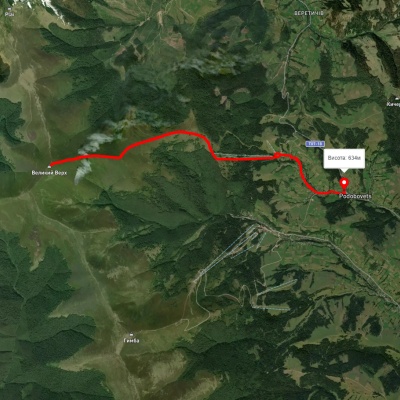
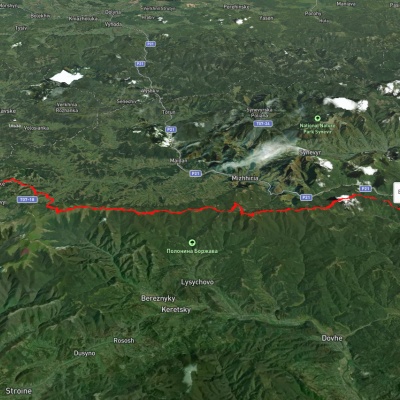
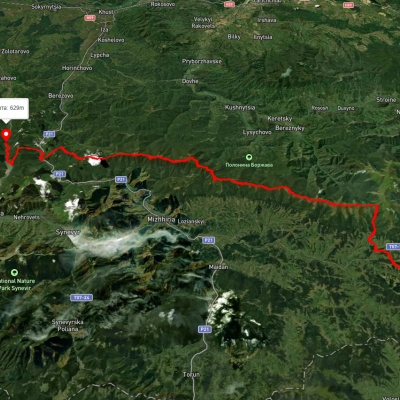
We suggest these hiking trails through or near Church of the Presentation of the Blessed Virgin Mary (new and old), Roztoka: Volovets, via Borzhava polonyna and Shypit Waterfall to Skotarske village, Skotarske village, via Borzhava polonyna and Palenyi Hrun polonyna to Nyzhnii Bystryi village, Skotarske village, via Borzhava polonyna and Palenyi Hrun polonyna to Vilshanske reservoir, Volovets, via Mount Plai, Mount Velykyi Verkh and Mount Hemba to Podobovets village, Podobovets village – Mount Velykyi Verkh – Podobovets village, Vovchyi village, via Mount Stiy to Podobovets village





Volovets, via Borzhava polonyna and Shypit Waterfall to Skotarske village
Skotarske village, via Borzhava polonyna and Palenyi Hrun polonyna to Nyzhnii Bystryi village
Skotarske village, via Borzhava polonyna and Palenyi Hrun polonyna to Vilshanske reservoir
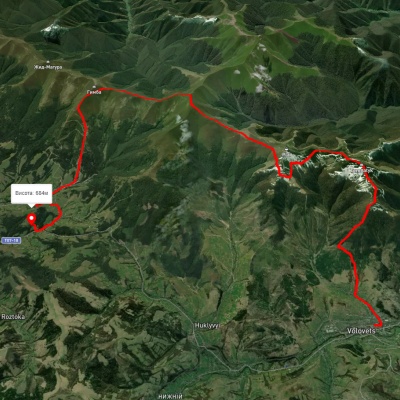
Volovets, via Mount Plai, Mount Velykyi Verkh and Mount Hemba to Podobovets village