Bukachivtsi
TheBukachivska amalgamated territorial community was formed on December 23, 2018, with the administrative center in Bukachivtsi, Posvirzh, Bukachivska Sloboda, Vytan, Kozari, Zhuravenky, Vyshniv, Zrub, Cherniv ,Rohatyn district of Ivano-Frankivsk region. The center of the community - Bukachivtsi - is located between the Dniester and Svirzh rivers, 28 km north of the district center(Rohatyn) and 12 km east of the newly reconstructed Lviv-Ivano-Frankivsk highway. Bukachivska ATC is located 58 km from Ivano-Frankivsk International Airport and 101 km from Lviv International Airport.
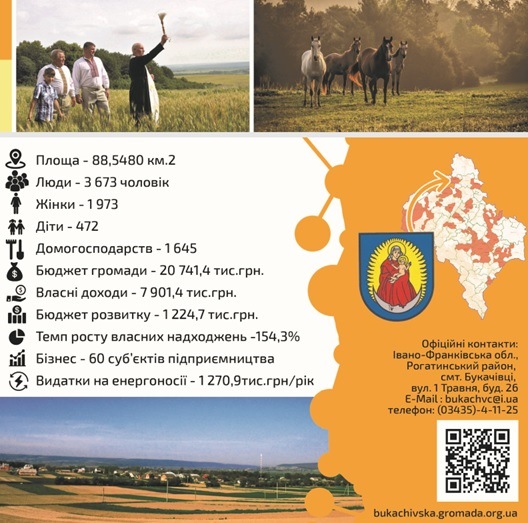
The first mention of Bukachivtsi in written sources dates back to 1438. Jan Kola "the Elder" (sometimes called "Koliuszko", signed "from Dalejew, Hrynivtsi, Zhovtantsi"), Galician sub-commissary of 1455, (?-1472) of the coat of arms of Yunosha in 1469, during the audit of the kingdoms, presented many privileges with grants and records of amounts, in particular, 200 hryvnias from the Hungarian King Louis for Bukachivtsi, Kozary, Vyshneve, and Molodenche (Młodzieńce).
On March 12, 1510, the grandfathers of the village of Bukachivtsi, Stanisław and Wilbrand, received a privilege from King Sigismund the Old to found a town of the same name with Magdeburg law. The Lviv-Halych trade route, which ran through the town, contributed to the development of trade and crafts. In May 1745, the city was visited by opryshky.
The seals of the second half of the nineteenth century show the ancient coat of arms of Bukachivtsi: the figure of the Blessed Virgin Mary with the infant Jesus coming out of a cloud. Under the influence of the First Russian Revolution, in 1906 the villagers took part in an agrarian strike.
On October 1, 1931, the rural gmina (self-governing community) of Sloboda Bukachivska in the Rohatyn district of the Stanisławów province was liquidated and its territory was annexed to the rural gmina of Bukachivtsi in the same district.
On October 1, 1931, the rural gmina (self-governing community) of Sloboda Bukachivska in the Rohatyn district of the Stanisławów province was liquidated and its territory was annexed to the rural gmina of Bukachivtsi in the same district.
In 1939, the village was home to 3,850 inhabitants (1,170 Ukrainians, 1,030 Poles, 450 Polish colonists, 50 Latinists, and 860 Jews). From December 1939 to March 13, 1959, Bukachivtsi was the district center. In September 1943, units of S.A. Kovpak's partisan unit passed through Bukachivtsi. On October 17, 1944, a hundred of "Roma" made an attack on the district center.
Historical and cultural features of the settlements of the Bukachivska ATC
- The Church of the Miracle of St. Michael the Archangel (der.) in the village of Vyshniv 1804;
- The Church of the Assumption of the Blessed Virgin Mary (der.) village. Zhuravenky 1899;
- Church of the Transfiguration of the Lord (walled) Chernivtsi village 1890.
Archaeological monuments of local significance:
- Kurgan burial site Vyshniv I, Vyshniv village, Mohylky ur., in the vicinity of the village of uncertain affiliation territory of 1 ha.
- Zhuravenky I settlement village. Zhuravenky, Kozari village, Gora-Domashnya ural, eastern outskirts of Kyivska Rus village area 0.5 ha.
- Zhuravenky II settlement village. Zhuravenky, Kozari village, Kyivska Rus settlement area 100x90 m.
- Kozari I kurgan burial site Kozari village, grave site, 1 km north of the village, in the forest area 10 ha
- Soviet soldiers' mass grave Bukachivtsi village 1944 1972 - "- Mog 10x12 Sculpture 2.8 m Pedestal 1.6 m
- Monument to the countrymen who died in World War II and in the struggle for Soviet power in Bukachivtsi village 1941-1945, 1944-1950, 1972.
- Tomb site of Soviet and party activists from Bukachivtsi village 1944-1950 1958 - "- concrete Mog 1.6x1.8 m Skul 4.2 m DEC decision of 28.11.1969, no. 612/4.
- Monument to soldiers - fellow villagers of Cherniv 1941-1945 1965 Lviv ceramic sculpture f-c Concrete Sculpture 3m.
- Monument to Taras Shevchenko 1961 Bukachivtsi, Chornovola str. Copper, concrete
- Old school building 1909 still Bukachivtsi, 59 Chornovola str.
- Mass grave of the Ukrainian Insurgent Army and UPA soldiers 2001 Bukachivtsi, Chornovola str.
- The mass grave of Sich Riflemen and UPA soldiers 2001 Bukachivtsi, Chornovola Street, cemetery Earthen mound, metal cross.
On the territory of the Bukachivska ATC there are hiding places in the villages of Zhuravenky, Vyshniv and Cherniv. During the Second World War in the village of Kozari, one of the bells was removed from the church bell tower and hidden near the church building in a well.
There is a mill on the territory of the ATC, which was built in the 19th century. Bricks for the construction of this mill were brought from Austria on a newly built railroad. It was re-equipped three times, first built as a water mill, after the Svirzh riverbed was changed, it was converted to a steam mill, and later to an electric mill. People came to this mill from all over the district because it was the only place where they made buckwheat flour for local delicacies, local buckwheat pies.
Рекомендуємо відвідати в Bukachivtsi


Маршрути поблизу Bukachivtsi
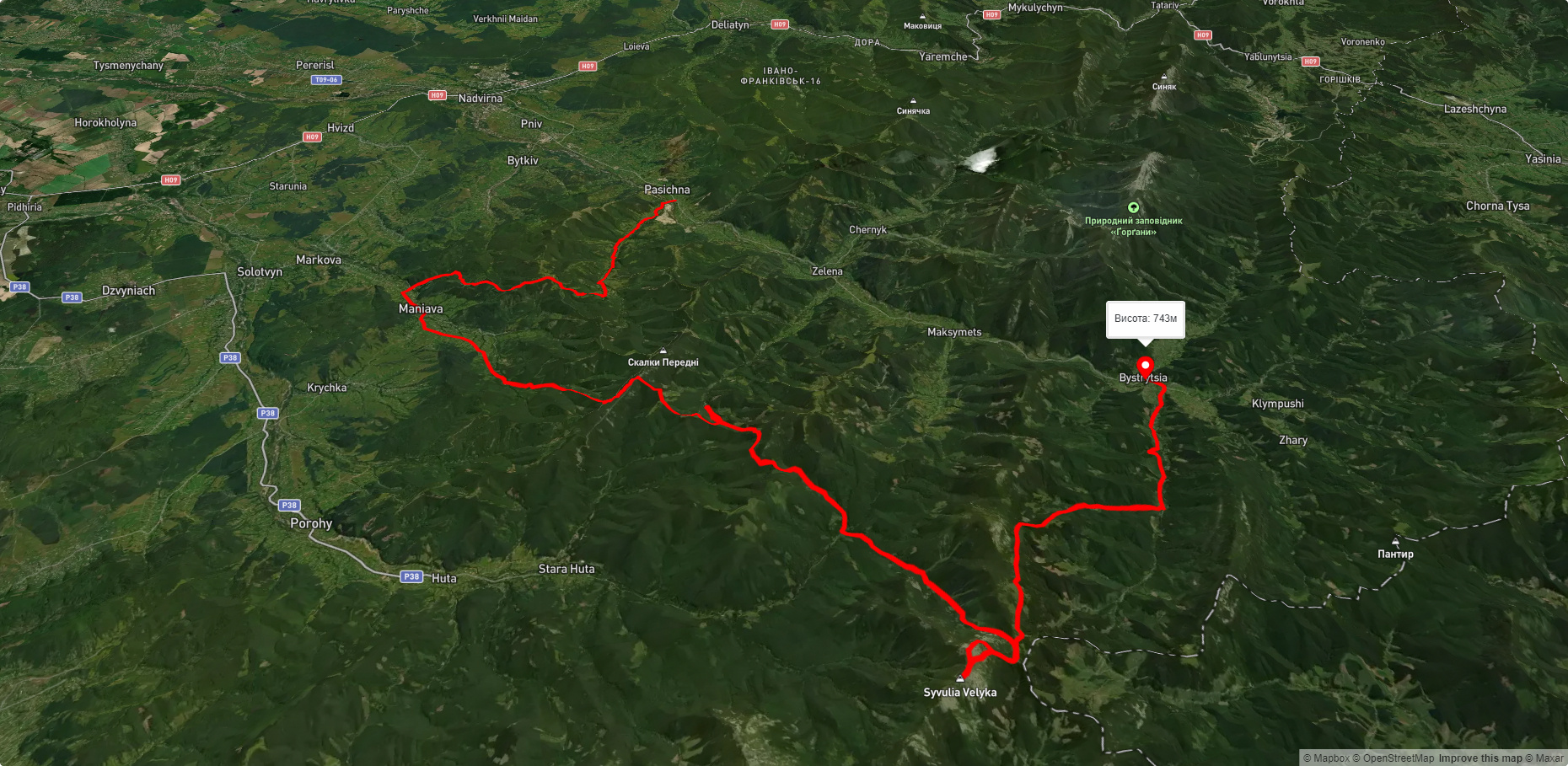
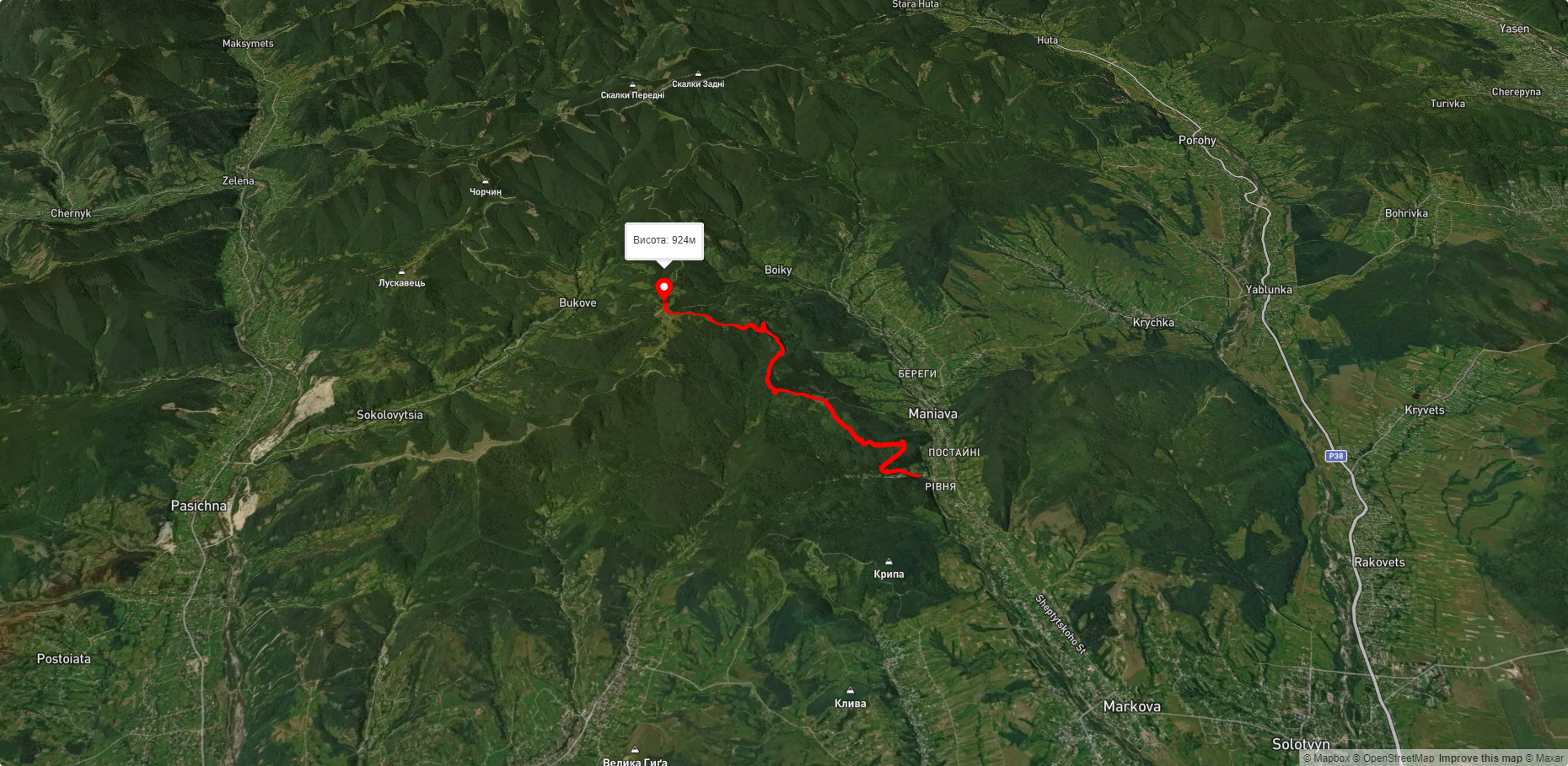
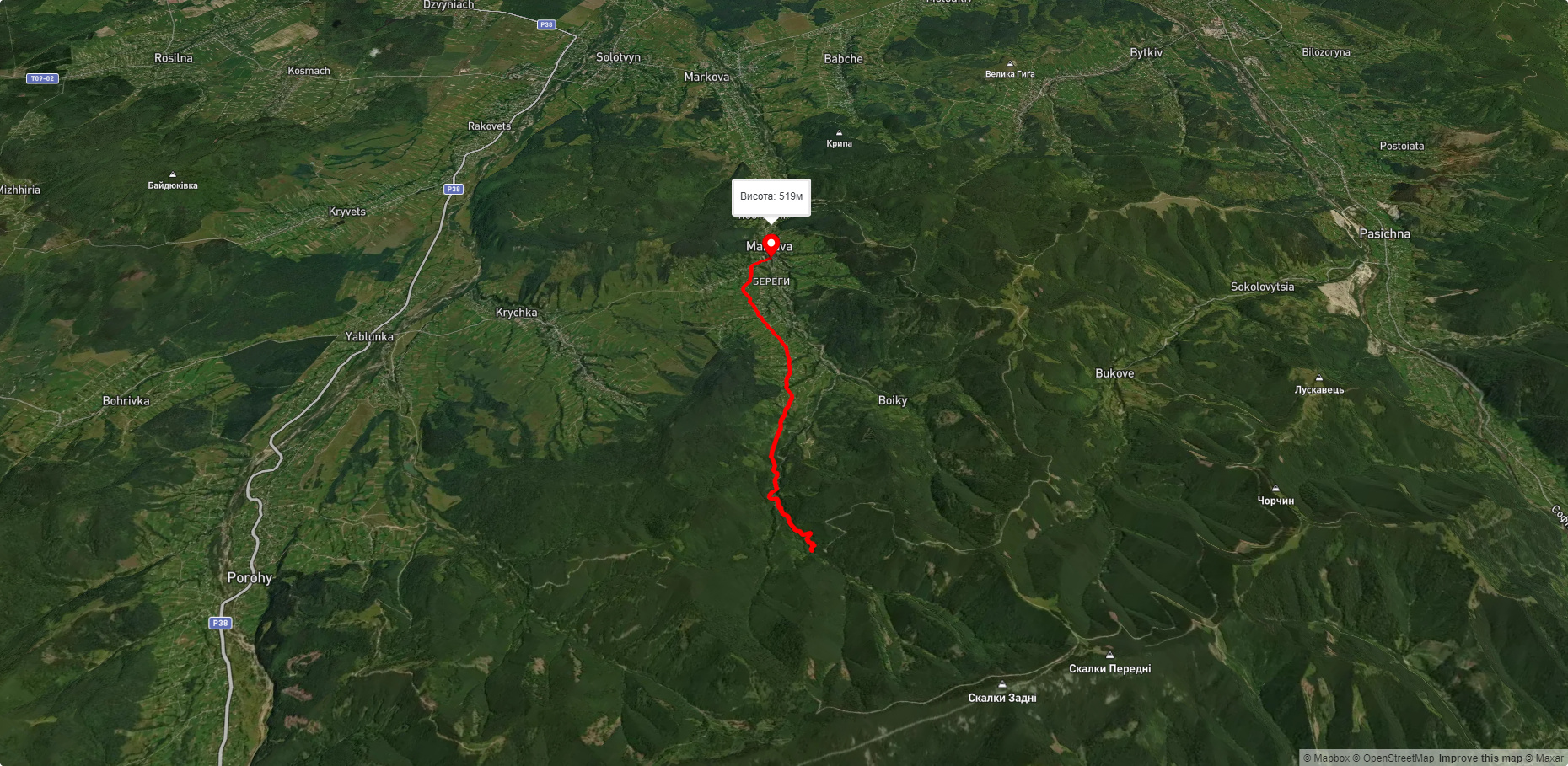
Які туристичні (пішохідні) маршрути проходять через/біля Bukachivtsi?
Пропонуємо пройти такі туристичні (пішохідні) маршрути через/біля Bukachivtsi: с. Пасічна, через с. Манява, Манявський вдсп., г. Велика Сивуля до с. Бистриця, с. Манява - пол. Монастирецька, с. Манява - вдсп. Манявський, с. Гута - с. Пасічна, Гута - Погарчина, с. Пасічна, через г. Синячка до м. Яремче