Bushtyno


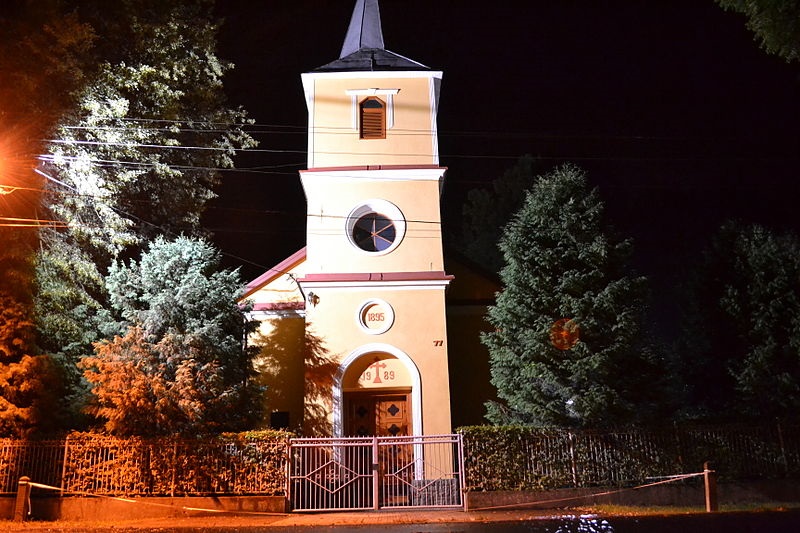
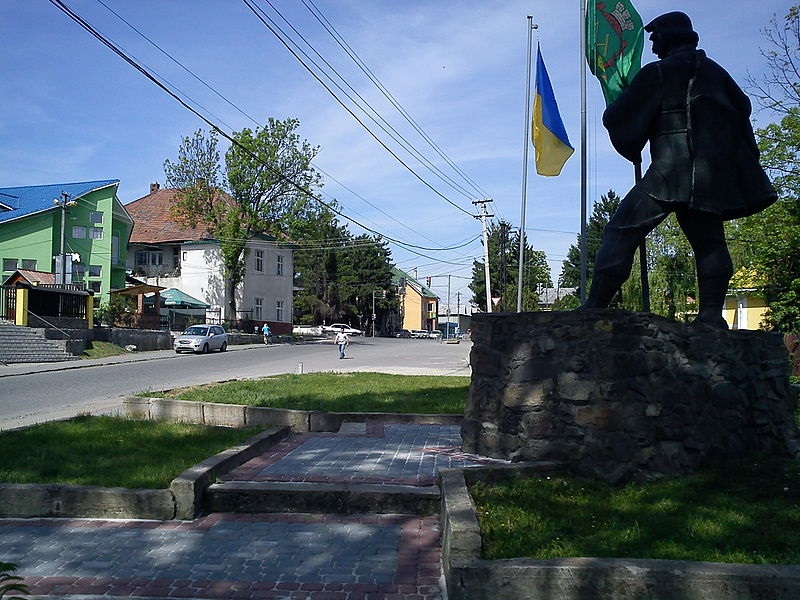
Bushtyno (until 1995 - Bushtyna; Hungarian: Bustyaháza) is a town in the Tyachiv district of Zakarpattia region. Bushtyno was founded in the middle of the fourteenth century. Initially, it was located in the Dolyna tract, and then its inhabitants moved to the Horb tract, where they live today.
In 1373, the Hungarian King Louis I granted Bushtyno to the sons of the Wallachian voivode Balka Ivan and Drah. Documents of 1389 mention it as the property of the Transylvanian king Drag; and in 1480 - as the estate of the feudal lord Bertolon Dragari. In the fourteenth and fifteenth centuries, the village was inhabited by Ukrainian and Hungarian people. In terms of its legal status, it was initially free, engaged in agriculture and animal husbandry, grazing sheep and cattle on the meadows belonging to the community. Gradually, the peasants' lands were seized by feudal lords, and in the early seventeenth century they became dependent on the ruler of Khust Castle and the Kostelivska state dominion. Bushtyn's serfs cultivated six land allotments (teleks) = 32 golds = 16 hectares. For this, every year, on November 11, they gave the ruler of Khust castle a marten skin, a koblik (100 kg) of oats, a hay wagon, 11 dinars, brought one wagon of firewood to the lord's yard every week, and on religious holidays they contributed 24 eggs and 12 dinars. Thus, the serfdom duties, in-kind and monetary taxes amounted to 6 kobliks of oats, 6 hay wagons, 144 eggs, 138 dinars in money, and 312 wagons of firewood.
According to the census of 1715, there were 25 peasant households in Bushtyn (22 Hungarian and 3 Ukrainian families), which had 98 golds (49 hectares) of arable land and 49 kosash (the area mowed by a mower in 1 day), and buffaloes. The two-field system of cultivation was dominant. The field of each peasant was divided into 2 parts: tsaryna (bread, hayfields) and toloka (pastures). In 1792, the royal salt storehouse (dominia) concluded an agreement with the family of the landowner Teleki to transfer a plot of land in Bushtyn (on the banks of the Tisza River) to the dominia, where the construction of a salt warehouse, an inn, and a butcher shop began.
Salt mined in the mines of Okruhla (near Tyachiv) and Shandrova (Oleksandrivka) was brought by wagons to the warehouses in Bushtyn. Salt from Solotvynia was also delivered here on rafts. The serfs formed groups of rafters (bokorash) who floated the wood to Vilok and from there to Hungary (Tokaj, Solnok, Szeged).
Bushtyno, surrounded by large forests, became a transshipment base for the transportation of logs from the end of the eighteenth century. The timber was floated down the Teresva and Tereblya rivers to Bushtyno, and from there down the Tisza to Hungary. A forestry administration was established in the village, which was subordinated to the Marmarosh-Siget Directorate of State Estates and was engaged in forestry, wood processing, and transportation.
In 1872, the Chop-Mármaros-Sziget railroad was laid through the village. The timber from Bushtyn's warehouses was not only floated, but also transported by rail. The development of capitalist relations led to the stratification of the peasantry. According to the 1900 census, only half of the 608 inhabitants were engaged in agriculture, and 28 people lived on auxiliary earnings. At the same time, the residents of Bushtyn had to work 60 days a year repairing and building roads and bridges. Workers had no easier life. The working day at the logging sites lasted 12-14 hours, they lived in huts, slept on the ground near fires, and their earnings were meager. In search of a better life, many Bushtyn residents emigrated abroad.
In the early twentieth century Bushtyno was a typical Verkhovyna village. Houses were built of wood, in a log cabin, covered with straw, partially with shingles. Bushtyno residents wore clothes made of homespun cloth and cloth. The traditional part of clothing was a petek made of sheep's wool. Medical care was not readily available. There was only 1 doctor for 14 surrounding villages. There were two parochial schools in the village, which provided only primary education. One of them (Ukrainian) had 180 children.
On January 21, 1919, representatives of Bushtyn, together with prisoners of war who returned from Russia, voted for reunification with "Great Ukraine" at the Khust People's Congress (I. Deyak, M. Mykuliak, V. Andryshyn). From 1919 to March 1939 Bushtyno was subordinated to the Czechoslovak Republic. During this period, the village had mills and a power plant, the Nashytska woodworking company, an elementary school, Prosvita, and the Karpatska Pravda newspaper.
Since 1957, it has been an urban-type settlement.
After the collapse of the USSR in 1992, the Greek Catholic community was officially registered again, and on February 20, 1994, the cornerstone for the construction of a new Greek Catholic church was dedicated on Holovna Street. In the fall of 1995, the concrete foundation of the dome was laid, and in 1998 the construction of the 36-meter-long, 12-meter-wide church with two towers 28 meters high and 10 meters high walls was completed. The construction was supervised by priest Stepan Sich and community leader Dmytro Rvanovych Deyak. The Tysa enterprise, headed by Ivan Tsupra, the director of the Elektroavtomatika plant, Mykhailo Azari, the forestry workers led by Ivan Lukach, and other enterprises, as well as believers Ivan Kelemen and Mykola Khomechko, provided materials and financial assistance. Believers of various denominations from Bushtyn, Vyshkiv, Tia-Cheva, and other villages, as well as charitable organizations in Hungary and Germany, helped with funds.
The construction was carried out by Bushtyn craftsmen V. Lypey and M. Duychak, followed by Oleksa Sabadosh from Sokyrnytsia and local builders Ivan Popovych, V. Jakob, Stepan Fedelesh, and Mykhailo Hhnat. One of the two bells installed on the tower was donated by the Orthodox community. In 1998, the iconostasis was installed by the Mizhhirya master Mykhailo Kinch. The church was dedicated on May 28, 1998.
Chapel of the Annunciation of the Virgin Mary Ave. 1903. The stone chapel was built at the expense of the Orthodox believer Yurii Andryshyn on the site of the throne of the wooden church that burned down. At Andryshyn's request, services were held in the chapel twice a year. During the Soviet era, the chapel was used as a warehouse, and now the colorful paintings depicting the scenes of the Assumption and Annunciation are peeling off. Later the building ended up on a private plot. The residents of Bushtyn plan to restore this interesting landmark.
The village is located in the eastern part of Transcarpathia, in a lowland called the Marmarosh Basin, at the confluence of the Tereblya River and the Tisza, opposite the peaks of the Hutyn Ridge, 8 kilometers from the district center. On June 16, 1872, the Satu Mare - Korolevo - Bushtyno section of the Hungarian North-Eastern Railway was opened, and on November 19, 1872, the Bushtyno - Sigit section was opened. The national highway Mukachevo - Rohatyn and the Chop - Solotvyno railway pass through the settlement, thanks to which Bushtyno has good connections with other settlements not only in Zakarpattia, but also throughout Ukraine and other countries. The village has clearly defined boundaries: to the south, the Tysa River borders the villages of Yablunivka and Vyshkovo, to the west - the village of Steblivka, to the north - the villages of Novobarovo and Vonihovo, to the east - the village of Ruske Pole.
The total area of the settlement is 2566 hectares, including 1001 hectares of the settlement. The population of Bushtyn is 8500 people. Ukrainians, Hungarians, Russians, Romanians, Roma, Slovaks, Germans, etc. live here. The climate is temperate continental with warm summers and mild winters. Southwestern winds prevail throughout the year, blowing according to the orientation of the Tysa River valley. The territory of the village has a flat relief. The rivers Tereblya, Tysa and small streams, brooks and watercourses flow through Bushtyno: Mlynovytsia, Pomoynytsia, Roztoka and others.
The village has unique swamp and forest complexes of the tracts "Dubrava", "Dubrovy", "Mochar", "Mocharka" and "Dubky" (the last two are objects of the nature reserve fund). These tracts are relict remnants of the Last Ice Age in the Late Glacial and are of exceptional environmental importance and outstanding significance. Today, it is the last remnant of relict glacial ecosystems with a unique flora and invertebrate fauna in the plains of Zakarpattia.
Of particular value are fragments of sphagnum bogs (peat bogs) and bogs with unique flora and fauna, some of which are listed in the Red Book of Ukraine (narrow-leaved daffodil, Banat saffron, yellow-bellied damselfly, etc.) Due to the highest diversity of daytime butterflies in Zakarpattia (82 species), the forests of the Dubrovy tract are considered to be of European importance, having the status of Prime Butterfly Area.
- Objects of the nature reserve fund
- Park of culture and recreation (Bushtyno)
- Park (Bushtyno)
- Dubrovy (protected tract)
- Mochar (protected tract)
The "Regional Museum of Ethnography of the Villages of the Lower Tereblya River" successfully operates, which has a unique collection of ancient clothes, weaving and embroidery items, as well as household items used by the peasants of the Tereblya Valley in the late nineteenth and early twentieth centuries. To promote the Hutsul horse breed, a horse mating station was established in Bushtyn, which extends its activities to Tyachiv and Khust districts of Zakarpattia region.
Відео
Що відвідати
Пам’ятки, музеї та цікаві місця поруч з Bushtyno.
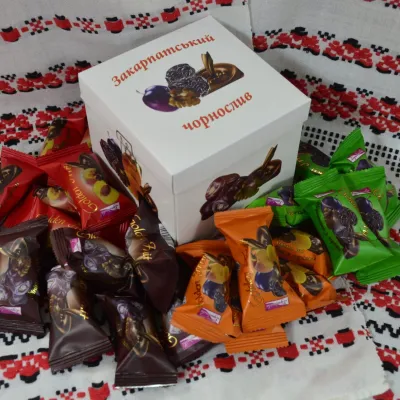 Крафтові виробникиСолодощі «Golden Fruit», БуштиноБуштиноменше 1 км від центруGolden Fruit — кондитерське виробництво в Буштині на Тячівщині, яке з 2006 року робить цукерки з сухофруктів і волоського горіха в шоколадній глазурі.
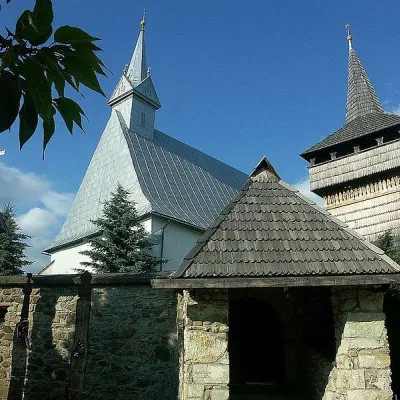 ЦеркваРеформаторська церква, ВишковоВишково4,5 км від центруРеформатська церква - пам'ятка архітектури місцевого значення у селищі міського типу Вишково Хустського району Закарпатської області.
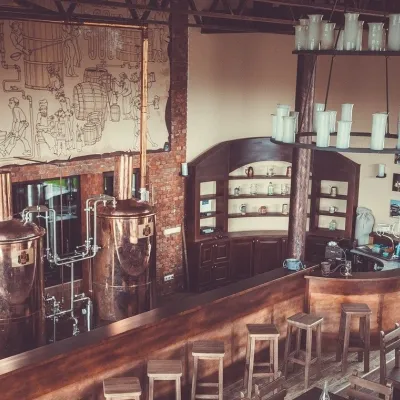 Пиво й пивоварніПивоварня «Kibler» у комплексі PUBLO, ВишковоВишково5,2 км від центруПивоварня «Kibler» — власна броварня готельно-ресторанного комплексу PUBLO у Вишковому на Хустщині. Мідні варильні котли стоять просто в залі, за барною стійкою, тож...
 Крафтові виробникиМінеральні води «ВАП Шаяни», ВишковоВишково5,8 км від центру«ВАП Шаяни» — завод мінеральних вод у старовинному селищі Вишково над Тисою, за кілька кілометрів від відомого курорту Шаян.
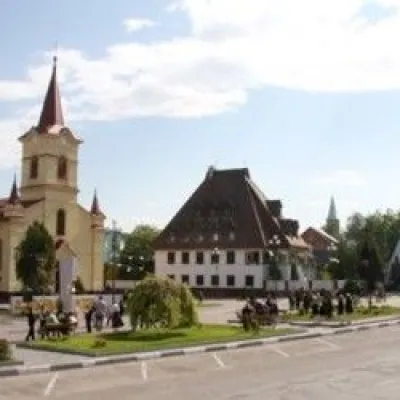 АрхітектураКостел Святого Стефана (Іштвана), ТячівТячів7,8 км від центруРимо-католицький костел святого Короля Іштвана (Стефана) зведено в 1780 році. Годинник на вежі костелу - не справжній, а намальований.
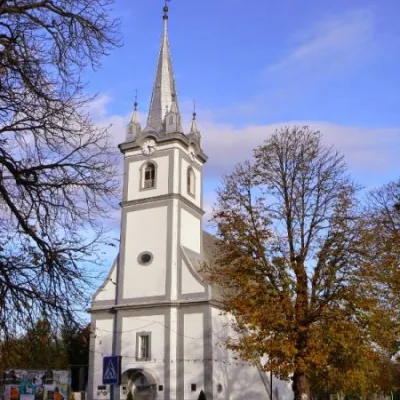 АрхітектураРеформаторський костел, ТячівТячів7,9 км від центруРеформатська церква - пам'ятка архітектури національного значення у місті Тячів Закарпатської області.
Крафт поруч
Усі крафтові місця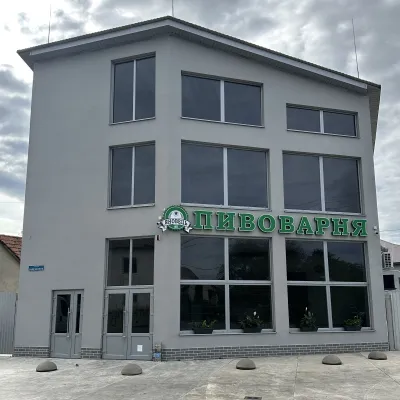 Пиво й пивоварніПивоварня «Яновець», ТячівТячів8,3 км від центруПивоварня «Яновець» — невелика міська броварня з власним магазином у Тячеві, на вулиці Залізничній, неподалік залізничної станції.
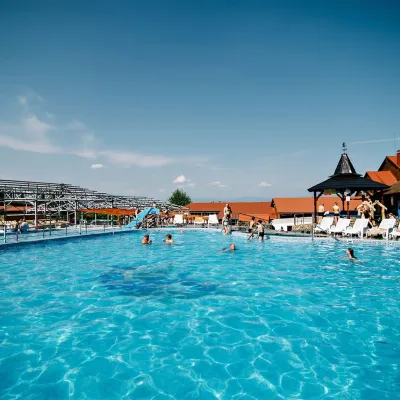 Аквапарки й термальні басейниТермальний комплекс «Теплі води», ВелятиноВелятино16 км від центруТермальний комплекс «Теплі води» у Велятині — один із найвідоміших на Закарпатті басейнових комплексів, куди приїжджають на день, щоб поплавати в теплій мінеральній...
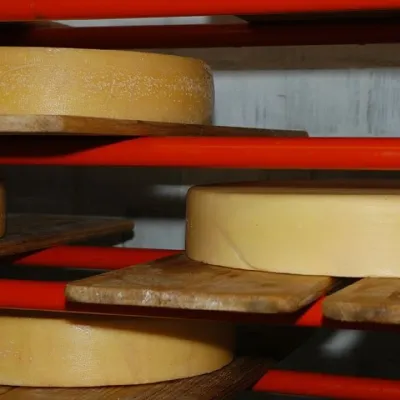 Сироварні та полониниСелиська сироварня, Нижнє СелищеНижнє Селище17 км від центруСелиська сироварня в селі Нижнє Селище на Хустщині — одне з тих місць, з яких почалася сучасна історія крафтового сиру в Україні.
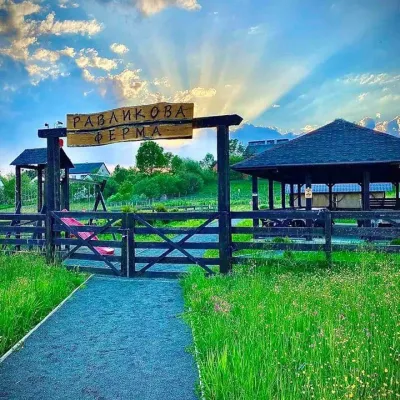 ЕкофермиРавликова ферма, Нижнє СелищеНижнє Селище17 км від центруРавликова ферма в Нижньому Селищі — одна з перших равликових ферм в Україні і перша на Закарпатті. Вона працює з 2017 року в селі під Хустом, яке давно має репутацію...
 Крафтові виробникиПекарня-кондитерська «Селиські тістечка», Нижнє СелищеНижнє Селище17 км від центру«Селиські тістечка» (Selyski Bakery) — родинна пекарня-кондитерська в селі Нижнє Селище на Хустщині. Її розвиває місцева підприємиця Діана Губаль, а сам заклад стоїть...
 Крафтові виробникиПасічне господарство «Мед Карпат», ХустХуст20 км від центру«Мед Карпат» — родинне пасічне господарство Паппів із Хуста з понад сорокарічною історією. Перша бджолина сім'я з'явилася в родини наприкінці серпня 1980 року — її...
Де зупинитися
Готелі, садиби й котеджі в Bushtyno та околицях.
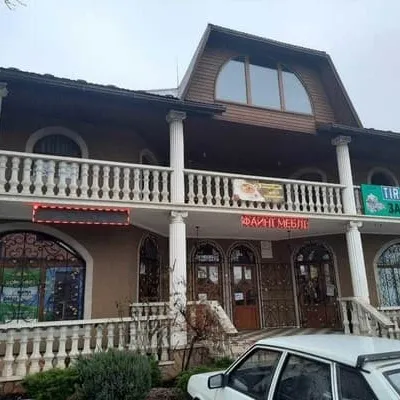 ГотельСадибаТячівменше 1 км від центруГотель "Садиба" розташований в центрі селища Буштино, в 5 км від міста Тячів. Гостям пропонується проживання в двомісних і тримісних номерах.Поруч: Реформаторська церква 4,9 кмКостел Святого Стефана 7,2 км1 маршрутвід 1 060 грн за ніч
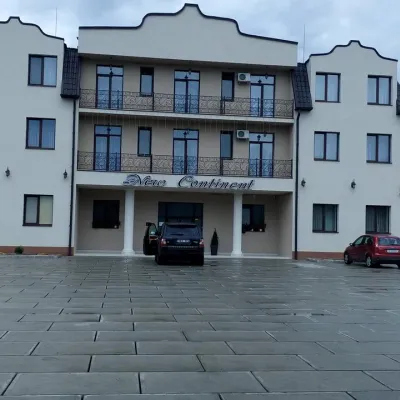 ГотельГотель "Новий континент" БуштиноБуштино2,5 км від центруПарковкаWi‑FiПоруч: Костел Святого Стефана 5,4 кмРеформаторська церква 6,7 км1 маршрут
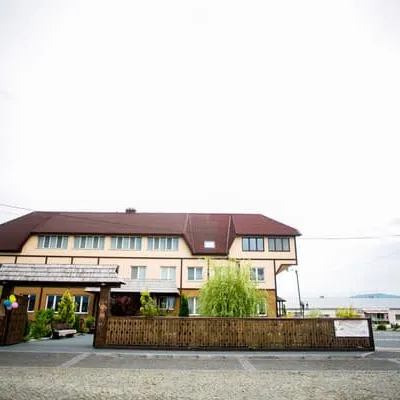 ГотельТюльпан Хуст3,7 км від центруБасейнПоруч: Реформаторська церква 1,1 кмСвято-Миколаївський храм 8,3 км1 маршрутвід 1 200 грн за ніч
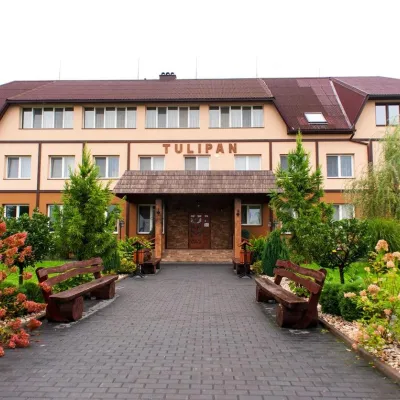 ГотельГотель "Тюльпан" ВишковоВишково4 км від центруБасейнМангалКухняПоруч: Реформаторська церква 800 мСвято-Миколаївський храм 8,1 км1 маршрут
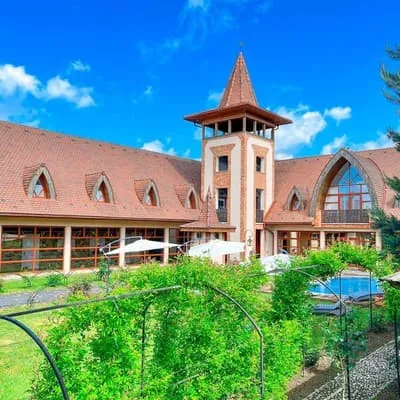 ГотельPubloХуст4,4 км від центруБасейнСаунаПоруч: Реформаторська церква 2,9 км1 маршрутвід 3 000 грн за ніч
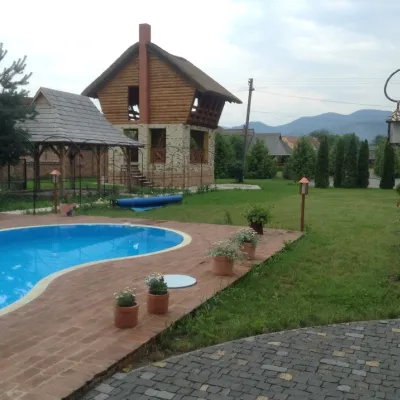 ГотельСпа-готель "Publo" ВишковоВишково5,3 км від центруЧанБасейнСаунаПоруч: Реформаторська церква 900 мСвято-Миколаївський храм 6,7 км
Маршрути поруч
Всі маршрути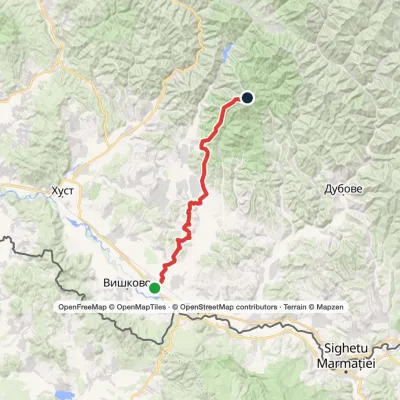
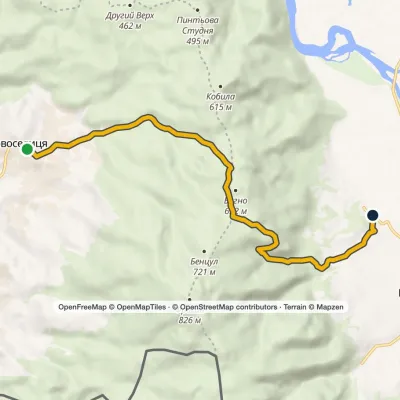
Вершини поруч
Всі вершини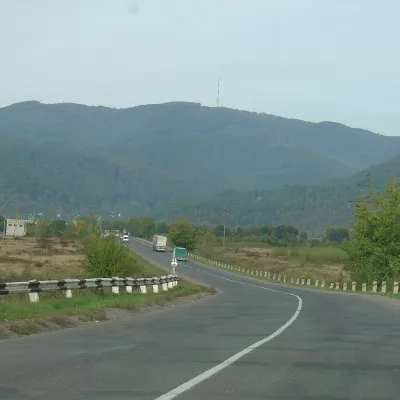 ВершинаГора ТупийІмстичововисота 878 м · масив Вулканічні Карпати30 км від центруТупий — найвища вершина однойменного масиву, що є частиною Вулканічного хребта Українських Карпат. Вона розташована на межі колишніх Хустського та Іршавського районів...
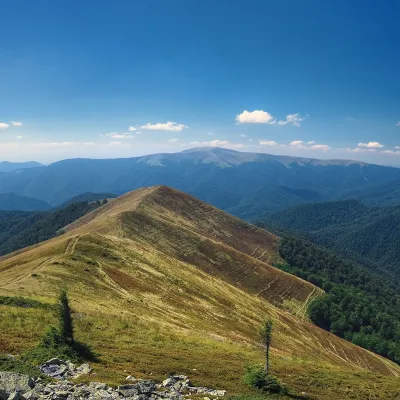 ВершинаГора МанчулВільшанивисота 1 501 м · масив Боржава33 км від центру1 маршрут на вершинуГора Манчул (інші назви – гора Менчул, Полонина Манчул) – 1501-метрова вершина в Українських Карпатах.
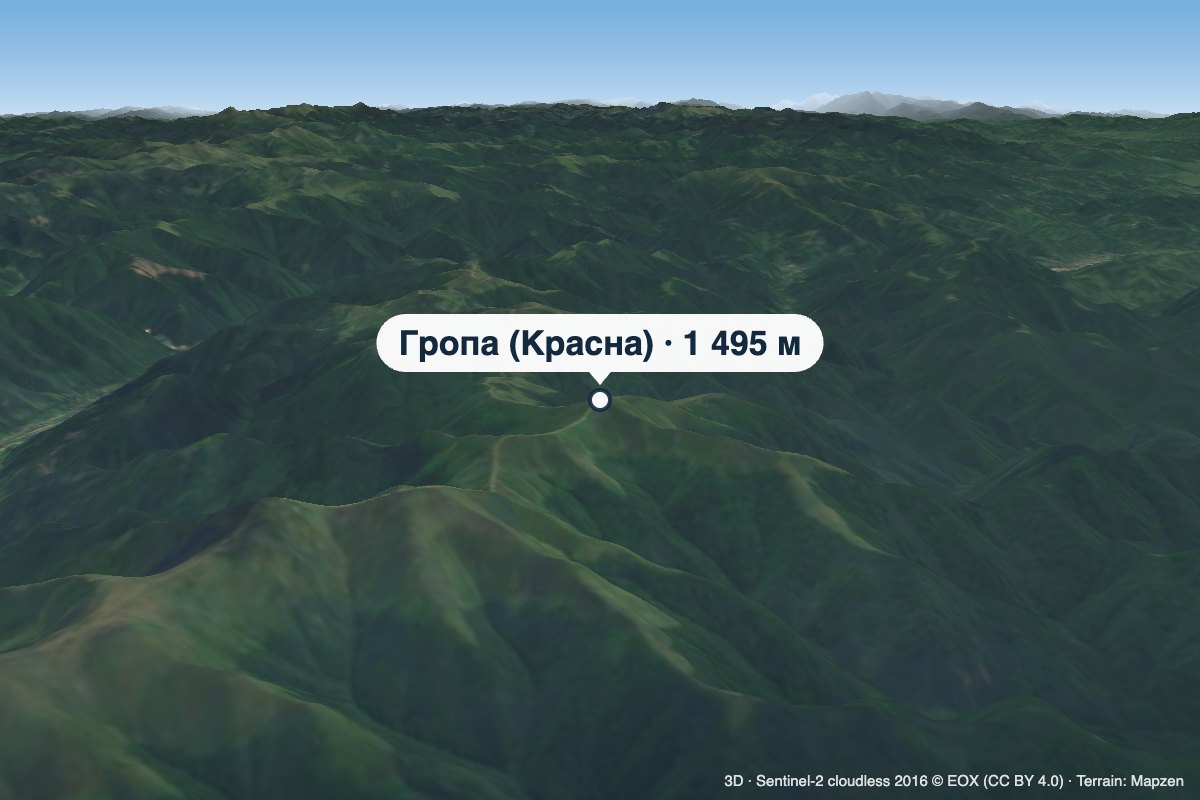 ВершинаГора Гропа (Красна)Руська Мокрависота 1 495 м40 км від центруГропа — вершина заввишки 1495 м у центральній частині головного гребеня Полонини Красної, у Тячівському районі Закарпатської області.
