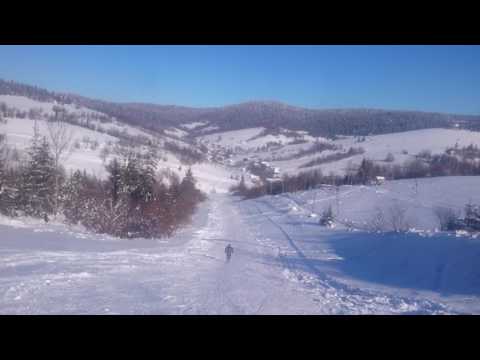
If you don't know the village of Verkhniy Studenyi yet,
book your accommodation and plan your vacation in the Carpathians. There is everything for cognitive, sporting and simple relaxation. Verkhniy Studenyi is a village in Ukraine, in the Transcarpathian region,
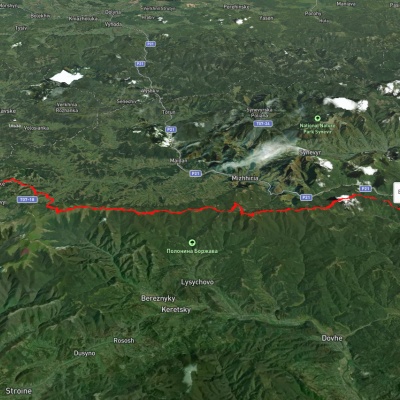
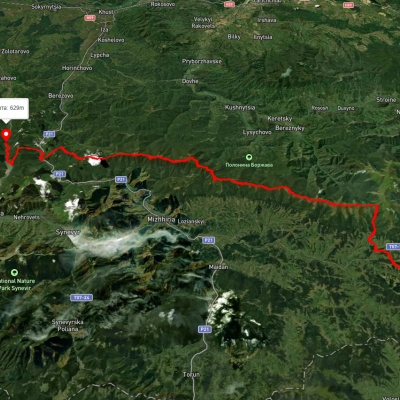
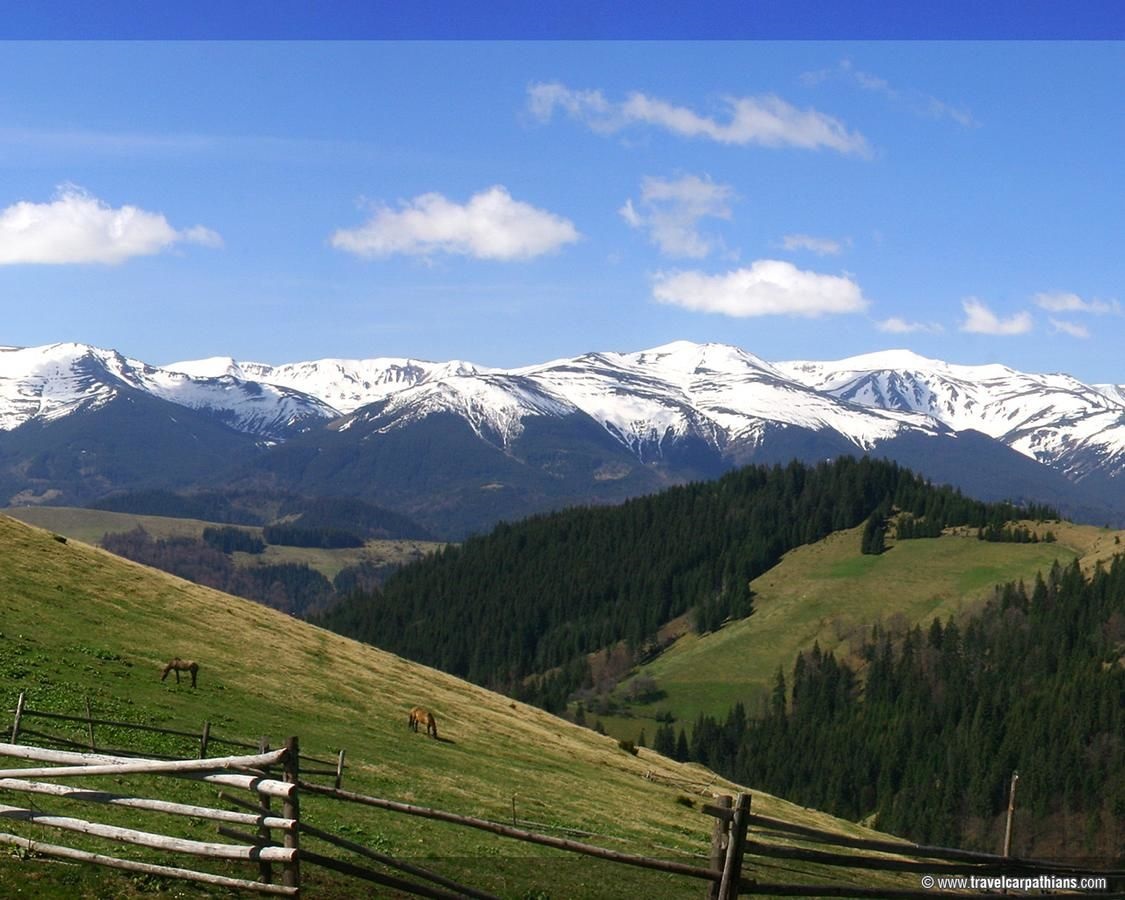
Mizhhiria district, which was founded, according to local legends, by peasants who fled from Galicia. Located in the Borzhava mountain valleys, Verkhniy Studenyi is part of the
Zakarpattia resort area, which includes the towns of
Podobovets and
Pylypets, located within 17 km of the Carpathian tourist area.
There are several legends about the origin of the village's name. One of them says that the first settler was Studen, and the name of the village came from his surname. According to the second legend, Studen was named after rebels who drank cold (iced) water from a local well (now called Dovbushov's Well). The third legend says that when the Tatars attacked our region, their outpost was located in the village of Pylypets. The Tatars captured a very beautiful captive who became the concubine of the warlord, but the beautiful captive fell in love with another man, with whom they escaped to the edge of the village of Studenyi, to the Prypir tract (they stopped and settled there), where the settlement of Studenyi began. According to the stories of old-timers, specially fortified hiding places or castles were used to fight against the Tatars. This is evidenced by the name of one of the village's peaks, Zamok, which is located in the western part of the village.
The first written mention of Verkhnii Studenii dates back to 1612 as Hideghpathak or Ztudina, and in 1653 as Hydeghpathak, the founders of the village were the Lipchei and Dovhai families. According to legend, the first settlers were people who moved from the lowland regions of Zakarpattia. The archives of the Mukachevo Greek Catholic diocese contain information that in January 1657, Prince George Rakovci II of Transylvania with a 40,000-strong army was in Studen, from where he crossed to Galicia through Novoselytsia and Pryslip in deep snow to win the Polish royal crown. While Prince Rakowiec was fighting in Poland for the Polish crown.
Emilian Mustiyanovych wrote about the settlement under the watershed Carpathian ridge in his 1926 Monthly Calendar (pp. 70-71): "Studenie is one of the largest villages of our diocese of Mukachevo, stretching for 14 kilometers, with three churches, three curates, and three churchmen." The village was different from the others in that it was inhabited by large households, several families, often not even related. The surrounding lands, or rather forests, belonged to Hungarian and Austrian magnates - Urmeze, Dovhay, Lipcha, Teleki.
During the revolution of 1848-1849 in Austria-Hungary, the disgruntled local population plundered the landowners' and church economies, for which both (Upper and Lower) villages were subjected to brutal punitive actions by the imperial troops. They were assisted in this by the troops of the Russian Empire, which Nicholas I sent to suppress the Hungarian revolution at the request of the emperor.
Then there were several waves of emigration, the rule of the Czechoslovak government, World War II and the Hungarian occupation, and the Soviet Union.
In Verkhnii Studenne, there is a monument of sacred wooden architecture, the Church of St. Nicholas and the bell tower, dating back to the 17th century: "This church is the only classical Boikos church preserved in the Transcarpathian Boikos region
(Volovets and most of Mizhhiria district). It is dated by an inscription on the log house (1804). Before the alterations, the church was indescribably beautiful and had the ancient purity of the Boyko style. All the spruce log cabins are rectangular, pyramidal with creases on top, also rectangular in plan, not octagonal, as in later churches of the Galician Boykivshchyna; the tops over the narthex and nave have five divisions, and over the altar - four. Archaic elements include a porch on columns that surrounds the narthex on three sides (now, unfortunately, glazed), twin windows, and tent-like endings to the tops (only the central top ends in a dome). Unfortunately, in the early 1920s the church was covered with tin (organized by Vasyl Furdyanyk, who brought money from America and brought tinsmiths from
Mukachevo), and recently a side room was added to the altar. The wooden bell tower that stands near the church is also covered with tin."
The village is located near ski resorts:
Pylypets 9.5 km,
Podobovets 12.7 km,
Izky 11.2 km. In addition, for winter recreation, the resort has 4 trails for beginners with a length of 400 to 1200 meters and an altitude difference of 160 to 250 meters. The slopes are too easy for professionals. There are 4 lifts (3 drags and 1 cable car). You can stay in
the Edelweiss ski complex or in the private sector. There is a ski equipment rental shop and instructors are available. The Adrenaline sports complex offers evening skiing.
You can taste delicious Transcarpathian dishes in cafes and kolybas located at the foot of the ski lifts. In addition to skiing and snowboarding, you can go sledding and snowmobiling. There is a disco, sauna, table tennis, and billiards.
The resort is popular throughout the year, as its remoteness from megacities provides excellent opportunities for green tourism, cycling, and walks in the woods. Each of the ski resorts offers interesting excursions to the Carpathians and bus tours to local natural and architectural monuments.
Nyzhnistudenyi village council Nyzhniy Studenyi village, 360 +38 (03146) 2-93-20
Mountain Search and Rescue Service Mizhhiria village, 16/12 T. Shevchenko str. +38 (03146) 2-23-45, +38 (097) 847-60-41
Nearest towns: Mizhhirya 31 km, Mukacheve 96.2 km, Uzhhorod 130 km, Lviv 154 km, Ivano-Frankivsk 157 km.
You can get to the resort by train to Volovets station, and then by bus or minibus to Verkhnye Studenne. You can also take a bus from
Uzhhorod or
Mizhhiria to the Beskyd bus stop.