Transcarpathian meteorite "Knyahynya"
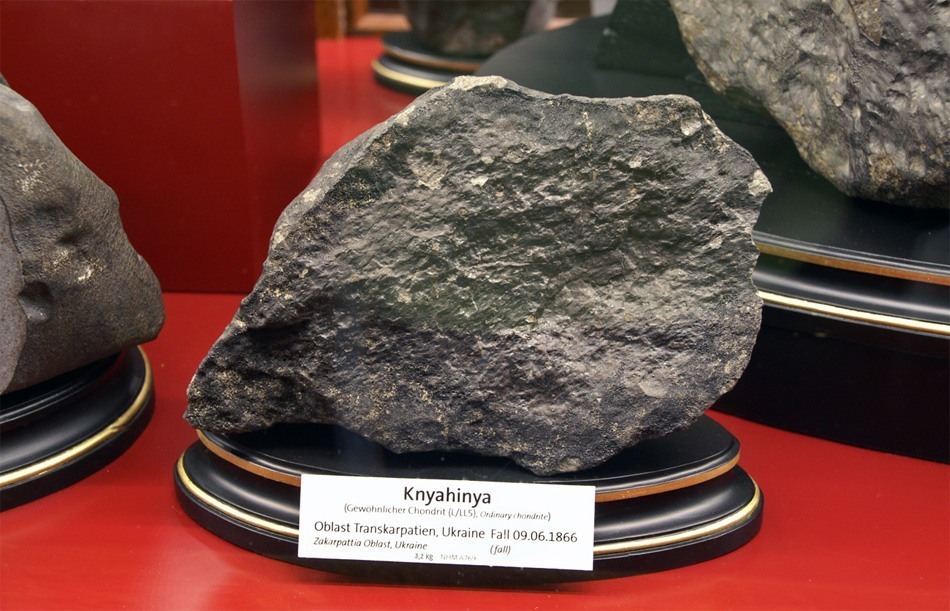
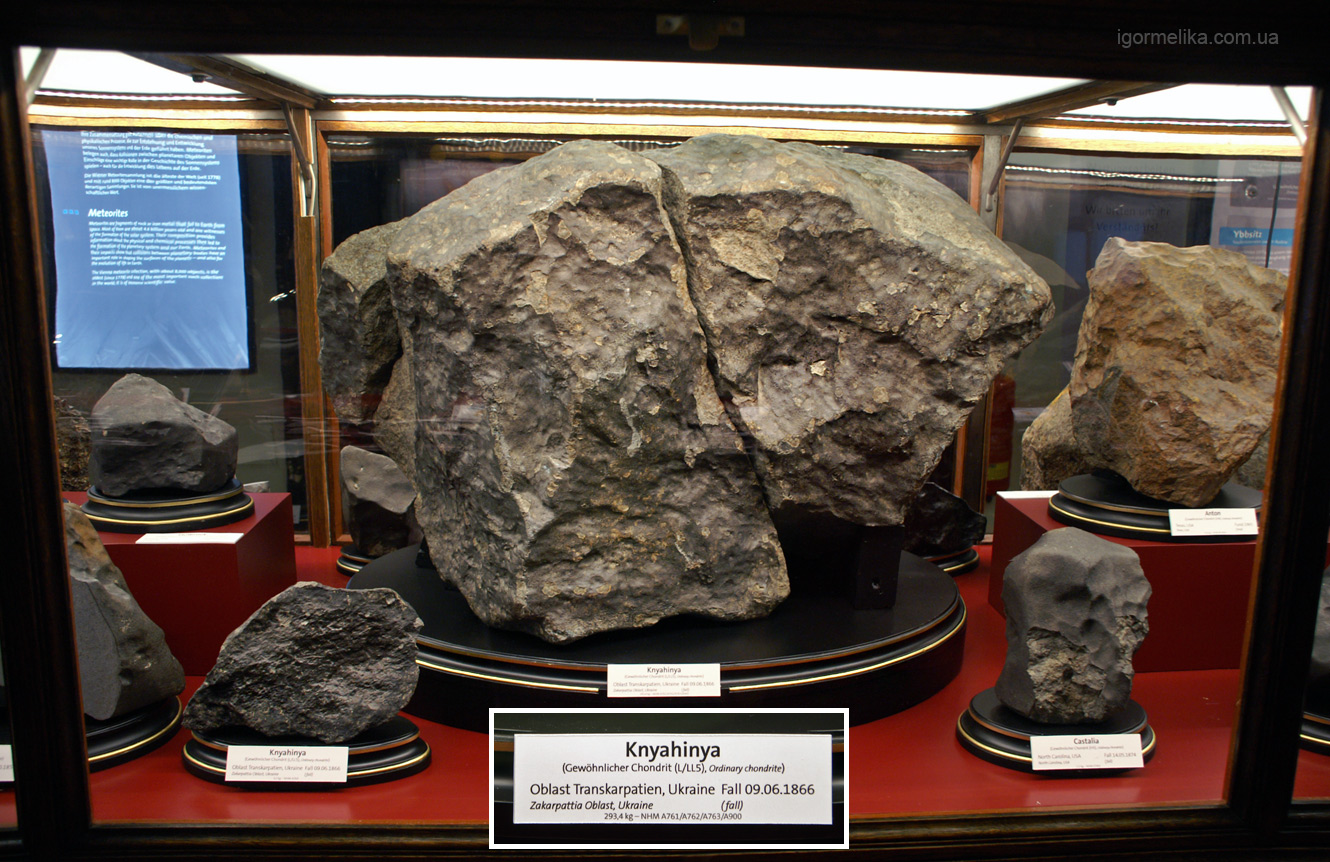
Knyahynya is a stone meteorite (chondrite, group LL5) weighing over 500 kilograms. It is the largest meteorite found in Europe in recent history. When it passed through the dense layers of the atmosphere, it was visible as a bright bolide over the territory of modern Slovakia, the cities of Liptovsky Mikulas, Šaryš, Zemplín and Presov. After traveling about two hundred kilometers, at about 17:00 on June 9, 1866, it exploded at an altitude of 40 km above the village of Kniahynya (Ukraine, Zakarpattia region, Velykyi Bereznyi district), breaking into more than 1200 pieces, causing a short-lived meteor shower. The fragments covered a large area within a radius of 5 km. The bulk of the meteorite body (presumably the nucleus), weighing 279,766 grams, landed eight kilometers from the village of Knyahynya, on the slope of Mount Stinka (1078 m) in the Chorni Mlaki tract.
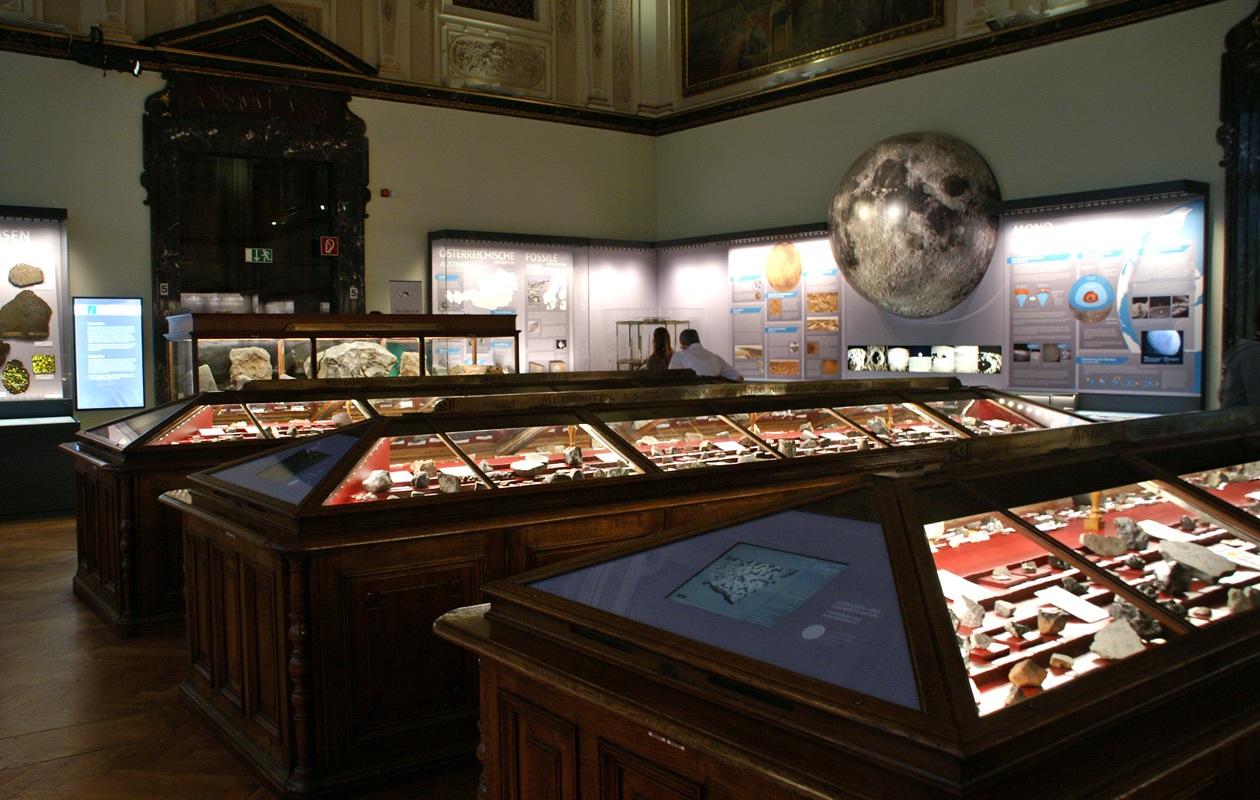
A few days later, this fragment was found by Vasyl Kryvianyk, a resident of Knyahynya village, at a depth of about 2 meters. When it fell, the core broke into two almost identical pieces weighing 141833 and 137933 grams, and another piece weighing 2350 grams broke off from the last piece. Soon after, Velykyi Bereznyi forester Anton Pokornyi learned about the discovery. According to him, he bought the meteorite from Kryvianyk "for two oxen, which he chose himself." Subsequently, Pokornyi himself resold it at a profit to the Vienna Imperial Museum (a modern museum of natural history), where the meteorite is still stored today.
In December 2009, old archival documents revealed new data about the Princess, which indicate the significant role of this meteorite in the development of the panspermia hypothesis. We are talking about publications in the scientific journal Sience (1881), in the article "C. Darwin and Dr. Hahn's discovery of fossil remains of organisms in a meteorite", correspondence between Charles Darwin and German geologist Otto Hahn (not to be confused with physicist Otto Hahn). In it, in particular, the German scientist claimed that during the study of the Princess's meteorite fragments, he had discovered particles of extraterrestrial corals, parasites, and plants. The data was verified and fully confirmed by the famous zoologist Weinlander. All information about the research was published by the author in the book "Die Meteorite (crondrite) und ihre Organismen" (1880). Interested in the stories about the largest meteorite in Europe, Jules Verne himself visited the site of its fall in 1892.
The Transcarpathian TV company M-Studio made a documentary about the meteorites of the region and, in particular, about the Knyahynya meteorite. The search for the fragments is still ongoing, and a recent discovery is evidenced by a lot at an online auction by a resident of Berehove-a piece weighing 164 grams and priced at $4,500.
How to get to the meteorite crash site
There are two routes to the Chorni Mlaky tract: from the village of Knyahynya or from the village of Stuzhytsia. The latter is a little shorter - only 5 km on foot in one direction. Near the bridge in the village of Stuzhytsia is the beginning of the route. Then you should walk along the Stuzhychanka river to the Pidzvonyi tract, along the road through the field to the forest. At the edge of the forest, you can make a stop to drink mineral water (there is a rest area near the spring).
Behind the spring, the trail bends to the right and leads to the Paporotni tract. There are centuries-old beech forests around, as well as sycamores, ash trees, white firs, and spruce trees. You need to walk about 1.5 km through the tract to another spring. Behind it, a path leads to the Chorni Mlaki tract to the right.
Directly in Stuzhytsia, it is worth visiting the centuries-old oaks, some of the oldest trees in Ukraine. According to various estimates, the trees are between 1,100 and 1,300 years old. Depending on the weather conditions and physical fitness, a walk from Stuzhytsia to Chorni Mlaky can take from 3 to 5 hours. The total length of the route is about 10 km.
From the village of Knyahynya, the walk to the meteorite crash site is about 8 km. In order not to go down the same path, you can return not to the village, but on the road to the tourist center "Dubovyi Hai". Why is this route attractive? The trail to the Chorni Mlaky tract passes karst caves on the slopes of the Stinka massif, and the local beech and sycamore forests are one of the natural treasures not only of Zakarpattia, but of the whole country!
So, right after the village of Knyahynya, turn left - the route is marked, look for blue markings on the trees. The trail goes uphill, passing through the fields, from which you can clearly see the Stinku ridge and the Knyahynytsia mountain.
Video
 Зроблено в Україні. Найбільший європейський метеорит, який впав в Україні24 Канал
Location on the map
Comments
Places to stay nearby
All stays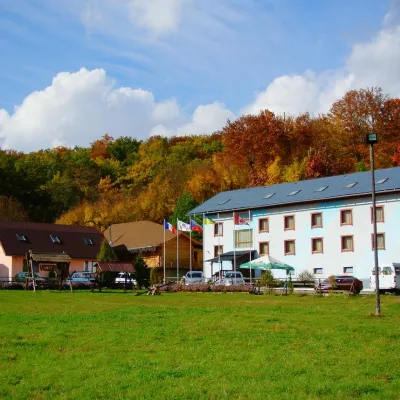 HotelHotel Complex "Klub Visson"Kostryna4.7 km from Transcarpathian meteorite "Knyahynya"PoolSaunaSPANearby: Mt Judah Top 4.2 kmMt Yavirnyk 5.1 km15 trails
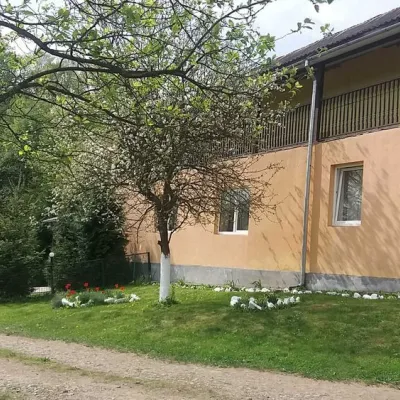 HomesteadHomestead "Ulich"Velykyi Bereznyi district6.8 km from Transcarpathian meteorite "Knyahynya"PoolSaunaNearby: Mt Judah Top 6.6 kmMt Yavirnyk 8.1 km4 trails
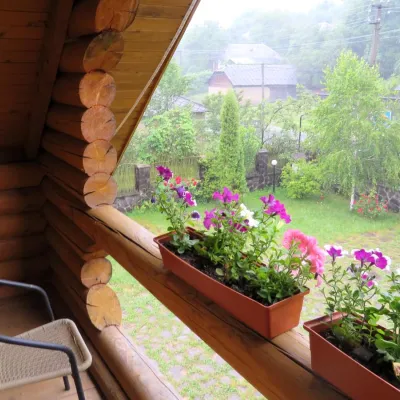 HotelMini-Hotel "Verkhovynskyi Dvir" KostrynaKostryna7.2 km from Transcarpathian meteorite "Knyahynya"SaunaBBQKitchenNearby: Mt Judah Top 5.4 kmMt Yavirnyk 5.6 km12 trails
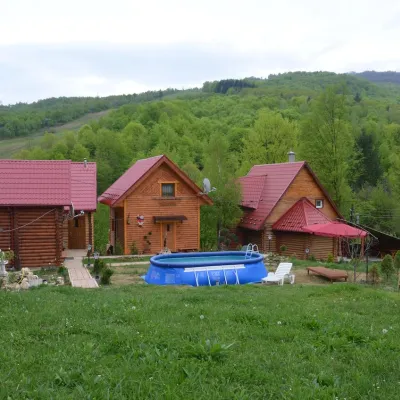 HomesteadPrivate Homestead "Teremok" VyshkaVyshka12 km from Transcarpathian meteorite "Knyahynya"PoolSaunaFireplaceNearby: Mt Krasiia 1.5 kmMt Yavirnyk 8.7 km4 trails
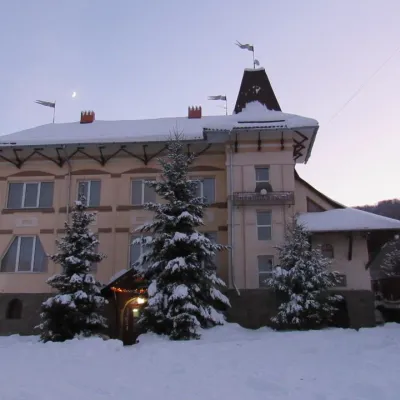 HotelHotel "Perlyna Krasyi" VyshkaVyshka12 km from Transcarpathian meteorite "Knyahynya"SaunaParkingWi‑FiNearby: Mt Krasiia 2.1 kmMt Yavirnyk 9.7 km2 trails
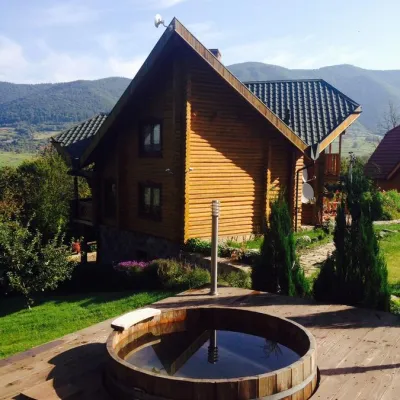 HomesteadHomestead "Ertash" VyshkaVyshka12 km from Transcarpathian meteorite "Knyahynya"PoolSaunaBreakfastNearby: Mt Krasiia 2.1 kmMt Yavirnyk 9.8 km2 trails
Trails nearby
All trails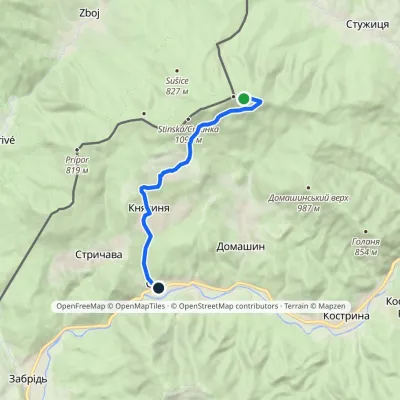 EasyOne-dayMarkedMount Stinka Sil villageElevation profile256–1 030 m9.6 kmascent 10 m≈ 2.5 h walkingunder 1 km from Transcarpathian meteorite "Knyahynya"
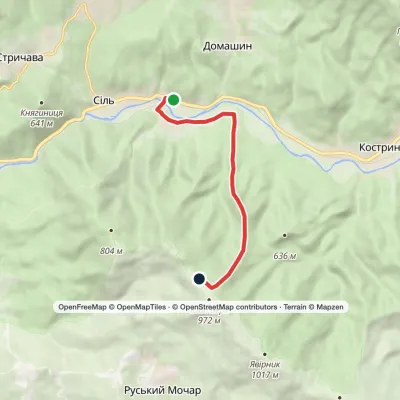 EasyOne-daySil village Mount YavirnykElevation profile253–934 m6.8 kmascent 694 m≈ 3 h walking2.7 km from Transcarpathian meteorite "Knyahynya"
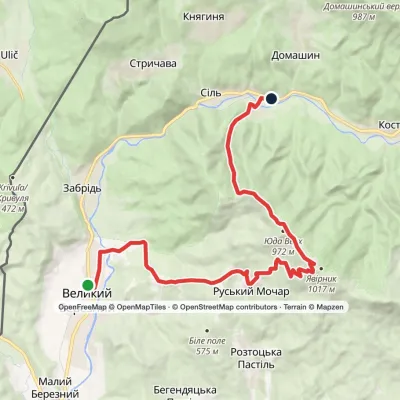 ModerateTwo-dayVelykyi Bereznyi to Sil villagevia Ruskyi Mochar village, Mount YavirnykElevation profile203–1 013 m20 kmascent 886 m≈ 7 h walking3 km from Transcarpathian meteorite "Knyahynya"
Nearby attractions
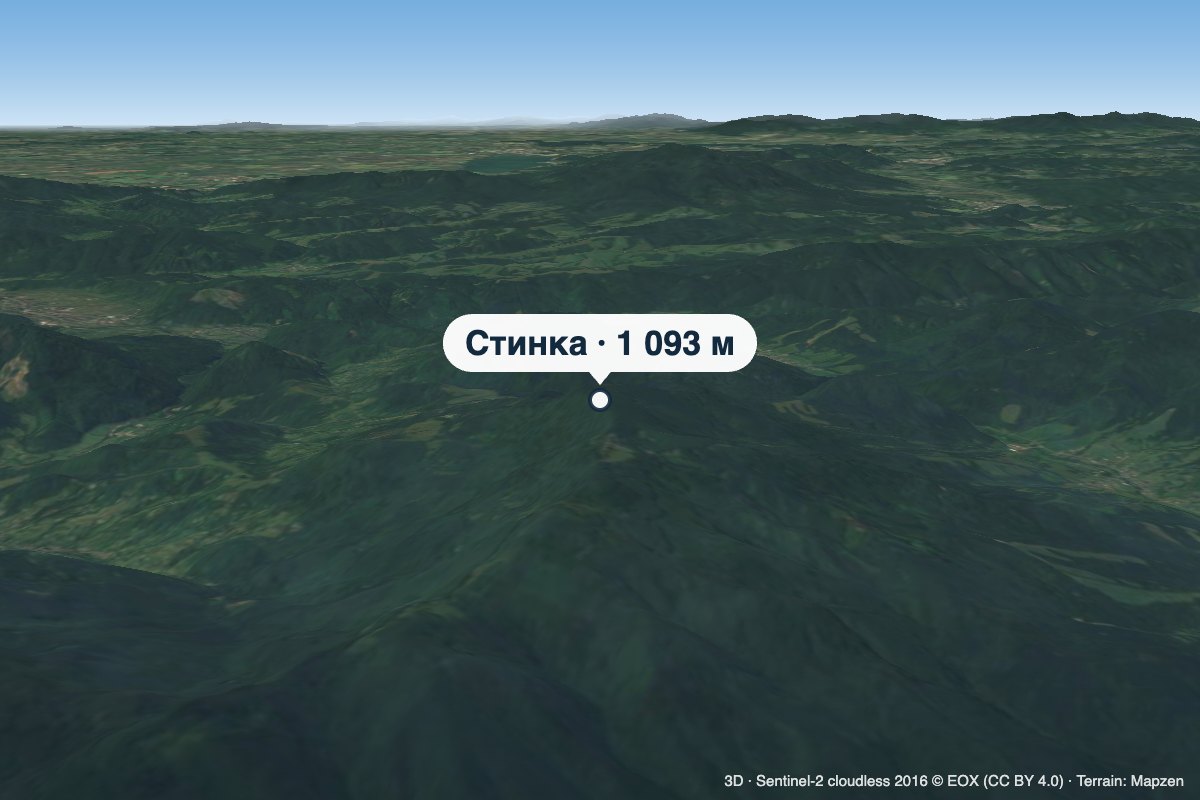 PeakMount StynkaKniahyniaaltitude 1 093 m3.1 km from Transcarpathian meteorite "Knyahynya"Stynka (Slovak: Stinská) is a 1,093 m mountain on the state border between Ukraine and Slovakia, in the Bukovské vrchy, part of the Bieszczady.
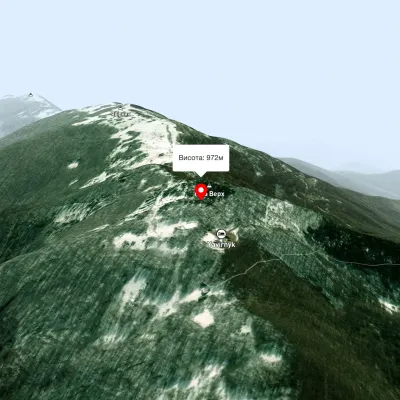 PeakMount Judah TopRuskyi Mocharaltitude 972 m7 km from Transcarpathian meteorite "Knyahynya"The top of Mount Judah Top is 972 meters above sea level. The nearest settlements are: Ruskyi Mochar (2.1 km), Sil (4.2 km), Roztotska Pastil (4.3 km).
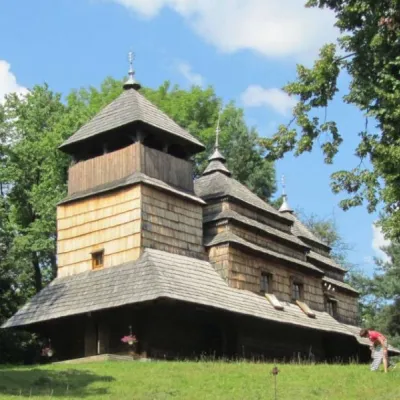 ChurchChurch of the Intercession of the Holy Virgin, KostrynaKostrynska Roztoka8.8 km from Transcarpathian meteorite "Knyahynya"Church of the Intercession of the Holy Virgin - a wooden church located in the village of Kostryna, in the Velykobereznyanskyi district of the Zakarpattia region, a...
Craft nearby
All craft places Eco farmsCsiga-Biga “Merry Stable” Farm, Velykyi BereznyiVelykyi Bereznyi10 km from Transcarpathian meteorite "Knyahynya"Vesela Stainia Csiga-Biga (“The Merry Stable”) is a small family farm in the town of Velykyi Bereznyi in the Uzh valley.
 Eco farmsLavandova Hora lavender farm, PerechynPerechyn26 km from Transcarpathian meteorite "Knyahynya"Lavandova Hora (“Lavender Hill”) is a family farm on the edge of Perechyn that in just a few years has turned an ordinary hill above the town into one of the most...
 Craft producersKarpaty Nasolodzhuisia juices & jams, PerechynPerechyn27 km from Transcarpathian meteorite "Knyahynya"“Karpaty Nasolodzhuisia” (Carpathians, Enjoy) is a brand of the company Dzherela Karpat from Perechyn, a small town in the Uzh valley.
 Honey & meaderiesTurianskyi Med Apiary, Turia RemetaTuri Remety30 km from Transcarpathian meteorite "Knyahynya"Turianskyi Med («Turia Honey») is the family apiary of Myroslava and Viktor Minkovych in Turia Remeta, a picturesque village in the Turia river valley near Perechyn.
 Cheese dairies & pasturesTurianskyi Dvir Estate Cheese Dairy, Turia PolianaTurya Polyana39 km from Transcarpathian meteorite "Knyahynya"Turianskyi Dvir is a private country estate on the shore of a mountain lake in the village of Turia Poliana in the Perechyn area, about 50 kilometres from Uzhhorod.
 Craft beer & breweriesYuber Brewery & Pub, UzhhorodUzhhorod40 km from Transcarpathian meteorite "Knyahynya"Yuber Brewery & Pub is one of Uzhhorod's youngest and most modern craft breweries. It operates at the Praha hotel and restaurant complex at 38A Verkhovynska Street, on...