Ploska
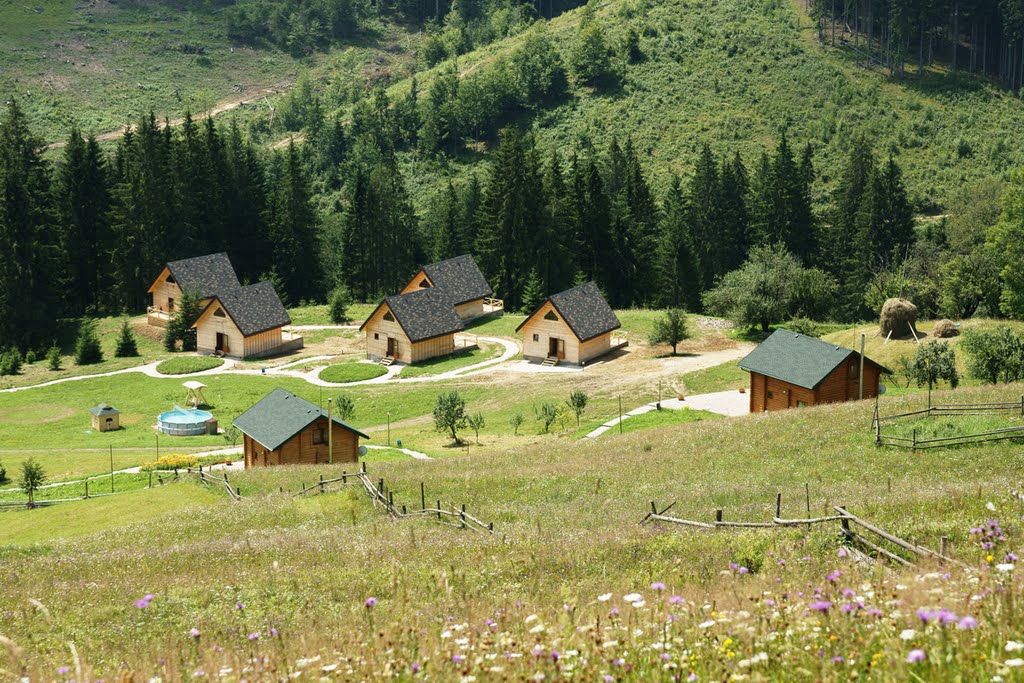
Ploska is a village in Ukraine, in the Putyla district of the Chernivtsi region. The population is 827 people. The local self-government body is the Ploska village council. Not far from the village there is a forest reserve "Borgynya".
The village of Ploska, located between Putyla and Selyatyn, has been known since 1707. The small settlement stretches along one street, which serpentine rises to the Ploskivskyi Pass (970 meters).
Above the village rises Mount Hovdia, about which the locals tell the following legend. They say that once upon a time a rich but very stingy man named Hovdia lived in Ploska. Even for his own dinner, he ordered to serve only a crust of bread and a jug of water. One night there was a severe thunderstorm, and the two brothers, soaked to the skin, knocked on the gate of Govdya's house to take shelter from the rain. Govdia, fearing the possible costs, ordered the dogs to attack the brothers. Bitten and soaked, the brothers hid under a tree and said: "May you, miser, never see good things! Just as we are dying here under the lightning, so be it to you!" In no time, Govda's house was engulfed in flames, and in the morning the villagers saw a mountain on the site of Govda's house, which they named Govda. Later, a small lake was formed on the top of the mountain - Govdi's tears for his lost wealth.
At the beginning of the twentieth century, there were two clauses near Ploska that were very important for the transportation of timber from the Bukovyna Carpathians. The first was called Anton's, the second Ferdinand's.
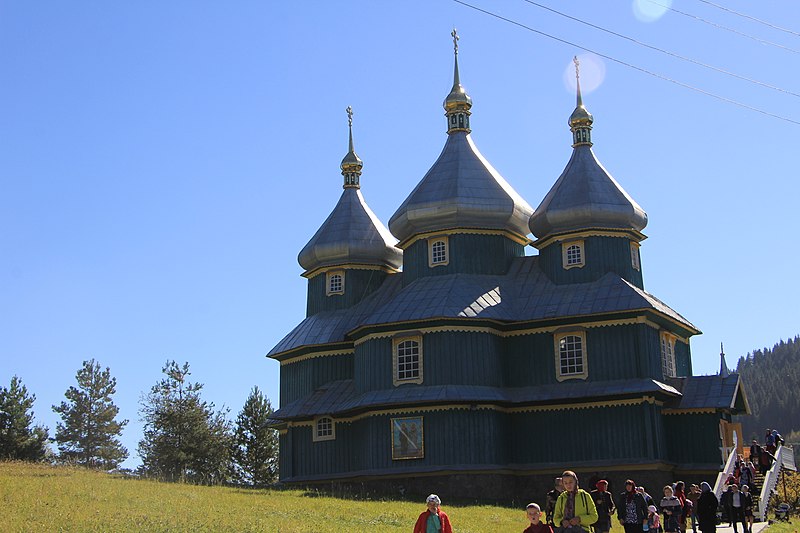
Behind the serpentine road in front of the pass, the Church of the Holy Apostles Peter and Paul stands on a hill with its green tree. Built in 1877, it is a typical Bukovyna wooden three-domed church.
A path leads from the village to the village of Vypchyna in the western direction. The village is located at an altitude of 1100 meters above sea level and is the highest settlement in the Ukrainian Carpathians. There is no road to this village, as well as to a large number of settlements in the Putylshchyna region.
We recommend visiting in Ploska


Trails nearby Ploska
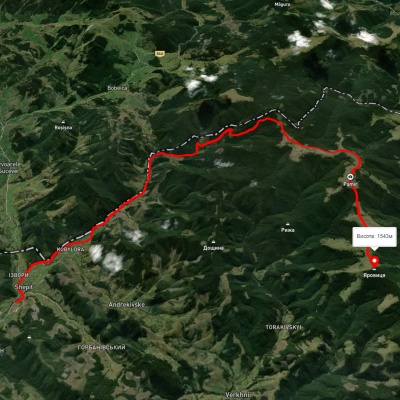
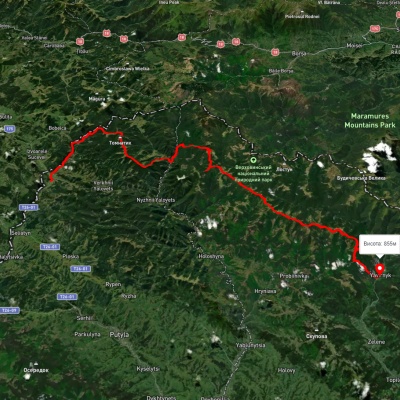
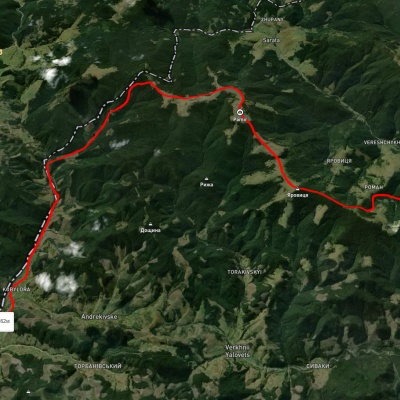
Which hiking trails pass through or near Ploska?
We suggest these hiking trails through or near Ploska: Shepit village – Mount Yarovytsia, Shepit village, via Mount Yarovytsia, Mount Pnivie and Mount Masnyi Pryslip to Shybene village, Nyzhnii Yalovets village, via Mount Yarovytsia to Shypit village, Verkhnii Yalovets village – Mount Yarovytsia, Verkhnii Yalovets village – Mount Yarovytsia, Bukovynske Oko