Lukavtsi
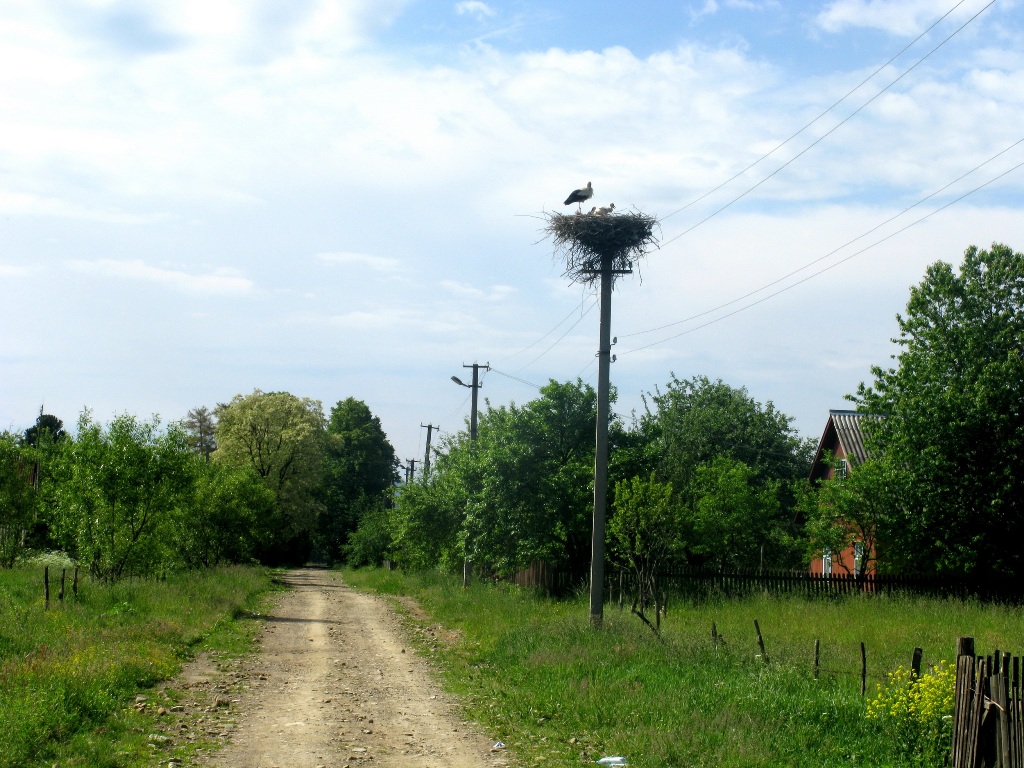
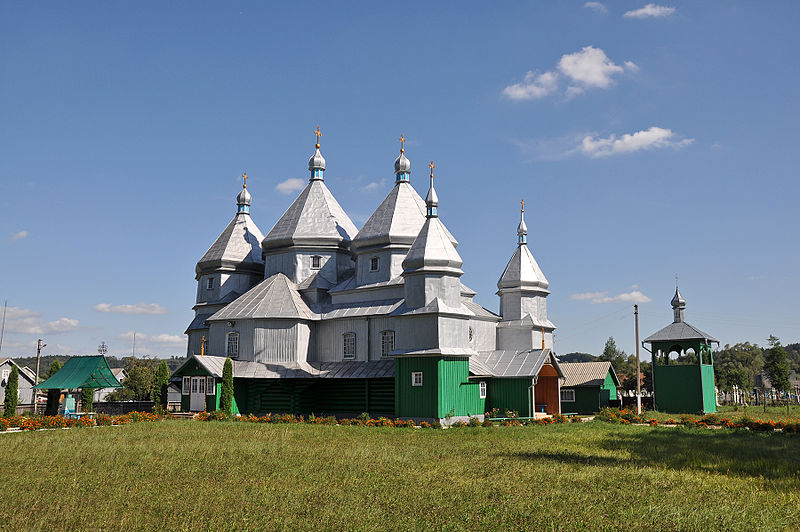
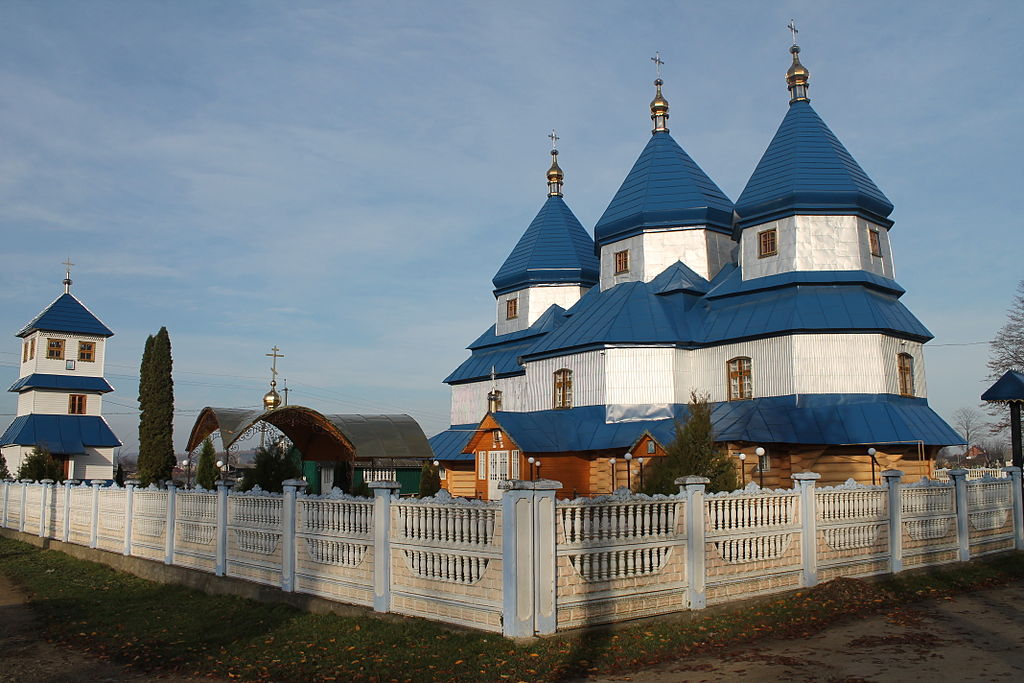
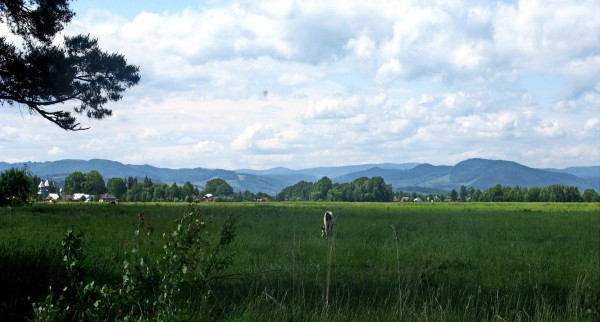
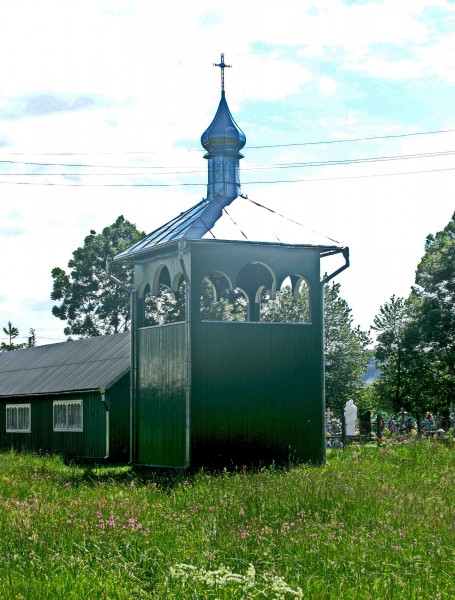
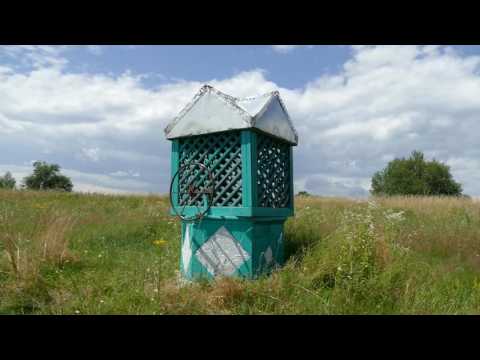
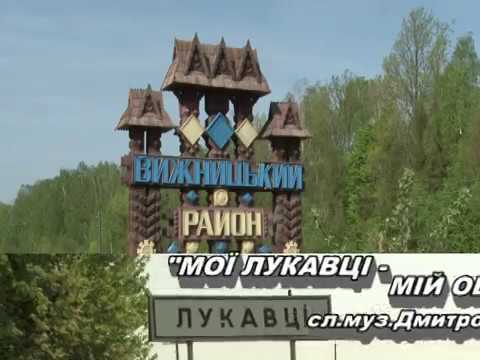
The village of Lukavtsi in the Vyzhnytsia district is located on the left bank of the Seret River. It is conditionally divided into Upper and Lower Lukavtsi. The population is about 2600 people. The distance to the city of Chernivtsi is 56 km. The traditional folk crafts are artistic embroidery.
The first mention in the documents dates back to 1428 in the charter of the Moldovan ruler Oleksandr Dobryi. In the Austrian period, Lipovans, a religious group of Old Believers who migrated from the northern part of European Russia after the split in the Russian Orthodox Church caused by the reforms of Patriarch Nikon in 1651, settled in the village and its surroundings. In the Soviet period, the village was called Lukivtsi (it can still be seen on some maps), but in 2005 the Verkhovna Rada returned the historical name.
A well-known public figure Mykola Vasylko (1868-1924)was born in Lukavtsi, and for 20 years he represented his region as a member of the Bukovyna Regional Sejm and the Austro-Hungarian Parliament. During the First World War, Mykola Vasylko was one of the co-founders and a member of the Main Ukrainian Council and the General Ukrainian Council. After the war, he carried out diplomatic missions as a representative of the ZUNR and the UPR in Austria, Switzerland, and Germany.
There is an old legend about the village of Lukavtsi, which stretches on both sides of the Siret River, located between the villages of Zhadova and Berehomet.
A long time ago, a wealthy noble family moved to this region. They had a son named Stan. They decided to settle in these places and hired people to work in the forests, look after the cattle, and do various household chores. Among them was a beautiful Turkish woman named Khidra. Stan fell in love with the beauty, but their family did not give them the blessing of marriage. So the two lovers decided to leave their parents and chose a place on the bank of a river and founded their own estate. The family had two children: Levko and Odarka. One day during a walk, Khidra went to the river to get drunk because it was a hot day, but she never returned. For a long time, Stan searched for his beloved, exclaiming: "Where are you, my Hidra?" Stan named the river Mihydra with a tributary Mihoderka in honor of his daughter Odarka. He gave his son Levko a part of the village, which was named Levkovo, and the village itself was named Lukavtsi, as Stan was from the Lukavetskyi family.
The village of Lukavtsi is one of the oldest settlements in Bukovyna. The first written mention of the village dates back to February 16, 1428. The first people started living here about five to six thousand years ago. The territory of the village, as well as the entire region, has been part of Kyivan Rus since the ninth century. When the great state began to disintegrate into a number of independent principalities, the land became part of the Terebovlia principality in the second half of the 11th century, the Galician principality in the middle of the 12th century, and from the end of the 12th to the middle of the 14th century it was part of the Galicia-Volyn state. From 1241 to 1349, the region was under the yoke of the Golden Horde. Later, it was captured by Hungarian feudal lords, then by Wallachian voivodes. Moldavian rulers issued a large number of charters announcing gifts or sales of landed property. It was during this period that the village of Lukavtsi was first documented.
In 1514, Bukovyna became vassalage to Turkey. It was one of the most difficult periods in the history of Bukovyna. After the next Russo-Turkish War (1768-1774), Bukovyna was ceded to Austria. From the reports of that time we learn that the region looked destitute. Frequent crop failures caused malnutrition. In 1806, the population of the Vyzhnytsia district was starving. At the same time, a fair was held in Sadhora, the proceeds of which went to help the starving population. During the Austrian period, Old Believers, Lipovans, Poles, and Germans settled in our village. People of many nationalities coexist peacefully, each preserving their own religion, customs and culture.
In 1816, the villagers began to seek permission and assistance from the authorities to build a school. On November 25, 1816, the community wrote a letter, signed by Vasyl Vasylko, asking for a school to be built in Lukavtsi. The First World War was a difficult test for the residents of Lukavtsi: many men were taken to war, and battles were fought right on the territory of the village.
From 1918 to 1940, the region was ruled by Romanians and subjected to forced Romanization. Many residents of Lukavtsi emigrated to America. However, the number of schools in Lukavtsi did not decrease, but education was conducted exclusively in Romanian. Old-timers I. Boichuk, I. Mykytyuk, and P. Boiko recalled that the teachers were very strict, but at the same time they understood the students: while teaching them in Romanian, they tried to explain things to the children in Ukrainian. Even today, people in the village remember with love and respect their teachers Oleksandr Tsopa, Yelyzaveta Tsopa, Mykola Taras, Karol Ptashko, Petro Prodanik (a native of the village of Lukavtsi), and Petro Isak.
A significant place in the development of schooling in the village of Lukavtsi belongs to the teacher, public and cultural figure Les Kyselitsa. On April 16, 1884, Ivan Kyselitsa's son Oleksii was born in the family. The family was large - four sons and two daughters. In this family, which was respected in the village, books and science were always honored. Of the six children, only Oleksii was educated. After graduating from the Chernivtsi Teachers' Gymnasium, he became a teacher. He began his career in the picturesque Bukovyna village of Mamaiivka. Later, he worked as an editor at the Children's Library publishing house of the Ukrainian School Society in Chernivtsi. Here, with his participation, a lot of literature is published in Ukrainian. In Chernivtsi, he was engaged in translation work. He was fluent in several languages: German, French, Romanian, and Latin.
In 1911-1922, he worked as the director of the Berehomet folk school, and also as a volunteer, in particular as the head of the Reading Room in Berehomet. From here he was taken to the fronts of the First World War. When he returned, he continued teaching, but the Romanian authorities forbade him to do what he loved. Oleksii Ivanovych was forced to take exams in Romanian in Bucharest and only then was he allowed to teach Bukovyna children. He continued his pedagogical work in his native village of Lukavtsi, where a school building had not yet been built. Children studied in rented houses. There were years when the community did not have the means to rent a building, so Oleksii Kyselitsa taught children in his own home, fostering the spirit of Ukrainianness in them. In the difficult time of persecution of everything national, he read to children the works of Ukrainian writers, celebrated Shevchenko's days. Former students, now elderly people in the village, recall the teacher's words with great gratitude and love.
From 1945 until the end of his life, he taught children German and headed the village library in V. Lukavtsi, which he created on the basis of his own library and was considered the best in the region. Oleksii Ivanovych's wife, Adelaide, from the Zybychynskyi family, who was also a teacher, kind to children, and a Ukrainian patriot, deserves a special mention. The Kyselitsa family raised three children: daughter Odarka, who later became an Honored Artist of Ukraine, and daughter Orysia, the wife of the Bukovyna poet Orest Masikevych. Their son Taras studied in Berlin (he tragically died). The entire Kyselytsia family selflessly served their native Ukraine.
In 1940, Soviet rule was established in the region. People were able to receive free medical care and education in their native language.
On July 5, 1941, our region was invaded by the troops of Nazi Romania. The second Romanian occupation (1941-1944) was even more difficult than the first. The Ukrainian population was Romanized. The Romanians took men of military age into labor units, massacred local Jews and Soviet activists. In 1944, under the onslaught of the Red Army, the settlements of the region were cleared of the enemy. The second return of Soviet rule brought repression. Nevertheless, these years still contributed to the development of education, improvement of medical care, development of industry and agriculture, and their technical equipment.
The village of Lukavtsi is famous for the fact that it is almost the only one in the region that has produced two parliamentarians in its history - Mykola Vasylko and Vasyl Bidenyi. Vasyl Tkachuk, head of the Vyzhnytsia District State Administration, and Vasyl Safroniak, head of the Putyla District State Administration, were born here and chose their career paths.
What to visit
Landmarks, museums and places of interest near Lukavtsi.
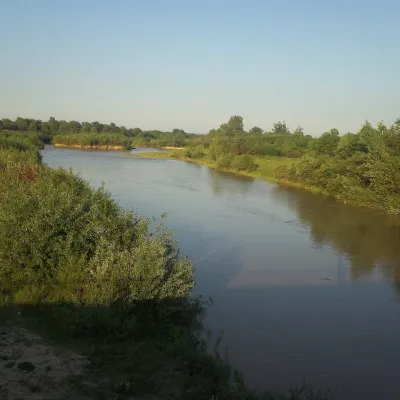 RiverSiret RiverBerehomet6.1 km from the centreThe Siret is a major Danube tributary 682 km long, but only its first 123 km lie in Ukraine. It rises on the northern slopes of Mount Oseredok near Dolishnii Shepit in...
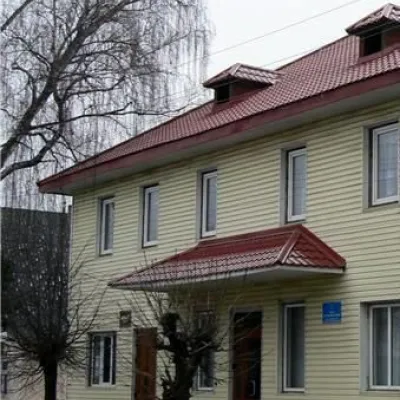 MuseumHistorical Museum, BeregometBerehomet6.1 km from the centreThe historical museum in Berehomet is one of the youngest in Bukovyna. However, in its short history, it has already become the cultural center of the village.
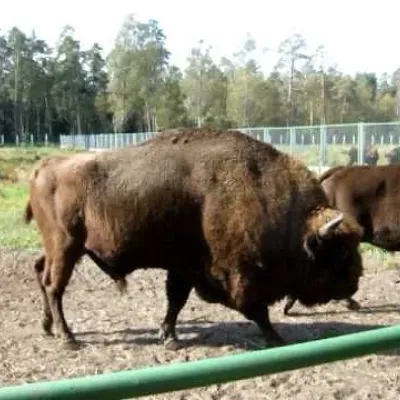 NatureBison reproduction center, BeregometBerehomet6.4 km from the centreThe bison population is being restored in Bukovyna. An environmental education and research center for the restoration of the bison population operates in the village...
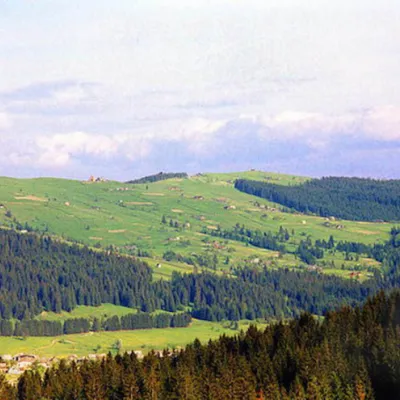 NatureNational Nature Park "Vyzhnytskyi" BerehometBerehomet7.8 km from the centreNational Nature Park "Vyzhnytskyi" was established on August 30, 1995 (Park Office: Chernivtsi Oblast, Vyzhnytskyi District, town of Berehomet, Centralna St., 27a.
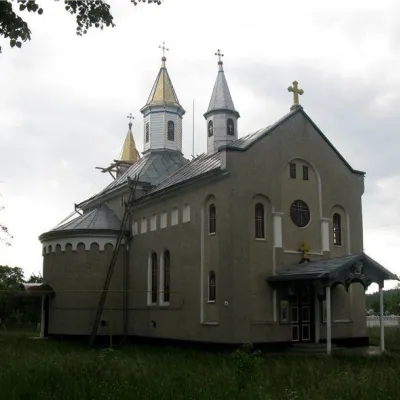 ChurchSt. Michael's Church, BerehometBerehomet8.1 km from the centreMichael's Church, directly connected to the Vasylko family. The church was built in 1888 at the expense of representatives of this famous family.
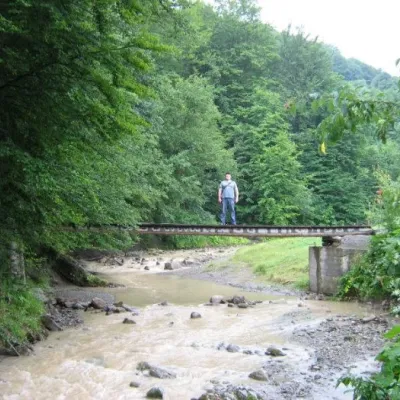 WaterfallMikva waterfallVyzhenka18 km from the centreThe Mykva Waterfall is a small but very picturesque waterfall located in the village of Vyzhenka, Chernivtsi region.
Where to stay
Hotels, guesthouses and cottages in and around Lukavtsi.
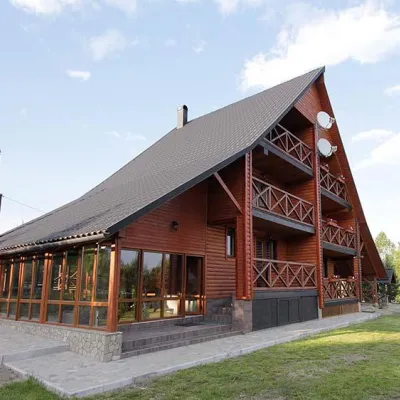 HomesteadHomestead "Guest House at Nina's" LukavtsiLukavtsiunder 1 km from the centreSaunaBBQKitchenNearby: Historical Museum 6.1 kmBison reproduction center 6.4 km
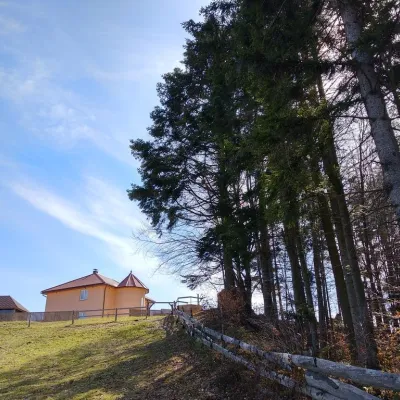 HomesteadHomestead "Valeriya" VovchynetsVovchynets4.2 km from the centreHot tubPoolSaunaNearby: Bison reproduction center 5.8 kmHistorical Museum 5.8 km
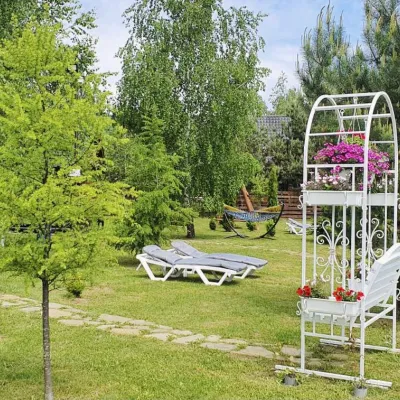 HomesteadPearl of BukovinaMyhove6.3 km from the centreBBQKitchenParking
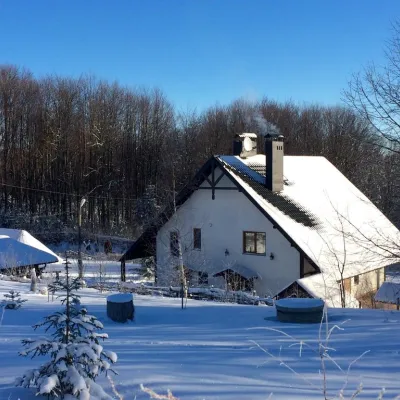 CottageCottages "Dolina Mykolaya" Myhove (pool, sauna, fishing)Myhove5.7 km from the centrePoolSaunaFireplaceNearby: Church of St. John of Suceava 5.7 kmBison reproduction center 6.7 km
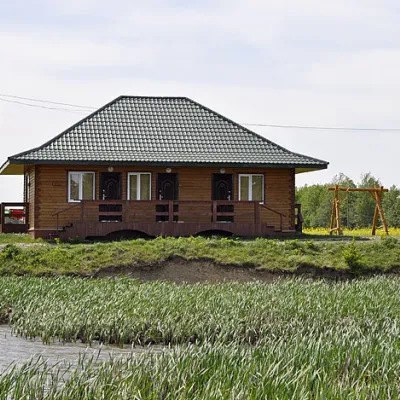 HomesteadHomestead "Rybachok" VahnivtsiVakhnivtsi6.1 km from the centreSaunaBBQKitchen
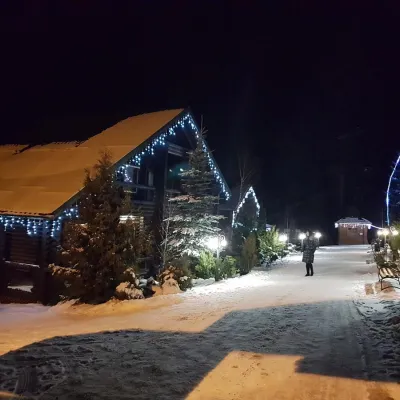 HotelHotel "Hostynny Dvir" Myhove (pool, sauna)Myhove6.1 km from the centrePoolSaunaSPANearby: Church of St. John of Suceava 3.1 kmBison reproduction center 3.9 km
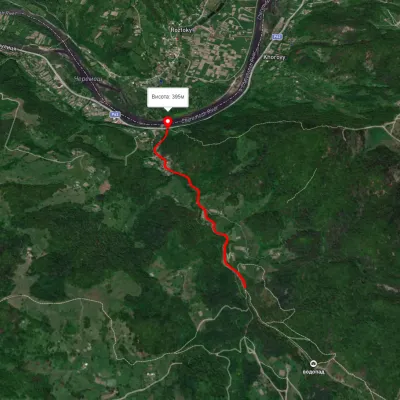
Trails nearby
All trails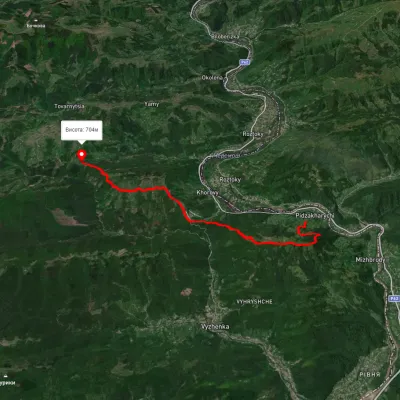
Peaks nearby
All peaks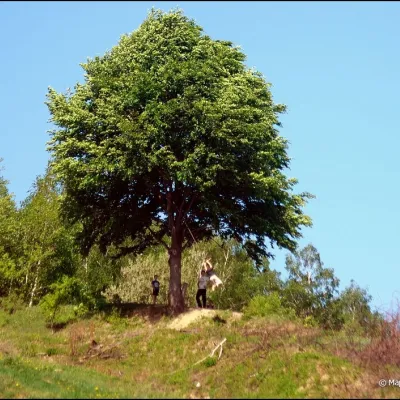 PeakMount KicheraKosivaltitude 567 m28 km from the centreThe march to Kichera is an easy walk that all tourists can do. The small length of the march allows you to take your time and just enjoy nature, eat berries, listen to...
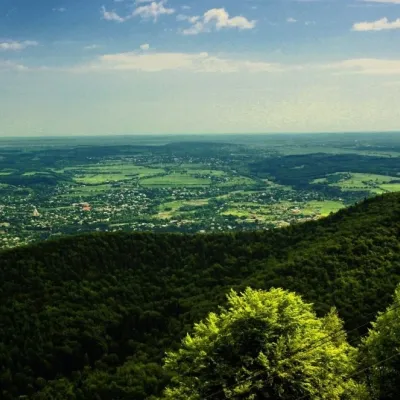 PeakMount Mykhalkova (Kosiv)Kosivaltitude 812 m28 km from the centreMount Mykhalkova (Mykhalkiv), with a height of 812 meters, is part of the Pokuttya Carpathians. The highest point of the city of Kosiv and the village of Horod.
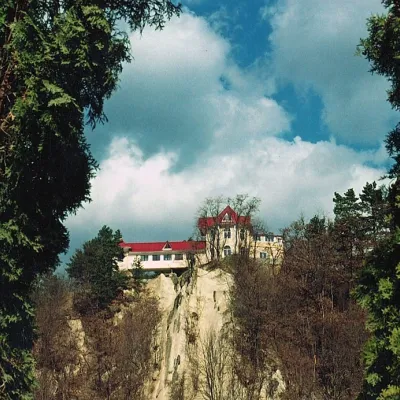 PeakCastle Hill (City)Kosivaltitude 450 m28 km from the centreThe top offers a panoramic view of the city. The mountain is home to unique black alpine pines, as well as deciduous and coniferous plantations, and white acacia...
What's nearby
Video