Cherche is a village in Opillya in the Rohatyn district of Ivano-Frankivsk region. The first written mention of the village dates back to 1435, although people lived in this place in the thirteenth century. The name of the village comes from the land on which the first monks settled, and then built their first monastery. Initially, the village was called Chernetske, but later the name was changed to the one used today.
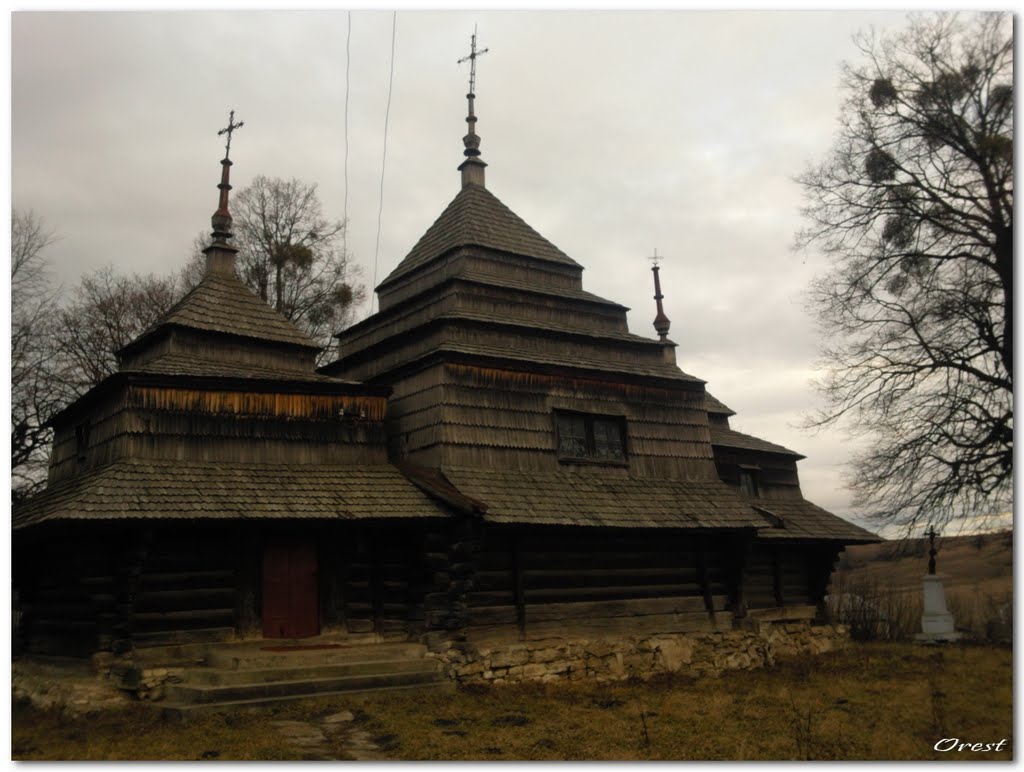
Attractions: The Church of St. Basil the Great of 1733, the Church of St. Basil the Great of 1897, the Mass grave of the UGA soldiers and the Healing Waters of Cherche.
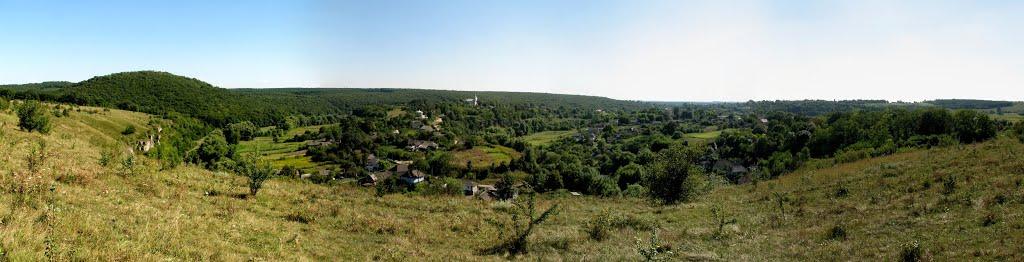
The tax register of 1515 documents a priest in the village (thus, there was already a church then) and 2 fields (about 50 hectares) of cultivated land. On June 26, 1919, a hand-to-hand battle took place near the forest of Vylin, during which the UGA drove the Poles back across the Svirzh River. The dead 8 UGA riflemen, two sergeants, and Petro Baran, a borough commander, were buried in the cemetery. The Polish gendarmerie destroyed the grave several times, and in 1944 it was destroyed by the NKVD. In 1990 it was restored. In 1939, the village was home to 1770 inhabitants (1760 Greek Catholic Ukrainians, 5 Roman Catholic Ukrainians, and 5 Jews).
In 1904, in the vicinity of Rohatyn, during military maneuvers, military doctors noticed the quality of the Cherkasy waters, but the public council at the time did not agree to their industrial exploitation. In the same year, Dr. Ivan Kurovets wrote: "Cherche has a future before it, but it still needs a large contribution of money and labor. I submit my remarks for the attention of the board. The council should build a Jewish pavilion with a kosher kitchen for the choir Jews. This will result in a wealthy Jewish clientele flocking to Church and contributing to its development with their money." The resort was developed by the Ukrainian association Zhyvets Cherche, headed by M. Panchyshyn, in the 1930s.
The resort has been operating on the basis of sulfuric springs with sulfide waters in the village of Cherche since 1925. The balneological and mud resort of Cherche uses hydrogen sulfide, sulfate-hydrogen carbonate-calcium, and sulfate-calcium healing waters as therapeutic agents, which are used for drinking and bathing and combined with local peat mud. Here, they treat diseases of the musculoskeletal system, peripheral nervous system, including various types of polyarthritis, sciatica, neuritis, hypertension, and gynecological diseases.
The sulfide (hydrogen sulfide) waters of the Cherche balneological resort are unique therapeutic mineral waters in Ivano-Frankivsk region. The mineral water of the Cherche resort contains a biologically active compound, hydrogen sulfide, in concentrations of up to 22.6 mg/dm3 (with regulatory requirements of at least 10 mg/dm3).
Residents of the Berezhany and Rohatyn districts collected voluntary donations and in 1932 purchased a plot of land and bricks for Bohdan Lepkyi's villa. With the funds raised and the writers' savings, the house was built according to the design of Roman Hrytsai. The villa was named Bohdanivka. A wooden chapel designed by the same architect was built in the village. According to architectural researcher Vasyl Slobodian, it was one of the best Art Nouveau chapels in Galicia. After the village was turned into a Soviet resort, the chapel was destroyed.
Levko Lepkyi, Bohdan Lepkyi's brother, was one of the co-founders of the resort in Cherche and its director from 1931 to 1939. In 1930-1939, Bohdan Lepkyi rested and worked in Cherce during the vacation period, first in the Roksoliana boarding house, and from 1933 in the Bohdanivka villa. From Cherche, he visited his relative Petro Smyk (father of Dr. Roman Smyk) in the village of Zhovchiv (now Rohatyn district, Ivano-Frankivsk region), where he painted pictures and icons.
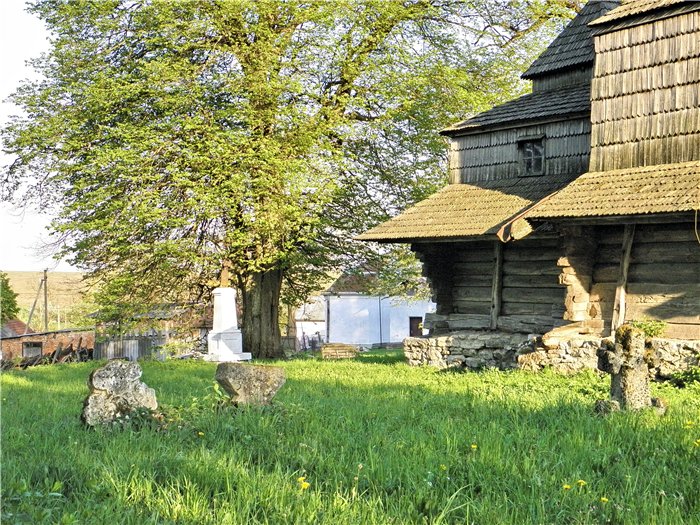
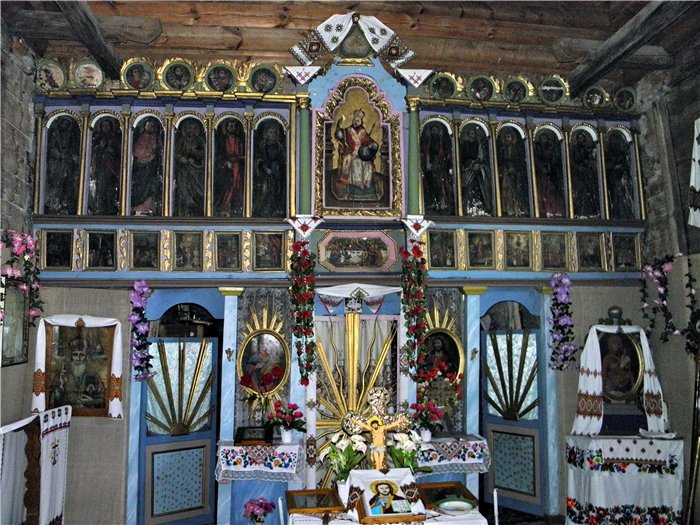
The village of Cherche, with its exquisitely beautiful wooden church of St. Basil, lies 5 kilometers northwest of Rohatyn. The Lviv-Rohatyn-Ivano-Frankivsk highway passes by the village. But the church is not located by the road. In order not to get lost for a long time, it is better to ask the locals how to get to the church. The Church of St. Basil is truly the height of wooden church perfection. The official date of construction is 1733. But I have read that the church of 1733 was moved here from another place. This is quite possible, because the church resembles Boyko churches.
We recommend visiting in Cerce


Trails nearby Cerce
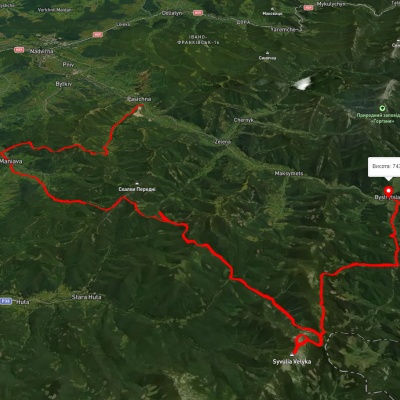
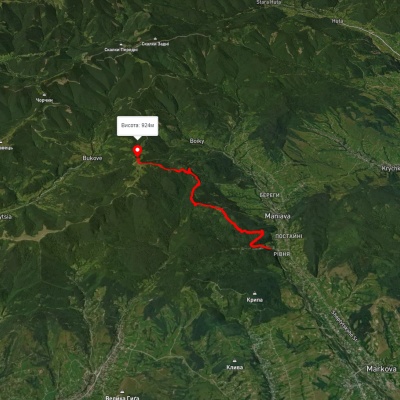
Which hiking trails pass through or near Cerce?
We suggest these hiking trails through or near Cerce: Pasichna village, via Maniava village, Maniava Waterfall and Mount Velyka Syvulia to Bystrytsia village, Maniava village - Monastyretska polonyna