Synagogue and Jewish cemetery (kirkut), Busk
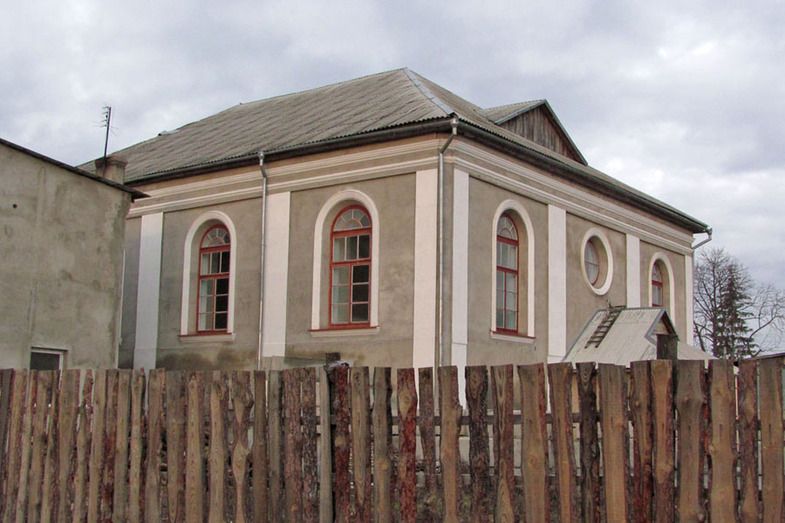
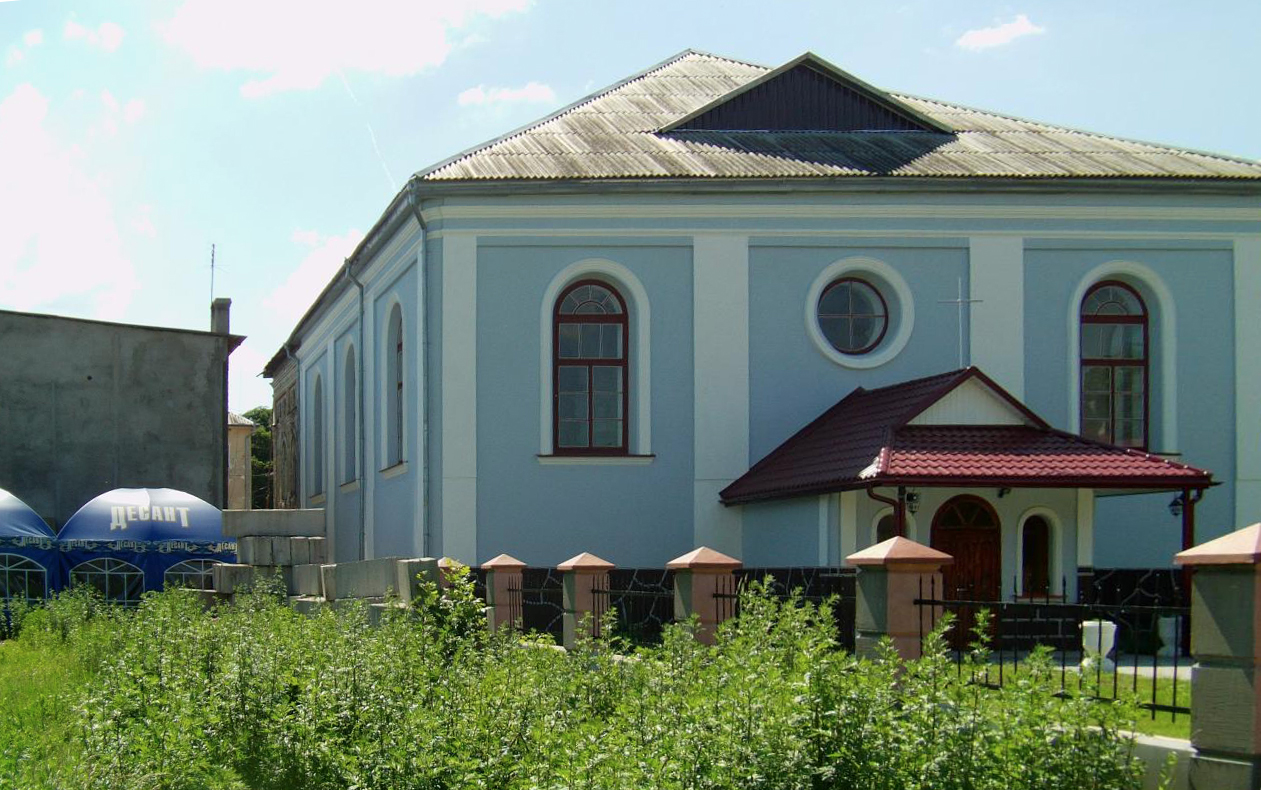
The Great Brick Synagoguein Busk, a town in the Ukrainian Lviv oblast, was built in 1842-1843 in the Baroque style and is still standing today. The synagogue is a protected cultural monument. It is located near the new Rynok Square. The building was constructed thanks to a donation from Jacob Glanzer, who also financed the Hasidic synagogue in Lviv.
Built on a rectangular plan, the synagogue has a square prayer hall. The walls, built of hewn stones, are plastered inside and out. The walls of the prayer hall were decorated with a cornice. The room is lit by two semicircular and one round window.
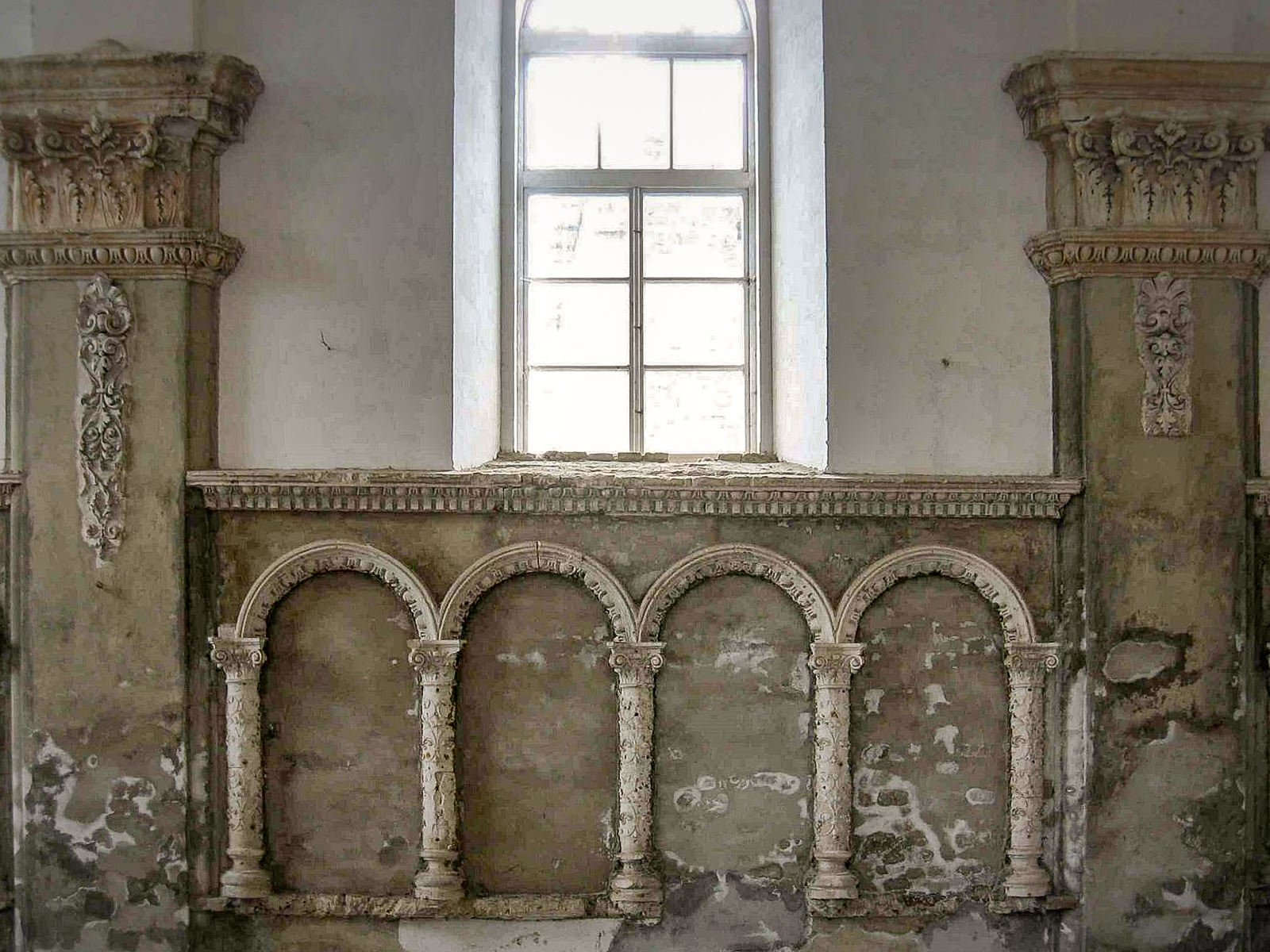
The western side is divided into two floors. On the eastern wall was a niche for the Torah, decorated with a two-story neoclassical portal topped with an archivolt. On the sides were two rows of columns with Corinthian capitals.
During World War II, elements of the synagogue's main hall's interior were used as building material.
After the Second World War, the synagogue was illegally appropriated as a building materials warehouse. During the Soviet era, the synagogue was used as a gym, later it was turned into a warehouse, and later one part of the synagogue was used for living quarters, while the other was turned into a dump. The building was rapidly deteriorating.
In the early 2000s, in order to preserve the valuable monument, it was decided to transfer the uninhabited part to the community of Evangelical Christians. Thanks to them, the building has now been partially restored. Although the layout was partially changed, the main elements of the decorations were preserved and preserved.
The Jewish community in Busk dates back to the sixteenth century. It is known that according to the 1864 census, 5297 people lived in Busk, including 1566 Jews, which was almost 35% of the city's population.
Busk has the oldest Jewish cemetery (kirkut) in Ukraine and one of the oldest in Europe, which is almost 500 years old. The kirkut itself is quite large, spread over several hills, some of which extend to residential buildings. Each Jewish headstone (matzevah) is a work of art that carries a hidden meaning. The most popular are images of various animals (lions, bears, squirrels, double-headed eagles, etc.), under which poetic epitaphs are placed, quoting texts from the Jewish holy books. The fact is that Judaism forbids depicting people. Therefore, in ancient times, the "portrait" of the deceased, his or her habits, profession, family tree, character, etc., was usually "encrypted" with various symbolic images.
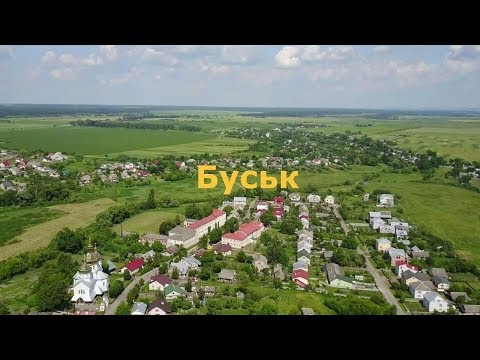
With minimal investment, Busk could be developed as a small tourist center in the Lviv region, where there is not only a Jewish cemetery, but also two old churches, a church, a synagogue, Badenyi Palace, a brewery, and a rich history.