Annunciation Church of 1587 in Kolomyia
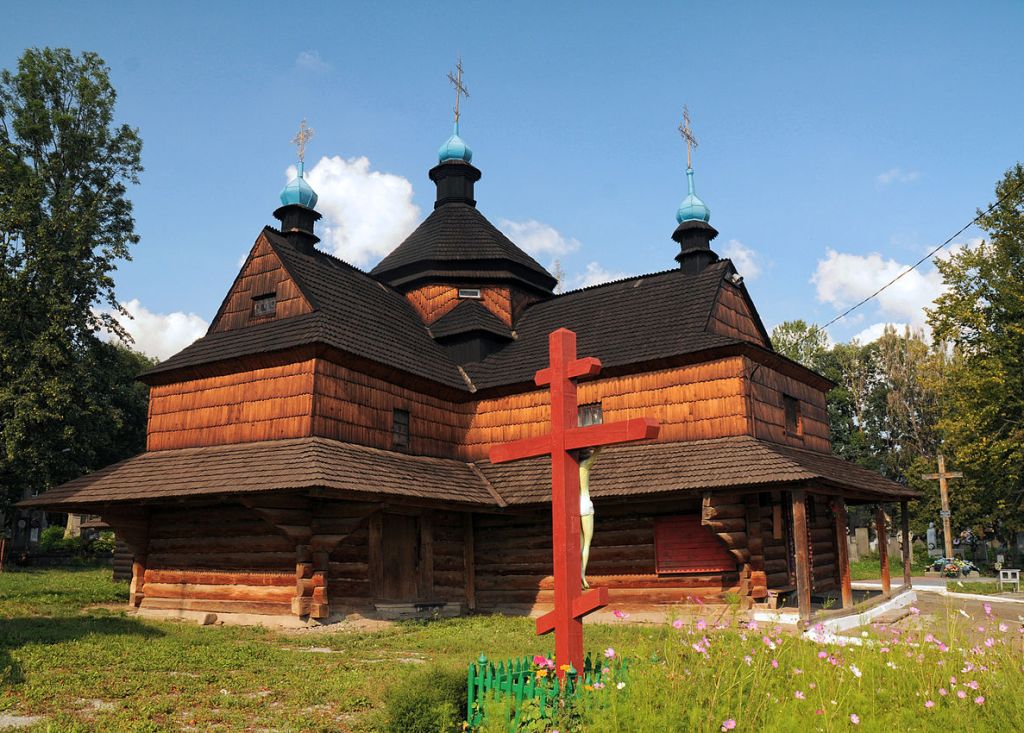
The church in Kolomyia is one of the most perfect representatives of Hutsul wooden architecture, and it is also one of the oldest among them (along with the church in Rohatyn). If you walk around its perimeter, you can see that all the facades are equivalent, carefully designed. However, it turns out that the building was not originally so cruciform. Initially, it was a three-tiered, probably one-story church, and in the eighteenth century two more rooms were added to it from the north and south, turning it into a cross church. But it was done so skillfully that it is completely invisible to the unprofessional eye.
The church looks squat, with a distinctly horizontal composition, and this effect is enhanced by the wide dome that creates a deep, even black shadow underneath (as seen in the title photo). Logvin writes that because of this, the people affectionately called the church a "mushroom," a mushroom.
The church yard is fenced off from the street and is accessed by a beautiful gate with a roof made in the Hutsul tradition. The church is open, but we did not manage to get inside.
The church is located on the outskirts of Kolomyia (it takes at least 20-30 minutes to walk from the center), in a large old cemetery. Even those who are not interested in graves will find it informative to take a walk there. It is not known by what miracle, but among the old graves and crypts there is even a tombstone of young boys, UPA soldiers (photo on the left), who died in 1944. Why wasn't it destroyed or noticed?
The complex, which consists of two wooden buildings-the Church of the Annunciation and a two-tiered bell tower located northwest of it-is located in the old city cemetery on the eastern outskirts of Kolomyia. Due to its flat terrain, it plays the role of an architectural accent in this part of the city.
The Church of the Annunciation can be considered the oldest example of a Hutsul wooden church that has survived to this day. Despite the existence of two points of view regarding the date of the church's construction (1587 and the eighteenth century), a field survey of the main architectural and structural components of the building allows us to date its construction to the end of the sixteenth century. Like most church buildings of this group, the monument is cruciform in plan, five-story, with one centrally located top. All five log cabins have a quadrangular shape and horizontally elongated proportions, which gives the building an emphasized squat character. This impression is reinforced by the arrangement of a bypass gallery-roof on curly brackets around the church, which is the most expressive horizontal accent in the three-dimensional composition of the building. The octagonal top above the central log house also emphasizes the horizontal character of the composition.
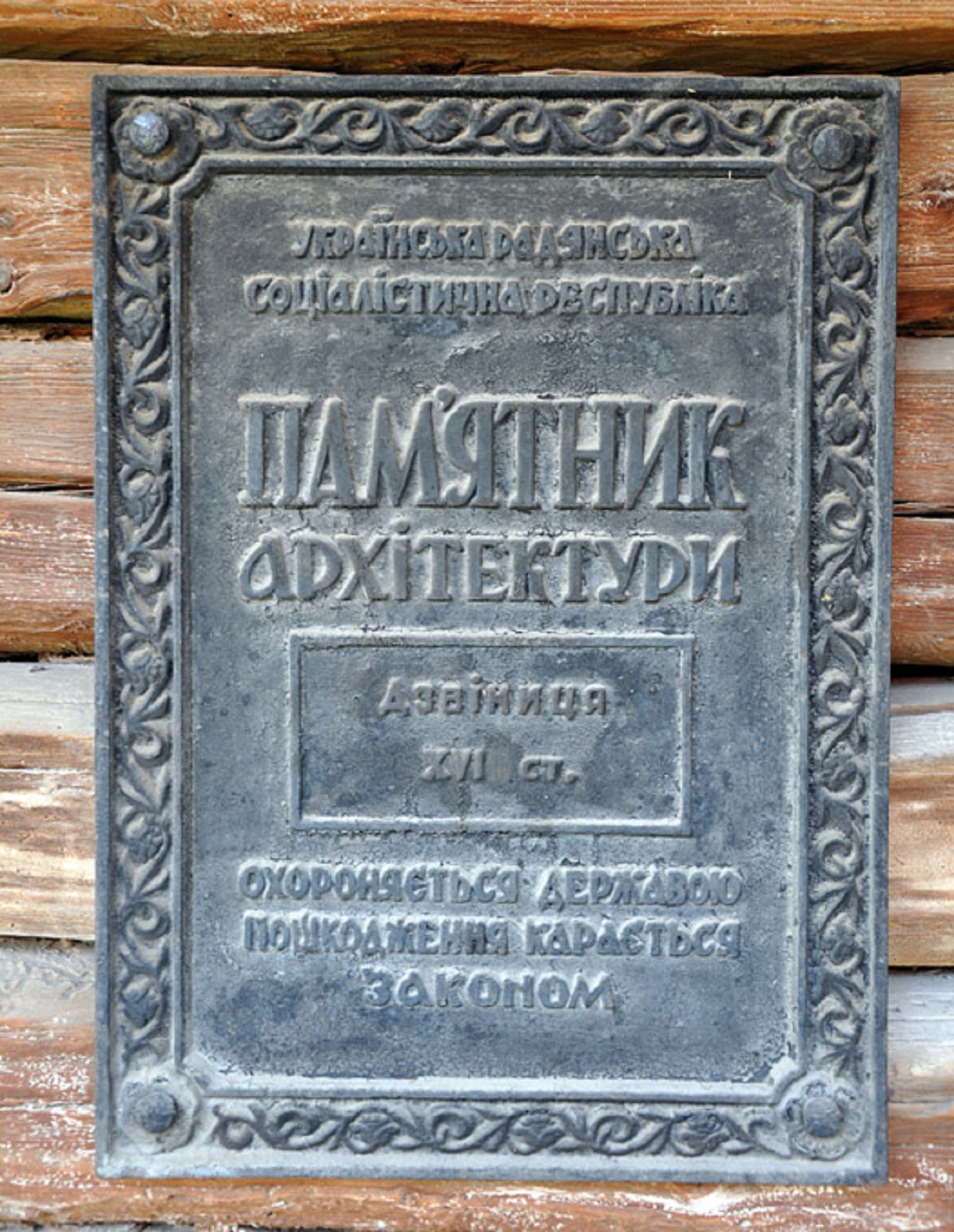
The bell tower, built in the eighteenth century, is the most common type of wooden bell tower in the Hutsul region, a "four on four" type. The first tier is a log four, and the 2nd tier is an open arcade-gallery topped with a low tent roof.
Like the church, the bell tower has emphasized horizontal proportions, which is facilitated by the arrangement of a wide canopy around it on curly brackets. The monument is one of the most perfect ensembles of Hutsul folk architecture.
Read more on the blog >>
Accommodation around Annunciation Church of 1587 in Kolomyia:


Nearby hiking trails near Annunciation Church of 1587 in Kolomyia:
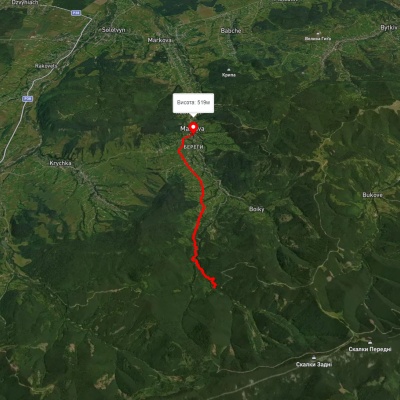
Which trails pass by Annunciation Church of 1587 in Kolomyia?
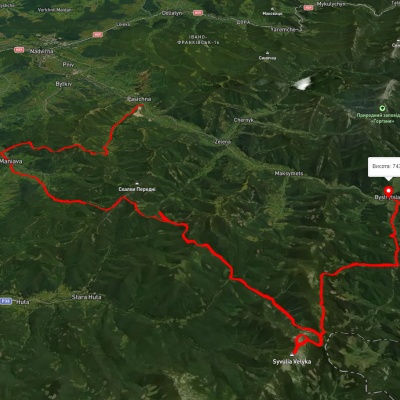
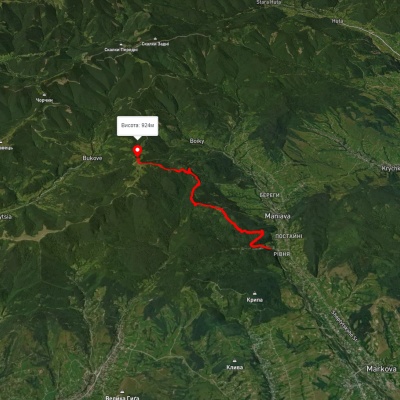
We suggest these hiking trails through or near Annunciation Church of 1587 in Kolomyia: Pasichna village, via Maniava village, Maniava Waterfall and Mount Velyka Syvulia to Bystrytsia village, Maniava village - Monastyretska polonyna, Maniava village – Maniava Waterfall, Dora village, via Mount Syniachka, Pereslip Pass, Turshuhuvata polonyna and the Yavirnyk ridge to Yaremche, Huta village – Pasichna village, Dora village, via Mount Syniachka and Pereslip Pass to Yaremche