Reformed Church (Church of St. Elizabeth), Khust
TheKhust Reformed Church is a Gothic Revival architectural monument in the city of Khust, Zakarpattia region, an architectural monument of national importance (#211). The sacred building is located in the historic center of Khust, at a distance of about 1 km from the castle, nearby there is another church of St. Anne. The building has a strict and luxurious appearance, which can be seen in all its details.
The Church of St. Elizabeth in the city of Khust, Transcarpathian region is one of the most significant monuments of the region. Khust castle has long been destroyed, and the Elizabethan church of the thirteenth century in the Gothic style pleases the eye to this day. The temple is built of stone. It reminds us of a fortress: narrow loophole windows, mighty stone walls around the church with two gates. The thickness of the walls is clearly visible through the window openings. The temple stands on a small elevation, completely dominating the one-story buildings that were here in the middle of the twentieth century. Folk legends say that the local population hid behind the walls of the church during the Mongol-Tatar invasion of 1241-1242. Perhaps it was true. Residents of the city also took refuge in this church during spring and autumn floods.
The church was Catholic until the fifteenth century. In 1523-1524, it became Protestant thanks to Husti Lovash Tomash, a reformer and leader who was born in Khust and adopted the Calvinist doctrine. Since the first half of 1600, the Betlen family has been at the head of the Protestant community. Count Betlen Istvan reconstructed the church with the money of his brother, the prince. In 1699, 4 roof towers were built, which became the model for today's towers, restored in 2001.
The Reformed Church is a kind of archive and a small museum of rarities. A number of things are kept here that have served the church for centuries. These include unique chalices, a gift box, preacher's office equipment, an old pulpit, oak pews, an organ, and more. Handwritten charters of Transylvanian princes and generals are also kept here, including the charter of the Transylvanian prince György Rakoczy, written on December 6, 1644, in Onod Castle.
The relics of such famous people as: Long György, a serf (castle) captain who died in 1708, Petrovtsi Koto Simonya (1662-1708) and her husband Duke Pekri Lavrinz, a curuc general who died in 1709. Their names were immortalized on marble slabs on June 18, 2006, at the initiative of the Hungarian Institute of History.
The church's bells are also quite old. The largest one dates back to 1683, the smallest to 1587.
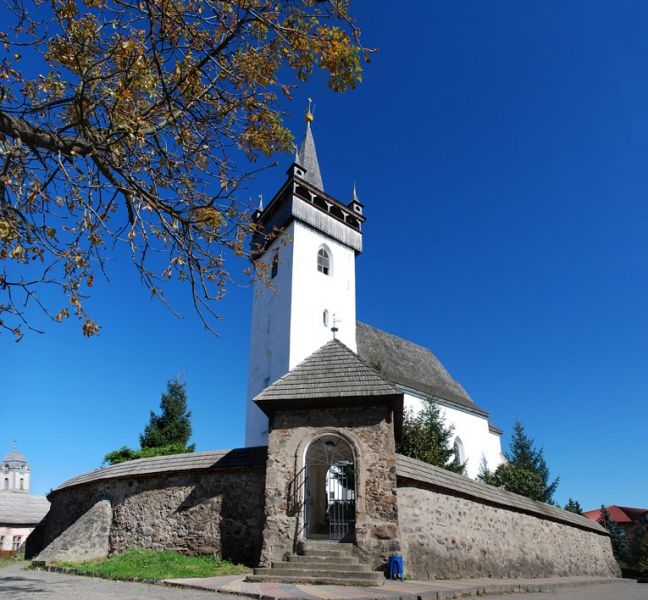
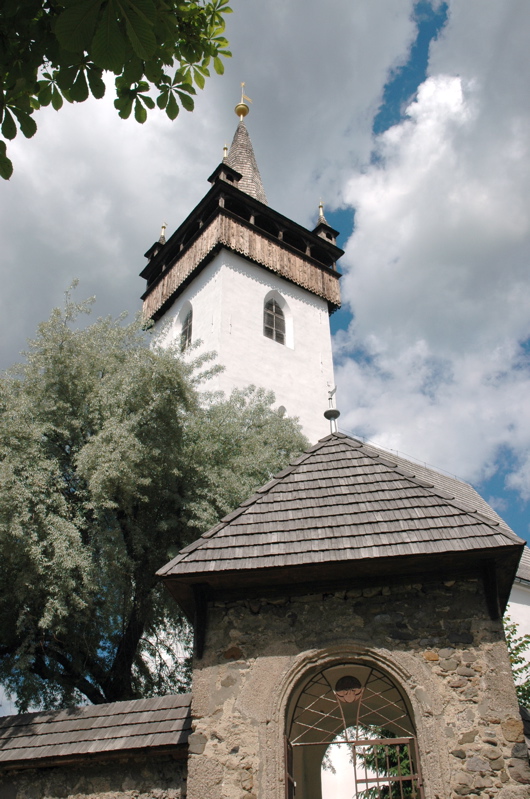
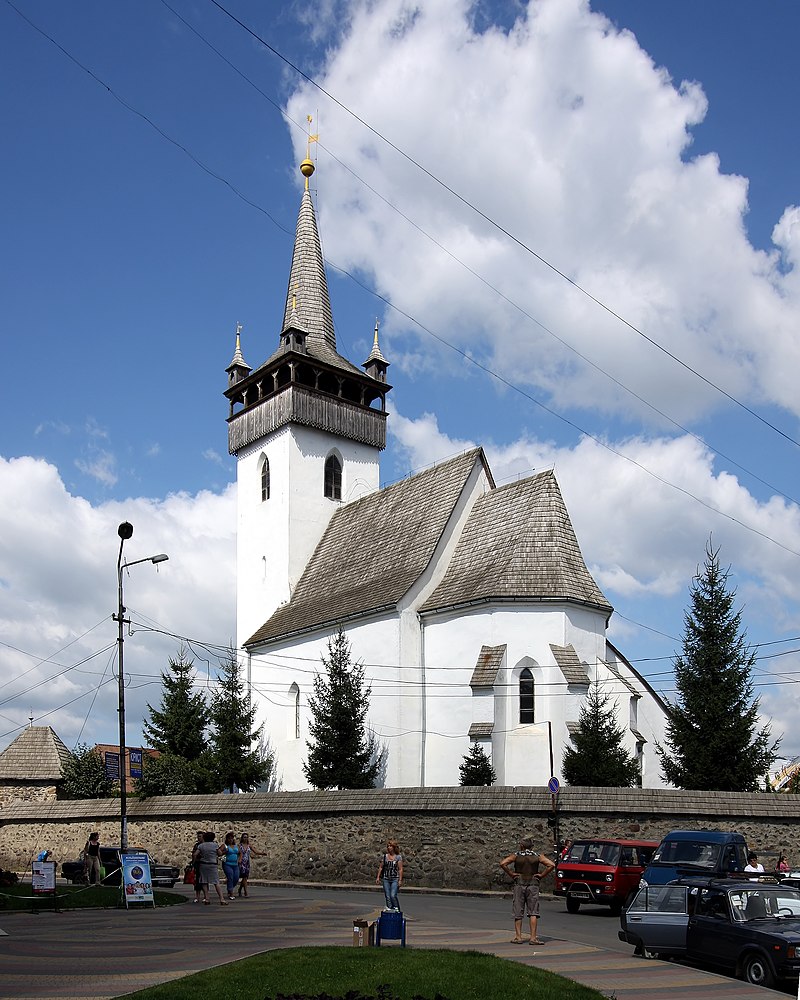
Today the church looks exactly the same as it did in the 15th century. It is rectangular in shape, has lancet windows, a bell tower, and an arched entrance. The upper tier of the bell tower is made of wood and decorated with several decorative lanterns. The building complex consists of a quadrangular tower and a stone church. The nave is covered with cross vaults. The walls of the temple are decorated with pilasters. The church is built in the Gothic style, defensive type. To the east is a faceted abyss reinforced by buttresses. On the western façade is a tower that served as a bell tower. The roofs of the former St. Elizabeth's Church were rebuilt in the 18th century. The building has preserved its Gothic windows. The territory is surrounded by stone walls with two gates.
The architectural structure is one of the oldest churches in Transcarpathia. It was also used as a safe haven. Throughout the history of the church's existence, the local population has repeatedly used it as a shelter from enemy raids. A six-meter high defensive wall runs along the entire perimeter of the building, surrounding it on all sides. The interior of the temple is represented by fragmentary frescoes that have been on its walls since the 15th century. They depict many famous people, contemporaries of the era - kings, generals, who were once canonized as saints.
This church is built of stone and resembles a fortress, with mighty stone walls around the temple, with two gates and narrow loophole windows, where the thickness of the walls is clearly visible through the window openings. In its architectural design, the church is a one-nave, rectangular church with a pentagonal presbytery supported by powerful buttresses, the presbytery being narrower and lower than the nave. In the interior, the nave is separated from the presbytery by a high lancet arch. The nave of the church is covered with cross-shaped Gothic vaults with nerves; the technique of vaulting on nerves was also used to cover the presbytery. To this day, the Gothic lancet windows have been preserved here, but they are low, which is why they resemble loopholes. In the past, the interior of the church was decorated with frescoes. According to folk legends, the local population hid in this shrine during the Mongol-Tatar invasion of 1241. In addition, local residents used to escape here during spring and autumn floods. It is known that the church was Catholic until the sixteenth century. However, in the 20s of the sixteenth century, thanks to the activities of the Khust Protestant Gust Lovash Tomasz, who converted to Calvinism, the church became a Reformed church. First of all, the supporters of this trend tended to minimalism, and in this regard, the Catholic frescoes were completely whitewashed and plastered over.
The first reconstruction of the church was carried out in 1600, when the Betlen family became the head of the local Protestant community, and a century later four roof towers were built here, which became the model for the modern ones, which were restored in 2001. It is known that during the seventeenth century the princes of Transylvania were patrons of the church, donating significant funds for its repair and maintenance. In the 80s of the eighteenth century, the church interior underwent a significant reconstruction, at which time a cut stone floor and seating were created. The church's bells have also been preserved since ancient times, the smallest dating from the late sixteenth century and the largest from the late seventeenth century.
On the west side of the façade is a tall, rectangular bell tower, which in the past also served as a defense tower. It is possible that in addition to this tower, the church had other defensive elements that are now lost.
Recently, during the restoration of St. Elizabeth's Church, the interior whitewash was removed and the ancient Gothic frescoes depicting Saints Istvan, Laszlo, and Duke Imre, which used to adorn the walls of the church, were revealed. An ancient organ stands on the church's loggia.
The Reformed Church is considered a kind of museum of rarities, and it contains items that have served this church for centuries, including unique chalices, oak pews, an organ, an old pulpit, and more. Under the floor are the graves of prominent personalities of the time, whose names are immortalized on marble slabs. Here you can also see handwritten charters of Transylvanian princes and generals, for example, the charter of the Transylvanian prince György Rakoczy, which was created in the middle of the seventeenth century. During 2004-2005, restoration work was carried out here, as a result of which the church was restored to many of the features that were inherent in its original appearance. Today, fragments of 15th-century frescoes can be seen in the church interior, which were restored from under a layer of plaster. In addition, large fragments of the outer defensive wall surrounding the church have survived to this day.
The Reformed Church in Khust is now a functioning Protestant church, considered one of the oldest sacred buildings in Transcarpathia (along with the churches in Vyshkovo, Kidosh, and a number of others) and is an architectural monument of national importance. Today, the Protestant church community numbers about 200 believers. The church can be visited on weekends and on religious holidays.
Accommodation around Reformed Church (Church of St. Elizabeth), Khust:


Which trails pass by Reformed Church (Church of St. Elizabeth), Khust?
We suggest these hiking trails through or near Reformed Church (Church of St. Elizabeth), Khust: Pyntia's Path, Lukovo village, via Mount Buzhora to Svaliava, Bushtyno, via Zanivka tract to Mount Manchul, Kushnytsia village, via Kuk polonyna, Mount Shyrokyi Verkh, Mount Zhyd-Mahura, Mount Velykyi Verkh and Mount Plai to Volovets, Novoselytsia – Smerekovyi Stone, Vovchyi village, via Mount Stiy, Mount Zhyd-Mahura, Pryslip Pass, Kuk polonyna, Mount Korytyshche and Shyroke village to Nyzhnii Bystryi village


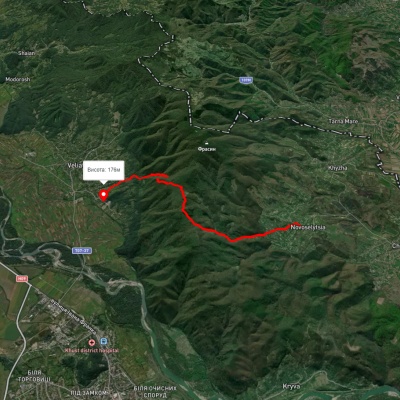
Pyntia's Path

Lukovo village, via Mount Buzhora to Svaliava
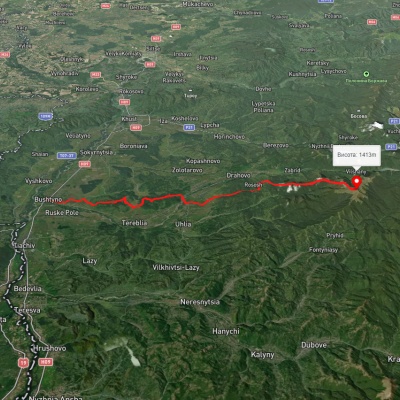
Bushtyno, via Zanivka tract to Mount Manchul
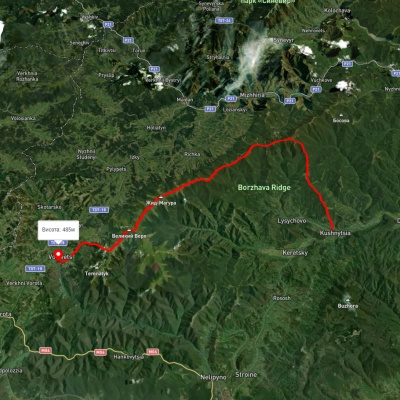
Kushnytsia village, via Kuk polonyna, Mount Shyrokyi Verkh, Mount Zhyd-Mahura, Mount Velykyi Verkh and Mount Plai to Volovets