Shelest St. Michael's Church, Uzhhorod
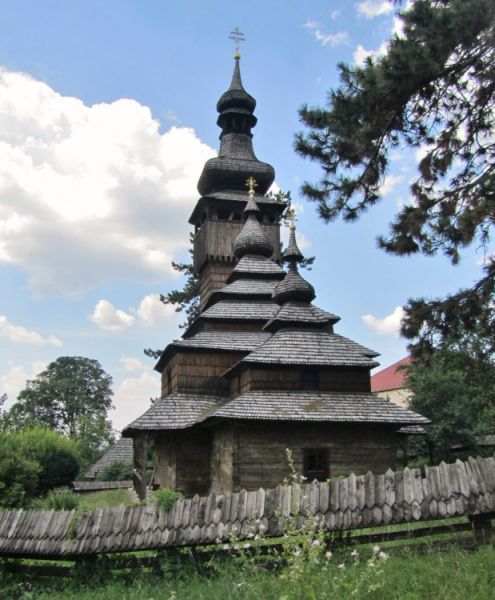
Shelest St. Michael's Church is an architectural monument of national importance. It is located in Uzhhorod, 33-a Kapitulna Street. Most sources indicate the date of foundation as 1777. Another name for the building is often used - the Church of St. Michael the Archangel. This monument is one of the few wooden church buildings in Ukraine that has been preserved to the 21st century. Its security number is 172.
The church was built in the village of Shelestiv, Mukachevo district, in 1777. Some sources contain information that its construction began much earlier, and in 1777 the building was consecrated and renovated after repair work. This version was supported by the works of the historian Tivodar Lehotskyi. When a brick church was built in the village of Shelestov in the 20th century, the wooden St. Michael's Church was transferred to the use of schools in Uzhhorod. In the late 1920s, the Orthodox community of Mukachevo made a proposal to purchase the building. The church was then moved and consecrated in Mukachevo on August 5, 1928. For some time, the church was neglected until it became part of the Transcarpathian Regional Museum of Folk Architecture and Life in Uzhhorod in 1972. Restoration work in 1969-1972 was carried out by architects I. R. Mohytych and B. Y. Kidzelsky. According to other sources, the church was moved to the museum in 1974 or 1976.
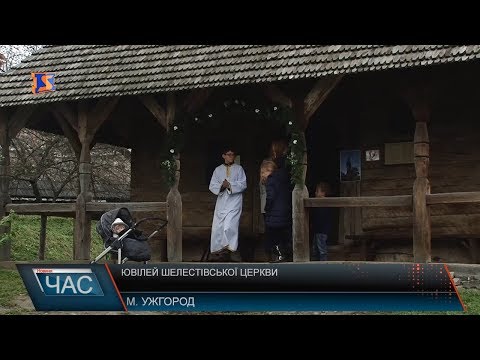
From the mid-1970s until 2008, no restoration work was carried out on the church building. The search for craftsmen with the appropriate level of training took some time, and as a result, the restoration of the building was entrusted to a specialist from Solotvyno. The complexity of the restoration was primarily due to the small number of specialists who could perform such work. Renovation of the church required restoration work and handling of special wooden plates that had to be laid on top of each other. The necessary list of works was performed by master Mykhailo, who already had considerable experience in restoring wooden structures. Repairs were made to the church's bell tower. A restored cross was installed above its top. The director of the open-air museum planned to open the church for tourists and visitors to see when the restoration work was completed. It was planned to hold services in the Shelest church on Sundays. At the beginning of the century, I. Hrabar noted in one of his works that this church building is the best example of wooden architecture in Transcarpathia. In the winter of 2013, St. Michael's wooden church was included in the list of objects that were included in the decision to make certain changes to the program of creating an insurance fund for documentation in the Transcarpathian region for the period 2011-2015. The church is now one of the exhibits in the open-air museum. The exposition of the Transcarpathian Museum of Folk Architecture "Shelest Church" includes a bell tower built of wood, bells, a chapel, and the main building. The building is located on the site of the Castle Hill Complex, which is an urban planning monument.
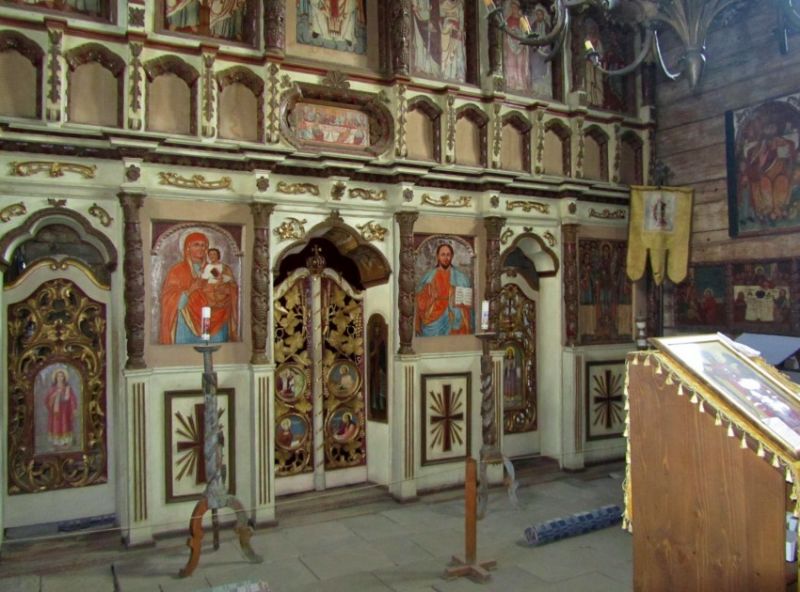
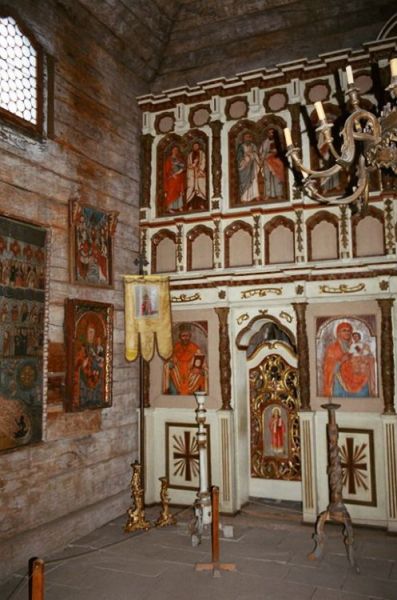
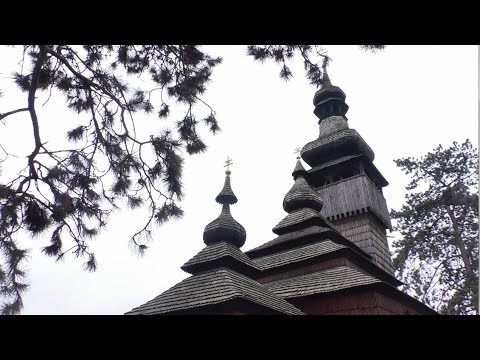
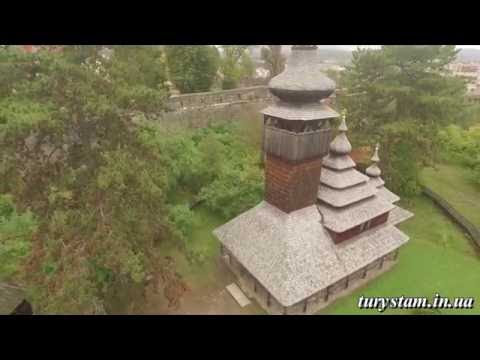
The Shelest St. Michael's Church belongs to the classical Lemko style of the folk school of architecture and is the only church built with this characteristic in Transcarpathia. It is one of the two Lemko churches in Ukraine that have survived without global architectural changes. The craftsmen who worked on its design and construction managed to combine the tent and baroque folk architectural styles. As a result, the church building is distinguished by its proportionality, harmony, and elaboration of artistic details. The monument combines Western and Eastern influences and this is expressed in the architectural style. The building plan indicates the eastern origin of the church, while the features of the bell tower construction indicate the influence of Western architectural art. The presence of multi-tiered hipped roofs over the altar part of the church and the nave indicates its connection with and influence on the construction of the Boyko style of architecture, which was common in the northern Carpathians. The building has some features of the Baroque style. Experts note the dynamism of the architectural structure due to the gradual growth of parts of the building from the altar to the bell tower. The bell tower has a frame structure decorated with an arcade of bell towers, and it is crowned with a Baroque dome with developed facets and an openwork arcade. This object is crowned with a forged cross. You can find similar domes above the tent tops of the altar. The tower is tall and has a Baroque architectural style. The height of the church, taking into account the height of the tower, reaches 22 meters. The log cabins are made of oak beams. Their cross-section reaches 40 cm. The church is three-story, consisting of three log cabins. It is covered with shingles. The narthex and nave are the same width. The tops of the nave and the eastern part are hipped with creases, in the crown of which are baroque cupolas. The church iconostasis stands out for its expressive carving, has 4 tiers and floral ornaments. The carvings are characterized by a combined style and can be seen on the gilded columns. Some elements in the tower and its design indicate the presence of some features of the Rococo style. The church altar is crowned with a not very high top, which has two creases. The nave has three creases. In the 19th century, the iconostasis was decorated with works by Ilya-Brodlakovych-Vyshenskyi, a painter from Zakarpattia. They were moved to the wooden church from the Church of the Holy Spirit in the village of Kolochava. Many icons that had long been in the possession of the Shelestka church disappeared.
Only wooden nails were used in the construction of the church and no metal nails were used. The territory of this architectural monument is bounded from the northwest by a stone counter-arching wall. The beginning of the 20th century was characterized by a change in the architectural ensemble of the wooden building: the walls of the log cabins were plastered. The surfaces were also whitewashed. In the winter of 2008, restoration work was carried out to save the Shelest church from destruction. The wood used for the work was treated with a special antiseptic agent, which should protect it to some extent from harmful environmental factors. Most of the objects used as restoration tools are made of oak.
Accommodation around Shelest St. Michael's Church, Uzhhorod:

Boutique Hotel "Villa P" Uzhhorod
Vulytsia Kapitulna, 22, Uzhhorod, Zakarpatska Oblast, Ukraina

Hotel "Ungvars'kyi" Uzhhorod
Vulytsia Elektrozavodska 29, Uzhhorod, Zakarpatska Oblast, Ukraina


Which trails pass by Shelest St. Michael's Church, Uzhhorod?
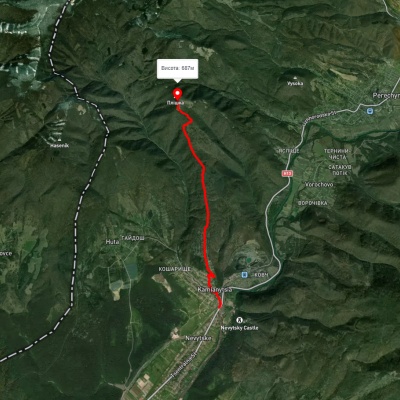
We suggest these hiking trails through or near Shelest St. Michael's Church, Uzhhorod: Kamianytsia village, via Antalovetska Poliana and Yarok village to Uzhhorod, Carpathian Metro hiking route, Yarok village, via Antalovetska Poliana to Nevytske village, Kamianytsia village, via Mount Plishka to Perechyn village, Kamianytsia village – Mount Plishka, Kamianytsia village – Mount Plishka – Kamianytsia village

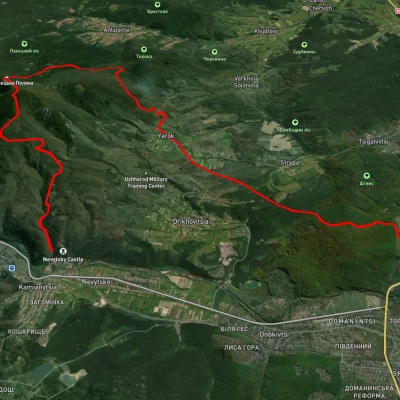
Kamianytsia village, via Antalovetska Poliana and Yarok village to Uzhhorod
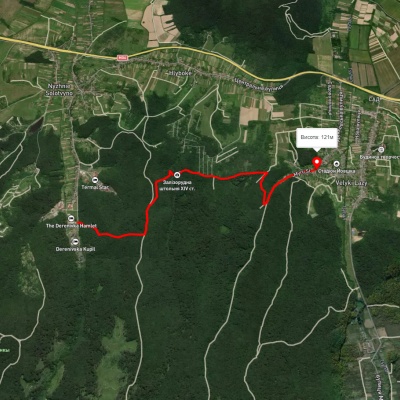
Carpathian Metro hiking route
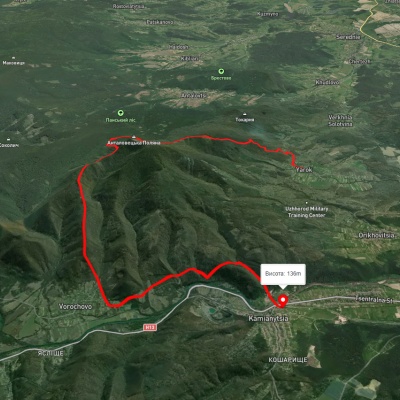
Yarok village, via Antalovetska Poliana to Nevytske village
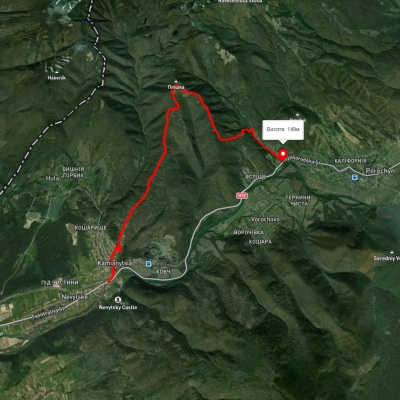
Kamianytsia village, via Mount Plishka to Perechyn village