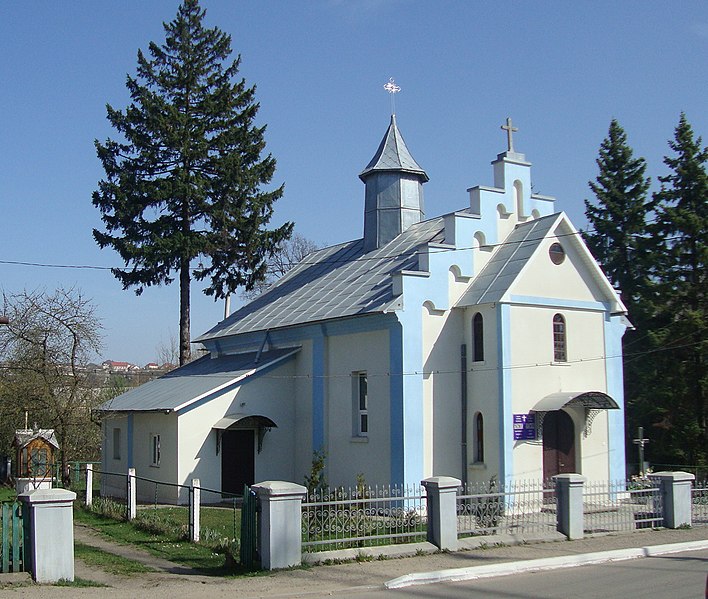
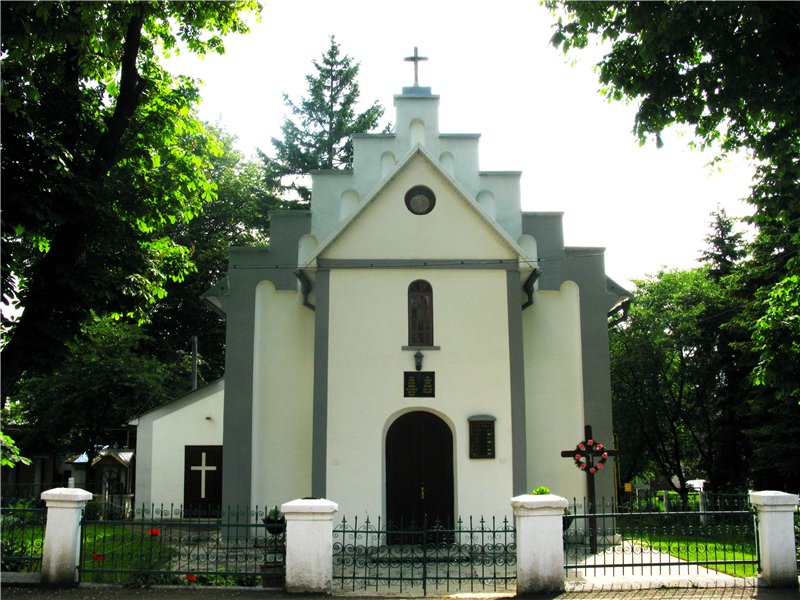
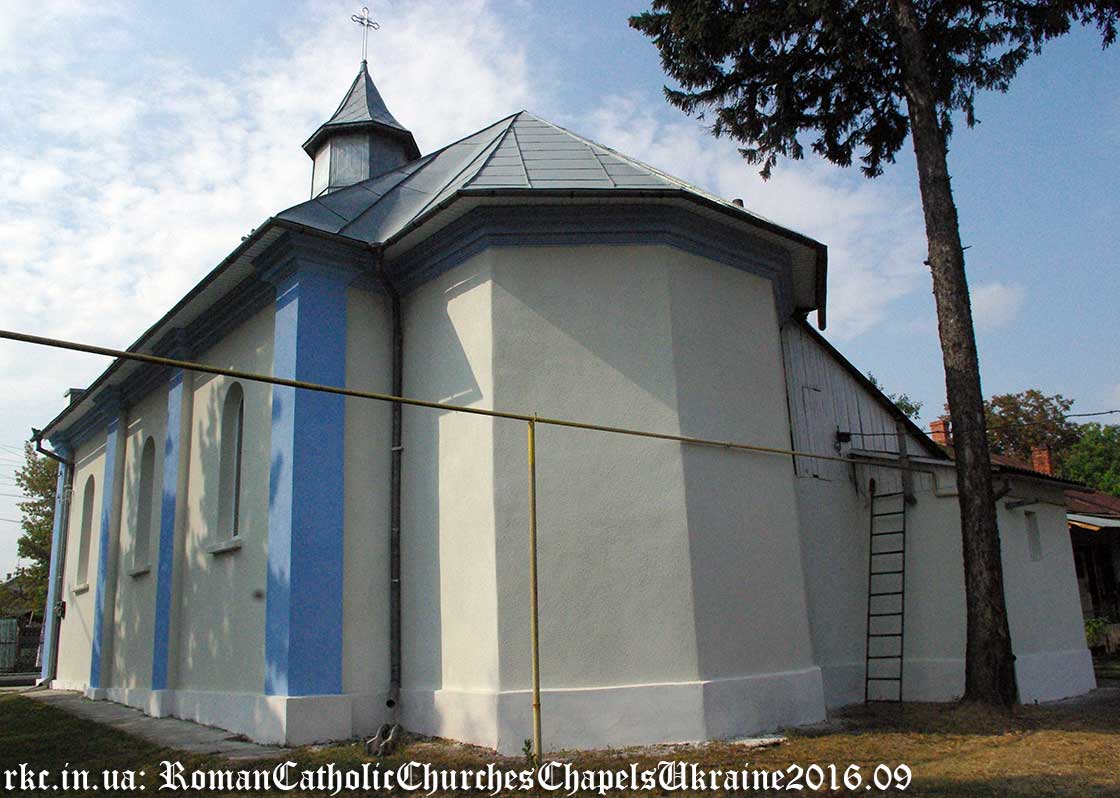
"Church of Our Lady of Sorrows" Hlyboka
The first written mention of the village of Hlyboka dates back to 1438, in 1919-1940 it was called Adynkata, since 1940 it has been the center of the Hlyboka district, and since 1956 it has been an urban-type settlement.
The place where the town lies was once called Chorna Poliana. In 1359 and 1497, battles between Moldovan and Polish troops took place here. Polishness took root here, and Hlyboka still has Polish accents, thanks to the colonists who once lived in the settlement. In the second half of the nineteenth century, many lands around Hlyboka belonged to the Sapieha family. In 1892, Bronisław Skibniewski (1830-1904) bought the estate from Prince Adam Sapieha. This is a familiar name for those interested in the history of Podillia: it was this Skibniewski who was a sworn enemy of the eccentric and reductive Ignacy Scibor-Markhotskyi. Hlyboka remained in the hands of the Skibniewskis until the Second World War-the last owner was Bronisław's son Oleksandr.
In 1906, a brick branch church of the parish of the Nativity of the Blessed Virgin Mary in Seret was built in Hlyboka at the expense of the Skibniewski family(Mr. Skibniewski wasa generous and highly educated man who did much for his town and its inhabitants), and in 1910 a parish exposition was created, which later became an independent parish. In 1944-1992, the local church was closed (it housed first the energy sales administration and then the archive). The parish is served by diocesan priests.
Nowadays, on Hlybotska Street, tourists should really visit the Church of Our Lady of Sorrows. The church is small, but it attracts tourists with its unusual facade architecture, whose pediment resembles two staircases that seem to lead to its top. The church was closed by the Communists in 1946, and the holy images were taken with them by Polish emigrants. In Soviet times, the church building served as a movie theater, a mini-power plant, and a district archive. In 1993, it was returned to the Roman Catholic community. In the same year, holy images returned to the church from abroad.
But the main attraction is the Skibniewski Palace, which is hidden on the territory of the hospital campus (the Skibniewski Palace now houses the district children's hospital).