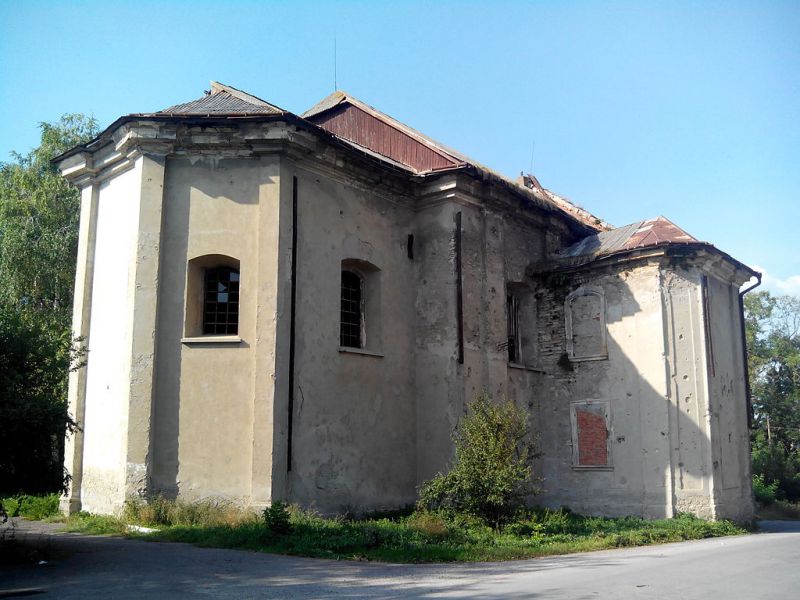
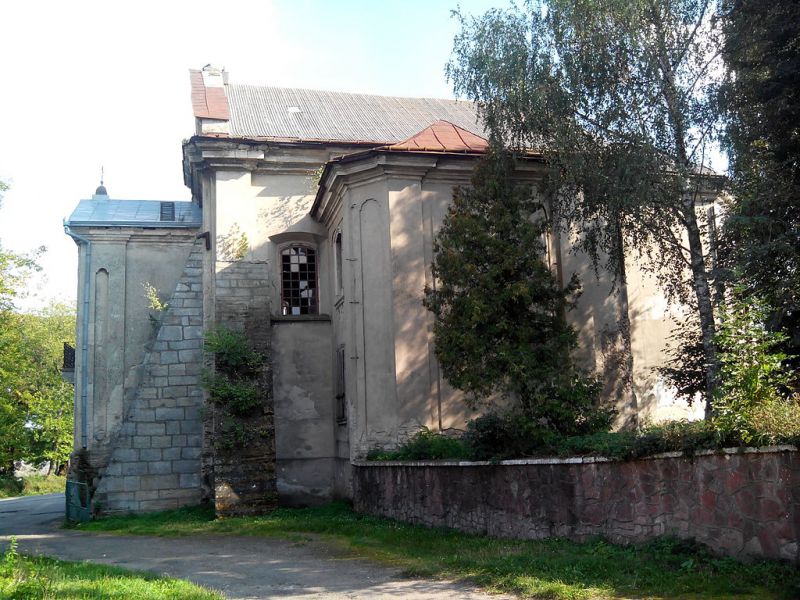
Armenian church, Horodenka
The active settlement of Horodenka by Armenians after the Magdeburg Law was granted contributed to the emergence of Armenian architectural structures. One of the symbols of the wealthy Armenian community in the city was the 18th-century Armenian Church, which has survived to this day, but in a dilapidated state.
The Armenian church in Horodenka was built in 1706. It was surrounded by a high stone wall with an Armenian cemetery inside. The richness and splendor of the interior indicated the significant influence of the Armenian community. By the end of the 17th century, the city had become a significant trade center, where Armenians controlled almost all of the city's trade. The territory of the church was large enough to accommodate an Armenian cemetery. The church yard was surrounded by a high wall, and the entrance was decorated with a beautiful gate.
From the outside, the Armenian Church combines asceticism and moderate pretentiousness of the building. Highly placed windows on thick walls add to the elevation, and a balcony is built over the door at the entrance. The main façade of the church is supported by powerful buttresses protruding from the lower part of the walls.
In 1743, the mayor of the city, Mykola Potocki, granted some privileges to the Jewish community in trade and crafts. Over time, Jews began to displace Armenians, and in 1811 an organ was installed in the church.
During the communist regime, the Armenian Church was used as a warehouse. Today, it is closed, the windows are barred, and the walls and roof are gradually collapsing. The church is the oldest surviving building in the town and is in need of restoration.
The Armenian church is located almost in the center of Horodenka. It can be reached both by public transport and by rail from Ivano-Frankivsk. If you are traveling by car, it is better to go through Tysmenytsia on the P20 highway, which leads to Horodenka.
Horodenka is a town and district center in the Ivano-Frankivsk region, on the lands formerly called Pokutia. The first written mention of Horodenka dates back to 1195. In 1668, the town received the Magdeburg Law. Horodenka was a part of the Ruthenian Voivodeship centered in Lviv and belonged to the Kolomyia Starostwo of the Polish-Lithuanian Commonwealth. In 1772 (after the first partition of the Polish-Lithuanian Commonwealth), the Horodenka region, as part of Galicia, was occupied by Austria-Hungary. During the Austro-Hungarian occupation, two monasteries were liquidated in Horodenka, and in 1788 the first secular school was opened with German as the language of instruction.
Nearby hiking trails near Armenian church, Horodenka:
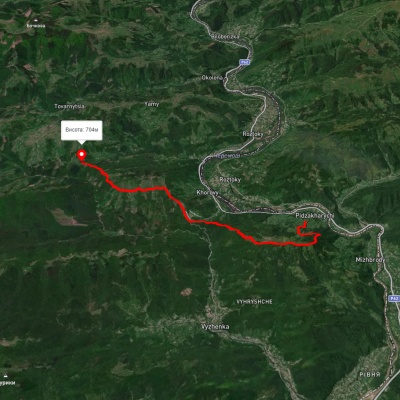
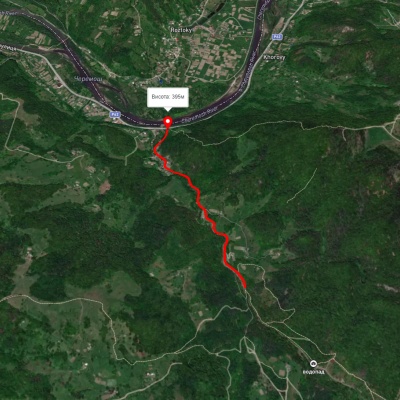
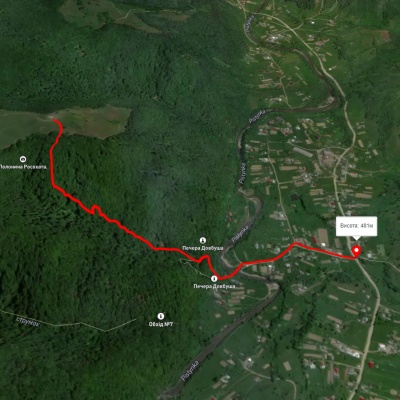
Which trails pass by Armenian church, Horodenka?
We suggest these hiking trails through or near Armenian church, Horodenka: Nimchych Pass – Protiate Kaminnia, Smuharski Waterfalls, Sheshory – Rosokhata, Bukovets village – Pysanyi Kamin – Bukovets village, Pysanyi Kamin – Bukovets village, Kosmach village, via Mount Rotylo, Mount Hrehit and Mount Bila Kobyla to Bukovets village