Lavra Monastery of St. Onufriy, Lavra
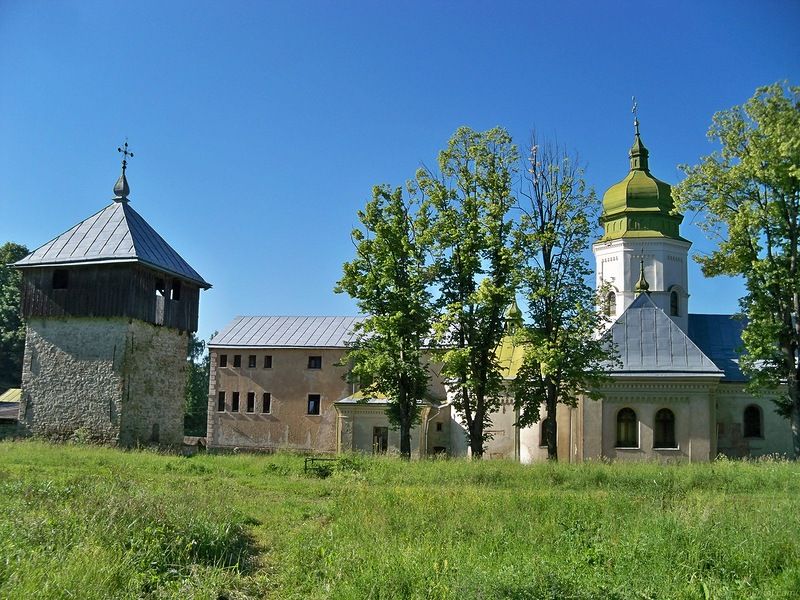
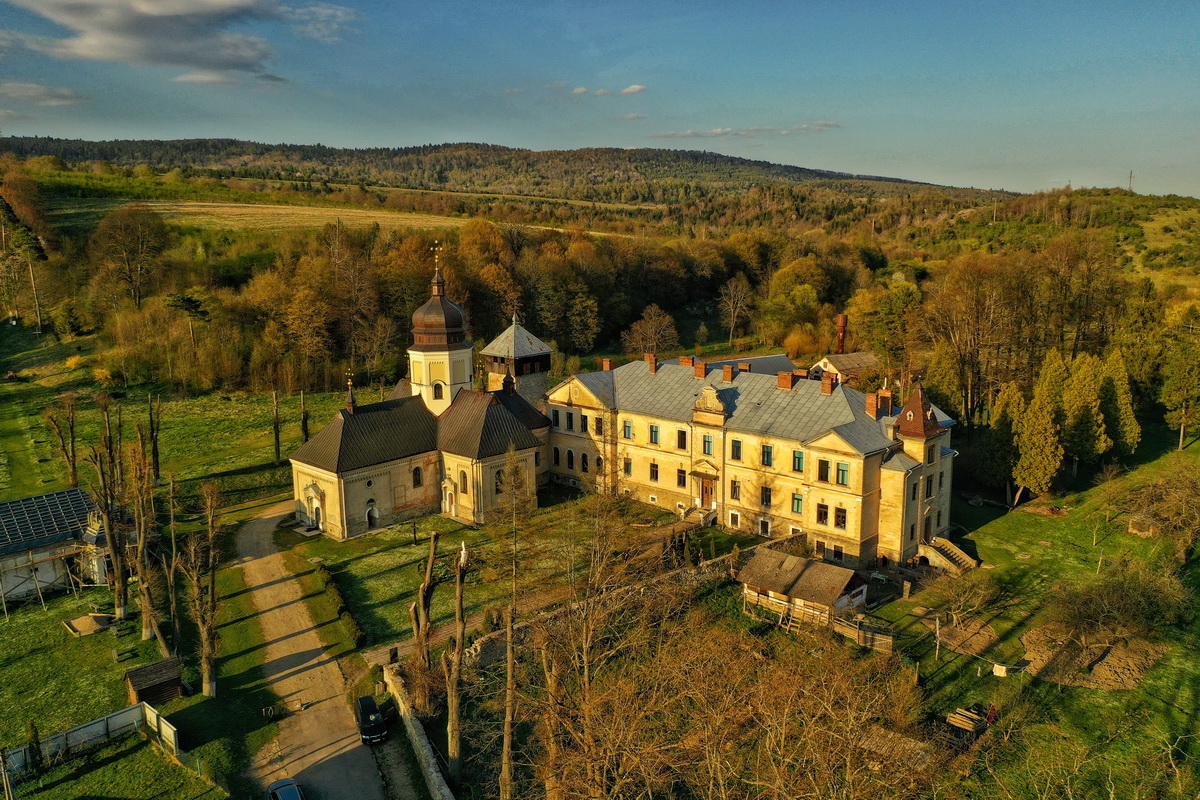
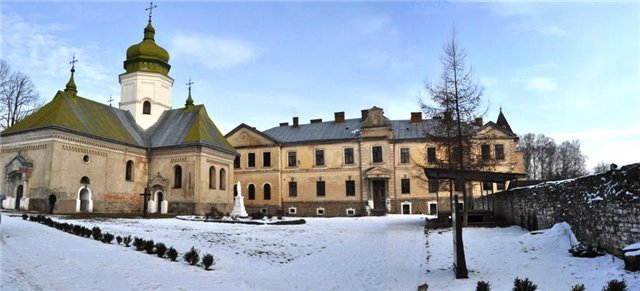
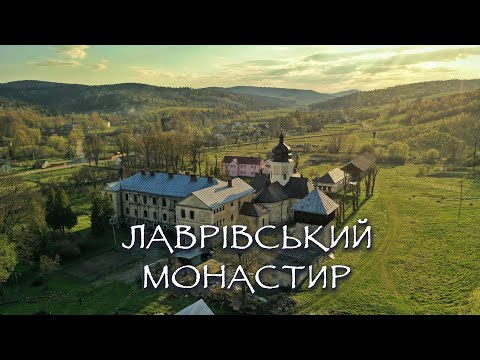
Closer to the border with Poland, 106 kilometers from Lviv, there is a small village of Lavriv. It is notable for one of the oldest shrines in Western Ukraine. This is the Basilian Lavra Monastery of St. Onufriy. The powerful walls immediately make it clear that it was also a defensive structure.
Lavriv Monastery is a Basilian monastery in Ukraine, in the village of Lavriv, Lviv region. It belongs to the Ukrainian Greek Catholic Church. It was founded in the middle of the XIII century and named after St. Onufriy. One of the most important centers of Western Ukraine. A unique monument of culture and national history. The sacred center of the Boykivshchyna region. According to legend, it is the burial place of the Galician-Volynian Prince Lev Danylovych.
According to the legend, the founder of the monastery was Prince Lavr, mentioned in the charter of Prince Lev Danylovych in 1292. According to historian Ihor Mytsko, Lavr is the monastic name of the Grand Duke of Lithuania (1264-1268) Voyshelk, who was a monk in the Transfiguration Monastery in Spas and the Onufriyivsky Monastery in Lavriv in 1255-1257.
Wojshelk-Lawr was the godfather of Lev I Danilovich. In the mentioned charter, issued in Przemysl, Lev writes that his "uncle" (godfather) Prince Lavr sold the monastery to Bishop Antonii of Przemysl (the document was kept in the monastery library until 1939). It is now known that this charter is a forgery of the early sixteenth century. But this does not deny that the forgery was based on a true story. In fact, the first documentary mention of the monastery dates back to 1407.
The architecture of the monastery church was influenced by the three-vaulted and domeless churches of the Moldavian principality.
The Onuphriyiv Lavra once housed a part of the relics of St. Onuphriy. It was the only place where his relics were kept in Eastern Europe (other parts were kept in Constantinople, Rome, and Braunschweig). The relics were lost during the Tatar raids of the 16th century.
Lavrivskyi is the oldest monastery of St. Onuphrius in Ukraine, from which the cult quickly spread to Galicia (Lviv, Pidhirtsi, Dobromyl) and further east.
Denys Zubrytskyi in his Critical and Historical Narrative of the Times (1845) says that in 1767 all the wooden buildings of the Lavra Monastery burned down. Only a stone chapel survived, in the wall of which the tombs of the princes were found (according to Lev and Lavra). The abbot of the time, Fr. Voliansky, invited the abbots of the neighboring monasteries and ordered the opening of this grave. The coffins were covered with rough silver tin and decorated with exquisite carvings, one of which was engraved with the name of Lev. To prevent anyone from appropriating the wealth they had found, the silver was secretly melted down and sold, and the proceeds were used to rebuild the burned monastery. Most researchers consider this story a legend. In particular, they point out that Prince Lev died as a monk, and thus he should have been buried as a mere mortal-in a wooden coffin, not in a silver coffin.
In 1860, by order of the state authorities, during the reconstruction of the church, most of the remains from the crypts of St. Onufriyivska Church were moved to the cemetery on St. John's Hill.
In 1911, the church was reconstructed under the direction of the architect, priest Kazimierz Mrozowski. Under the oil paintings by Martyn Yablonski from 1872, other, much older, tempera paintings depicting scenes from the life of Christ were discovered. The invited restorers initially dated them to the seventeenth and eighteenth centuries and recognized them as having no significant value. However, Mrozowski further studied them and came to the conclusion that the paintings should actually be dated to the XV - early XVI centuries. It was noted that the school and Byzantine style are very close to the tempera paintings of the Jagiellonian ("Russian") chapel in Wawel. It is known that the latter appeared in 1470 and were not the only ones made by this group of artists in Galicia. According to experts of the time, the Lavra tempera paintings were a very valuable monument in the entirety of Polish-Lithuanian Commonwealth.
During the archaeological excavations of 1986 (led by Mykhailo Rozhko), a niche-arcasolium was discovered in the altar part of the church, which was of exceptional importance in princely times. The relics of St. Onufriy or the coffin of Lev Danylovych could have been kept here. But so far, no archaeological expedition has been able to find the remains of Prince Lev.
The history of the Lavra Monastery of St. Onufriy is closely linked to the Sheptytsky family. Metropolitan Athanasius Sheptytsky studied in Lavra, and Father Nikifor Sheptytsky was an archimandrite of the Lavra Monastery. In 1926, Andrei Sheptytsky participated in the study of the frescoes of St. Onufriy's Church. The National Museum (Lviv) houses a painting by Metropolitan Andrey Sheptytsky, Landscape from Lavrov, which depicts a road in a village on both sides of the monastery.
Lavra Monastery is an important architectural and artistic monument.
The Church of St. Onufriy, apparently built by Lev Danylovych, was one of the first three-conch churches in Ukraine, based on Byzantine-Athenian models. The church is characterized by its centrality, cruciform plan, and the placement of the dome at the point of the "golden section." At different times, it combined features of Romanesque, Gothic, Renaissance, Baroque, and Classicist styles. Archaeologists date the altar part in the form of a three-leafed cloverleaf (tricone) and the space under the dome to the 13th century. The layout and construction techniques of the church indicate the masters of the Byzantine school with the participation of Ukrainians.
During the reconstruction of 1910-1914, Modest Sosenko found frescoes of the mid-16th century on the walls of the church under the painting by Yablonsky (1872). This was a unique find, because the paintings of Ukrainian masters of that period, except for Lavrov and St. Nicholas Church in Lviv, are only found outside Ukraine in Poland (Lublin, Krakow, Sandomierz, Posada Ryboticka).
The Lavra Monastery was a significant center of education in the Boyko region. An exemplary German-language school (Main District School, 1788-1911) functioned here for over a hundred years. In the 1920s and 1930s, the monastery hosted a Basilian lyceum that continued its traditions.
In the seventeenth century, two music irmoloys were created in Lavra, one by Iosyp Kreinytskyi and the other by unknown authors. These manuscripts are valuable monuments of both manuscripts and sacred Ukrainian music. They show that a school of choral singing, composition, compilation, editing, and rewriting of music books was formed in Lavra in the seventeenth century.
In the early 20th century, a church museum was established at the monastery, which over the years acquired a large collection of icons from the 15th and 18th centuries (including the Belinsky Miraculous Icon).
The Lavra Monastery had an archive and one of the richest libraries in Galicia. The archives, in particular, contained charters of Prince Lev, Polish kings, manuscripts written in gold, charters of hetmans, bishops, and Moldovan lords. The library's collections included old printed books of the 16th and 17th centuries, as well as valuable German- and Polish-language periodicals of the 19th and 20th centuries (the monastery subscribed to almost all publications published in the Austro-Hungarian Empire).
Famous Ukrainian figures visited the monastery to study its history, architecture, painting, and archives: I. Nechuy-Levytsky, Y. Holovatsky, I. Franko, M. Hrushevsky, I. Krypiakevych, O. Barvinsky, V. Shchurat, O. Dukhnovych, and A. Sheptytsky.
In 1939, Lavrov's archive and library were taken by the NKVD to the neighboring village of Strelky and burned. Local residents hid some icons, which later ended up in museums. In June 1941, the monastery was a barracks for the Soviet garrison. At that time, most of the outbuildings were destroyed and the water in the pond was drained.
After the Second World War, a boarding school for disabled children was established in the monastery premises, which lasted until 1994. At that time, the church of St. Onufriy served as a warehouse, coal was stored in the bell tower, and other premises housed a village school, library, and club.
In 1990, the church of St. Onufriy was transferred to local parishioners. In 1994, the monastery was restored. Today, four monastic priests and one novice serve in the Lavra Basilian Monastery of St. Onuphrius.
On June 25, 2011, through the mediation of Bishop Iryney Bilyk, the relics of St. Onufriy were returned to the Lavra Monastery. During the thirteenth and fifteenth centuries, the relics of the saint were kept in the Lavra Monastery, but were lost during the Turkish invasions. The relics were transferred thanks to the efforts of the abbot of the Lavra Monastery, Fr. Thus, the relics of St. Onuphry the Great, the patron saint of women in childbirth, returned to the Lavra Monastery forever after almost 500 years.
The Lavrov Necropolis is impressive and testifies to the phenomenon of interfaith unity around the relics of St. Onuphry. Many supporters of the cult of St. Onuphry, according to their wills, were buried in the Lavra Monastery rather than in their cathedral churches. The first of them was Prince Lev Danilovich, who, according to legend, was buried in Lavrov. However, the chapel to which tradition tied his grave turned out to be a building from the seventeenth and eighteenth centuries.
Many such burials have survived from the second half of the seventeenth century, the time of the monastery's greatest prosperity. It was during this period that Moldovan lords (princes) were buried within its walls: Stefan Petricea (1675) and Constantine Shcherban Basarab (1681), as well as the Jerusalem Patriarch Macarius Ligarid (1681).
In the dungeons of St. Onufriyivska Church there is a necropolis whose roots go back to princely times, when there was a cemetery here before the construction of the church. After the addition of the side wings in the 2nd half of the 17th century, crypts were created, including the crypt of the Vynnytsky family in the southern wing. Here, in particular, they were buried:
Accommodation around Lavra Monastery of St. Onufriy, Lavra:


Which trails pass by Lavra Monastery of St. Onufriy, Lavra?
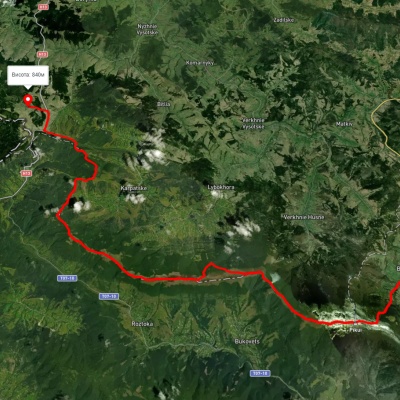
We suggest these hiking trails through or near Lavra Monastery of St. Onufriy, Lavra: Nedilna – Tower of Memory, Sprynia – Chapel – Tower of Memory, Sianky village, via the Verkhovyna Watershed ridge and Mount Pikui to Bilasovytsia village, Sianky village, via Mount Starostyna and Mount Velykyi Verkh to Mount Pikui, Sianky village, via Mount Drohobytskyi Kamin, the Ruska Put Pass and Mount Pikui to Bilasovytsia village, Sianky village, via Mount Starostyna, Mount Velykyi Verkh and Mount Pikui to Bilasovytsia village

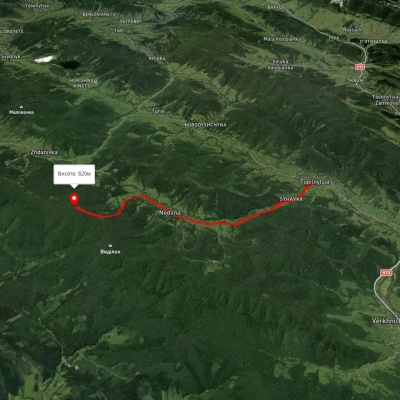
Nedilna – Tower of Memory
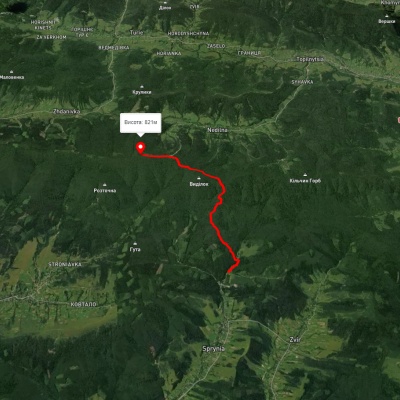
Sprynia – Chapel – Tower of Memory
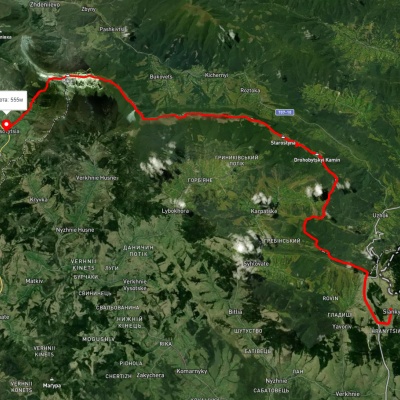
Sianky village, via the Verkhovyna Watershed ridge and Mount Pikui to Bilasovytsia village
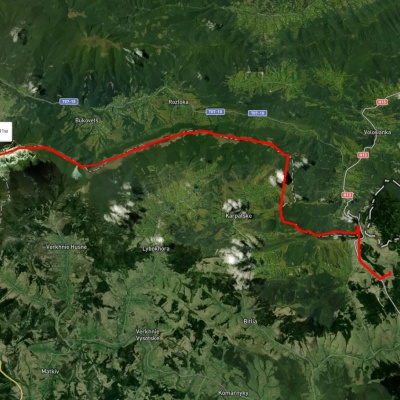
Sianky village, via Mount Starostyna and Mount Velykyi Verkh to Mount Pikui