Krasnoyilsk
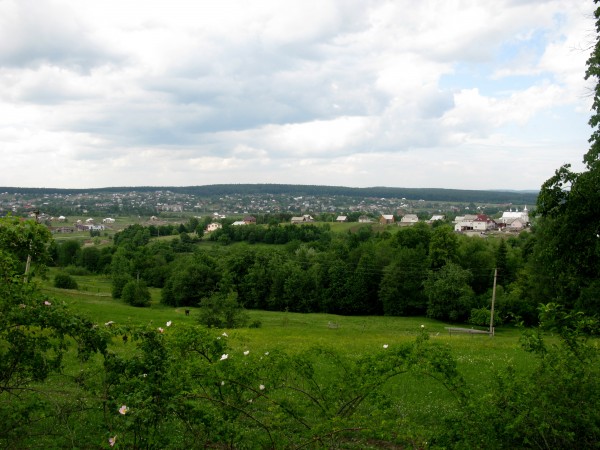
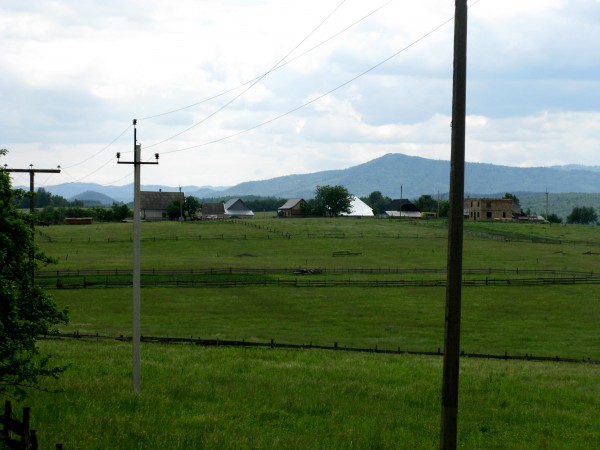
The large village of Krasnoyilsk, known since 1431, immediately follows Chudey. The old name of the settlement was Krasna. At the beginning of the nineteenth century, there was a glass factory in Krasna that produced hollow and sheet glass, which was moved here from Stara Huta (more about it in the next story). Like Banyliv-Pidhirnyi, Krasnoilsk is a real paradise not only for architecture lovers, but also for lovers of mountains and green nature: the mountains covered with protected forests begin just behind the town.
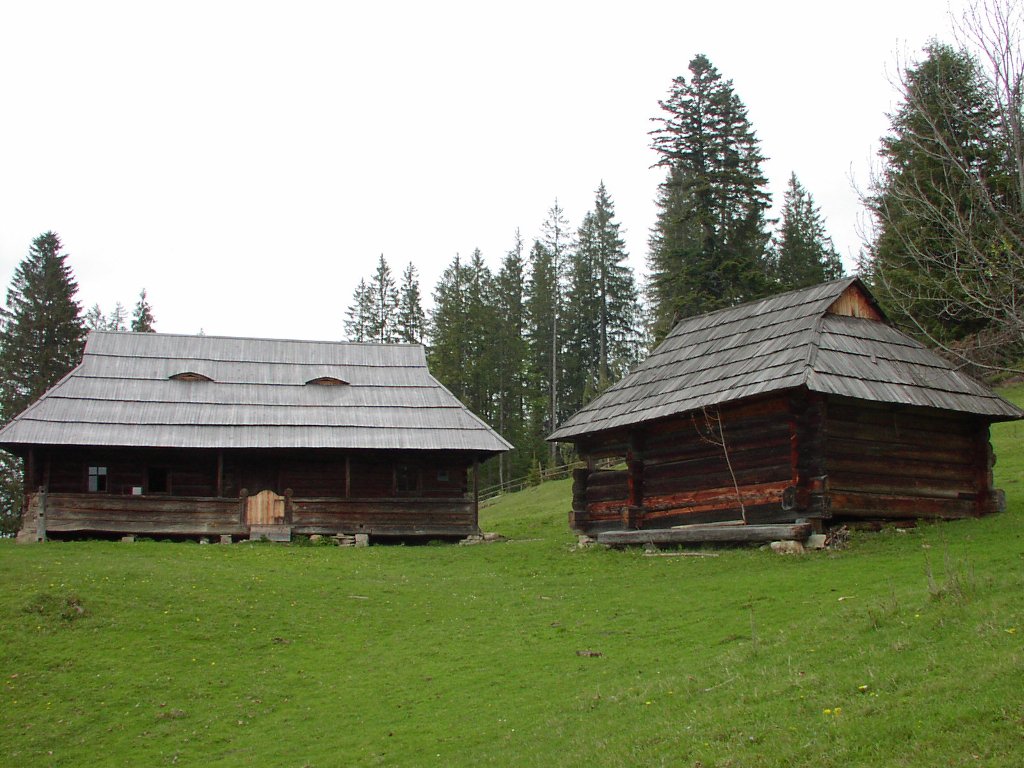
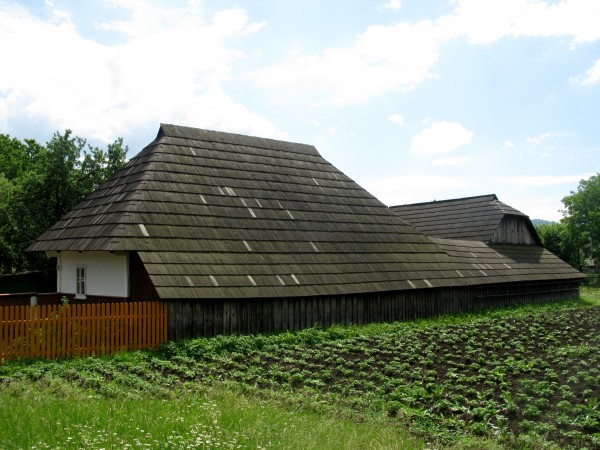
We'll start our journey from the main street of Stefan Mare, where you can't miss a right turn. The street stretches for many kilometers along the Seretel River almost to its source in the mountains. The first thing that catches your eye is a huge number of wooden houses under shingle roofs, some of which resemble Hutsul huts.
And in the very center of the village, a complex of two churches will attract attention, the first of which is a large stone cross-shaped church with a massive dome over the nave and three towers over the Babynets. The Church of the Intercession in Krasnoilsk, like the church in Chudey, is a seven-domed church. It was built during perestroika and consecrated in 1991.
The nave of this church houses the Krasnoilsk Icon of the Mother of God, painted in the 1950s by iconographer Smirnov, an immigrant from Russia, who created it for the Orthodox Andronnyk family, who in turn gave it to friends from the poor Mitryk family. For the first time, the icon manifested its supernatural properties ("wept") during the pre-Easter week in 1995. The Mytryks took it to the old Ivanovo church, where the church rector Vasyl Pavlenko, placing it in the altar, saw traces of an oily substance on the back of the icon. Later, the substance soaked the icon and began to show its miraculous properties, healing the residents of Krasnoilsk and pilgrims from other places. The rector of the church was happy to show me the icon: the water is still "crying".
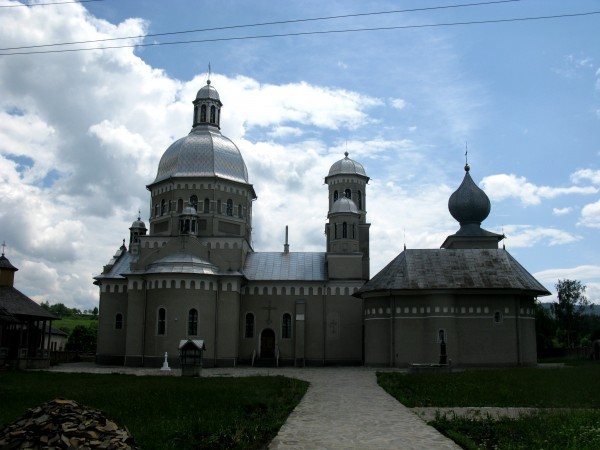
And a true connoisseur of church architecture will be interested in the small stone church that hides in the shadow of the new large church. The Church of St. John the Baptist, built in 1792 at the expense of boyar Oleksandr Ilshcha, is a unique example of a stone church for the Bukovyna Carpathian region. Something similar can be seen in Luzhany and Toporivtsi, but none of them is the same.
The thick walls and small window openings in the upper part of the wall suggest that it was built as a defensive structure. The church has a semicircular altar and chancel, and the nave has semicircular side extensions. The pitched roof has a large overhang and resembles the roofs of Bukovinian wooden "hut" churches. The top of the church is an atypical for these towns dome that resembles an onion in its shape.
On the territory of the churchyard, in an old hut under the shingles, there is an ethnographic museum, created in 1999 to foster respect for the preservation of national traditions and customs, the development of national and spiritual consciousness, and the formation of interest in the history of their family.
Next to the church complex is an old two-story building of the village council.
The southern outskirts of the village is the village of Slatina, which stretches for two kilometers along the Solonets stream (another name is Ezerul) under the forest. To get here, it's best to ask the locals about the turnoff to Slatina from the main street.
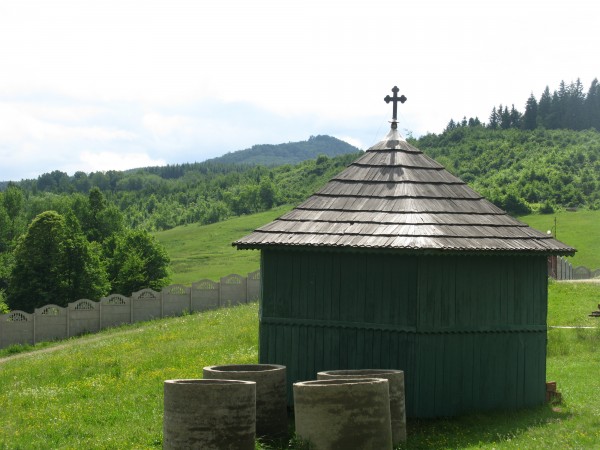
The Slatina Convent of St. John of Suceava was founded here in 1995. The monastery is still under construction. Today, the monastery has a monastic building with a house church and a well. The monastery church is under construction. The monastery will be visited by many pilgrims and tourists on the church holiday on June 15.
On the southern outskirts of the Slatyn corner, at the headwaters of the Solonets River, there is a unique well. Its depth is 12 meters, and the salt concentration is so high that a chicken egg does not even sink in the water. In the old days, people used to come from all over Storozhynets region, and even from Southern Bukovyna (now the territory of Romania) to get salt water. They exchanged it for money, leather, grain, and other goods. Interestingly, the water level in the well did not drop. It remains at the same level today. Today, the spring is located on the private property of Viktor Herman, a descendant of the former owner of the well, behind a fence. Unfortunately, I didn't make it to the well: the road was blocked by a stream that even my Dacia couldn't handle.
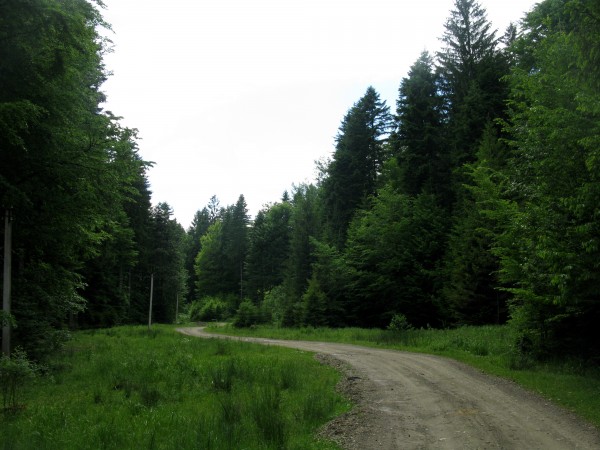
At the end of the tour of Krasnoilsk, it's worth taking a drive along the old Bucharest road. Actually, it is a continuation of the Storozhynets-Budenets-Chudey-Krasnoilsk road and leads south towards the Romanian border. To drive on it, you should have your passport with you: it is a border zone. The old road winds through a beech and fir forest surrounded by green mountains.
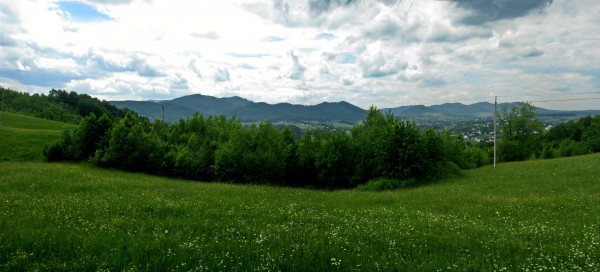
Before the Second World War, there was a small settlement of Germans on the road on the southern outskirts of Krasnoilsk. A German Lutheran church operated here. Today the former church is an Orthodox church. The road near the border offers an unforgettable panorama of Krasnoilsk and the surrounding mountains.


Accommodation in Krasnoyilsk, with:
Are there places with a fully equipped kitchen for cooking in Krasnoyilsk?
If you are interested in places with an equipped kitchen for cooking in Krasnoyilsk, check out these options: Homestead "Mriya" Mykulychyn
Planning to grill a barbecue and spend time with friends outdoors in Krasnoyilsk?
If you are interested in venues with a gazebo in Krasnoyilsk, take a look: Homestead "Mriya" Mykulychyn
Want to spend an evening by the fireplace in Krasnoyilsk with your loved one, friends or family?
If you are interested in cottages or apartments with a fireplace in Krasnoyilsk, check out these options: Homestead "Mriya" Mykulychyn
Which hiking trails pass through or near Krasnoyilsk?
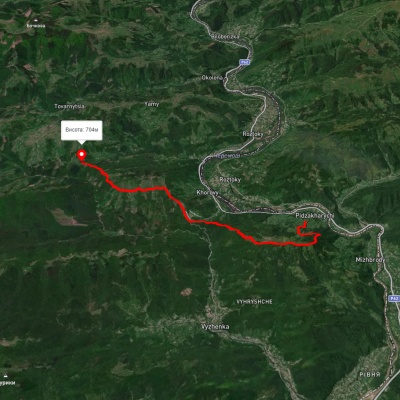
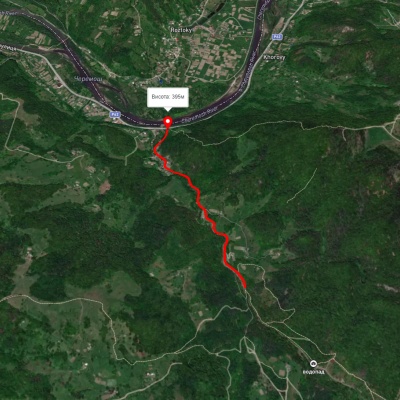
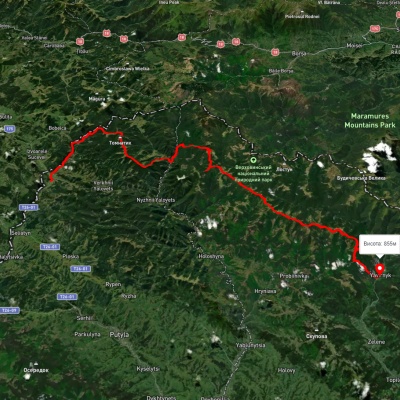
We suggest these hiking trails through or near Krasnoyilsk: Nimchych Pass – Protiate Kaminnia, Smuharski Waterfalls, Shepit village, via Mount Yarovytsia, Mount Pnivie and Mount Masnyi Pryslip to Shybene village, Shepit village – Mount Yarovytsia, Nyzhnii Yalovets village, via Mount Yarovytsia to Shypit village, Shepit village, via Mount Yarovytsia, Mount Pnivie and Mount Tarnytsia to Probiinivka village