Count Badeni Palace, Busk
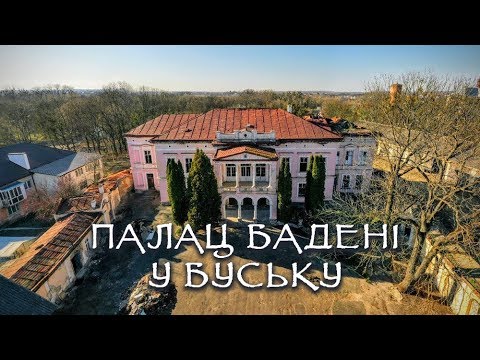
The BadeniPalace is an excellent example of European architecture of the early 19th century, located in the city of Busk (Lviv region). The family seat of Count Casimir Felix Badeni's family combines beautiful forms, interesting location, and a deep history of the ancient Galician family. The Badeni Palace is an important historical site in the city of Busk.
In the history of Ukraine and, in particular, Galicia, the Badeni count family, whose roots are lost somewhere in Wallachia, and according to other sources - in Italy, left a deep mark. The brothers Kazimierz and Stanisław owned several tens of thousands of hectares of land and processed grain in their own mills. In the city of Busk in the Lviv region, Kazimierz founded a brewery, and in Radekhiv, Stanisław expanded a similar enterprise and built a greenhouse. Badeni supported schools for Polish children and churches.
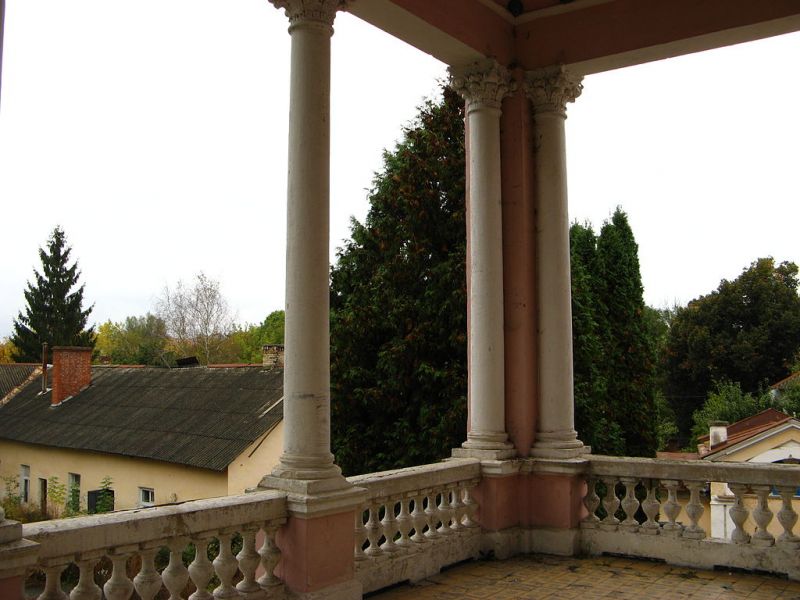
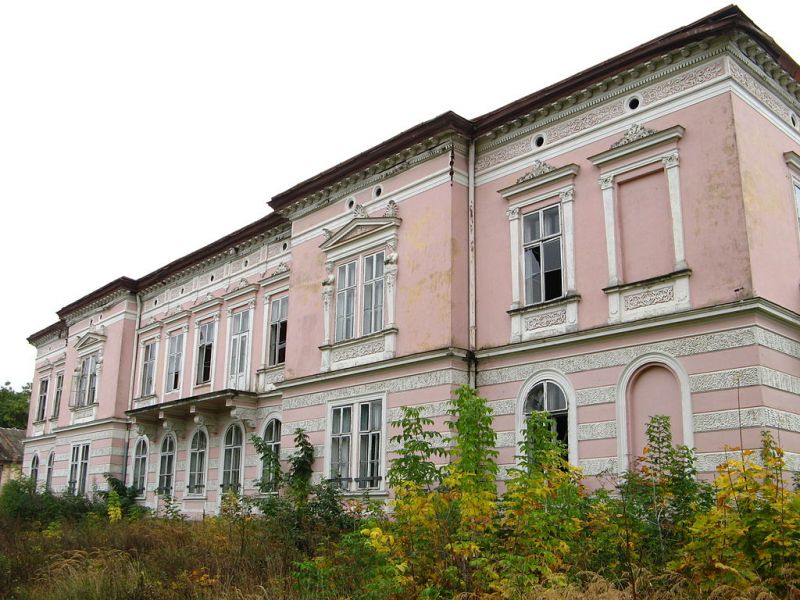
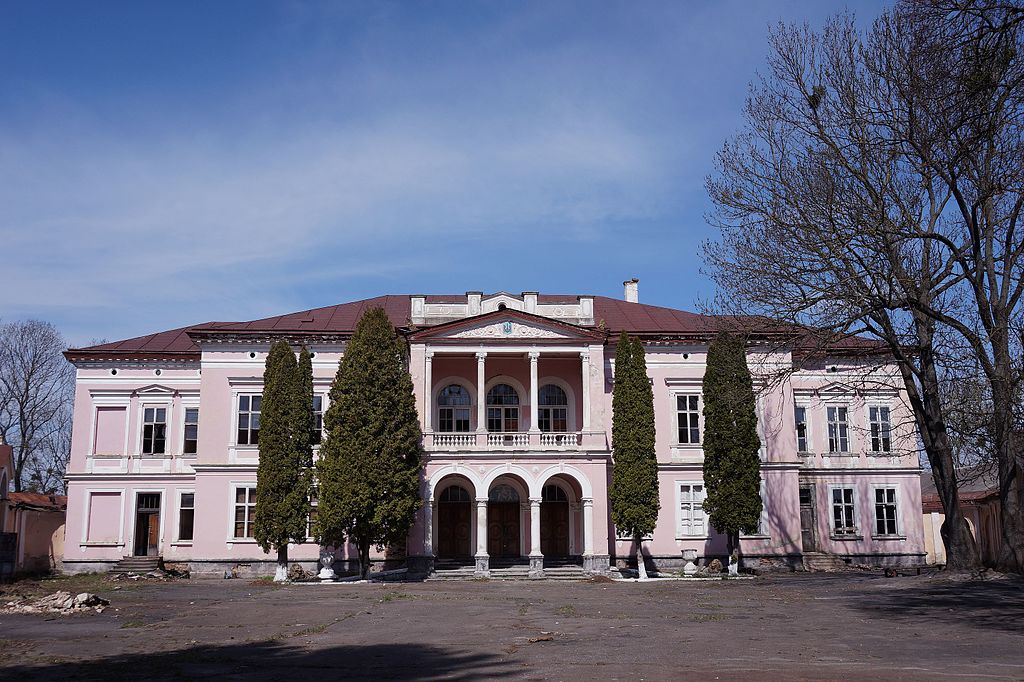
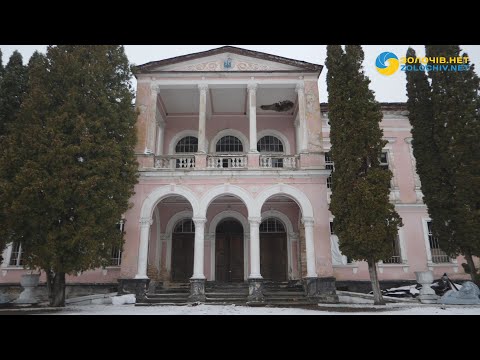
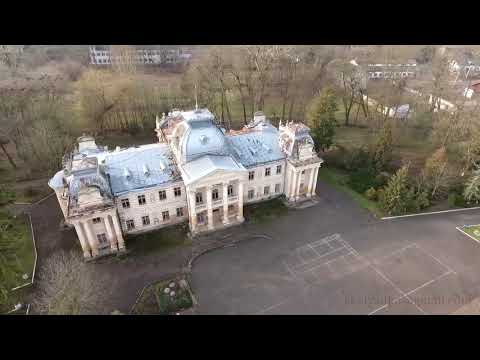
The classical building in Busk was built in 1810. Kazimierz Badeni purchased it in 1876, rebuilt it in the Neo-Renaissance style, and significantly increased the size of the building. The palace was built in the classical style. The building has two floors and many spacious rooms. The main façade in the center is decorated with a portico; the park (rear) façade is decorated with pseudo-risalits, a long balcony, and stone vases on the balustrade.
The palace and its surrounding grounds stand on a gentle hill in the center of Busk. From the side of the main entrance, the palace's territory is bounded by Petrushevycha Street, on the left side by the Western Bug River, and on the other two sides by a deep moat and a hillside that descends into the Ivan Franko City Park.
The first documentary information about the Busk Palace as the grandfatherly residence of the Busk elders Jablonowski is recorded in the Property Inventory of the Busk Starostvo from 1698 (the original document is kept in the Manuscripts Department of the Stefanyk Scientific Library in Lviv). It stood on the same site as the present-day Palace building, although it was much more modest in size, had a typical defense purpose, and was made of wood.
For more than 100 years (1776-1879), Busk and the surrounding areas were the grandfatherly property of the Polish magnate family of Mier, which also owned Radekhiv, Kholoyiv, Sokal, and Kamianka Strumylova. In the eighteenth and nineteenth centuries, the Mier family owned 3 palaces (in Radekhiv, Kamianka, and Busk) and a palace-type building in Lviv (on Virmenska Street).
The history of the Busk Palace is associated with the name of Wojciech Albert Mier (Mier Wojciech Albert; April 19, 1757, Radekhiv - † August 22, 1831, Kuty, Poland) - writer, poet, and translator, pro-Austrian politician, Austrian chamberlain (1778), privy counselor to the court and imperial sub-commissary (1806), Knight of the Order of St. Stephen (1817). St. Stephen (1817), envoy from the Galician State Sejm to Vienna (1808), member of the Scientific Society in Krakow (1827), honorary member of the Arcadian Academy in Rome, who was the son of Józef Mier, starosta of Busk and Sokal, and voivode of Pomerania. In 1798, Wojciech Mier inherited the lands of Busk from his father and held the title of the Didych of Busk until 1819, when, due to financial problems and the threat of bankruptcy, he was forced to lay down the Busk Didych and move to Leżajsk.
In 1810, Wojciech Mier began construction of the Busk residence. The prototype of the modern palace complex was a small one-story manor house, which underwent several major renovations and redevelopments during the nineteenth century.
According to the lustration of 1832, it was a brick one-story building under a shingle roof with metal gutters around the perimeter and three brick chimneys. Inside, there were large haylofts, 4 living rooms with large double windows with 16 quarter-sash windows and iron stoves for heating, a kitchen, a hall, a cradle, a roastery, a porch, and two vaulted brick beerhouses. Above the porch was a separate room with two windows, and above it was a summer gazebo made of oak boards.
The development of the Palace was continued by the new owners of Busk, who lived here permanently - Henryk Mier (1835-57) and his son Feliks (1857-79). They actually added a second floor and two side wings to the front building. After the death of Felix Mier in 1879, who left no descendants, his wife Anna Vierer briefly became the owner of the palace. In 1880, Felix's widow, in exchange for a lifetime rent, transferred the Buska property to Kazimierz Felix Badeni, her late husband's nephew, and moved to Vienna.
Casimir Badeni (1880-1909), his son Ludwik (1909-1916), and his grandson Casimir (1916-1939) were the owners of the palace and the Buskie grandfathers in turn.
Kazimierz Badeni was the future leader of the Conservative Galician Party and the Prime Minister of Austria-Hungary. The Badeni Palace is a two-story building with many spacious rooms. Its exterior and interior show authentic features of the Classicist and Neo-Renaissance styles, which ensures the high architectural and artistic value of the building. In particular, the interiors of the lobby, the palace building's salon, and the main staircase were designed by the master Petro Harasymovych in the Neo-Renaissance style and decorated with rich stucco moldings. The main façade of the building is decorated with a portico; the park façade was characterized by pseudo-risalits, stone vases, and a long balcony on a balustrade. In general, the exterior of the palace is characterized by modesty. In 1932, it was partially reconstructed.
Until 1939, i.e. before the arrival of Soviet power in Galicia, the estate was used by the Badeni family as a summer residence, and later began to gradually decay. Since 1961, a military unit was located here, and later it was disbanded and a police station was located here. However, later this institution left the building as well. At the end of 2012, the palace was inspected by a local commission. As of 2015, access to the territory and inside remained officially closed, but in practice, the closed central gate could only stop non-local tourists... In May 2015, a fire broke out here, causing great damage, but thanks to the skillful actions of firefighters, it was quickly extinguished and the palace survived.
In 1939, the palace was nationalized by the Bolshevik government. In 1939-41, the district committee of the Communist Party of Ukraine was located here. In 1941-44, Wehrmacht troops were quartered in the palace. After the advent of Soviet rule, the palace began to decay. Since 1961, a military unit has been housed here, so little of the palace's interior decor remains.
Count Badenyi's Palace in Busk is a building of high architectural and artistic value, requires urgent restoration and renovation work, and is an architectural monument of local significance. While in Busk, be sure to visit its beautiful wooden churches - the Church of St. Onufriy and the Church of St. Paraskeva. Although they are located far from the center of the town, they are undoubtedly worth a visit. Fans of old mansions are also advised to visit the Czartoryski Palace in Zhuravno and the Palace of Lviv Archbishops in Obroshyno.
In 2004, the military unit was disbanded, but the Ministry of Defense remained the balance holder of the building. Today, difficult negotiations are underway to give the building to the sphere of culture and tourism, but for now the palace remains a police building... In recent years, the palace has been empty and gradually deteriorating. As a result of a fire on 8-9.11.2016, the roof and ceilings were damaged over an area of 150 m².
On May 25, 2016, the castle complex was transferred to the ownership of the local community. Concerned residents of the city joined the initiative to save the palace and plan to turn it into a cultural and tourist center.