Church of St. Michael, Uzhok
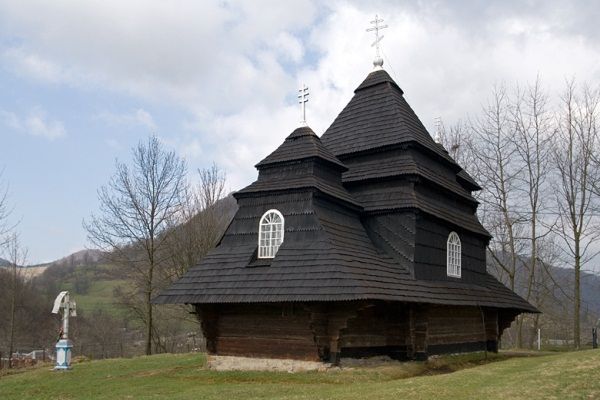
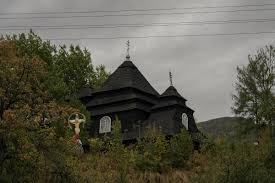
One of the most striking sights of the Carpathians is undoubtedly the wooden church of the Holy Archangel Michael, located in the village of Uzhok, Velykyi Bereznyi district, Transcarpathian region, an architectural monument of national importance (# 198).
The wooden church in Uzhok is a kind of business card of Transcarpathia. It is one of the most interesting buildings of the Boyko style. It is so perfectly placed on the slope that it seems to have grown on this spot. The backdrop for it is a striking natural amphitheater, where steep peaks break out from the broad slopes under the clouds, where variations in shapes and lighting effects, colors of wooded and grassy areas, gentle hollows and dark gorges with mysterious boulders provide a real dramatic production that never gets boring to contemplate. The forms of the church seem to repeat the natural surroundings: a massive hill dominates the central tent top, which is supported by a small tent above the altar area, and the quadrangular small tower above the narthex is graceful and naive, as if it is not yet ready for the dominance inherent in towers, and acts as an accompanying melody in a holistic harmonious composition.
The Uzhok shrine was included in the list of 16 wooden churches in the Carpathian region (eight from Poland and Ukraine) that claimed a special status on the UNESCO World Heritage List. The final decision on this was made at the 37th session of the UNESCO World Heritage Committee held on June 21, 2013 in Cambodia. St. Michael's Church was included in the UNESCO World Heritage List.
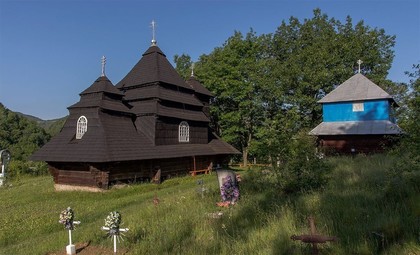
The Church of St. Michael the Archangel is a monument of wooden architecture of the Boyko school, built on the ledge of a high hill. With its laconic forms, it fits perfectly into the mountainous landscape. Three square log cabins determined the composition of its volumes, where the middle one is dominant, the top of which has two square hollows and a tent end. The mountain above the altar was made lower and with a single bend. A small bell tower is arranged above the narthex, which is much higher than the altar top, but lower than the central one, which deprives the mass of the church of immobility and introduces an element of dynamics and picturesqueness into its overall composition.
The church is made of wooden spruce beams. It is covered with shingles. The corner joints are made into a simple lock with a double-sided cutout with a straight countersunk tooth. It is a three-storey log house. In appearance and design, the monument belongs to the Boyko school of folk architecture, but, unlike it, the western top is higher than the eastern one. The church is square in plan, with the central log house wider than the other rectangular log houses. The log cabins of the central and eastern volumes are covered with hipped roofs with creases On the flat floor of the Babynets there are emporiums, above which rises a low frame bell tower with an open arcade of bell towers under a hipped roof. The roof, which rests on the log cabin overhangs, continues into the roof. To the northwest of the building is a two-tiered, square wooden bell tower. The crowns of the first log tier are covered with a dormer; the second frame tier is covered with a hipped roof.
The three parts of the temple, united by wide planes of the roof, resemble a conical hill with three tops. The darkened log cabins, figuratively carved at the corner joints, the roof slope, and the entrance door with a wide jamb, the upper part of which has preserved a precious inscription with the names of the authors of this architectural work, breathe chamber and friendliness.
The exterior of St. Michael's Church is simple and unpretentious. The temple is devoid of sharp external decorations and intricate details - it is slender and graceful. The silhouette of St. Michael's Church is extremely picturesque, with an expressive pattern, with a clear predominance of horizontal division of the tops. The wide slope of the dormer, covering the entire building, gives it a compact appearance and at the same time creates an organic transition from the environment to the main masses of the church, which grow above the gallery.
The churches of the upper reaches of the Uzh belong to the Boyko style and have numerous relatives in Lviv oblast-about fifty Boyko churches in the Skole and Turka districts and several more in Ivano-Frankivsk oblast and Poland, which is within easy reach from the Uzhok pass. However, the Transcarpathian churches create a kind of sub-style-the symmetry of the three domes with a dominant central one, characteristic of Boyko churches, is broken here. The top over the western part turns into a tower, and while in the Uzhok church the tower does not yet exceed the central tent, in the others it already rises. At the beginning of the twentieth century, such churches stood in almost every village along the upper reaches of the Uzh. Nowadays, five of them have been preserved, but three are mercilessly covered with tin.
According to legend, in ancient times Uzhok was a large settlement and had as many as seven mills, but after the plague spread throughout Europe, only one man remained in the village, who lived above the church. New settlers came from the neighboring Galician villages of Hnyla, Yavoriv, and Syanka. The church was built by master Pavlo Toniv from the neighboring village of Bitlia on the Lviv side of the Carpathians and master Ivan Tsyhanyn from the village of Tykhy. The builders finished the work on June 11, 1745. Other inscriptions on the log house add touches to the history of the church: "1895 Hyrych Petro curator weighed" (the church was being raised and the lower logs of the log cabins were replaced) and "Havrylko Vasyl curator" - apparently, this curator organized such a responsible repair work, and it was performed by the master Tsyhanyn from Tykhy (possibly a descendant of the church builder). It is said that the church was originally built high on a hillside, but old people found it difficult to climb up there, so the church was moved down the slope, almost to the road. The bishop's visitation of 1751 refers to a new church in Uzhok, equipped with all the books and two bells.
Near the church there is a classic Verkhovyna wooden bell tower, square in plan, two-tiered, covered with a four-pitched tent, built in 1927. During the First World War, the Austrian government requisitioned the bells for military use. The two new bells were much heavier, and they did not dare to install them on the bell tower.
The Uzhok church has been extremely popular for about 100 years. Its photos have been published many times in periodicals, books, and booklets. Many Transcarpathian artists have dedicated their paintings to this outstanding monument, and its image adorned the bishop's chapel and the chapel of the teachers' seminary in Uzhhorod.
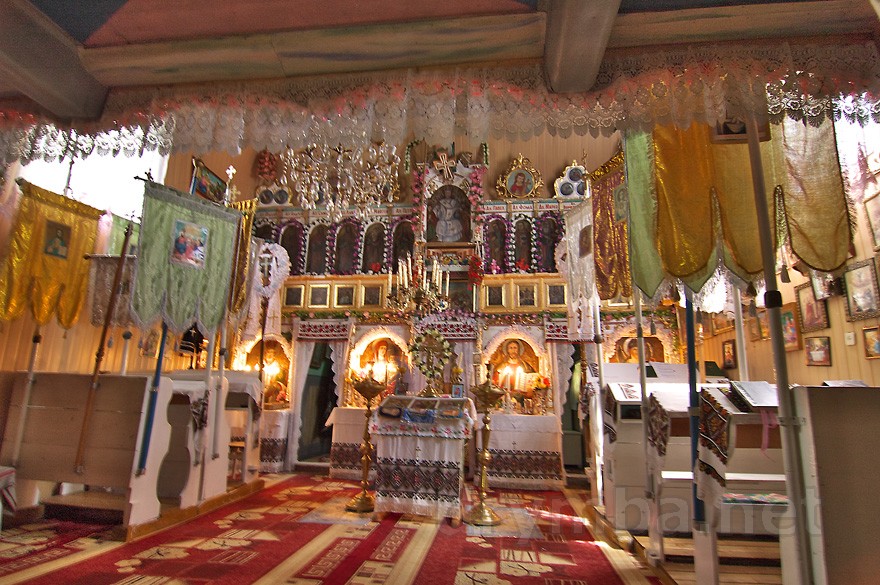
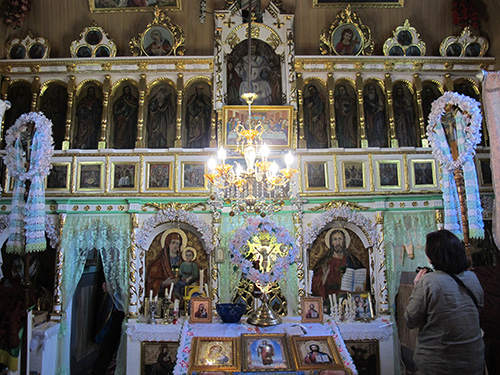
From the low, dark narthex, through a cutout arch, one can see the carved gilded iconostasis located in the main room. The fact that the upper parts of the nave's dome are immersed in darkness and its zenith is almost invisible enhances the sense of height of this room, although in absolute terms it is very modest. The painting and carvings of the iconostasis are quite peculiar. Especially memorable is the royal gate, on the panels of which the master placed two symmetrical stems, in the upper curls of which he wrote "Annunciation" in medallions, and in the lower ones - the four evangelists.
In the interior of St. Michael's Church, the master used the contrast of light and shadow. Getting from the dark babinets (a room for women) to the solemn, elegant, illuminated central part of the church, which is perceived as much larger than it actually is. This effect was undoubtedly taken into account by talented folk architects. The impression is enhanced by the beautiful carved iconostasis, which plays with gilding in the sunlight that comes in through the upper windows.
The interior of the church captivates with the contrast between the semi-dark low narthex and the majestic space of the central room, which is open to the hipped roof. The decorative richness includes a figuratively carved passage from the narthex to the nave, carvings of the eighteenth-century iconostasis, some preserved fragments of old carvings, a beautiful canopy and a kyot in the sanctuary. Unfortunately, the interior was significantly damaged due to good intentions: a new entrance door was installed, the smooth walls were upholstered with cardboard, paper and painted, all the icons were repainted, plastic flowers were hung, etc.
St. Michael's Church in the village of Uzhok is a functioning church, belongs to the diocese of the UOC-MP, is considered a kind of business card of Transcarpathia, and is an architectural monument of national importance. The church is a UNESCO World Heritage Site, one of 8 wooden churches on Ukrainian territory. In particular, two churches from Zakarpattia were included, along with the church in Uzhok, and the Strukiv church from the village of Yasynia, which is at the opposite end of the region. And another church on the UNESCO list, the Church of the Cathedral of the Virgin Mary in the village of Matkiv, is located relatively close to here, but in the Lviv region, on the other side of the Carpathians.
Video 2
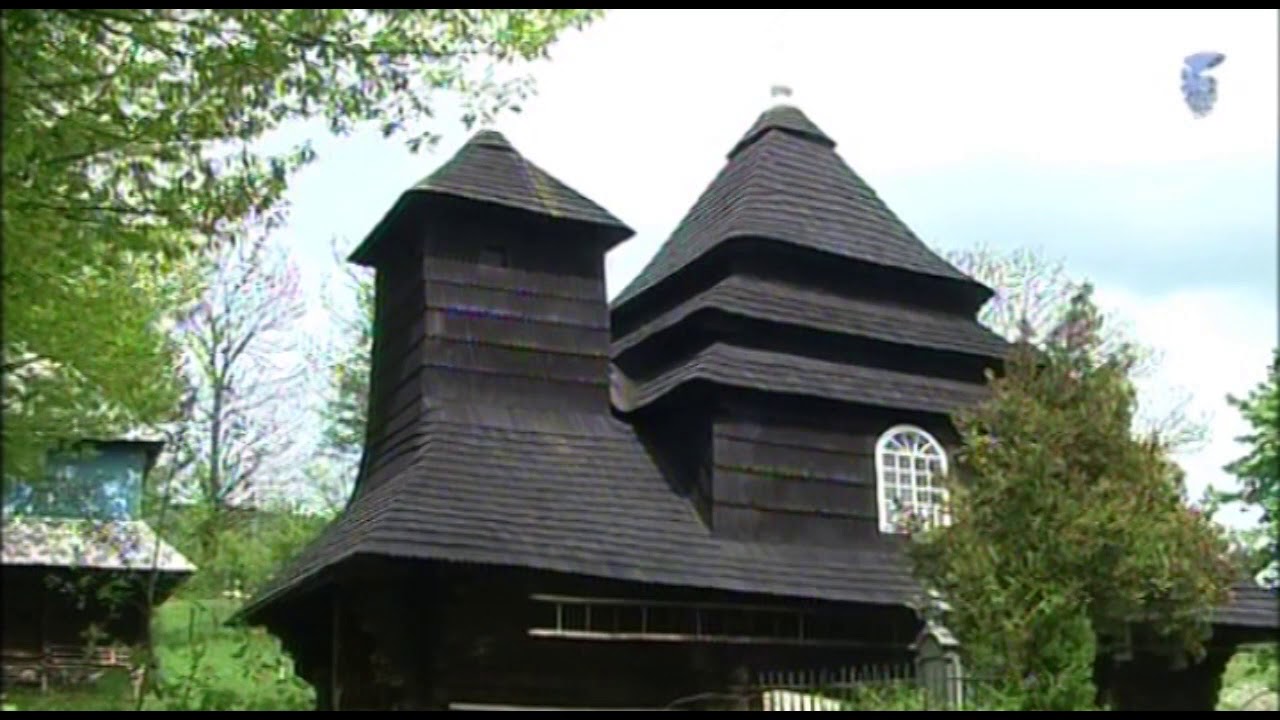 Ужок. Дерев'яна церква Святого Архангела Михаїла 1745 рік.Юрій Крилівець
Location on the map
Comments
Places to stay nearby
All stays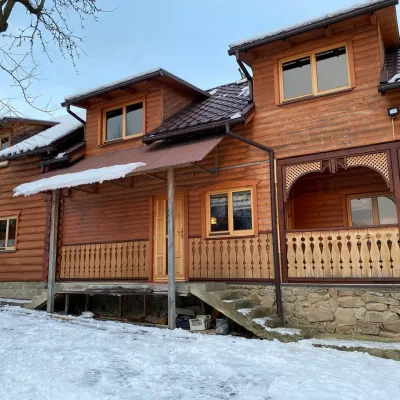 HomesteadVilla UzhVyshkovounder 1 km from Church of St. Michael, UzhokThe cottage "Villa Uzh" is located amidst picturesque mountains in the village of Uzhok, 5 km from the Volosyanka-Zakarpatska railway station.Nearby: Church of St. Michael 500 mMt Opolonek 2.2 km3 trails
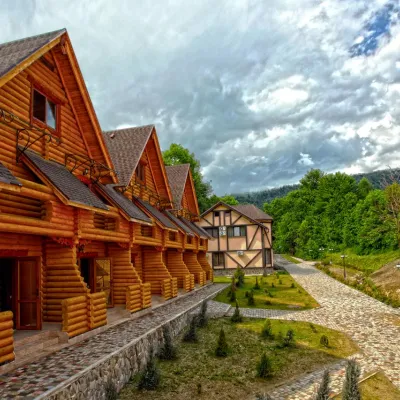 HotelHealth Complex "Uzhansky Kupeli" UzhokUzhok1.2 km from Church of St. Michael, UzhokHot tubPoolSaunaNearby: Church of St. Michael 1.2 kmMt Opolonek 2.2 km6 trails
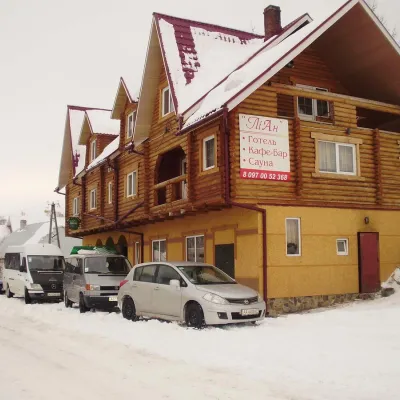 HotelHotel-Restaurant "LiAn" MykulychynVolosianka1.5 km from Church of St. Michael, UzhokSaunaTransferNearby: Church of St. Michael 1.5 kmMt Opolonek 2.0 km2 trails
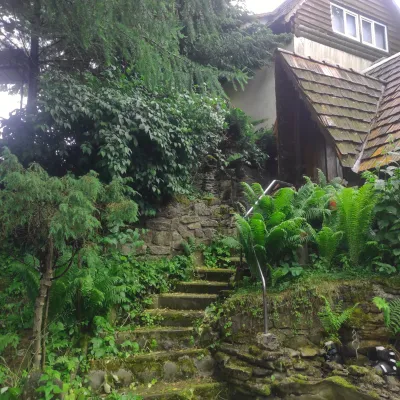 HomesteadHomestead "U Dyadi Vani" VyshkaVyshka12 km from Church of St. Michael, UzhokPoolSaunaBBQNearby: Mt Krasiia 3.4 km2 trails
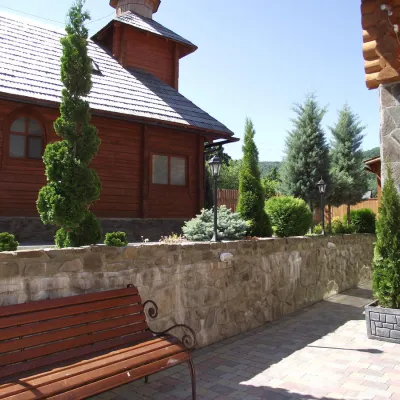 HotelTOP Resort&Spa Vyshka (2.7 km to the Krasia lift)Vyshka12 km from Church of St. Michael, UzhokPoolSaunaSPANearby: Mt Krasiia 2.7 km1 trail
 HotelGuest house "Urochyshche"Vyshka13 km from Church of St. Michael, UzhokPoolSaunaKidsNearby: Mt Krasiia 2.3 km1 trail
Trails nearby
All trails HardMulti-dayMarkedUzhok village to Bilasovytsia villagevia Husnyi village, Mount Drohobytskyi Kamin +2Elevation profile540–1 385 m30.3 kmascent 1 300 m≈ 10 h walkingunder 1 km from Church of St. Michael, Uzhok
 HardMulti-dayUzhok village to Zhdeniievo villagevia Mount Drohobytskyi Kamin, Starostyna village +3Elevation profile406–1 351 m36.4 kmascent 1 246 m≈ 11.5 h walkingunder 1 km from Church of St. Michael, Uzhok
 ModerateTwo-dayUzhok village to Mount Velykyi Verkhvia Mount Drohobytskyi Kamin, Mount StarostynaElevation profile569–1 304 m18.2 kmascent 1 065 m≈ 6.5 h walkingunder 1 km from Church of St. Michael, Uzhok
Nearby attractions
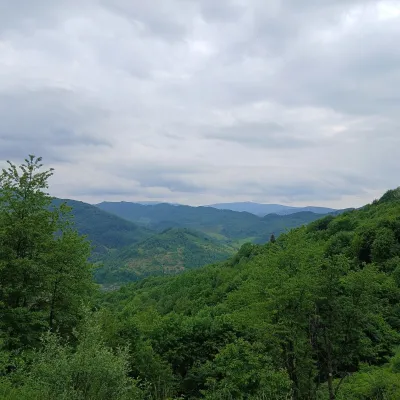 PeakMount OpolonekUzhokaltitude 1 028 m2.1 km from Church of St. Michael, UzhokOpolonek (also Opolonyk) is a 1,028 m mountain in the Bieszczady, part of the Eastern Beskids. The summit lies right on the state border between Ukraine and Poland;...
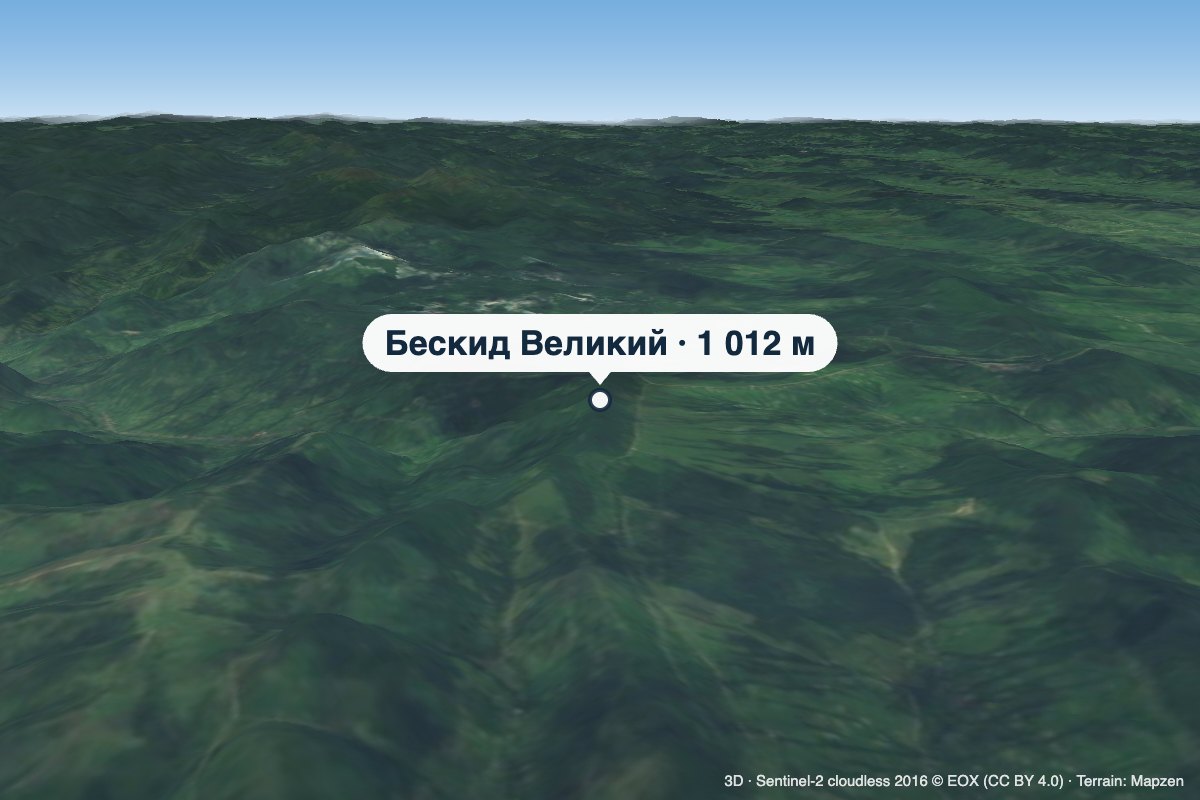 PeakMount Beskyd VelykyiSiankyaltitude 1 012 m · Watershed Ridge range4 km from Church of St. Michael, UzhokBeskyd Velykyi is a 1,012 m summit on the border of Lviv and Zakarpattia oblasts. It is the first rise of the Vododilnyi (Verkhovyna Watershed) Ridge counting from the...
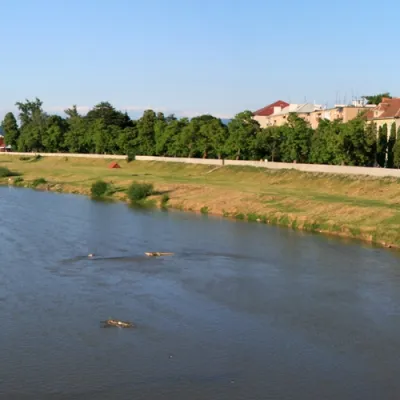 RiverLatorytsiaRoztoka7.9 km from Church of St. Michael, UzhokLatorytsia River - Latorytsia and its surroundings are a popular destination for eco-tourism. The river's flow through mountains and forests creates picturesque...
Craft nearby
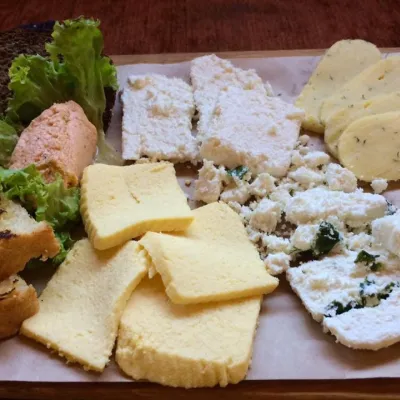
All craft places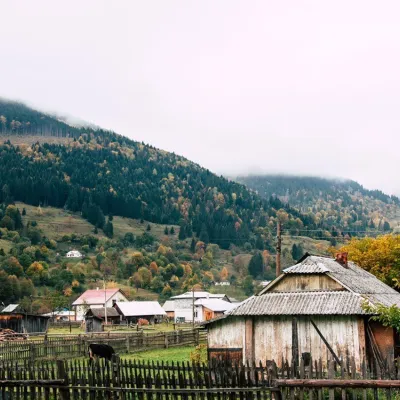 Cheese dairies & pasturesBilasovytsi Cheese Dairy, BilasovytsiaBilasovytsia23 km from Church of St. Michael, UzhokBilasovytsi Cheese Dairy is a small family dairy in the Transcarpathian village of Bilasovytsia, set at about 600 metres above sea level at the foot of Mount Pikui.
 Eco farmsCsiga-Biga “Merry Stable” Farm, Velykyi BereznyiVelykyi Bereznyi32 km from Church of St. Michael, UzhokVesela Stainia Csiga-Biga (“The Merry Stable”) is a small family farm in the town of Velykyi Bereznyi in the Uzh valley.
 Cheese dairies & pasturesTurianskyi Dvir Estate Cheese Dairy, Turia PolianaTurya Polyana33 km from Church of St. Michael, UzhokTurianskyi Dvir is a private country estate on the shore of a mountain lake in the village of Turia Poliana in the Perechyn area, about 50 kilometres from Uzhhorod.
 Honey & meaderiesTurianskyi Med Apiary, Turia RemetaTuri Remety35 km from Church of St. Michael, UzhokTurianskyi Med («Turia Honey») is the family apiary of Myroslava and Viktor Minkovych in Turia Remeta, a picturesque village in the Turia river valley near Perechyn.
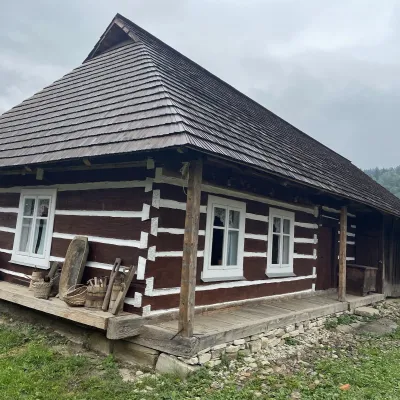 Ethno parks & homesteadsNanashkova Khata Ethno-Homestead, Lopushanka-KhomynaStrilky37 km from Church of St. Michael, UzhokNanashkova Khata ethno-homestead is a restored Boyko house built in 1930 in the village of Lopushanka-Khomyna, Sambir district, in a quiet mountain valley of the Lviv...
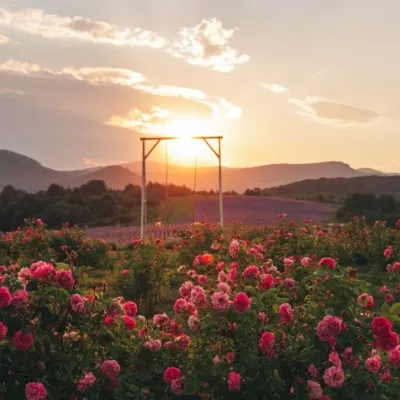 Eco farmsLavandova Hora lavender farm, PerechynPerechyn39 km from Church of St. Michael, UzhokLavandova Hora (“Lavender Hill”) is a family farm on the edge of Perechyn that in just a few years has turned an ordinary hill above the town into one of the most...