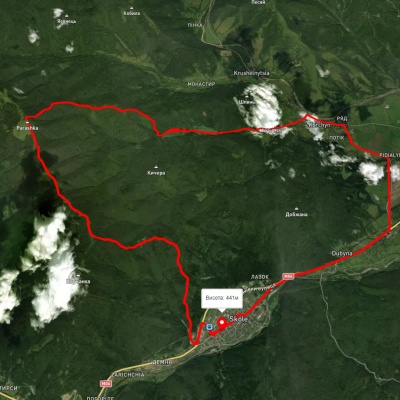
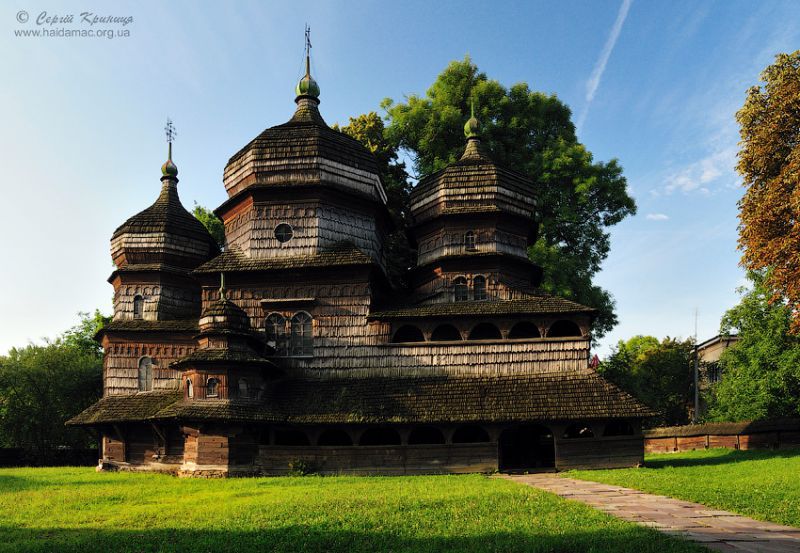
Church of St. George, Drohobych
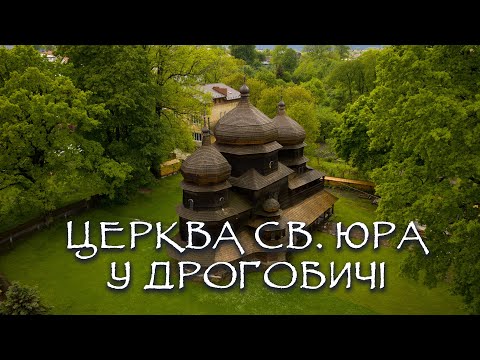
Traveling around Western Ukraine, you can see a good hundred wooden churches. And each of them is interesting in its own way. However, among this list, the Church of St. George in Drohobych stands out as a monument of Galician wooden architecture of the late XV - early XVI centuries, one of the best preserved and one of the best monuments of ancient Ukrainian sacred architecture. It was built in the fifteenth century, rebuilt several times, and given its final architectural form by the talented Ukrainian builder Hryhorii Teslia from Drohobych. It is a part of the wooden architecture department of the Drohobychyna Museum.
In 1657, an old church was transported from the village of Nadiiiv near Dolyna and the existingchurch was completed with its material, with a babynets built from the altar log, and the altar made of new material. The church was exchanged for salt, dismantled, and transported to Drohobych on oxen. It was erected on the site of the previous church, which had burned down, and in 1678 a bell tower was built nearby. But, in fact, the Drohobych church was not imported, as is commonly recognized, but only 1/3 of it (the narthex and the Vvedenskyi chapel) was built from Nadiivka timbers, which indicates that the monument is entirely local in origin. There is a lot of common information about the "bringing of the church": in the dilogy of Drohobych resident Andrzej Hsiuk we can read that it was dismantled and brought from Kyiv.
The Church of St. George was repaired several times, but it has not lost its original appearance. The church was built without a single nail: all the wooden parts were fastened with wooden stakes. Unfortunately, modern craftsmen used ordinary nails to repair the church.
But the greatest value of the church is hidden inside: the iconostasis and wall paintings of the 17th century. Their author is Stafan Medytskyi. By the way, there are only a dozen wooden shrines in Ukraine that still have paintings. This list includes the churches of St. George and the Holy Cross in Drohobych. The uniqueness of these paintings is that with their help we can imagine how Ukrainians of that time imagined hell and heaven. We can even see what clothes they wore back then.
The painting near the choirs is interesting. It depicts a couple of lovers and a drunkard being driven by a devil in a wheelbarrow straight into the mouth of Leviathan. It can be assumed that adultery and drunkenness were considered terrible sins at that time. The image of hell, which for some reason is occupied by women, is striking. On the icon depicting the execution of one of Christ's apostles in Malta, the author drew an executioner in a hat and people dressed in 18th-century bourgeois clothes, landscapes of Drohobych and the Carpathians. Obviously, the icon painter wanted to make the scene from the New Testament understandable to the parishioners. This makes the icon unique.
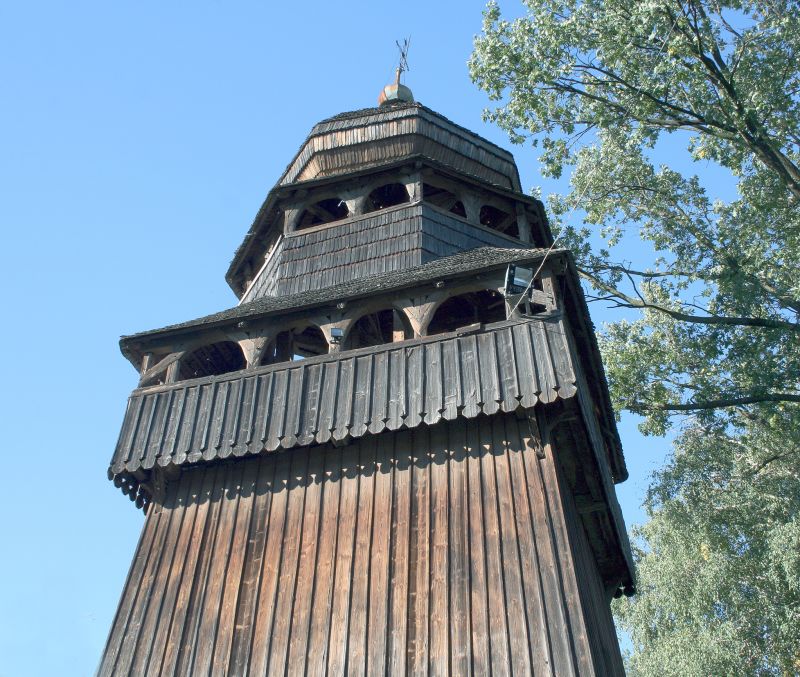
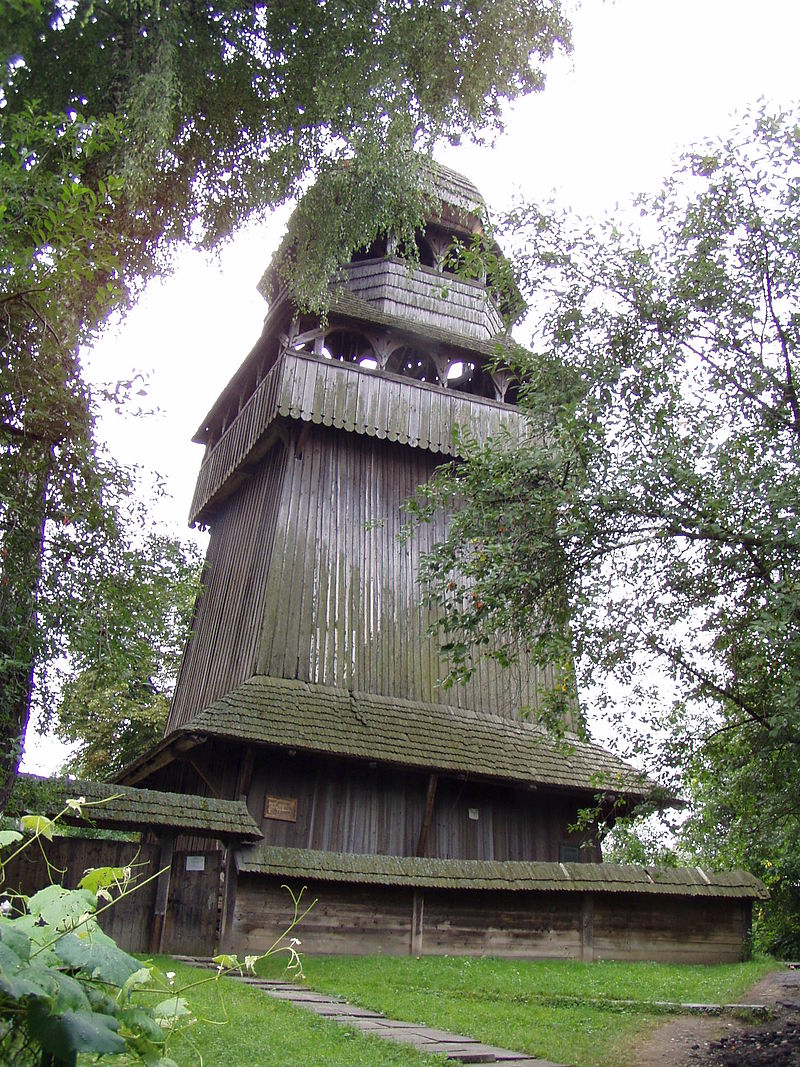
Thebell tower of St. George's Church was built in 1678, is located on the northwest side of the church, and was often repaired until 1711, but it has retained its original appearance and is one of the best preserved monuments of seventeenth-century Galician folk architecture. This wooden bell tower is square in plan, four-tiered, crowned with a Baroque dome, and combines the features of defensive wooden towers and sacred architecture.
The area near the church has repeatedly been the site of significant historical events. On July 6, 1941, several thousand Drohobych residents and residents of the surrounding villages gathered on the square in front of St. George's Church. The ideology advisor of the Drohobych regional leadership of the OUN and, at the same time, the deputy head Vasyl Mykoliak ("Maple") informed the audience about the proclamation of the Act of Restoration of the Ukrainian State on June 30, 1941, in Lviv, occupied by German troops, and the establishment of the Government of the Ukrainian State in Lviv, headed by Prime Minister Yaroslav Stetsko. Those present at the meeting swore allegiance to Ukraine.
St. George's Church is a wooden, three-tiered (three-story) church with a square main nave, faceted altar and narthex logs, topped with three baroque domes and covered with shingles, and belongs to the ancient tradition of Galician church construction. To the west and east of the central log house are five-walled faceted log houses of equal size. The temple culminates in three floors without hollows. Above the Babinets are the choirs with a gallery arch and the Chapel of the Presentation, which was accessed by another entrance from the courtyard; this presence of another church in the church adds to its uniqueness and originality. Remains of exterior paintings are preserved on the cornices and walls of the second tier of the Babynets. The church is characterized by a carved and gilded altar.
The interior of this sacred building is painted with frescoes made under the direction of the painter Stefan Medytskyi, who worked with his sons, using only natural pigments from clay and soot. The works on religious themes ("The Passion of Christ") alternate with rich floral decorative ornaments. The iconostasis and icons by the same artist ("Akathist to the Mother of God," "Acts of the Apostle Paul," "Beheading of the Great Martyr Yurii") are in brown-ochre and olive-green colors; with modest painting means the artist gave an individual, almost portrait-like expression to the depicted figures. The relief of the vine carvings on the columns of the iconostasis is close to the carvings on the stone. There is not a single free space left on the walls of this shrine - they are all covered with paintings that impress with their lightness and depth. The icons of this painter are executed mainly in olive green and brown colors, with a pronounced individual, portrait expression of the depicted figures. The surviving paintings of the church testify to its great artistic value.
Today, the church is part of the wooden architecture department of the Drohobychyna Museum.
On April 17, 2012, the third day of Easter, the area near the church became one of the city's venues for the Great Gayivka, which was attended by at least 5,583 participants, which was recorded by representatives of the Ukrainian Book of Records as a record for the number of participants. In particular, the participants of the Great Haiivka held an exhibition of works by students of the Drohobych art school, performances by creative groups from the city and neighboring Stebnyk, a master class on Drohobych icon painting, a concert by the Verkhovynka dance group, and from here they later went to the pantry.
The Church-Museum of St. George in Drohobych, Lviv Oblast, on June 21, 2013, together with seven wooden churches in Ukraine (the Church of the Holy Trinity in Zhovkva, the Church of the Descent of the Holy Spirit in Potelychi, Zhovkva District, the Church of the Cathedral of the Blessed Virgin Mary in Matkovi, Turkiv District, and the Church of the Holy Spirit in the village of Matkovi in Turka district, Lviv region, as well as the Church of the Ascension in Yasenia and the Church of St. Archangel Michael in Uzhok, Zakarpattia, and the Church of the Nativity of the Blessed Virgin Mary in Nyzhniy Verbizh and the famous Church of the Descent of the Holy Spirit in Rohatyn, Ivano-Frankivsk region) are UNESCO World Heritage Sites.
Drohobych is located 85 kilometers from Lviv. The city is served by electric trains and passenger trains from Truskavets, Kyiv, and Dnipropetrovs'k.
St. George's Church is located at 25 Solonyi Stavok Street. You can walk here in 10-15 minutes from the town hall on Rynok Square.
Drohobych is a city of regional subordination, the second most populous city in the Lviv region, the administrative center of the Drohobych district (which is not included in the city). The city was founded in the late XI century. In 1340, it became the starosta of the Przemyśl Land of the Russian Voivodeship of the Kingdom of Poland, later the Commonwealth of both Nations. Since the 15th century, the city has been known in Europe as a saltworks center. After the First Partition of Poland, Drohobych became part of the Austro-Hungarian Empire. In the mid-nineteenth century, it became Europe's largest oil center. In 1939, under the Molotov-Ribbentrop Pact, it was ceded to the Soviet Union. Yurii Drohobych and Bruno Schulz were born in the city.
Accommodation around Church of St. George, Drohobych:


Which trails pass by Church of St. George, Drohobych?
We suggest these hiking trails through or near Church of St. George, Drohobych: Sopit village, via the Sopit polonynas to Sopit village, Korchyn village, via Hurkalo Waterfall and Mount Parashka to Krushelnytsia village, Kamianka village, via Mount Lopata, Skole and Mount Parashka to Krushelnytsia village, Korchyn village – Hurkalo Waterfall, Skole, via Mount Parashka, Hurkalo Waterfall and Korchyn village to Skole, Skole, via Mount Parashka, Hurkalo Waterfall and Korchyn village to Verkhnie Synovydne village



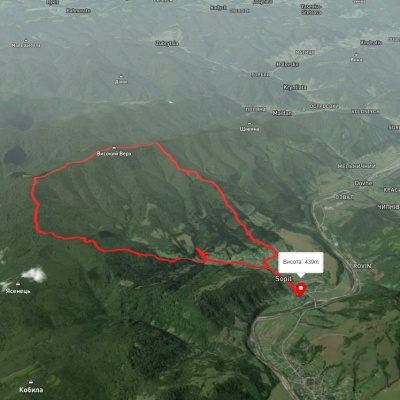
Sopit village, via the Sopit polonynas to Sopit village
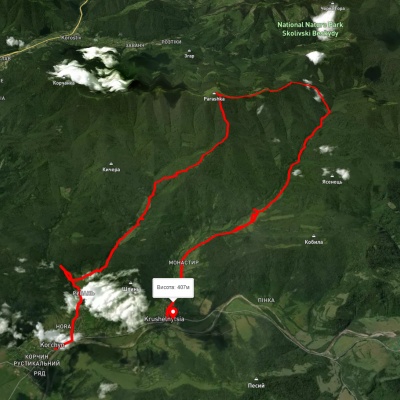
Korchyn village, via Hurkalo Waterfall and Mount Parashka to Krushelnytsia village
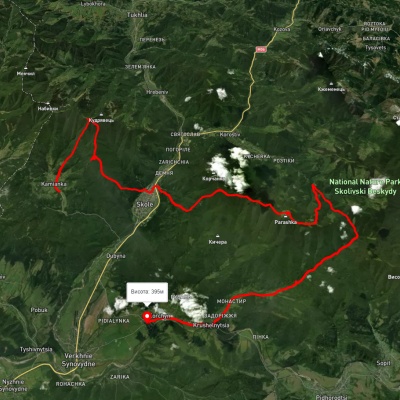
Kamianka village, via Mount Lopata, Skole and Mount Parashka to Krushelnytsia village
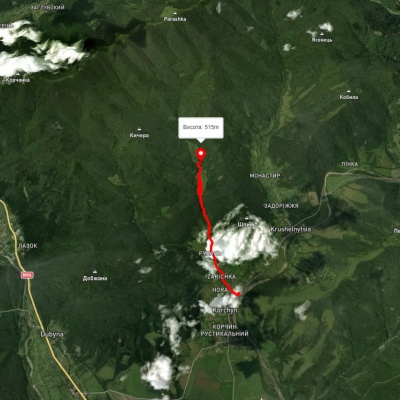
Korchyn village – Hurkalo Waterfall