Church of St. Francis, Delyatyn
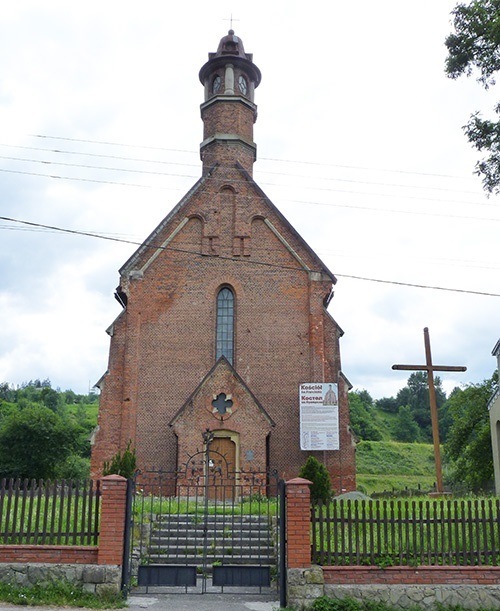
Rich salt deposits, as a guarantee of the prosperity of the Kolomyia region, inscribed its numerous villages on the pages of history as early as the time of the White Croats. However, they began to exist only on March 8, 1400, when the royal Polish authorities granted these lands above the Prut River to the brothers Stetsko and Ivashko Nagovych.
However, there is no information about the existence of a Catholic parish here for centuries, although for a long time Delyatyn, as the largest settlement, actually served as the administrative center of the surrounding lands under the Polish aristocracy. In 1645, the castle founded by Andrzej Bełżecki was even completed here, and in the eighteenth century the estates were transferred to the Potocki counts.
According to official documentation, until 1857 the local Roman Catholic community was subordinated to the Nadvirna parish and did not have its own church, despite the personal visit of Emperor Franz Joseph (1830-1916) to the village in 1851. However, it may have been this coronation visit that got things off the ground.
Thus, on July 31, 1857, the Austrian government officially established a chapel in Deliatyn under the patronage of the Religious Fund, including a dozen and a half surrounding Nadvirna villages. At the same time, the cornerstone was laid for the foundation of the church of St. Francis, the patron saint of the emperor.
TheRoman Catholic Church of St. Francis is the main attraction of the village of Delyatyn. The foundation stone of the church was laid with the participation of Emperor Franz Joseph. The Austrian sovereign arrived on the day of the foundation of the religious building and personally laid several stones of the future monument and poured gold coins into the corners of the building. He also planted four cedars on the territory adjacent to the church, which were brought from Vienna. This event took place in 1857.
The construction of the church was completely completed in 1865, and the consecration took place on Christmas Eve on December 24 of that year by Father A. Yablonsky. At the same time, the Deliatny chapel officially came into its own only almost twelve years later with the blessing of Archbishop Francis Xavier Wierzchlejski (1803-1884).
To confirm the official status of the church of St. Francis, it was still necessary to undergo a consecration (conducted by Archbishop Severin Titus Morawski (1819-1900) on September 2, 1882), and only after that the parish appeared on the pages of official documents of the local representation of the Catholic Church.
The significant destruction of the church (damaged tower and roof) caused by the First World War of 1914-1918 was repaired only in 1924 by the Polish Republic, which gained control of these lands after the war. This was due to the significant destruction of the most famous Eastern European salt resort, with up to 80% of its housing stock destroyed to the ground.
During the Second World War of 1939-1945, the walls of the church of St. Francis of Assisi stood, but the occupying Soviet authorities closed it to parishioners and worship in 1945, placing here, in their "best" traditions, first a military warehouse (until 1970), and then a workshop of the local timber mill in the hope of killing the Christian soul. However, just before the collapse of the Soviet Union, the authorities remembered its architectural value and began renovations to accommodate a museum. These plans were not to be realized.
The warmth of the flame of faith warmed these walls only when Ukraine regained its independence - on August 18, 1994, the church was returned to the Delyatyn community, which completed the restoration and renovation work on its own. The renewed Catholic shrine was re-consecrated on September 25, 2016, by Metropolitan Archbishop Mieczyslaw Mokrzycki of Lviv.
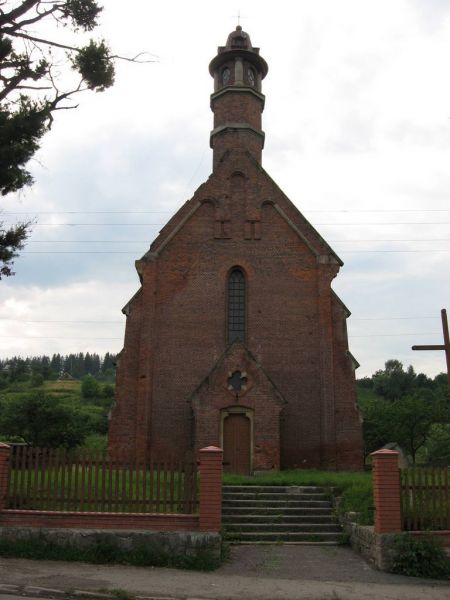
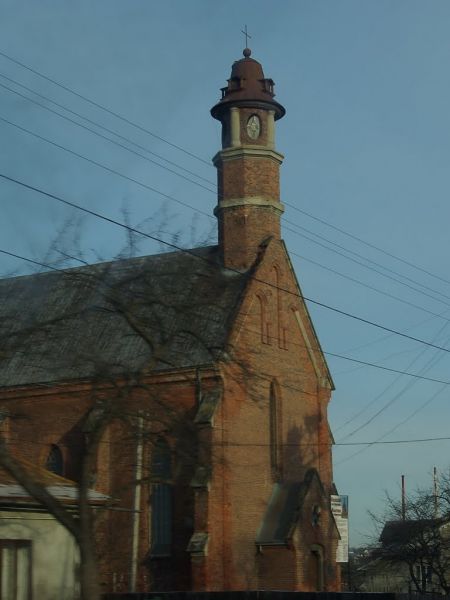
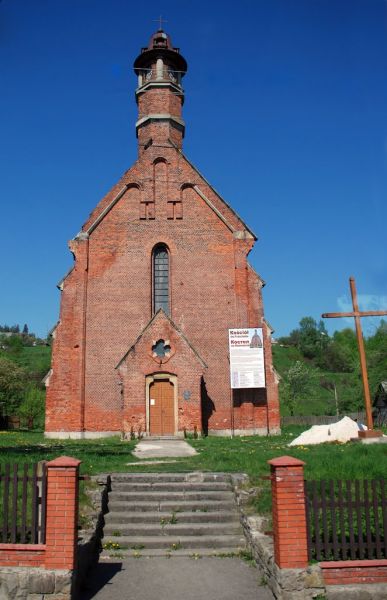
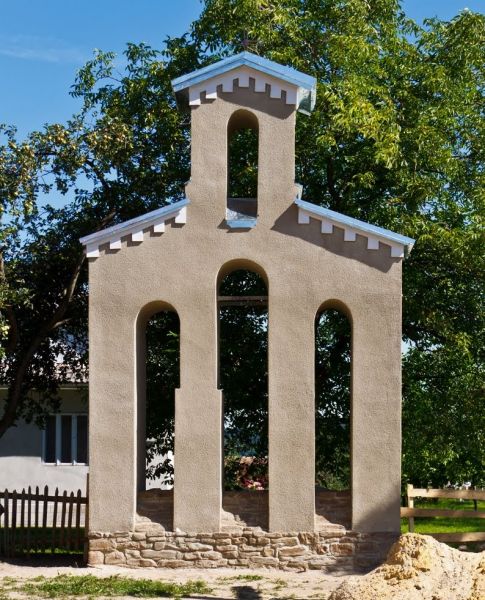
The small single-nave church of St. Francis in a mixed Romanesque-Gothic style of red brick under a gable roof is located on a hill along the Mukacheve-Frankivsk-Lviv highway in the central part of the village. It has a rectangular perimeter with ribs of stepped buttresses on the sides (four of each), a faceted apse with a rectangular vestry extension, and a small narthex in the southeast. To the right is a three-arched four-pillared two-tiered bell tower decorated with denticles.
The decorative elements of the exterior facades are entirely made of figured masonry, including box and arched door and window openings, the cross of the narthex tympanum, corner blades, the arcature of the central tympanum, the rose of the northern apse, and, of course, the the main highlight is a faceted three-tiered tower on the crest of a steep roof under a shalom-shaped dome with lucarnes, and its upper tier is emphasized by simple stucco columns of the Doric order alternating with oval shrope windows.
Address: 211a 16 July St., Delyatyn, Ivano-Frankivsk region, Ukraine.
By car on the highway H09 (Mukachevo - Ivano-Frankivsk - Lviv) to Delyatyn, the church is located along the highway. By public transport to the center of Delyatyn, and then in the southern direction to the Church of St. Francis.
Video
 Костёл Святого Франциска.Александр Супрун
Location on the map
Comments
Places to stay nearby
All stays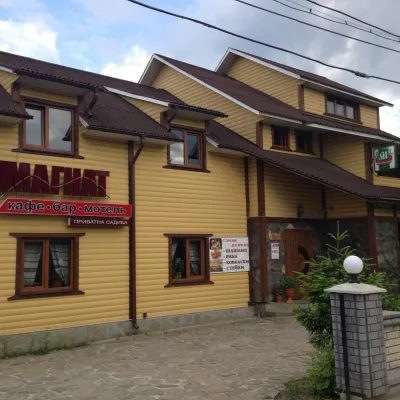 HomesteadHomestead "Mahnat" MykulychynDeliatynunder 1 km from Church of St. Francis, DelyatynSaunaBBQKitchenNearby: Church of St. Francis 200 mWhite Stone Rock 5.3 km1 trail
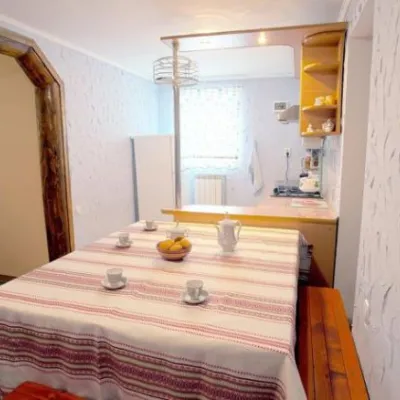 HotelHomestead "U Pani Adelyi" DelyatynDeliatyn1 km from Church of St. Francis, DelyatynSaunaFireplaceKitchenNearby: Church of St. Francis 1.0 kmWhite Stone Rock 6.2 km1 trail
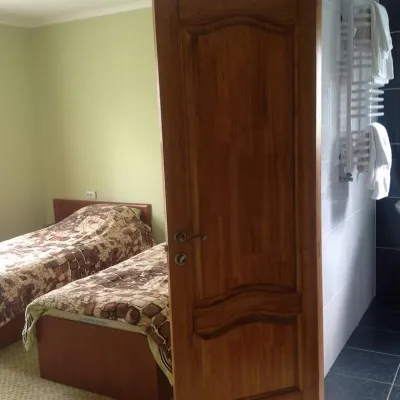 HomesteadGuest House "Vizyt" DelyatynDeliatyn1.1 km from Church of St. Francis, DelyatynBBQKitchenParkingNearby: Church of St. Francis 1.1 kmWhite Stone Rock 4.7 km5 trails
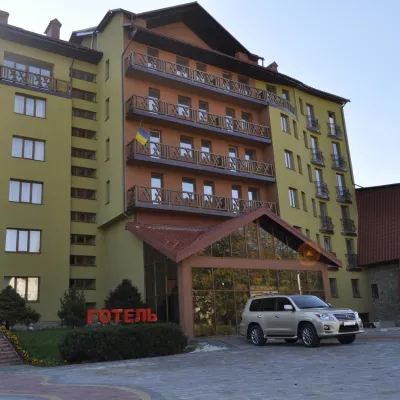 HotelHotel and Recreation Complex "Malivo" DelyatynDeliatyn3.1 km from Church of St. Francis, DelyatynHot tubPoolSaunaNearby: White Stone Rock 2.9 kmMount Makovytsia 5.1 km8 trails
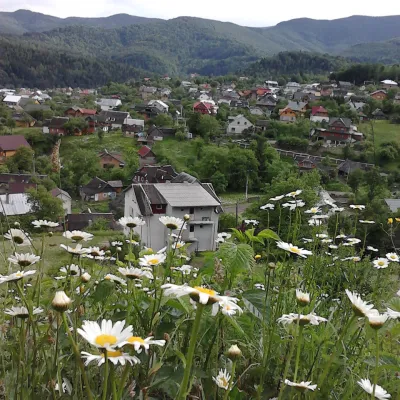 HomesteadHomestead "Hutsulochka"Yaremche5.3 km from Church of St. Francis, DelyatynPoolNearby: Peter and Paul Church 100 mMount Makovytsia 3.4 km16 trails
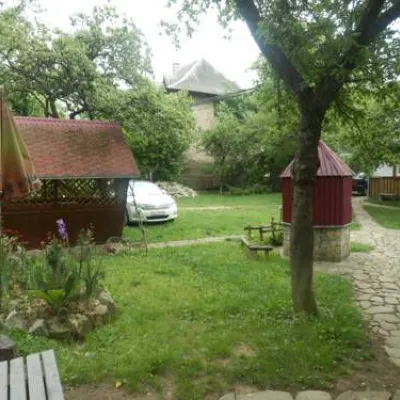 HomesteadHomestead "Darunochok"Yaremche5.3 km from Church of St. Francis, DelyatynSaunaBBQKitchenNearby: Peter and Paul Church 400 mMount Makovytsia 3.2 km15 trails
Trails nearby
All trails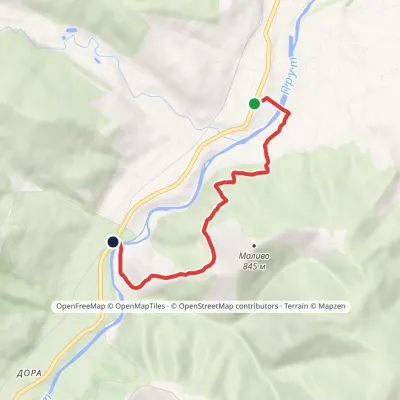 EasyOne-dayMarkedBaron's Trail: Deliatyn Dora villageElevation profile421–701 m5.3 kmascent 277 m≈ 2 h walking1.4 km from Church of St. Francis, Delyatyn
 HardMulti-dayMarkedDora village to Yaremchevia Mount Syniachka, Pereslip Pass +2Elevation profile480–1 467 m50.1 kmascent 1 898 m4.6 km from Church of St. Francis, Delyatyn
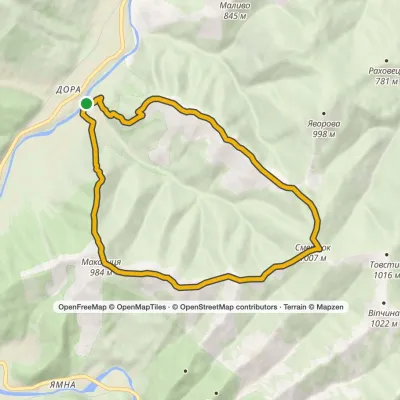 ModerateOne-dayMarkedDora loopvia Mount Makovytsia, Mount Staiky +1Elevation profile470–1 007 m13.2 kmascent 707 m≈ 4.5 h walking5.3 km from Church of St. Francis, Delyatyn
Nearby attractions
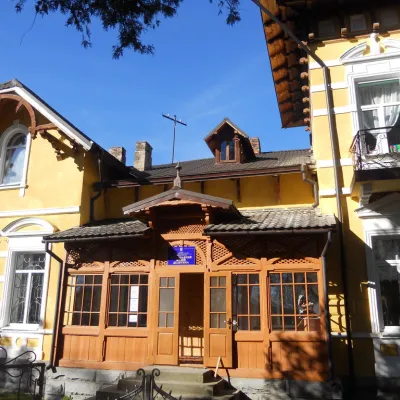 MuseumLocal history museum of the village of DelyatynDeliatynunder 1 km from Church of St. Francis, DelyatynThe museum was inaugurated on September 16, 2012. The museum was inspired by local resident Andriy Mysyuk, who for many years had been researching and studying the...
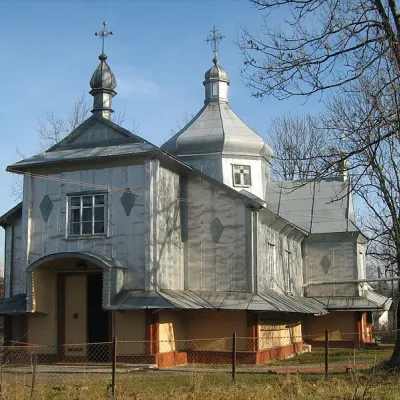 ChurchChurch of the Nativity of the Blessed Virgin Mary (old), DelyatynDeliatynunder 1 km from Church of St. Francis, DelyatynThe Church of the Nativity of the Blessed Virgin Mary is a striking work of the Hutsul school of folk wooden architecture.
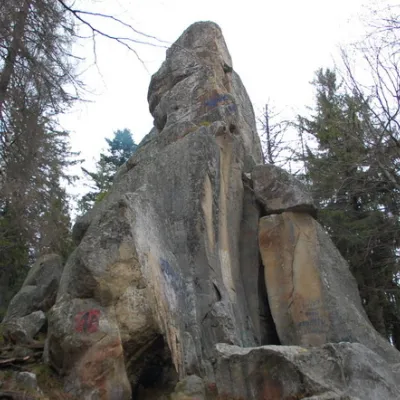 PeakWhite Stone RockDoraaltitude 538 m5.3 km from Church of St. Francis, Delyatyn7 trails to the topThe White Stone Rock is located in the village of Dora in the Carpathians and is one of the most prominent natural attractions in Ukraine.
Craft nearby
All craft places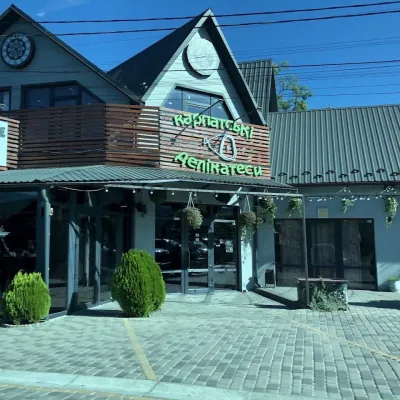 Craft shopsKarpatski Delikatesy farm shop, YaremcheYaremche5.1 km from Church of St. Francis, DelyatynKarpatski Delikatesy (“Carpathian Delicacies”) is one of the largest shops of local products in Yaremche, right on the main road through town at 59/2 Svobody Street.
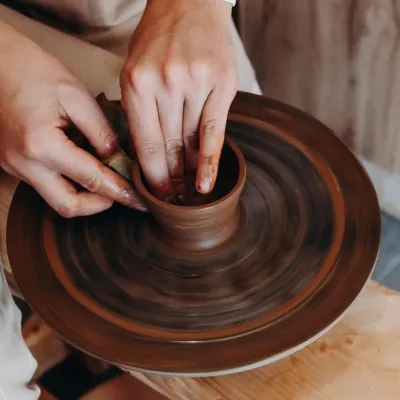 Ethno tours & guidesKosiv & Yavoriv Hutsul Crafts Tour from YaremcheYaremche9.4 km from Church of St. Francis, DelyatynIf you are staying in Yaremche or Bukovel and want to see the real craft heartland of the Hutsul region, not just the mountain views, a handy option is a day tour to...
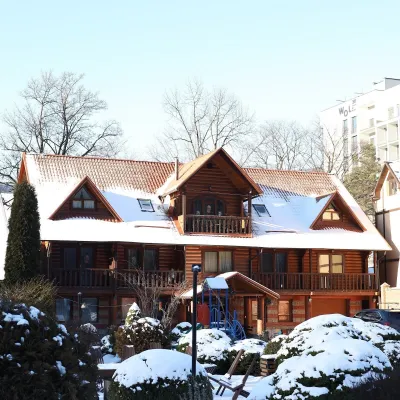 Koliby & Hutsul cuisineKrasna Sadyba Koliba, YaremcheYaremche9.9 km from Church of St. Francis, DelyatynKrasna Sadyba in Yaremche is one of the town’s busiest places to eat: it has almost seven and a half thousand reviews on Google Maps.
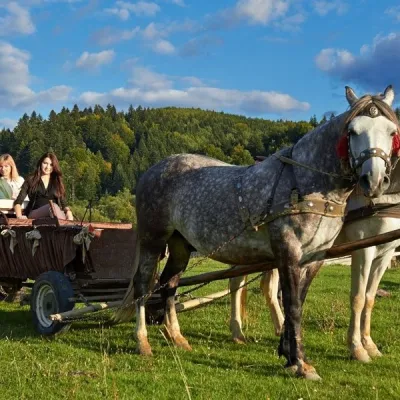 Horse ridingHorse Trails from Kamianyi Dvir Cottage, YaremcheYaremche10 km from Church of St. Francis, DelyatynBesides accommodation, the Kamianyi Dvir (“Stone Yard”) cottage on Hrushevskoho Street in Yaremche is known for its horse rides.
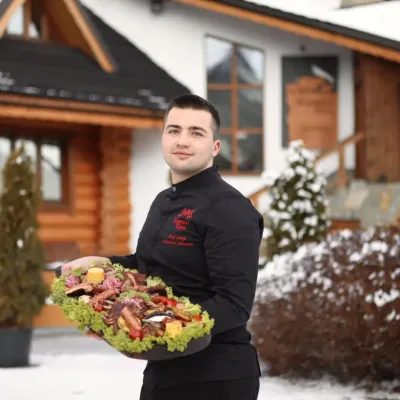 Koliby & Hutsul cuisineVedmezha Hora Koliba, YaremcheYaremche10 km from Church of St. Francis, DelyatynVedmezha Hora koliba in Yaremche (“Bear Mountain”) is a family restaurant that has long been one of the town’s most popular food addresses.
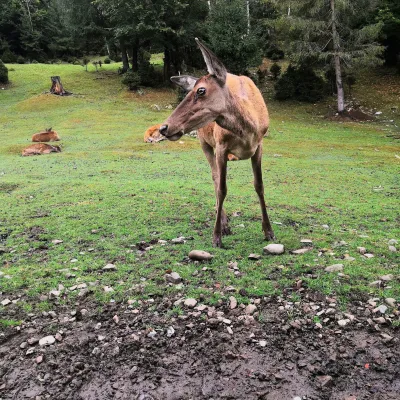 Wildlife parks & animal farmsCarpathian National Park Enclosure Farm, YaremcheYaremche10 km from Church of St. Francis, DelyatynThe Enclosure Farm of the Carpathian National Nature Park is a small wildlife park on the edge of Yaremche where you can see animals of the Carpathian forests up close.