Church of the Intercession of the Blessed Virgin Mary, Kostryna
The Church of the Intercession of the Blessed Virgin Mary is a wooden church located in the village of Kostryna, Velykyi Bereznyi district, Transcarpathian region, an architectural monument of national importance (#192).
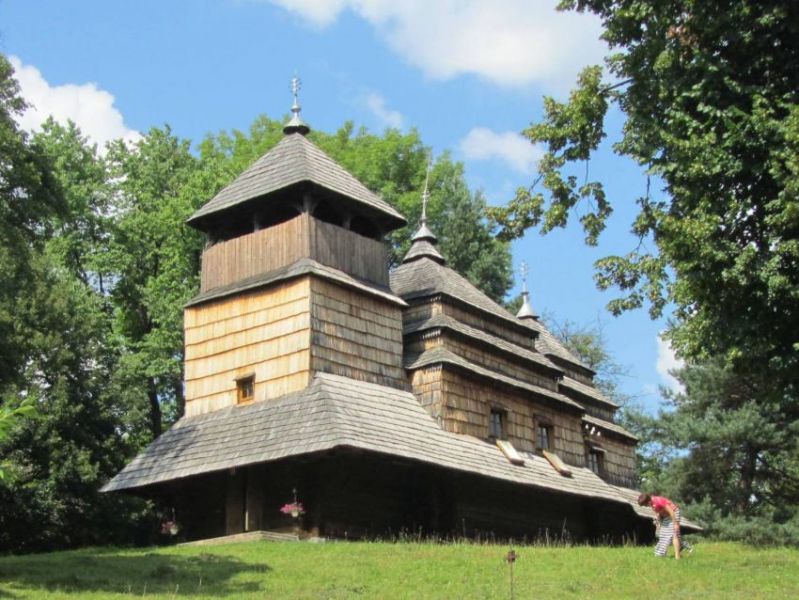
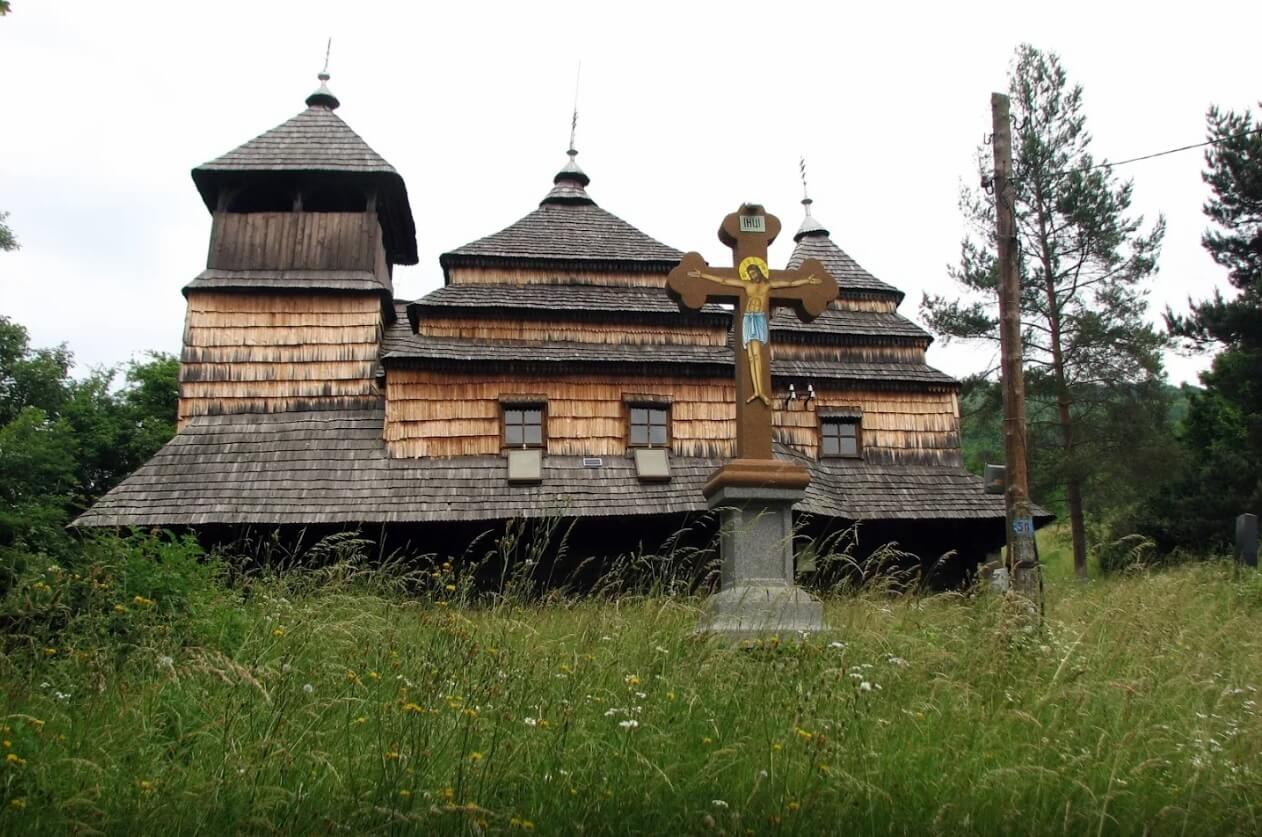
In the village of Kostryno, on a hill in an exceptionally beautiful location, there is a masterpiece of folk architecture, the wooden Church of the Intercession of the Blessed Virgin Mary, which is one of the outstanding monuments of Ukrainian folk architecture. The Kostrynka church is not inferior in beauty to the Uzhok church, but it is 100 years older and its beauty is somewhat different. The magic of the building is hidden in the secrets of proportions, in the size of the church, in the lines of its silhouette. From every angle, the church is perceived as a flawlessly completed work of art, perfectly integrated into the surrounding magnificent landscape. The church was built without a single nail or modern equipment, and the wooden structure is an authentic business card of the Velykyi Bereznyi region.
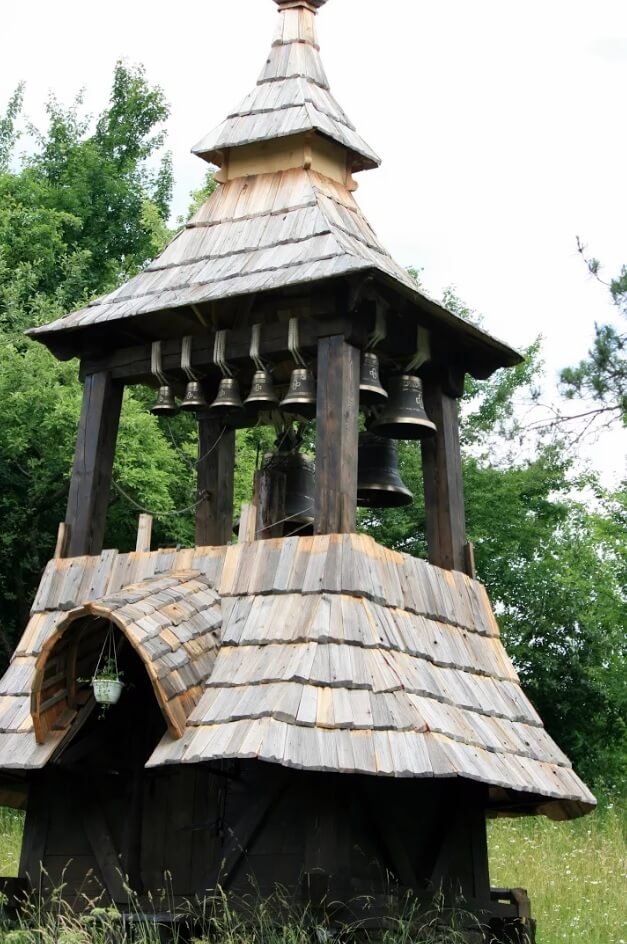
In the center of the village, on a hill, there is an original monument of Boyko wooden architecture, the Church of the Intercession. The church is of great interest as a transitional type from Boyko to Lemko architecture. A feature of the latter is a very peculiar dynamic composition of volumes, gradually increasing from a small altar through the central multi-hall top to a high tower-bell tower of the western type. In the church in Kostryno, this trend has only just been outlined, and its builders still retain the shape of the hipped tops of Boyko churches in the bell tower. The strict geometry of the architectural forms and the observationgallery of the bell tower bring it closer to wooden defensive architecture.
The Church of the Intercession of the Blessed Virgin Mary was transported and erected on its present site in 1703 from the village of Syanky, Lviv Oblast. In 1761, a frame bell tower was built over the log cabin of the Babynets. The corner joints are made by mortising into a simple lock with a hidden straight spike. In plan, all three log cabins are close to a square, the central log cabin is wider than the other log cabins. All three volumes of the church are covered with hipped roofs with two folds. Emporiums are arranged above the narthex. The church is surrounded by a dormer at the log cabin's outlets. It is constructed of spruce beams. The roofs, the eaves, and the walls above the dormer are covered with shingles. The wooden carvings of the eighteenth century have been preserved. The monument belongs to the Boyko school of architecture. However, the addition of the bell tower over the western part, which exceeded the central log house in height, upset the balance of the architectural masses and gave the building features typical of Lemko architecture.
The church is 15 meters long, 7 meters wide, and 14 meters high from the foundation. Due to the addition of the frame bell tower, the church acquired a certain dynamism with the growth of forms from east to west, which brought it as close as possible to the Lemko style churches.
Over the centuries of its history, the village has been lucky several times. First, in 1703, the community bought an extremely beautiful church built in 1645 in the village of Syanky in the neighboring Turka district of Lviv region. The wooden church was transported by oxen from Syanky overnight. Folklore says that when choosing a place for the church, the villagers hesitated for a long time and moved the wood from the Kosharky tract to the Doroshavytsia tract and vice versa, until they erected the church in Doroshavytsia. Secondly, the church has not undergone radical reconstruction, and the added tower has not diminished its charm. Third, in 1865 the community ordered a plan for a new stone church and chose a site. Obviously, due to lack of funds, the stone basilica church was not built for a long time. Finally, they decided to build it on the site of the wooden one and begin work in 1914, but the First World War broke out. After the war, the money raised for the construction depreciated, and the wooden beauty was saved.
Finally, we were lucky for the fourth time. From 1891 to 1901, a Greek Catholic priest, Mykhailo Lendel, served in Kostryno, and during these 10 years he wrote a very talented and detailed chronicle of the spiritual and economic life of the villages of Kostryno and Sil. Many facts of local history were recorded by a unique Kostryno man, the long-lived Heorhii Churei, who lived for 130 years (he died in 1897) and, according to the priest, was the chronicler of Verkhovyna. From these records we learn that the first spruce church in Kostryn was built in 1451, the second appeared in 1602, and the current one is the third. As in many other villages, the largest bell was confiscated for military use during the Hungarian War of Liberation led by Lajos Kossuth in 1848-1849. A new batch of bells was made in 1899 by the foundryman Sandor Laszlo in Mali Heivtsi near Uzhhorod.
Near the church you can see the graves of priests, especially the zealous and tireless Oleksandr Danylovych (served from 1848 to 1853), who built a headlight, planted an orchard, and introduced progressive farming methods at his own expense; Vasyl Legeza (1855-1893), who developed the parish, Augustyn Gulovych (1874-1884), who founded an apiary and built stone schools in Kostryno and Sol, and, of course, Mykhailo Lendel (1891-1901), who left descendants an invaluable chronicle of the villages of Kostryno and Sol.
A door leads to the narthex of the church, the frame of which has a sharp outline in the center, reminiscent of the Gothic style. The interior of the temple was designed in an interesting way. The low, dark Babinets, as if by contrast, enhances the spaciousness and lightness of the high-rise open space of the middle room, and focuses attention on the iconostasis with its shimmering gilding.
The iconostasis dates back to 1645, although Father M. Lendel also mentions the year 1596. The icons are painted on linden boards that have darkened from being varnished over the centuries, with varnishing dates of 1832 and 1894. The Gospel, which was purchased in 1871, is richly decorated, and the old Gospel dates back to 1691.
Today, the Church of the Holy Intercession belongs to the Orthodox diocese and is renamed the Kostryn Monastery. The Monastery of the Holy Intercession is considered an architectural monument of Transcarpathia, as it is built only of wood. Inside, iconostases and gilded holy chalices have been preserved. The old bell tower in the attic of the monastery is also impressive. The monastery is mainly maintained by monks and local residents. Iryna Belyo has been taking care of the spiritual monument of her native village for fifty years. In Soviet times, they wanted to destroy the monastery several times. However, the villagers defended the wooden monument and, fortunately, it survived. An old resident, Iryna Belyo, tells the story of how her husband was about to be fired from his job because he undertook to reconstruct the church. Today, the monastery looks majestic: the foundation has been laid for the church, the locks on the doors have been replaced, and the roof has been varnished. However, the style of the building has not been disturbed at all, but rather harmonizes with spring and nature.
Accommodation around Church of the Intercession of the Blessed Virgin Mary, Kostryna:


Які маршрути проходять повз Church of the Intercession of the Blessed Virgin Mary, Kostryna?
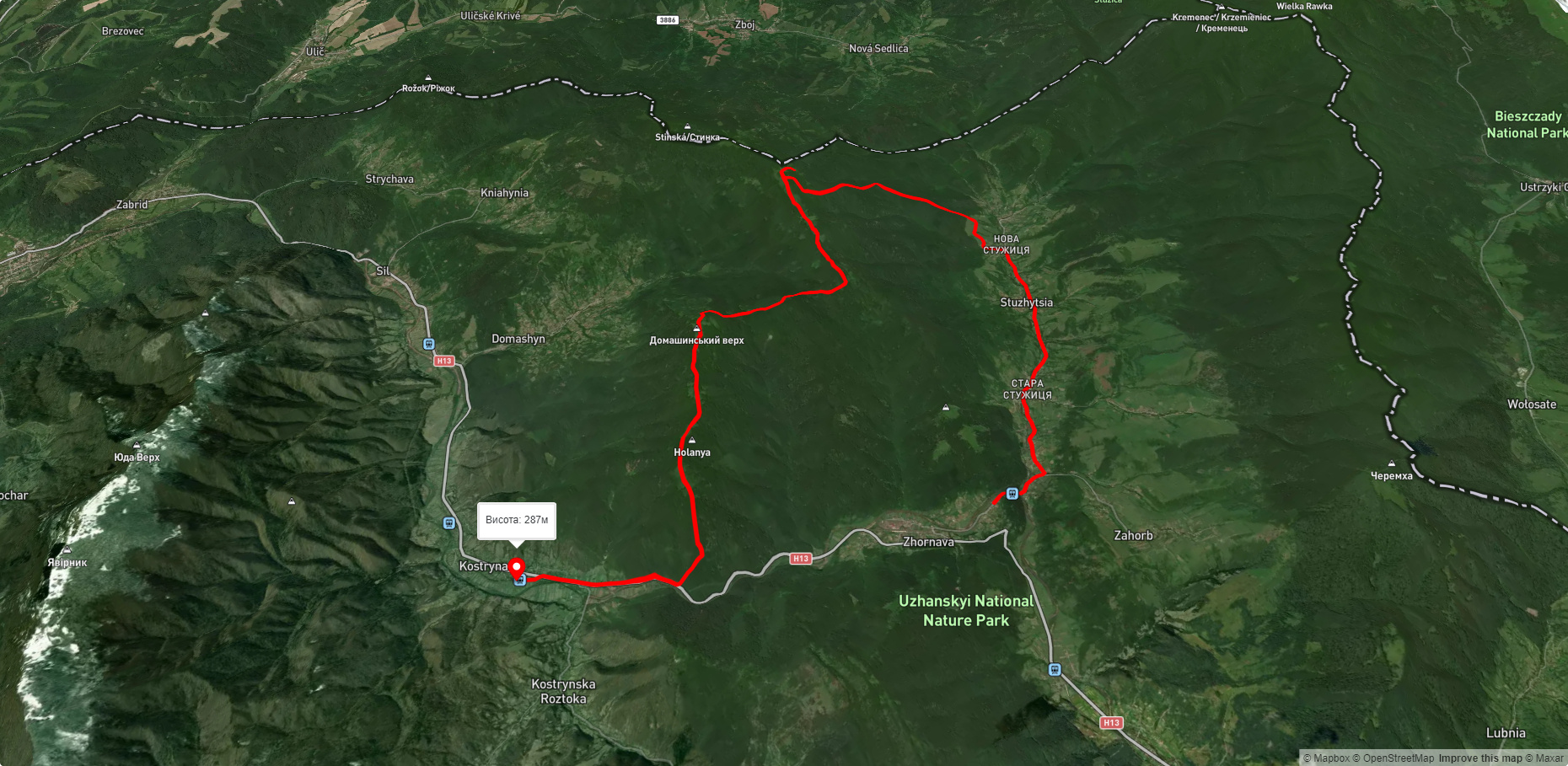
Пропонуємо пройти такі туристичні (пішохідні) маршрути через/біля Church of the Intercession of the Blessed Virgin Mary, Kostryna: с. Кострино – г. Красія, с. Кострина, через с. Вишка, с. Люта, г. Лютянская Голица, пол. Руна, до с. Пастілки, с. Кострина, через г. Явірник, г. Красія, с. Костринська Розтока до с. Кострина, с. Ставне, через г. Берце, г. Вежа до с. Кострино, с. Загорб, через с. Стужиця, місце падіння метеориту "Княгиня", хр. Голаня до с. Кострина, с. Кострина, через г. Борсук до с. Кострина


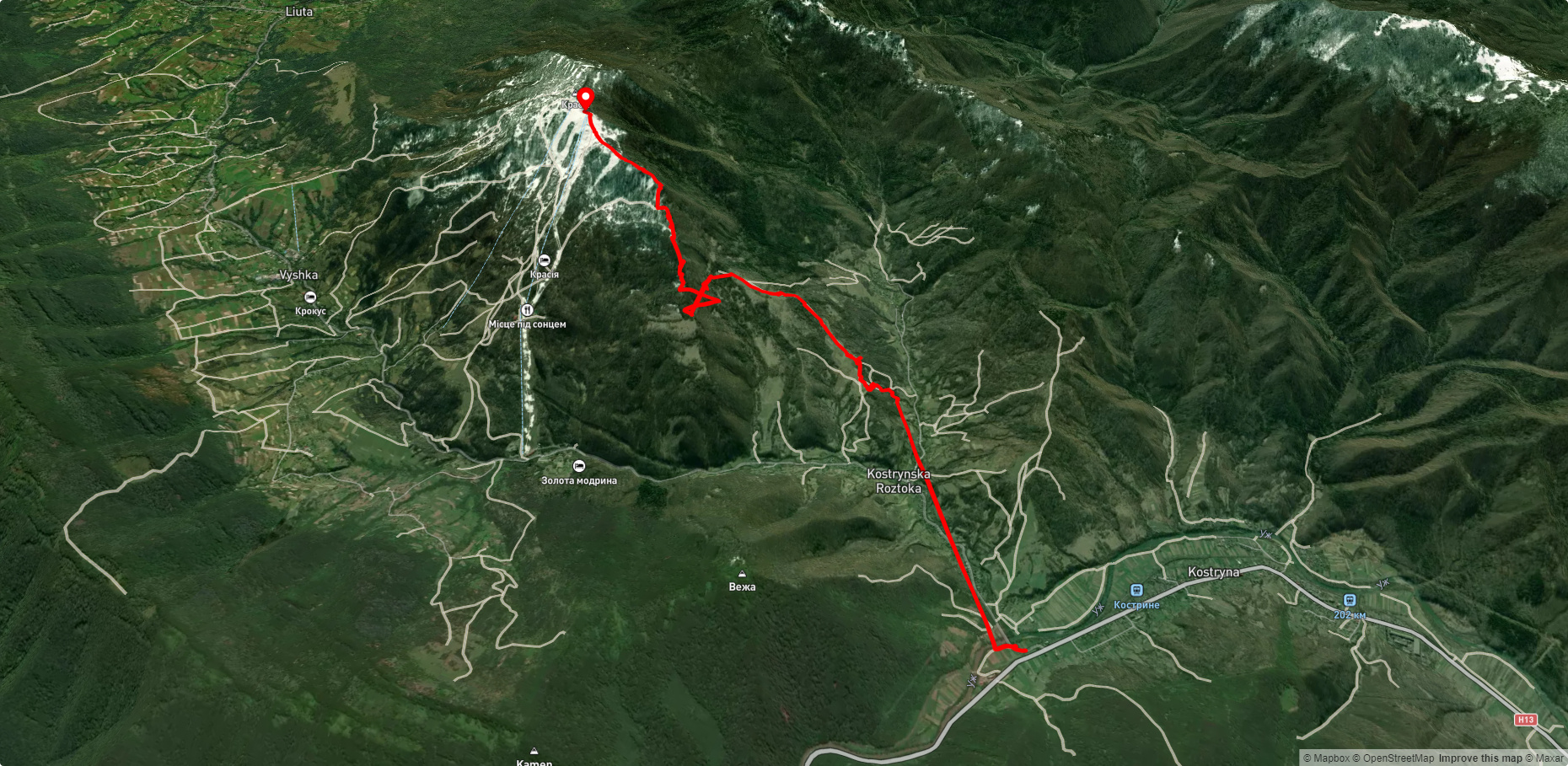
с. Кострино – г. Красія
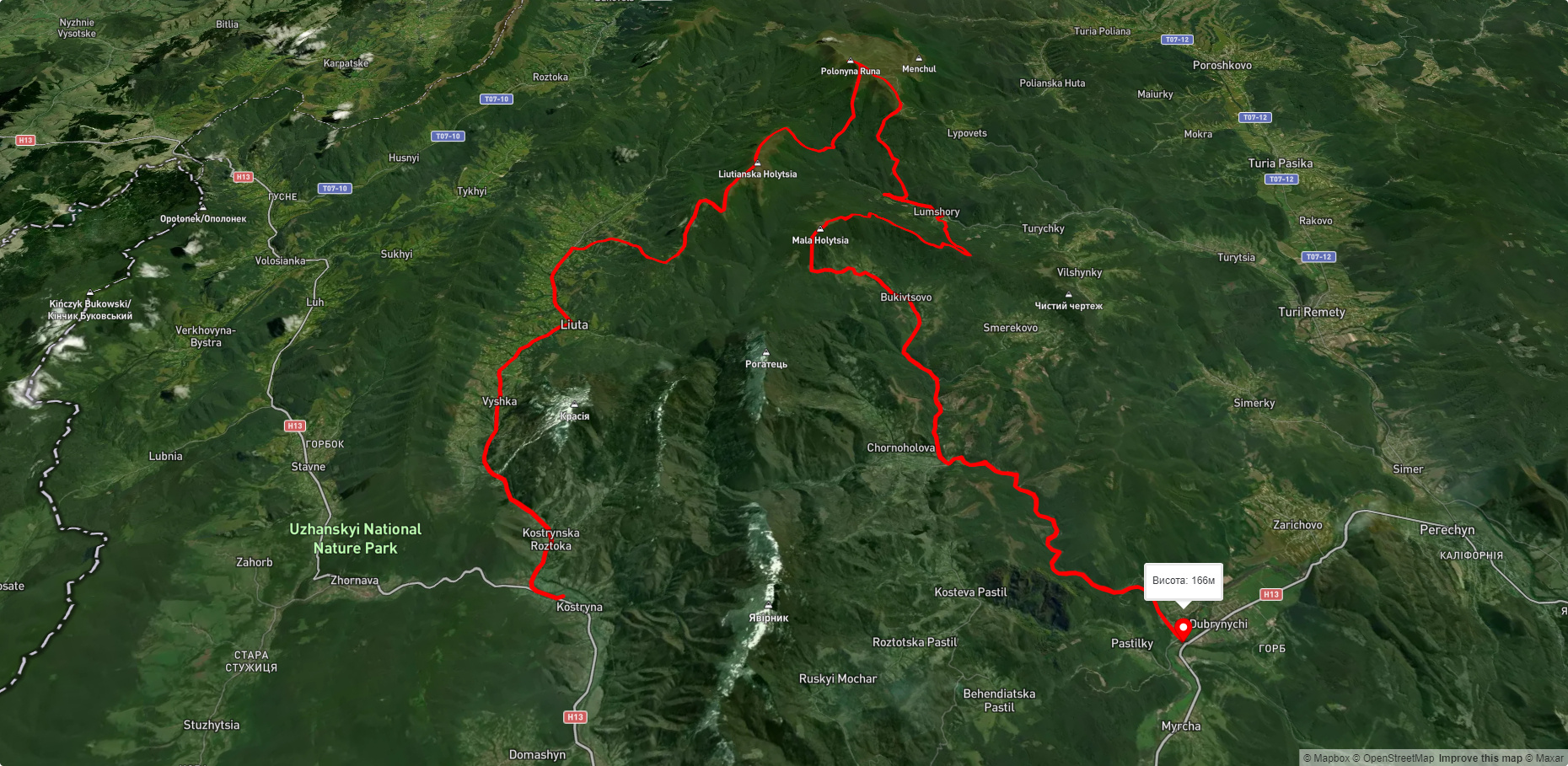
с. Кострина, через с. Вишка, с. Люта, г. Лютянская Голица, пол. Руна, до с. Пастілки
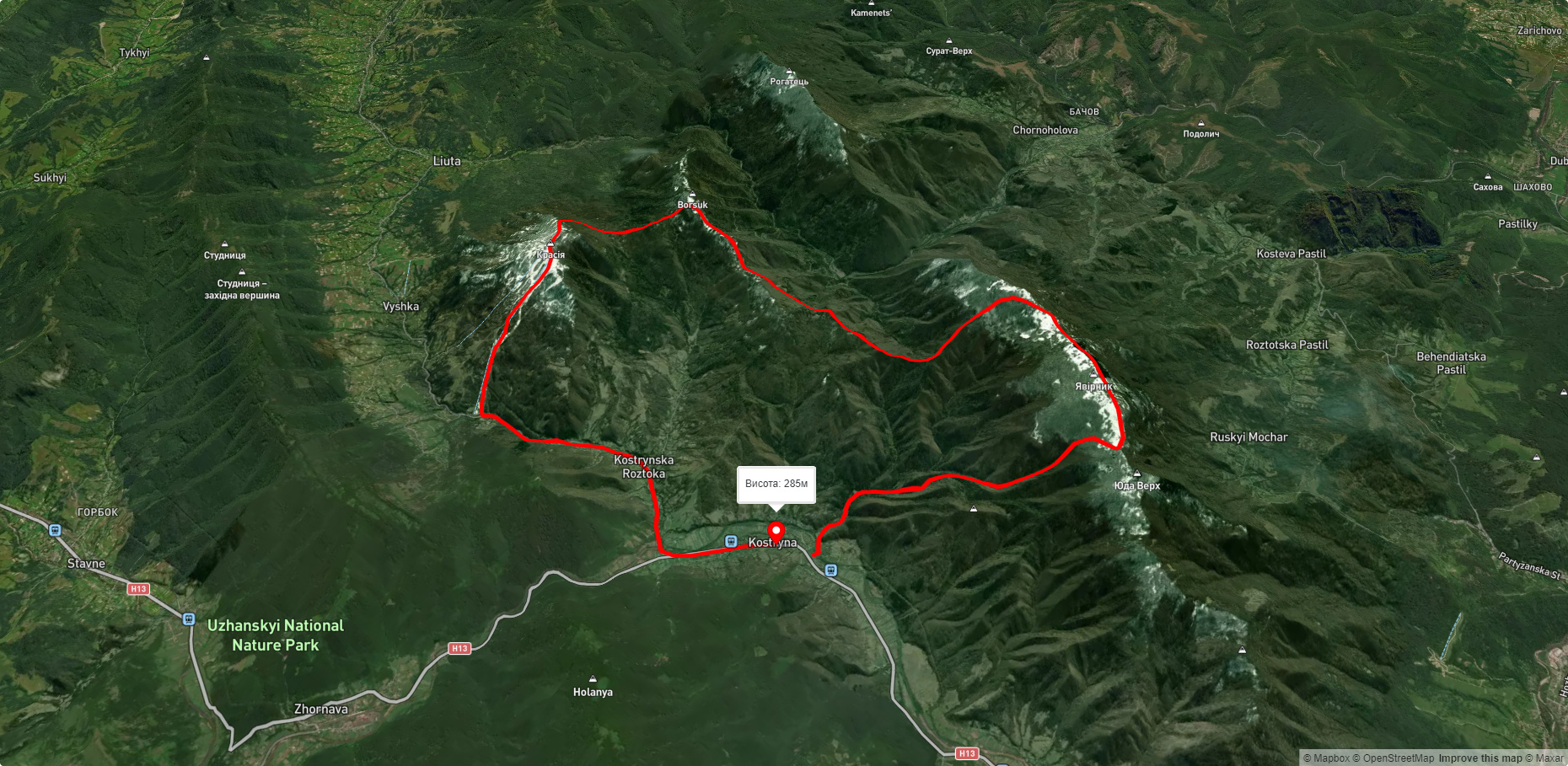
с. Кострина, через г. Явірник, г. Красія, с. Костринська Розтока до с. Кострина
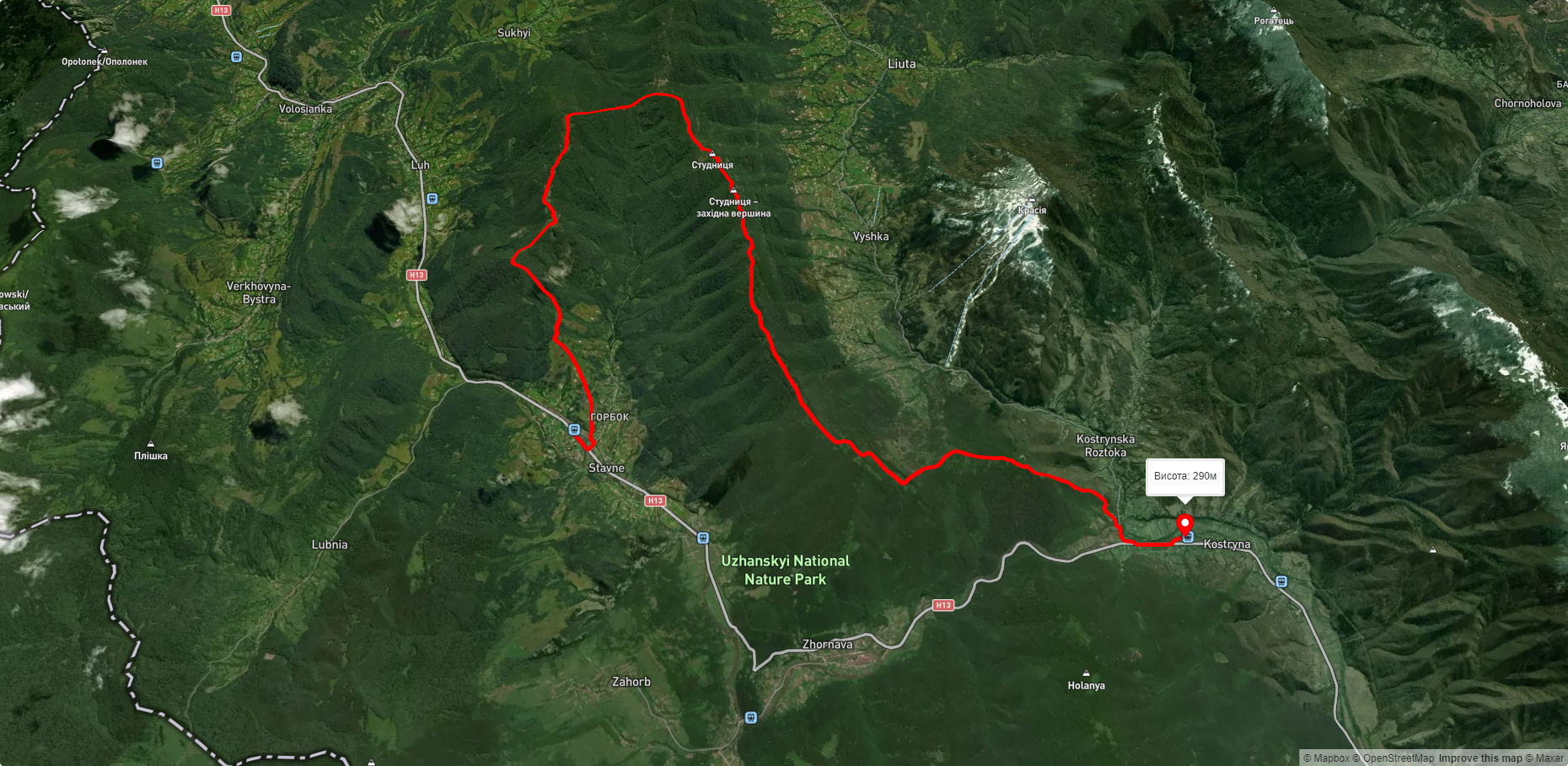
с. Ставне, через г. Берце, г. Вежа до с. Кострино