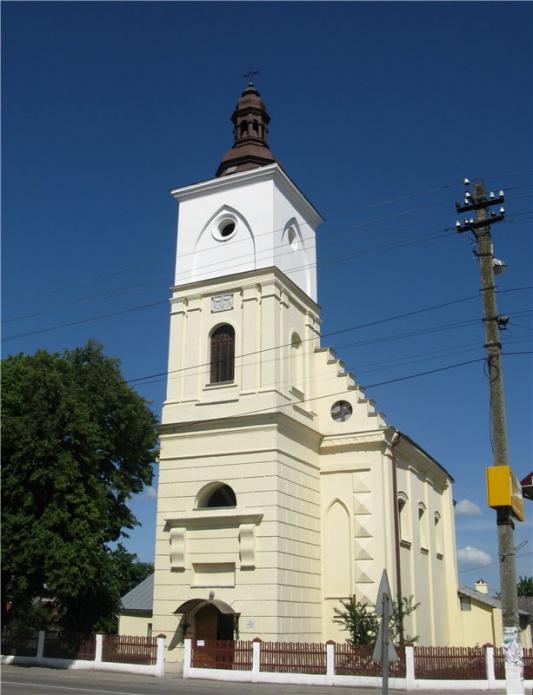
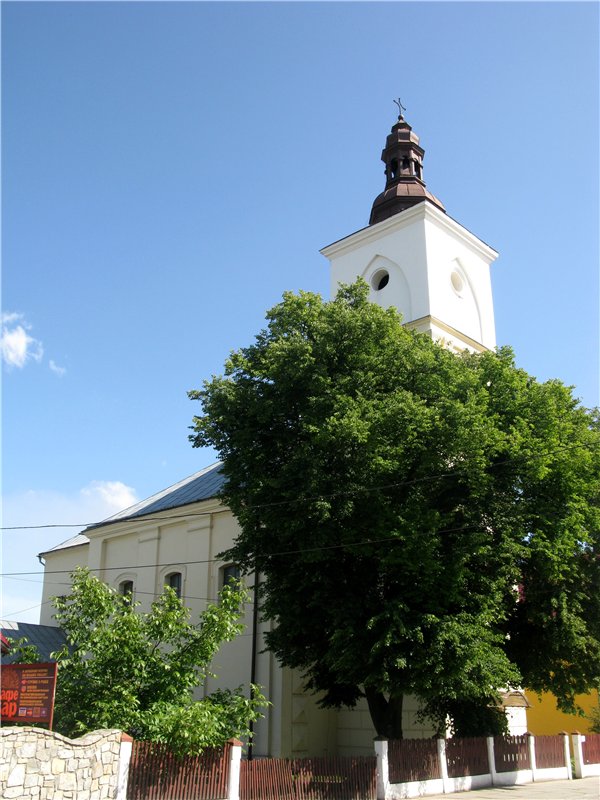
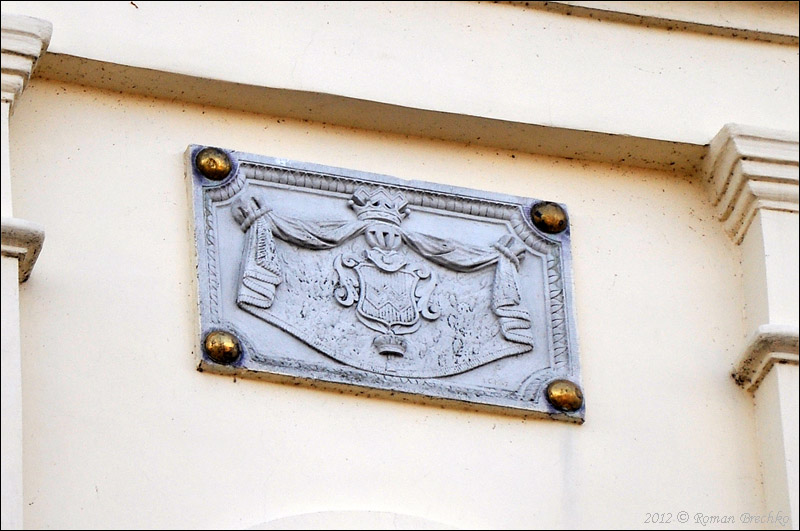
Church of the Holy Trinity, Burshtyn
The Roman Catholic Church of the Holy Trinity is located at: the city of Burshtyn, Bandera Street, 64 in Ivano-Frankivsk Oblast. It was built between 1740 and 1755 on the site of a wooden church constructed by Pavlo Benoit in 1740. This order was involved in redeeming Christians from Turkish captivity. Pavlo Benoit was an ambassador of the Polish-Lithuanian Commonwealth in Turkey, where he became acquainted with the activities of these monks. While developing the city, he invited the Trinitarians to Burshtyn and began the construction of the church. Until 1784, it belonged to the monks of the Trinitarian order. Later, it passed into the ownership of the Burshtyn Roman Catholic parish.
The struggle with the opryshky temporarily distracted the founder, and he died without completing his plans. His granddaughter, Yuliya Zhevutska, completed the construction of the sanctuary. The consecration of the church took place in 1774. However, after the Josephinian suppression, the Trinitarian order was dissolved, and the church was handed over to the Roman Catholic parish. In 1800, a tower was added above the entrance, and the church finally took on its modern appearance. The Latin parish belonged to the Kukilnytsky deanery for almost a century since its founding. Roman Catholics from Ozeriany, Yunashkiv, Korostovychiv, Kunychi, Konyushky, Kuropatnyky, Ludvykivka, Nastashyn, Dolyn and Seredni Sarnyk and Stasyova Vola (now Sloboda) came to worship at the Church of the Holy Trinity.
The sanctuary has survived several fires, after which, however, it became better and better following restorations. On October 21, 1838, as a result of a fire inside the church, the large altar burned down. A new altar was made to order by I. Skarbka. It amazed local residents and all visiting travelers with its beauty. In 1915, the roof of the church was severely burned. But the building suffered the most during the fire on April 12, 1920. On that day, Ukrainians organized an Easter shooting, which started the fire. Soon the church was restored. Locals remember that in the 1920s-30s, there was a clock on its tower.
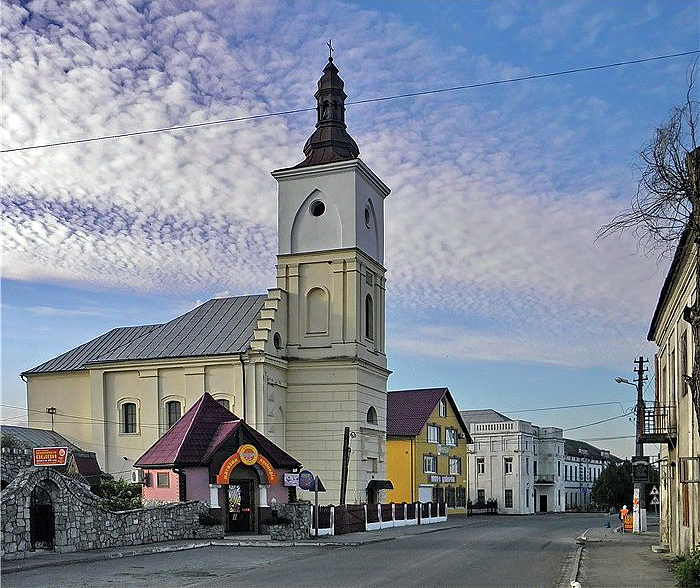
After World War II, the number of Roman Catholics in Burshtyn sharply decreased, and the authorities decided to liquidate the Roman Catholic religious community and close the church. From 1950 to 1992, the church was closed.
In 1951, the church was closed and repurposed as a library and a gym for the school, and in the 1980s, the local authorities transferred the church to the fish trust for use as a compound for animal feed. Burshtyn Roman Catholics were recommended to visit the church in Bukachivtsi, which was located 10 km away, to meet their religious needs. Among the most valuable items that were transferred for safekeeping to the state were 2 altars, 8 large icons, 1 small icon, 6 banners, and a small bell. In the 1980s, the local authorities transferred the church for use as a compound for animal feed by the fish trust. This decision was made despite the fact that the building was considered a historical and architectural monument. In 1990, the burning of animal feed inside the church inflicted another wound on it. The fire severely damaged the church tower.
In 1991, the sanctuary was returned to the Roman Catholic community. After repairs and interior updates, the church began to be used for its original purpose. The interior retains the baroque main altar, several sculptures, and part of the 18th-century fresco depicting the redemption of Christians from Tatar captivity by the Trinitarians (during the renovation, the fresco was heavily repainted).
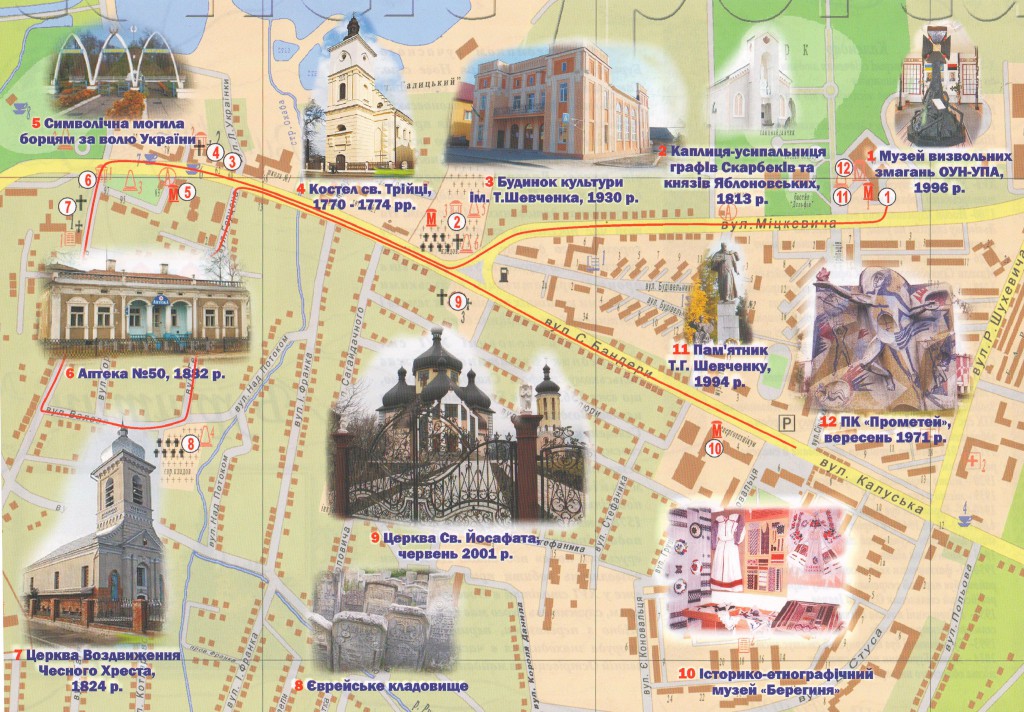
Below in the illustration, you will see all the landmarks of Burshtyn, and we also invite you to visit the pages of the well-known "Prometey" Culture Palace, "Berehynya" Historical and Ethnographic Museum, and the Church of the Exaltation of the Holy Cross in the old part of Burshtyn.
To add a comment you can: login or register.
Nearby hiking trails near Church of the Holy Trinity, Burshtyn:
Which trails pass by Church of the Holy Trinity, Burshtyn?
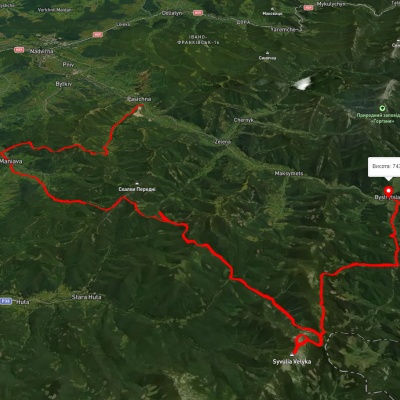
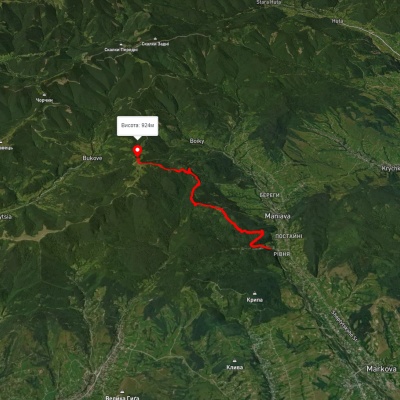
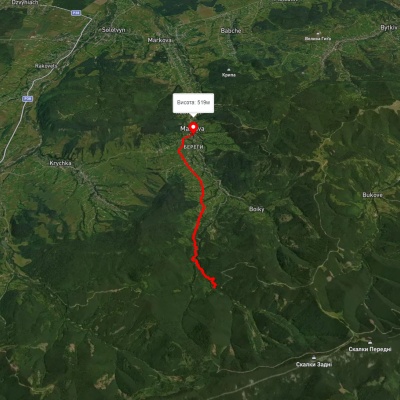
We suggest these hiking trails through or near Church of the Holy Trinity, Burshtyn: Pasichna village, via Maniava village, Maniava Waterfall and Mount Velyka Syvulia to Bystrytsia village, Maniava village - Monastyretska polonyna, Maniava village – Maniava Waterfall, Huta village – Pasichna village, Pasichna village, via Mount Syniachka to Yaremche, Pasichna village – Pereslop Pass