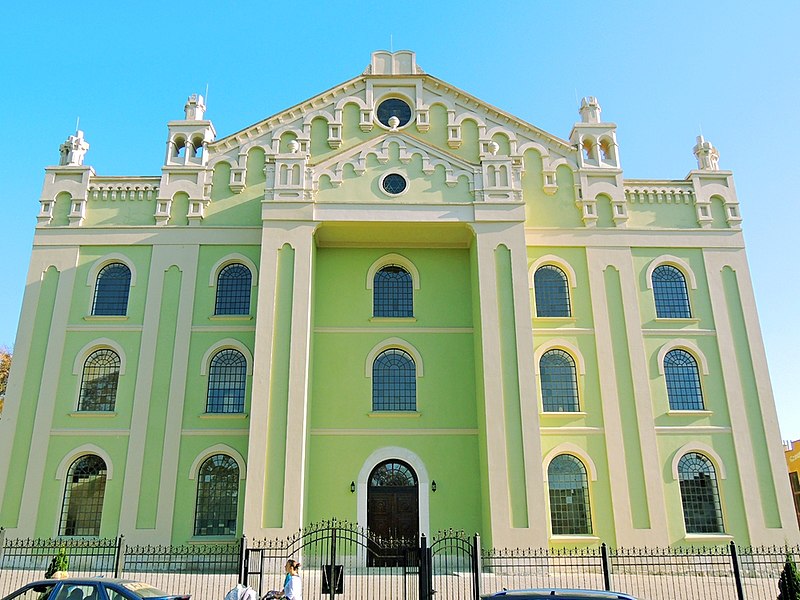
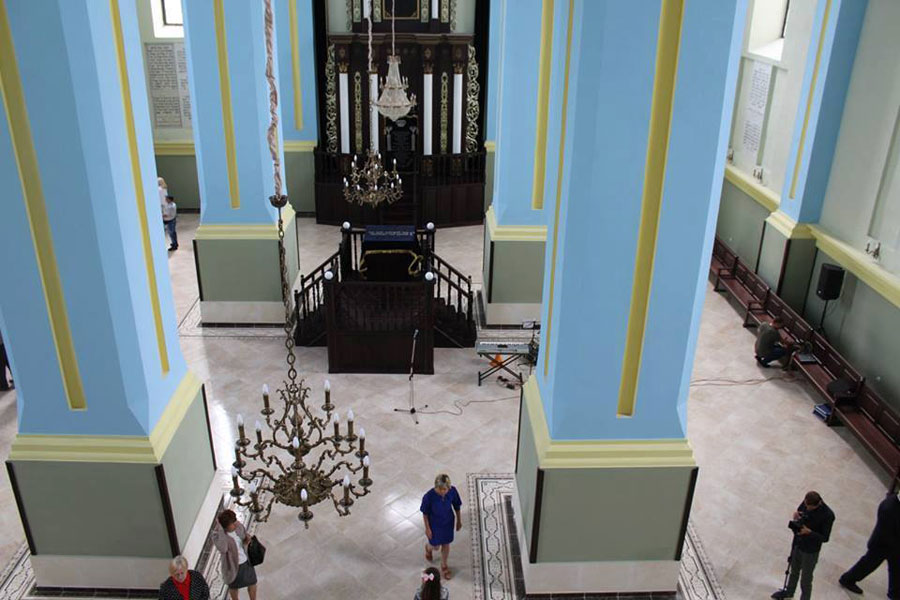
Choral synagogue, Drohobych
TheChoral Synagogue is an architectural and cultural monument in the city of Drohobych (Ukraine), located on P. Orlyka Street. It is one of the eight existing buildings out of seventeen (according to other sources, twenty) synagogues in Drohobych that existed in the city between the First and Second World Wars.
The first mention of the presence of Jews in Drohobych is associated with the activities of Vovchok, the owner of the Drohobych salt mines and, at the same time, a confidant of the Polish king Władysław Jagiello, and dates back to 1404. Salt production and sale attracted wealthy Jewish traders to the city and its surroundings, who settled the areas adjacent to the mines.
In the fifteenth and sixteenth centuries, the number of Jews living near the Salt Lake and on the border of the then villages of Zvarych and Zavizhna (now Zvarytska and Zavizhna streets in modern Drohobych) gradually increased. They began to produce and sell alcoholic beverages ("propinacia"), brew beer, and "shinkuvannya" (adding strength) of honey, which violated the monopoly of the church and the city magistrate on this type of activity and forced the latter to file a complaint against the Jews with the royal court. In 1578, Polish King Stephen Batory granted Drohobych the so-called "De non tolerandis Judaies" privilege, a ban on Jewish residence within the city limits, and Jews who arrived in Drohobych were not allowed to stay in the city for more than three days or engage in trade outside of fair days. Currently, there are no archival documents that would indicate the presence of representatives of the Jewish community in Drohobych between 1578 and 1616.
In 1616, Polish King Władysław IV Waza granted a privilege, which was confirmed in 1634 by Drohobych starosta and royal treasurer Jan (Ivan) Danyłowicz. According to this privilege, Jews in the suburbs of Drohobych were granted a barren plot of land measuring 30 morgas, or 1 lan (about 18 hectares), for the construction of their own housing and a synagogue. This is how the Jewish neighborhood, which was called Lan, emerged. The built synagogue and the Lan quarter were destroyed in 1648 during the storming of the city by Cossack troops led by Bohdan Khmelnytsky, against which local Jews Aron Hoshkovych and Lev Aronovych filed a complaint with the Lviv City Court in September 1649. In 1711, the community received permission to restore the synagogue, which, however, burned down in a fire in 1713 along with the "Lan". In 1726, the Jews received permission to build a new synagogue on the same site, provided that the new one was not higher or larger than the previous one. In 1743, the synagogue was rebuilt of stone and equipped with galleries for women. The synagogue building was elongated in plan from west to east (23.7x12.4 m), and the walls were 2.5 m thick. This synagogue, the only stone building on the Lana at the time, served as a shelter and protection for Jews and one of the architectural dominants of Drohobych until the monumental building of a large choral synagogue was built on the neighboring plot to its left in 1842-1865. After that it was converted into a beis midrash, and after World War II fragments of its ruins were incorporated into the building of a bakery.
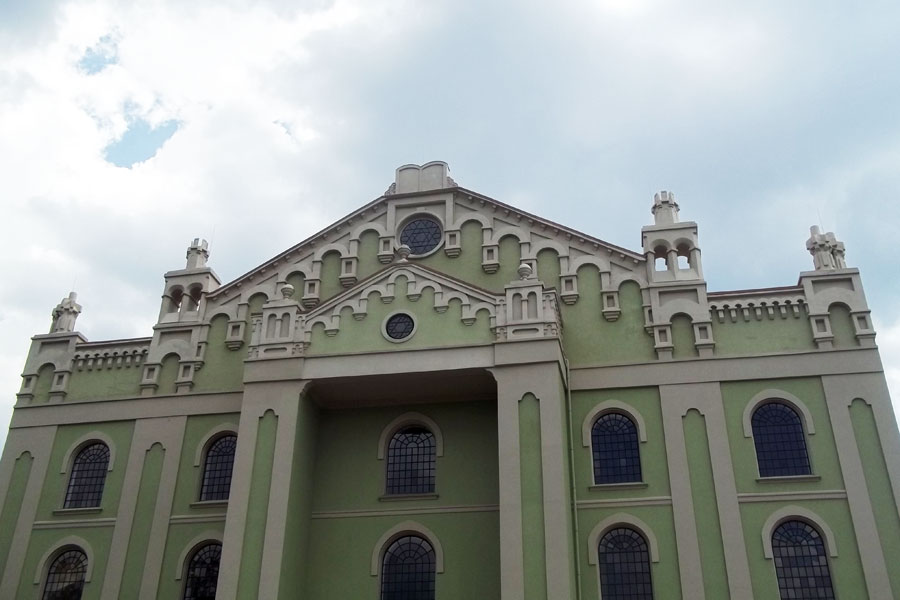
The construction of the choral synagogue wasinitiated by the local Jewish community, led by the Hasidic tzaddik Leizer Nissen Teitelbaum (Rabbi Eliezer Nissen Teitboim, 1786-1853) from 1849. The Drohobych Choral Synagogue was built over 23 years, from 1842 to 1865, in the Jewish suburb of Drohobych, Lan. At the time, the Drohobych Choral Synagogue was one of the largest synagogues in all of Europe and the largest in western Ukraine. The exterior decoration was based on a similar synagogue built in the German city of Kassel (1830), using the same Romanesque architectural belts typical of the German Rundbogen style to depict the façade. The Jewish synagogue built in Kassel was destroyed by the Nazis and can now be seen only in photographs, while the Drohobych Choral Synagogue is undergoing reconstruction.
During the Second World War, the synagogue building served as a stable. After the end of World War II, it housed a fabric warehouse, then a salt warehouse, and later a furniture store, and the outbuildings housed food warehouses.
The original olive-hued color of the synagogue was established on the basis of a study by the chief designer of Ukrzakhidrestavratsiya, a former resident of Drohobych, Zenon Lagush. Today the exterior of the building is greenish in color. In 1939, a few months before the outbreak of World War II, the future Nobel Peace Prize winner and sixth Prime Minister of Israel, Menachem Begin, got married in the large choral synagogue. His wife at the time was Eliza Arnold from Drohobych.
There are many historical facts closely associated with the Drohobych synagogue that not all residents of the city know about. For example, it is believed that the iconic painting "Jews Praying in the Synagogue on Yom Kippur" by the Drohobych painter Maurits Gottlieb is directly related to the Drohobych synagogue. Although some historians dispute whether it is the large synagogue that is depicted in the painting. There is speculation that it could have been one of the smaller synagogues in the city. However, this painting by Gottlieb is one of the greatest relics of Jewish art and is kept in the National Museum of Tel Aviv, and another, "Christ Preaching in the Synagogue," is kept in the National Museum of Warsaw.
In the late 80s and early 90s of the 20th century, the building was returned to the Drohobych Jewish community. Despite this, it was looted and set on fire twice. The building was in ruins, and there were projects for its reconstruction.
Experts estimate that at least half a million U.S. dollars would be needed to restore the building. The Jewish community of Ukraine set about restoring the monument. The builders began, as expected, with repairing the roof to save what was left. However, the Federation of Jewish Communities of Ukraine (Hasidim) was unable to find the necessary funds.
Subsequently, the Jewish community of Drohobych found patrons who allocated money to strengthen the walls of the building. Since November 2013, repair work has continued, and the facade is being renovated and strengthened. And, apparently, the lease agreement for the FEU premises will be terminated.
At the present stage of its history, the building of the Drohobych choral synagogue is used as a kind of platform for art exhibitions and projects, in particular, it hosted 4 exhibitions of watercolors by Bartłomiej Michalowski, a member of the Association of Polish Artists, a graduate of Maria Curie-Skłodowska University in Lublin (1991), as part of the Schulzfest festival (2008 - "Backward," 2010 - "The City 10 years later, Kazimierz in Drohobych", 2012 - "The Road", 2014 - "Spring"). In January 2020, we developed a 3D tour of the Choral Synagogue.
Historians have discovered that the largest synagogue in Eastern Galicia was once painted by a prominent Polish-Jewish artist, the "Jewish Rembrandt" (nineteenth century), a student of Jan Aloysius Matejka, a classmate and friend of Ivan Franko, a native of Drohobych, Mawrzyc Gottlieb. The Drohobych Choral Synagogue is depicted in his painting "Synagogue on Yom Kippur."
Yosyp Karpin, the head of the Jewish community in Drohobych, says that from now on the synagogue will serve both as a sacred building and as a center for the popularization of Jewish art in the city. The synagogue will also be a center of tolerance and cooperation with other local cultures. Obviously, exhibitions, chamber music concerts, interesting meetings, and performances will be an important and necessary part of getting to know the history of the city's Jewish heritage.
Accommodation around Choral synagogue, Drohobych:


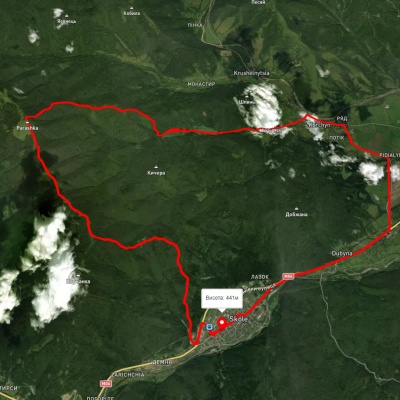
Which trails pass by Choral synagogue, Drohobych?
We suggest these hiking trails through or near Choral synagogue, Drohobych: Sopit village, via the Sopit polonynas to Sopit village, Korchyn village, via Hurkalo Waterfall and Mount Parashka to Krushelnytsia village, Kamianka village, via Mount Lopata, Skole and Mount Parashka to Krushelnytsia village, Korchyn village – Hurkalo Waterfall, Skole, via Mount Parashka, Hurkalo Waterfall and Korchyn village to Skole, Skole, via Mount Parashka, Hurkalo Waterfall and Korchyn village to Verkhnie Synovydne village



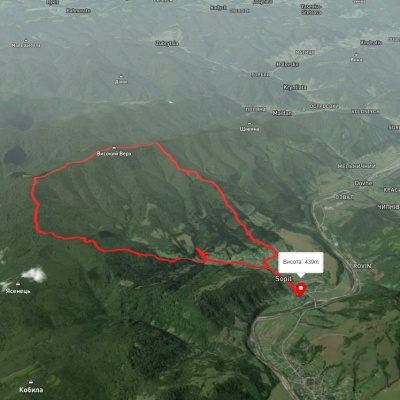
Sopit village, via the Sopit polonynas to Sopit village
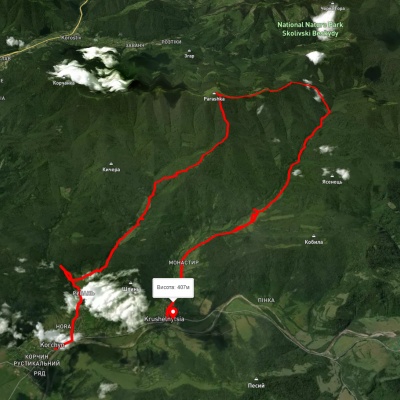
Korchyn village, via Hurkalo Waterfall and Mount Parashka to Krushelnytsia village
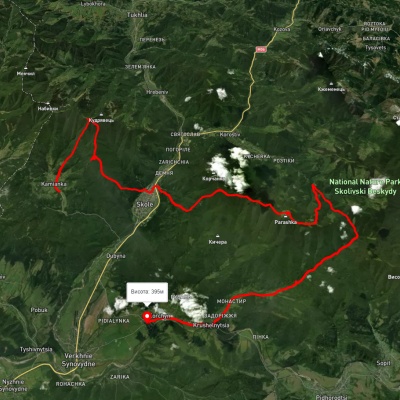
Kamianka village, via Mount Lopata, Skole and Mount Parashka to Krushelnytsia village
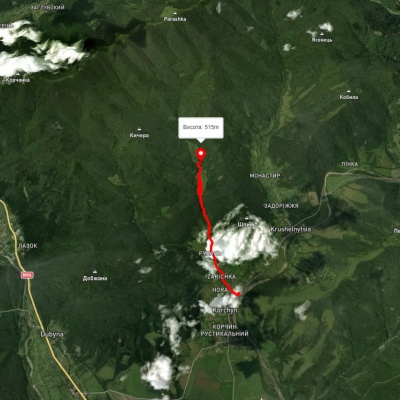
Korchyn village – Hurkalo Waterfall