Velykyi Bereznyi district
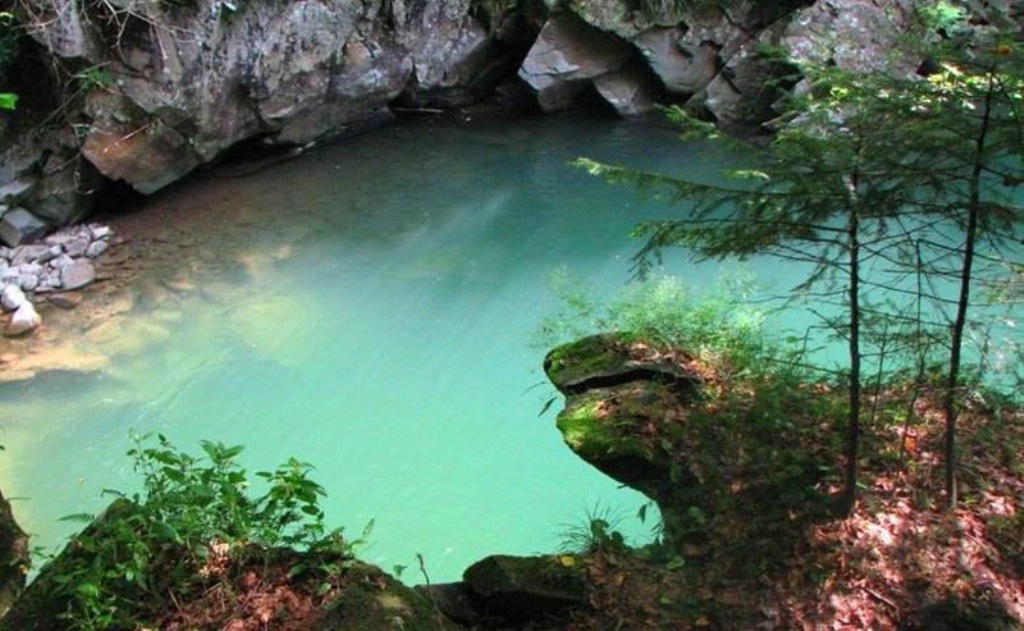
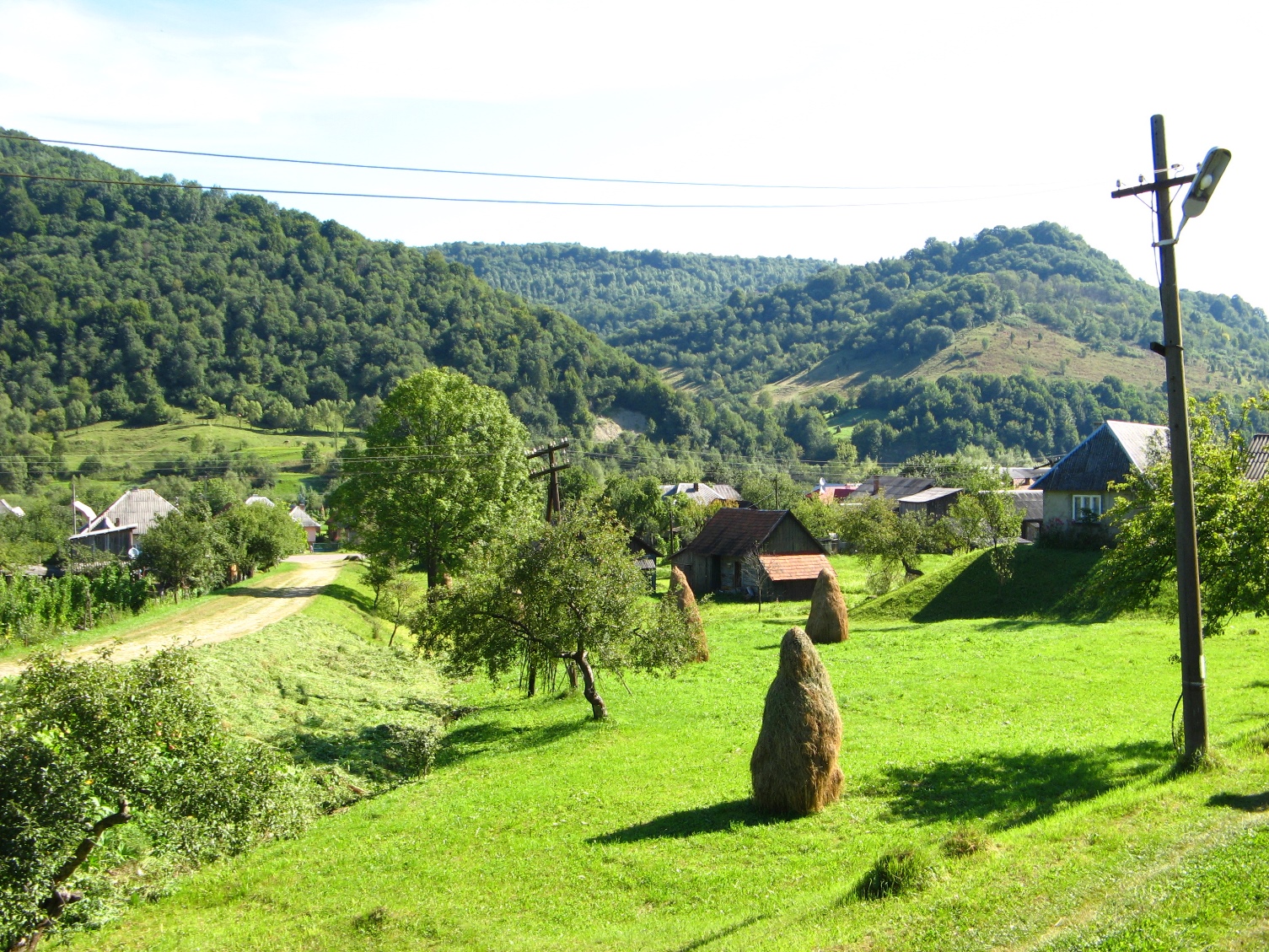
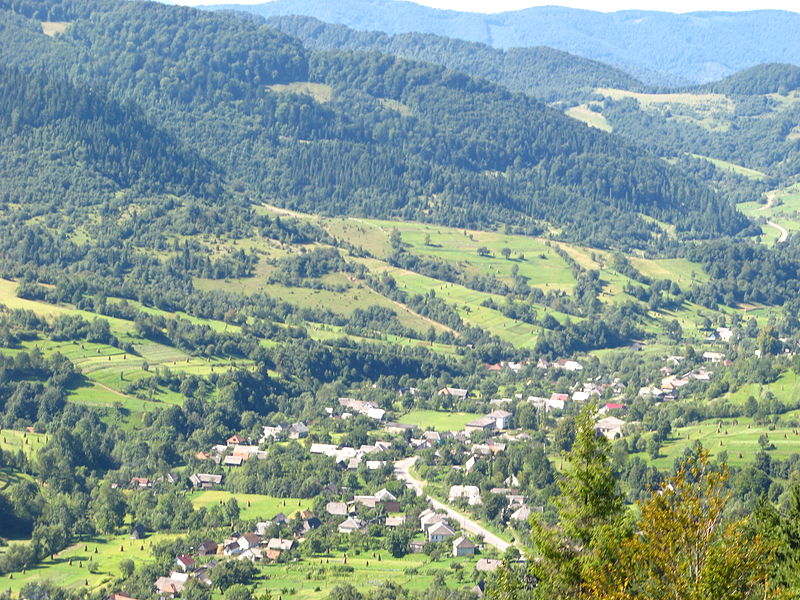
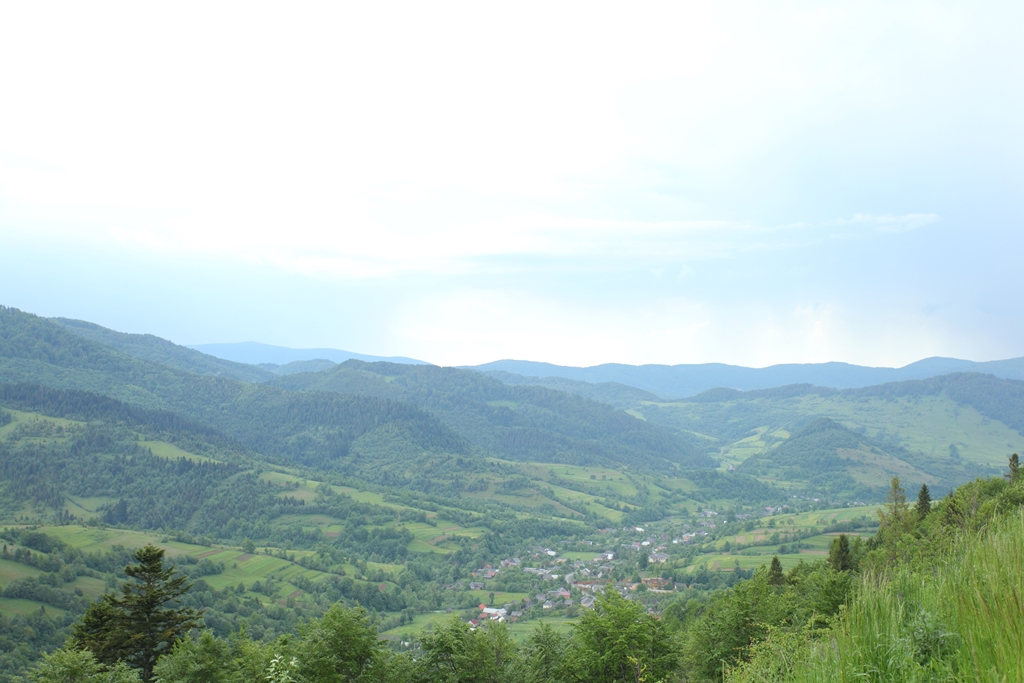
Velykyi Bereznyi district is an administrative-territorial unit in the northeastern part of Zakarpattia region, 30 kilometers from the regional center. The population is 26,258 people (as of January 1, 2019) and the area is 809 km². The administrative center is the village of Velykyi Bereznyi, located 40 km from the city of Uzhhorod, on the road and railway line connecting Lviv and Uzhhorod. It was liquidated in July 2020 due to the administrative-territorial reform and included in the newly formed enlarged Uzhhorod district, which also includes the former Perechyn, Uzhhorod and part of Mukachevo districts. Administratively and territorially, the district is divided into 1 village council and 14 village councils, which unite 32 settlements and are subordinated to the Velykyi Bereznyi District Council. In total, the district is home to representatives of about 76 different nationalities, including Ukrainians, Roma, Slovaks, Vlachs, and Hungarians.
The district borders Perechyn and Volovets districts of Zakarpattia region and Turka district of Lviv region of Ukraine. The western border is the border with two foreign countries - the Slovak Republic and Poland. Almost the entire district is a picturesque mountainous area, with forests dotted with valleys around rivers and streams. The highest point of the district is the mountain Polonyna Runa (1479 m). Slightly lower are the Polonyna Gostra and the mountains Mala Ravka and Kremenets. These and other peaks are part of the mountain ranges of the Ukrainian Carpathians.
Vacationing in Velykyi Bereznyi district is a great opportunity to get to know the history of the region, learn more about the secrets of ancient beech forests, enjoy the purity ofmountain air and savor the beauty of mountain peaks. Velykyi Bereznyi district is one of the most environmentally friendly parts of Ukraine, as there are no hazardous industrial enterprises in the district. Most of the district's territory is covered with mountains; the highest peak of Velykyi Bereznyi is Lautanska Holytsia, which is 1374 meters above sea level. The area is rich in forests, including beech virgin forests, and mineral springs such as Naftusia, Narzan, and Essentuki.
The district center is the village of Velykyi Bereznyi. An international checkpoint with Slovakia is located nearby. Several dozen tourist and cycling routes pass through Velykyi Bereznyi district.
The urban-type settlement of Velykyi Bereznyi and the largest villages lie in the valleys on both banks of the Uzh River, which originates in the outermost settlement of the district (and the region, as it borders Lviv Oblast through the Uzhok Pass), the village of Uzhok. The area is rich primarily in forest resources (including precious wood), mineral springs, and various minerals. However, only timber, two mineral springs, and crushed stone are commercially exploited.
The territory of the Velykyi Bereznyi district was inhabited as early as the 1st millennium BC, as evidenced by archaeological excavations, including bronze items and a burial ground. The first written mention of the district (Velykyi Bereznyi) dates back to 1409. The state tax list of 1427 states that Velykyi Bereznyi belonged to the possessions of the Uzhhorod dominion of the Druget Counts. According to the 1691 urban plan, the present-day district (the center and surrounding villages) was part of the 4th district of the Uzhhorod dominion of Count Miklos Bercsenyi, the heir to the Druget family.
The villages of Liuta, Malyi Bereznyi, Volosianka, Stavne, Stuzhytsia, and Chornoholova can be considered as old as Velykyi Bereznyi(according to written records). The first written references to other settlements date back to the last centuries, when the centralized administrative economic and social life of the region was already established.
Traditions and legends have preserved the memory of the 17th- and 18th-century opryshky Ivan Varga, Mykola Vasylchak, and Ivan Betsa, who led groups that attacked lordly estates and took revenge for the misery and poverty of the peasants. Under the leadership of Ivan Betsa, the rebels seized Uzhhorod Castle in 1704 and later joined the Kuruca army of Ferenc II Rákóczi. The traditions of logging and woodworking skills were passed down from the past centuries. In the district center, an extensive and lively trade began in the 17th century. Judging by the density of the network of modern commercial establishments, this feature has been preserved for centuries.
The development of crafts in the area, in particular pottery and cooking, was greatly influenced by the Slovaks who moved to the area in 1788 and founded their settlement in the district center. Since then, the development of cultural traditions in the region has been influenced by the culture of neighboring Slovaks.
A very important event for the economic and cultural life of the district was the laying of a railroad in 1894, which connected larger settlements not only with the regional center but also with Lviv.
In different historical epochs, the district, like most of Zakarpattia, was part of different states-Austro-Hungary, Hungary, and Czechoslovakia. Regimes changed, different linguistic and cultural foundations were imposed, but the population did not level their vivid traditions and customs. Stories, legends, and songs that testify to the original Lemko culture have survived to this day.
An important role in the cultural life of the district was played by the Prosvita Society, which was very active since the 1920s. It organized meetings and political actions. Ivan Shelepets organized a theater group that toured all the villages of the district with performances. Between 1939 and 1949, many members of the Prosvita society joined the ranks of the Carpathian Sich Riflemen.
During the Second World War, the district was occupied by the Khortist troops of Hungary, which was an ally of Nazi Germany and left behind a fortification monument called the Arpad Line. The youth of the Velykyi Bereznyi district fought on different sides of the front, as some were drafted into the Hungarian army, and some joined the ranks of General Svoboda's army, which fought on the side of the Red Army. Therefore, some returned from the battlefield victorious, and thus received the status of war veterans, while others were inglorious "allies of the enemy."
In those years, many people from the Velykyi Bereznyi district scattered around the world. Some of them became scientists and prominent figures in foreign countries. For example, Ivan Fizer from Myrcha became a doctor of philology, a professor at Harvard University in the United States of America, Stepan Liutiansky from Volosianka became a writer in the Czech Republic, Ivan Kaval became a poet of the Ukrainian diaspora in Germany, and others.
The Velykyi Bereznyi region is home to a dense population of Lemkos, an ethnic group of Ukrainians. The villages of Stavne, Chornoholova, and Liuta have folklore groups that often represent Lemko culture at festivals and celebrations. Masters of folk crafts, such as carver and inlayer Petro Kurtanych, weaver Mariia Rohach, embroiderer Mariia Zavadska, wheelwright Ivan Tsyfra, and others have preserved the best traditions of folk crafts of the Uzhanska Valley.
The hotel, camping, and banking businesses are developing. The development of the banking, hotel, and camping business was facilitated by the opening of the Malyi Bereznyi state customs crossing on the border with Slovakia in 1995. Mutual exchange of goods has intensified, and joint production and partnerships have been established. As early as 1908, the Hungarian Ministry of Agriculture created the Stuzhytsia and Tykhyi beech virgin forest reserves (331.8 hectares) and Tykhyi (14.9 hectares) near the villages of Stuzhytsia and Tykhyi. At the beginning of the 20th century, there were tourist shelters in the villages of the area, and in Uzhok, based on mineral springs, there were two sanatoriums with 30 baths, a military hospital, and 5 villas with 60 beds. During the First World War, everything was destroyed. Nowadays, the most popular vacation spot in Velykyi Bereznyi district is the Krasiya ski resort , located on the slopes of the mountain of the same name in the village of Vyshka. There are several hiking and biking trails in the area.
Extremely picturesque landscapes and unique virgin forests allowed a large area around the village of Stuzhytsia to be declared part of the international (Slovakia, Poland, Ukraine) Eastern Carpathians Biosphere Reserve. Scientists and ecologists set up experimental samples here and tried to protect the beech forests on Mount Kremenets and Mount Yavornik from human interference. In 1995, thanks to the efforts of scientists and ecologists of the region, the territory of the biosphere reserve was declared a landscape park "Stuzhytsia". Representatives of the U.S. Peace Corps worked here, and natural scientists from many foreign countries held seminars. The greatest scientific interest for modern biologists is represented by the unique red lichens preserved in the natural environment, which are very few on the planet and have long been listed in the Red Book.
In September 1999, the territory of the landscape park was increased to 39.125 thousand square kilometers, and by the Decree of the President of Ukraine, it was granted the status of a National Nature Reserve. Now Uzhansky National Nature Park is a real laboratory for researchers of the Carpathian forests. The development of ecotourism is being planned here, and both Slovak and Polish parties are interested in it. Wonderful recreation areas are located along the Uzh and Liutianka rivers, the ridge of Mount Yavornik, and near mountain streams.
What to see in Velykyi Bereznyi district?
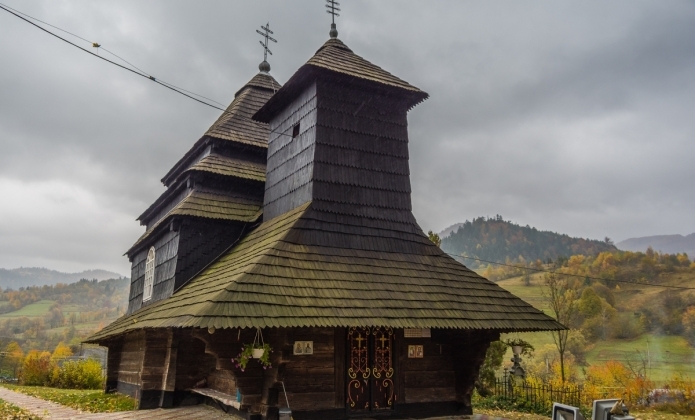
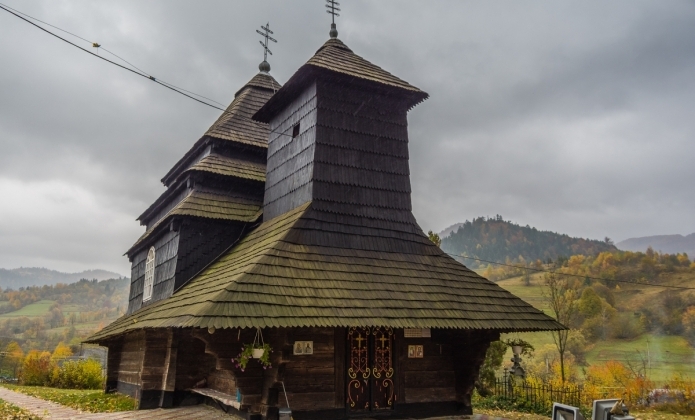
- The Church of St. Michael the Archangel of the XVII century in the village of Uzhok. It is included in the UNESCO heritage. This is one of the most famous wooden churches in Transcarpathia, located in the village of Uzhok, under the Uzhok Pass. It was built in honor of St. Michael the Archangel in 1745, and since then it has served as a place of communion with God;
- Church of the Holy Trinity (1792). Trinity Church (1792), Velykyi Bereznyi village, Roman Catholic Church (1778), Velykyi Bereznyi village, Monastery of St. Basilthe Great (1742 ). Basil the Great (1742), Malyi Bereznyi village;
- There are many architectural monuments in the district. The most valuable are wooden churches and temples - the Church of St. Nicholas in the village of Husnyi (16th century). Nicholas in the village of Husnyi (1655), the Church of St. Michael in the village of Vyshka. Michael in the village of Vyshka (1700), the Church of the Intercession in the village of Kostryna (1761), the Church of the Forerunner in the village of Sukhyi (1769), the Church of St. Basil in the village of Sil (1777), the Church of St. Nicholas in the village of Chornoholova (1794), and the Church of St. Anne in the village of Bukivtsovo (1717 - 1791) and the Malobereznyanskyi Greek Catholic Monastery. All of them are examples of the Boyko school of wooden monumental architecture, decorated with carvings and ornaments. The bell towers of the Uzhok St. Michael's, Husnensky St. Nicholas, and Chornoholivka St. Nicholas churches were declared architectural monuments.
- An outstanding monument of engineering in the Velykyi Bereznyi region is the railroad built across the Uzhok Pass in 1905-1906, when Zakarpattia was part of Austria-Hungary. The most difficult section for the builders was the 7.5 km stretch from the pass to the village of Volosianka with a height difference of 362 meters. Serpentines, bridges, viaducts, tunnels, and retaining walls were built. Most of these structures have survived two wars, many natural disasters, and continue to serve to this day;
- The longest railroad tunnel in Velykyi Bereznyi district is the Shcherbyn-Siankyi tunnel, which is 908 meters long. The tunnel connects Zakarpattia and Lviv region.
- The Uzhansky National Nature Park, established by the Decree of the President of Ukraine in 1999, covers an area of about 40,000 hectares and is located in the Uzh River basin from the village of Zabrid to the Uzhok Pass and is part of the Eastern Carpathians International Biosphere Reserve;
- The area of the villages of Stuzhytsia - Uzhok is the territory where the oldest reserves of forest beech are located (1908). It is here that beech forests have been preserved over an area of more than 55 hectares. It is a UNESCO heritage site;
- Uzhok Pass (883 m). This is one of the ways to get to Zakarpattia from the Lviv region and the border with Poland (Sambir direction);
- Important transport passes that have served people for centuries lead to the district through the Vodorozdilnyi Ridge: Uzhotskyi (889 m), Semenivskyi, Pshelench Beskyd. There are famous marble caves near the village of Knyahynya. Between the mountains is the famous Uzhanska hollow. The maximum temperature in the area (in summer) is +40°, the minimum (in winter) is 32°. The most stormy place in Ukraine is Velykyi Bereznyi, where there are up to 43 stormy days a year.
- The oldest trees in Ukraine are the Dido Oak and the Champion Oak in the village of Stuzhytsia. The oaks are 1200 years old;
- In the villages of Uzhok, Stuzhytsia, Kostryna, and Sil, there are mineral springs such as Naftusia, Narzan, and Essentuki.
- The Chorni Mlaki tract is the site of the Knyahynyansky meteorite. On June 9, 1866, at 16:5 p.m. local time, near the village of Knyahynya and Sil, an extremely interesting event took place - the fall of the largest meteorite in Europe. The events unfolded between the Stinka and Yavirnyk ridges. The meteorite appeared as a fireball over the town of Liptovsky Mikulas, flew eastward over the Slovak towns of Sharish, Zemplin, and Presov (Slovakia), and after traveling more than 200 km, exploded near the village of Knyahynya at an altitude of 40 km. Samples of it are kept in the regional museum of local lore, as well as in museums in Vienna and Moscow.
- There are karst caves near the village of Knyahynya that could be of interest to tourists. The most popular recreation areas are located along the Uzh and Liutianka rivers, the ridge of Mount Yavornik, and near mountain streams and slopes, including these: Krasiya, Sil.
Reserves, nature reserves, parks:
- Park (1866), Velykyi Bereznyi village (center). More than 250 rare tree species, including two-lobed ginkgo, Canadian hemlock, giant thuja, petiole and rocky oak.
- The Pasiki botanical reserve, near the village of Zabrid. Habitat of the autumn late flower (Colchicum autumnale), a rare species listed in the Red Data Book of Ukraine.
- Golanya Botanical Reserve (Zhornava Forestry). Beech forests with an admixture of white fir, sycamore, and ash aged 70-120 years. It is located within the altitudes of 700-800 m. The plantations contain a valuable form of sycamore "bird's eye". In the herb layer, there is a reviving lunaria (Lunaria rediviva), Scopolia carnioilica - rare plants listed in the Red Book of Ukraine.
- Ertashi Botanical Reserve (Stavnianske Forestry). Highly productive plantations of scots pine, as well as pine-beech, spruce-pine, and oak-pine (with northern oak) crops are protected. The stand is over 120 years old. This is one of the oldest research plots in the Ukrainian Carpathians. Crops were planted here in the XIX century to study the growth of valuable coniferous and deciduous species of different geographical races in beech forests in order to increase their productivity and economic and technical value.
- The Yavornyk Mountain botanical natural monument. Fir and beech virgin forests 170-220 years old with admixture of sycamore, elm, ash at an altitude of 1000-1050 m.
Tourists visiting the Velykyi Bereznyi district say that it is an extremely beautiful region. It is chosen by those who seek peace and the company of nature. The most popular ski area of Transcarpathia - Krasiya - is located in the district. Accommodation in the Velykyi Bereznyi district is provided in hotels, campgrounds, and rural tourism estates. Dining in restaurants offering Transcarpathian cuisine.
What to visit
Landmarks, museums and places of interest near Velykyi Bereznyi district.
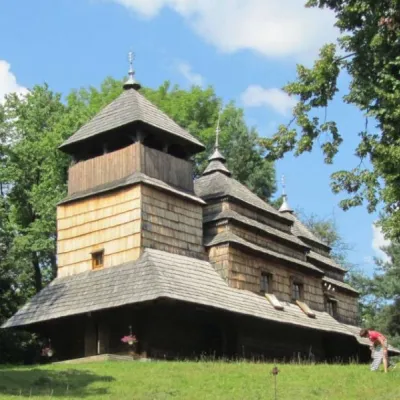 ChurchChurch of the Intercession of the Holy Virgin, KostrynaKostrynska Roztoka5.2 km from the centreChurch of the Intercession of the Holy Virgin - a wooden church located in the village of Kostryna, in the Velykobereznyanskyi district of the Zakarpattia region, a...
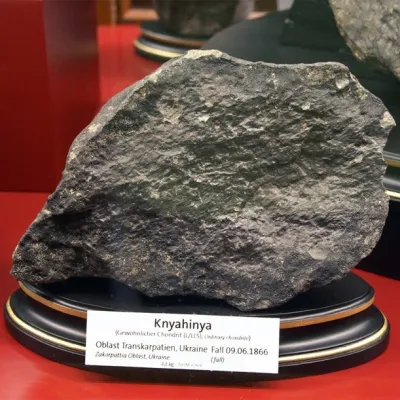 ArchaeologyTranscarpathian meteorite "Knyahynya"Kniahynia13 km from the centreKnyahynya is a stone meteorite (chondrite, group LL5) weighing over 500 kilograms. It is the largest meteorite found in Europe in recent history.
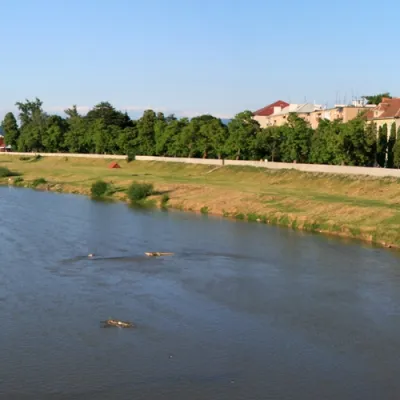 RiverLatorytsiaRoztoka14 km from the centreLatorytsia River - Latorytsia and its surroundings are a popular destination for eco-tourism. The river's flow through mountains and forests creates picturesque...
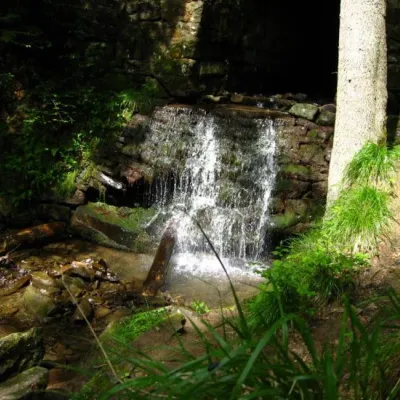 WaterfallLumshory waterfallsLumshory16 km from the centreLumshory waterfalls are a group of waterfalls in the Ukrainian Carpathians, a hydrological natural monument of local importance (called "Waterfall on the Turytsia...
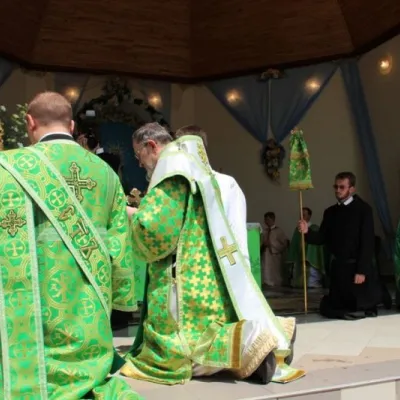 SightBasilian Monastery of St. Nicholas, Male BerezneMalyi Bereznyi21 km from the centreThe monastery is located in the village of Malyi Bereznyi, on the slope of Mount Dilok, near the Uzh River.
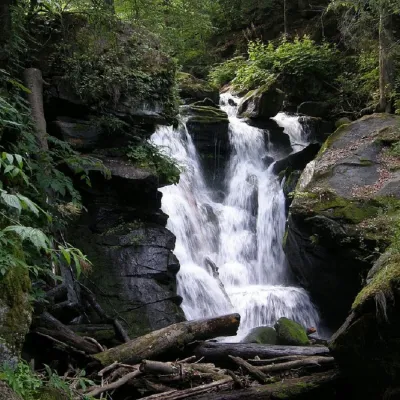 WaterfallVojvodyn waterfallPolianska Huta21 km from the centreThe Voyevodyn Waterfall is located on the stream of the same name near the village of Zhdeniyevo in Zakarpattia within the Sokolovi Skeli, an ornithological reserve of...
Where to stay
Hotels, guesthouses and cottages in and around Velykyi Bereznyi district.
 HomesteadHomestead "U Povara" Vyshka (1 km to the Krasiya ski lift)Vyshkaunder 1 km from the centreSaunaBBQParking
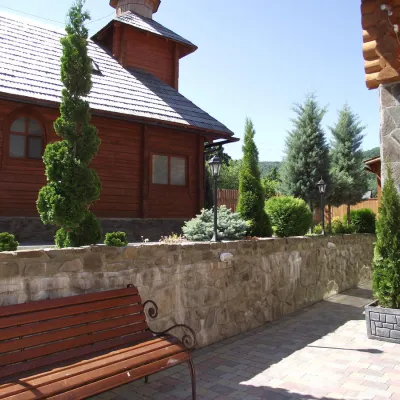 HotelTOP Resort&Spa Vyshka (2.7 km to the Krasia lift)Vyshkaunder 1 km from the centrePoolSaunaSPA
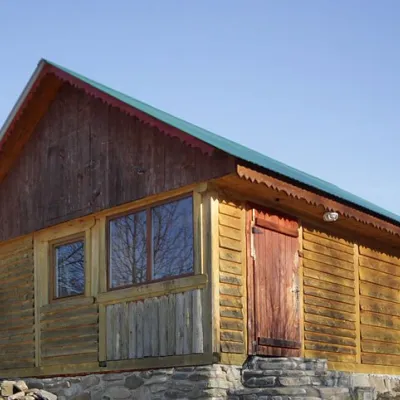 HomesteadHomestead "Smerekova Khata" VyshkaVyshkaunder 1 km from the centreSaunaBBQKitchen
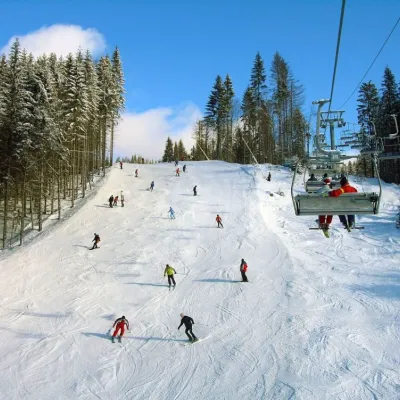 Ski resortSki Resort "Krasia" (Vyshka) - Lifts and TrailsVyshkaunder 1 km from the centrePoolSaunaKids
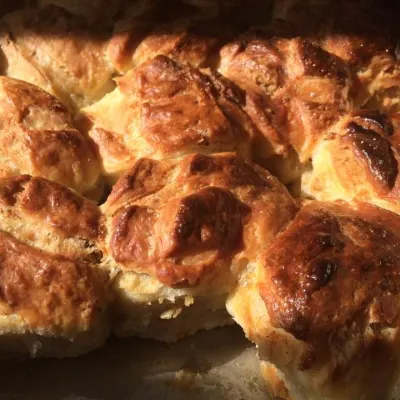 HotelGuest house "Urochyshche"Vyshka1.1 km from the centrePoolSaunaKids
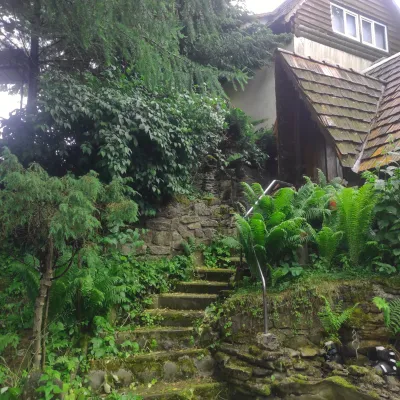 HomesteadHomestead "U Dyadi Vani" VyshkaVyshka1.5 km from the centrePoolSaunaBBQ
Trails nearby
All trails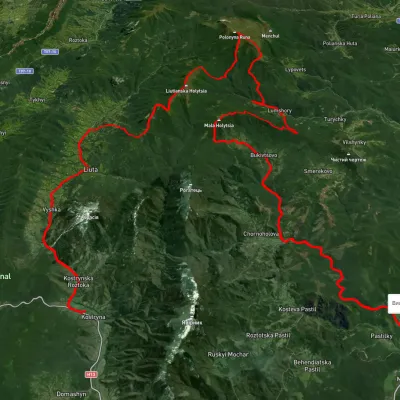 HardMulti-dayUnmarkedKostryno village to Pastilky villagevia Vyshka village, Liuta village +2Elevation profile167–1 472 m79.8 kmascent 3 090 munder 1 km from the centre
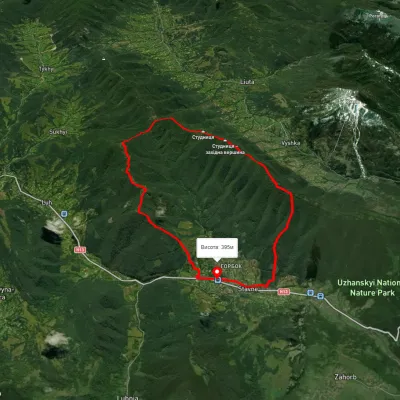 ModerateTwo-dayUnmarkedStavne village loopvia Mount Studnytsia, Mount SpalenyiElevation profile381–1 037 m17.6 kmascent 1 007 m≈ 6.5 h walking1.3 km from the centre
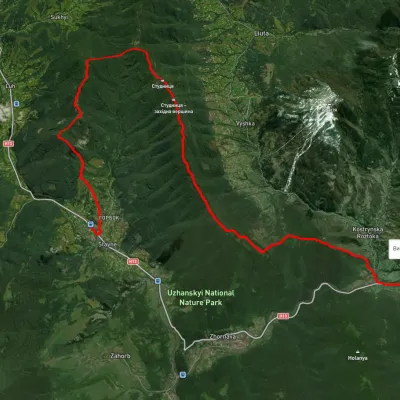 HardTwo-dayUnmarkedStavne village to Kostryno villagevia Mount Bertse, Mount VezhaElevation profile292–1 049 m22.3 kmascent 1 234 m≈ 8 h walking1.3 km from the centre
Peaks nearby
All peaks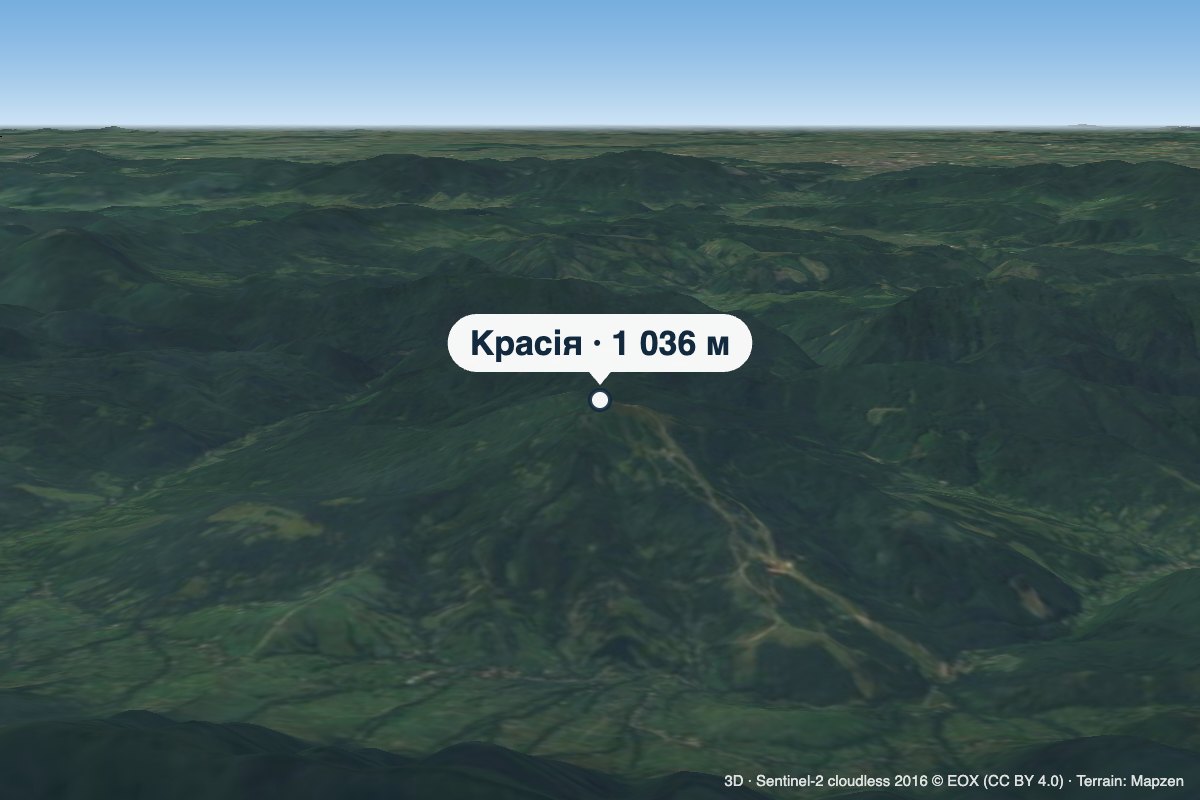 PeakMount KrasiiaVyshkaaltitude 1 036 m3.2 km from the centreKrasiia is a 1,036 m mountain in the Eastern Beskids above the village of Vyshka in the Uzhhorod (formerly Velykyi Bereznyi) district of Zakarpattia Oblast.
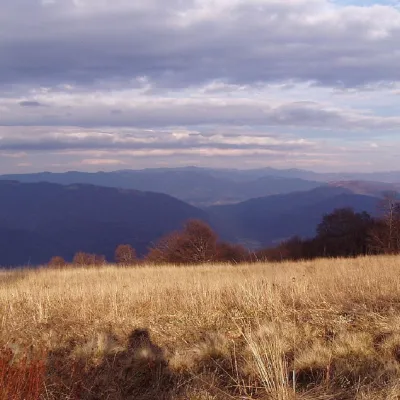 PeakMount YavirnykRuskyi Mocharaltitude 1 017 m11 km from the centre16 trails to the topMount Yavirnyk is a 1,017-meter peak of the Ukrainian Carpathians, which is located within the Polonynsky Beskyd.
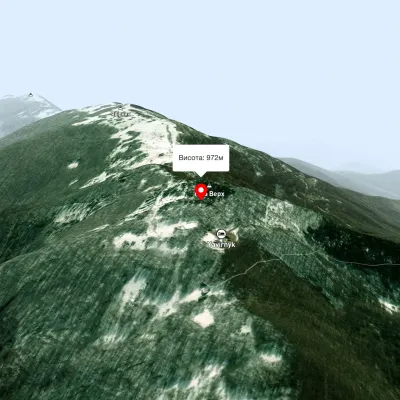 PeakMount Judah TopRuskyi Mocharaltitude 972 m12 km from the centreThe top of Mount Judah Top is 972 meters above sea level. The nearest settlements are: Ruskyi Mochar (2.1 km), Sil (4.2 km), Roztotska Pastil (4.3 km).