Stometrivka, Ivano-Frankivsk
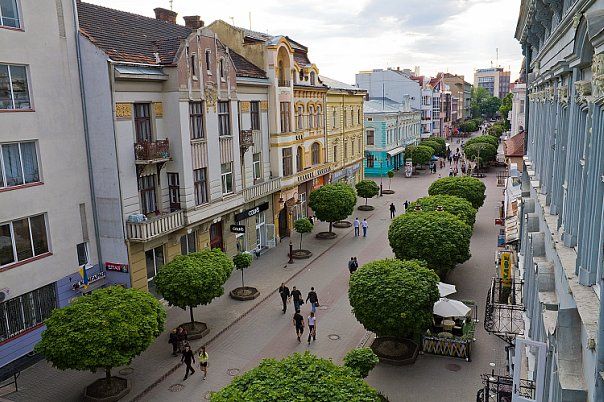
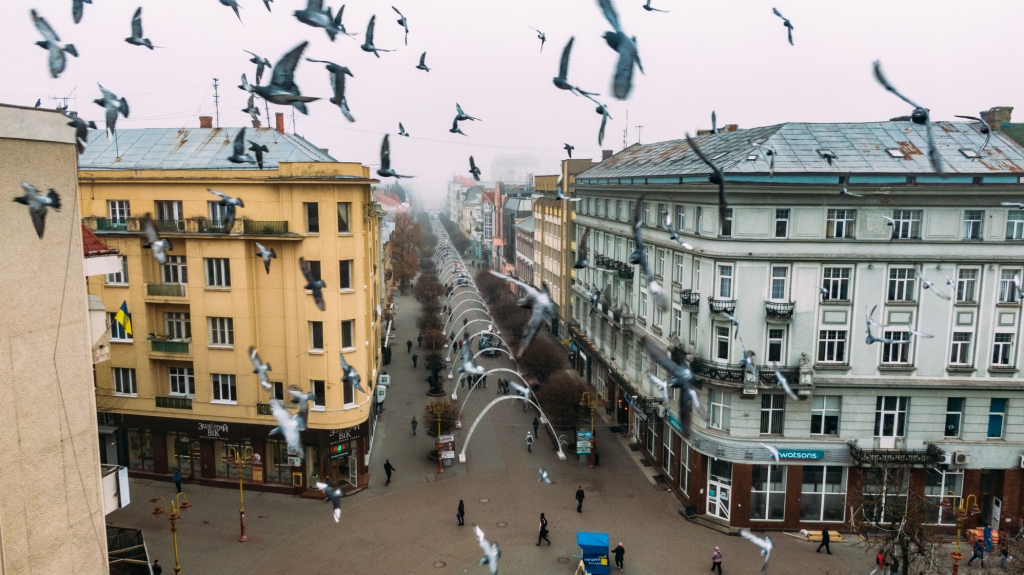
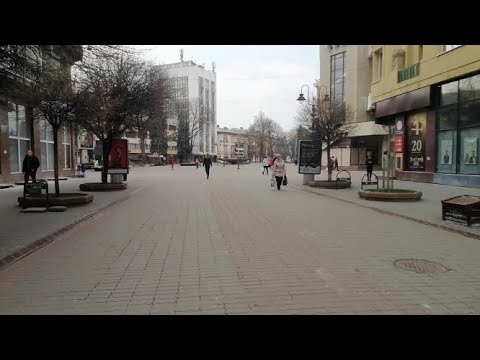
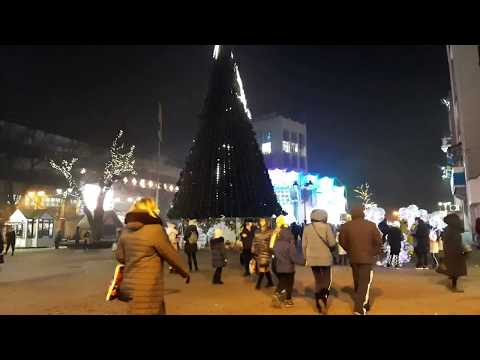
"Stometrivka in Ivano-Frankivsk is a favorite vacation spot for locals, and visitors to the city should definitely visit it, because this street is full of real city life, and the aroma of coffee comes from cozy cafes. All the roads in Ivano-Frankivsk lead to the "hundred-meter street". It's a place to take a leisurely stroll to feel the mood of the city, hear the Ivano-Frankivsk news, enjoy the architecture, and savor coffee from local cafes.
"Stometrivka starts near Vicheva Square and stretches all the way to Ivan Franko Street. It also has another name - "sotka". In fact, this name is very conditional, because the street is almost 450 meters long. Why did the street get this name? There are several versions:
- According to local architect Zenoviy Sokolovskyi, the name "sotka" was popularized because of Shashkevych Street, where the Molochne café was located, which was built in the 1980s. The 100-meter-long Shashkevych Street was completely blocked off to make way for the cafe's summer terrace;
- Another version is that the entire Radyanska Street (now Nezalezhnosti Street) used to be a roadway. However, in the early 80s, a part of the street was blocked to make it a pedestrian street. This section was then 100 meters long, which is why it got its name. After a while, the pedestrian zone was extended, but the informal name had already taken root among the people.
The beginning of Stometrivka is actually the second center of the city, the first historical center being Rynok Square. "Stometrivka is located at the beginning of Nezalezhnosti Street in the central part of Ivano-Frankivsk.
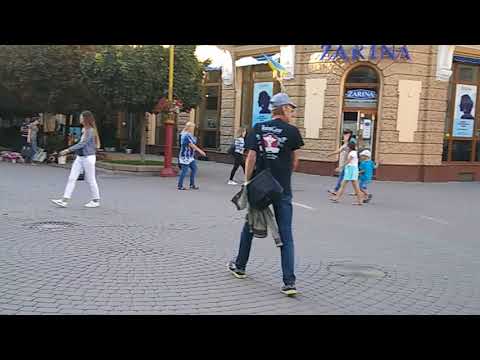
There are bookstores, shops, cafeterias, pizzerias and restaurants, and a monument to the artist Opanas Zalyvas. It is a favorite place for city residents to meet, relax, and take evening walks.
This street is one of the oldest in the city. As early as the 1760s, the first three Jewish estates appeared here, and the street was called "On Three Houses." Intensive development began in the second half of the nineteenth century, but the best houses, mostly three-story, were built in the early twentieth century.
The street has changed many names throughout its history. Another of its old names was Tysmenytsia Road. It came about because the street started from the Tysmenytsia Gate of the Stanislaviv Fortress and led to the exit to Tysmenytsia. In 1884 it was named Sapieżyńska in honor of a descendant of the famous Polish magnate Leon Sapieha. During the ZUNR period, this street was named after Shevchenko, during the Soviet era it became Soviet, and the German occupiers in 1941-44 named it after Hitler. In 1993, it became Independence Street.
At the turn of the nineteenth and twentieth centuries, the beginning of Sapiezhynska Street was called the "A-B line." This name was also used in other European cities. Back then, it was customary to call a certain row of building facades a "line" and to mark these lines with letters. For example, in Krakow, the Market Square had not only the A-B line, but also the C-D, E-F, and G-H lines. The Stanisławów A-B line was the most luxurious part of the city, starting from the Kaetan Kopacz grocery store and ending near the Pid Olenem hotel. There were exquisite shops, cozy cafes, and restaurants. Now it is a stretch from the beginning of Nezalezhnosti Street to Shashkevych Street.
The Kyiv Business Center (formerly the Union Hotel, then the Kyiv Hotel) is the first five-story building in the city, located on the corner of Nezalezhnist Street and Vicheva Square (address: 4 Nezalezhnist Street). The name was retained from a hotel that was located here during the Soviet era. The building was constructed in 1912 by Stanisław Khovanets and designed by architect F. Janusz. The figures on the façade were made by M. Antoniak. The building has identical facades on Nezalezhnosti Street and Vicheva Square. The high-tech hotel immediately had an elevator, central heating, and an independent power plant. Khovanets himself was the owner of the city's largest printing house, co-owner of the city newspaper Kuryer Stanislavivskyi, and director of a savings bank. Khovanets also opened a lithographic workshop where he printed photographs, postcards, maps, and calendars. The first floor, like today, was occupied by shops. The hotel was located on the upper floors. It remained the largest in the city until the Nadiia Hotel was built . Nowadays, the upper floors are occupied by business offices, the ground floor by shops and restaurants, and the basement has a coffee shop and a gallery of gifts and souvenirs.
On the opposite side of the street, opposite the Kyiv Business Center, stands a five-story residential building (present-day address: 11 Nezalezhnosti Street). It is the second tallest building in the city and belonged to Karol Hauswald. It was built in 1914. The building housed the exclusive Revere Hotel and Haubenstock's restaurant. During the Nazi occupation, a fashionable Hanse store operated here, with expensive goods intended only for Germans ("nur für Deutsche"). Then the Silhouette store was located on the ground floor. After that, the building has been used for various shops and establishments. The Hauswald House and the five-story building of the former Union form the main entrance from Nezalezhnosti Street to Vicheva Square.
"Banking Quarter" is the old name for a complex of buildings in Stanislaviv consisting of four L-shaped buildings that form a square when adjacent to each other. The quarter is located between Nezalezhnosti, Shashkevych and Hrushevskoho streets. Today, it is home to a branch of Raiffeisen Bank Aval, a Bukynist bookstore, a customer service center for Life:), the Main Department of Architecture and Urban Planning, the Slovan restaurant, and other institutions.
In 1900, this street also became the "sweetest" in the city. On June 12 of that year, a candy shop run by Jan Novorolsky and Władysław Krowicki was opened in the building of the Mishchanskyi Bank(15 Nezalezhnosti Street), which for many years became the best in Stanislaviv. In 1910, the confectionery set a kind of record by baking a huge cupcake and displaying it in a window for advertising purposes. There was an interesting city tradition associated with this candy shop: the graduates of that time hung their group photo in the shop window so that everyone could see it and share their joy with the graduates.
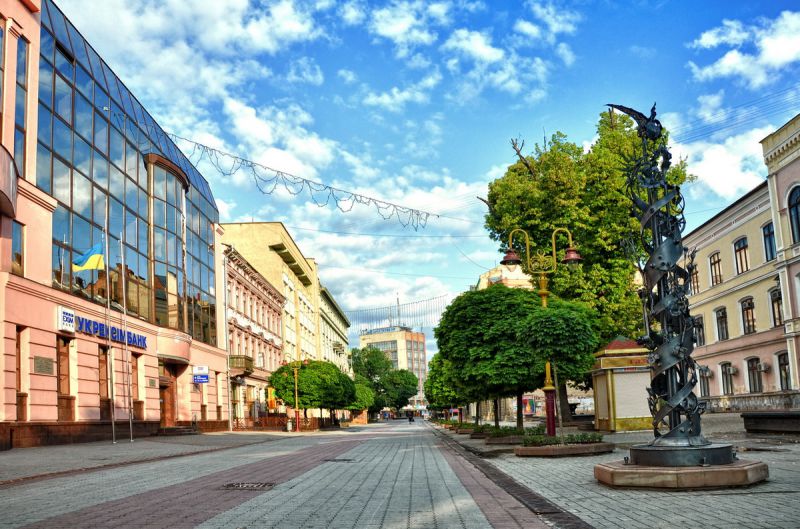
In 1909, the city's first cinema, Urania, moved into the building at 10 Sapiezhynska Street (now the building of Ukreximbank). In August 1909, this cinema screened the short film extravaganza Kaleidoscope. It was the first color movie seen by the city's residents. The cinema's equipment was purchased from the famous French company Pathe Freres, which in 1905 bought all the rights to the cinematographic apparatus from the Lumiere brothers. This studio also invented a way to color black-and-white footage using colorful stencils. In May 1912, the city's residents watched a movie with subtitles for the first time. The Urania Cinema showed the American film The Discovery of America by Columbus.
At the end of the nineteenth century, this street also became the most "drunken" in Stanislaviv. Around 1880, a local merchant, Mojzesz Kron, built a one-story house here and placed a propinquity, a place for selling vodka. Alcohol could be purchased in bottles and on tap. The propinquary was one of the most important sources of revenue for the local budget. For example, in 1900, one third of the city's budget consisted of revenues from propinquity. In 1912, the Union Hotel was built on the site of the propinquity.
The history of this street is connected with the lives of many famous people. The office of the famous Ukrainian lawyer and patriot Yosyp Partytskyi was located above the Union coffee shop in the Bassa building. Dmytro Vitovskyi, one of the founders of the ZUNR, practiced law with Partytskyi. A dentist Roman Yarosevych kept his private office in the building at the present-day address of 18 Nezalezhnosti Street. He was a prominent public figure, ambassador to the Reichsrat, and chairman of the Stanislaviv Railway Doctors' Association. The family of the famous memoirist Tadeusz Olszanski lived in the house at 29 Nezalezhnosti Street for a long time.
Several pedestrian zones are located in the area of the "hundred-meter" street, including Levko Bachynskoho, Dmytro Vitovskoho, and Shashkevych streets. There are no cars on Vicheva Square either, but there is an interesting fountain where you can walk under the bowl without getting your clothes wet.
There are also many functioning hotels on the "hundred-meter" street, which are adjacent to numerous souvenir shops, boutiques, cafes, and restaurants.
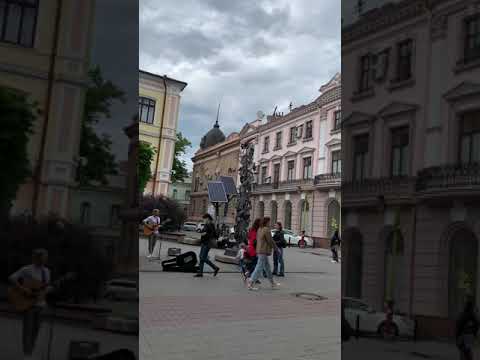
The streets of Ivano-Frankivsk feature many interesting wrought-iron sculptures created by blacksmiths from 30 countries at the May festival "Blacksmiths' Festival". Some of the blacksmiths' works have taken root on the "hundred-meter run". The most popular composition is the Tree of Happiness.
The pedestrian zone is a center of street art. Artists make the sidewalk bright and unusual by painting gutters and manholes. Musicians create a cozy mood by filling the street with romantic sounds of music.
Accommodation around Stometrivka, Ivano-Frankivsk:


Which trails pass by Stometrivka, Ivano-Frankivsk?
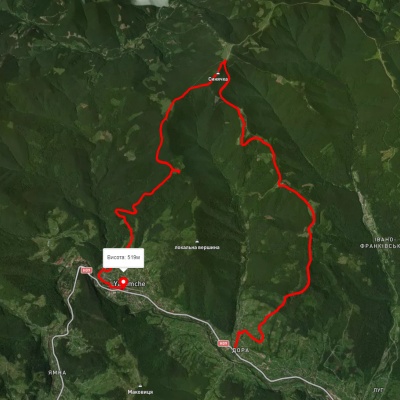
We suggest these hiking trails through or near Stometrivka, Ivano-Frankivsk: Pasichna village, via Maniava village, Maniava Waterfall and Mount Velyka Syvulia to Bystrytsia village, Maniava village - Monastyretska polonyna, Dora village, via Mount Syniachka, Pereslip Pass, Turshuhuvata polonyna and the Yavirnyk ridge to Yaremche, Dora village, via Mount Syniachka and Pereslip Pass to Yaremche, Dora village, via Mount Syniachka and Chornohorytsia polonyna to Yaremche, Dora village, via Mount Syniachka and the Chornohorytsia ridge to Yaremche

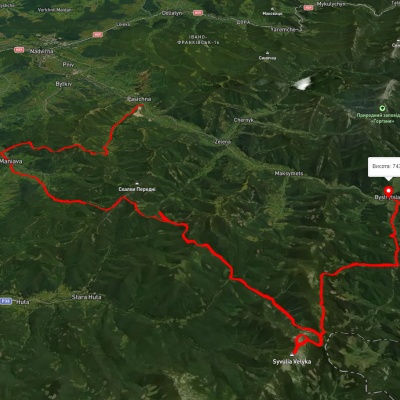
Pasichna village, via Maniava village, Maniava Waterfall and Mount Velyka Syvulia to Bystrytsia village
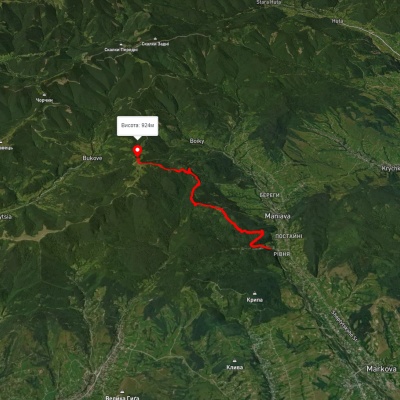
Maniava village - Monastyretska polonyna
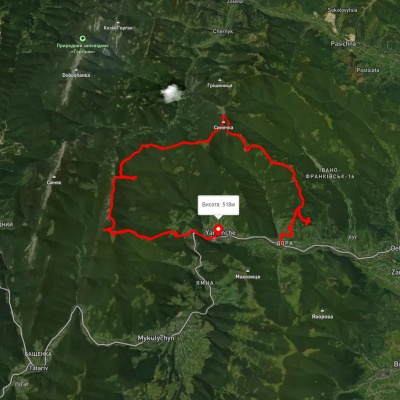
Dora village, via Mount Syniachka, Pereslip Pass, Turshuhuvata polonyna and the Yavirnyk ridge to Yaremche
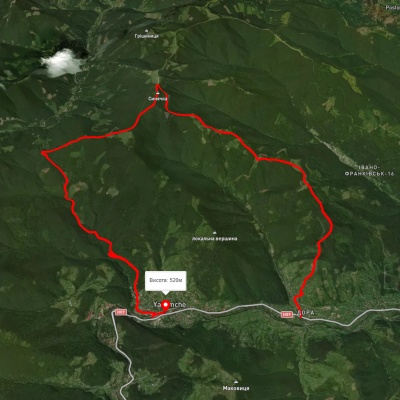
Dora village, via Mount Syniachka and Pereslip Pass to Yaremche