Rakovets
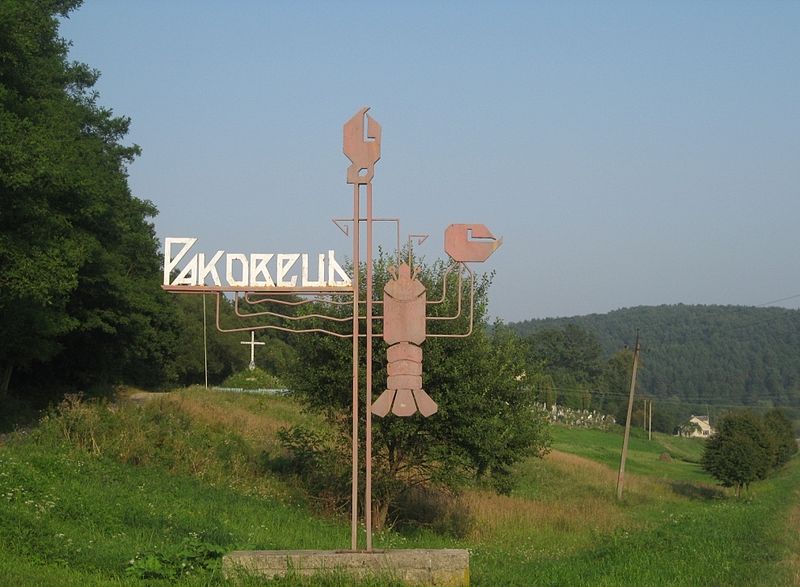
Rakovets (formerly known as Mlynivtsi) is a village in Ukraine, in the Pustomyty district of the Lviv region. The distance to the district center is 14 km, which passes through a local road. The nearest railway station Shchyrets II is 14 km away. The population is 207 people. According to some legends, the current name of the village of Rakovets comes from the crayfish that were abundant in these places. Another name of the town at that time was Mlynivtsi. This is due to the fact that there were many mills on the Zubra River at that time.
The exact date of the village's foundation is unknown. Some Polish sources say that already in 1466 the owner of the village was Petro Buchatskyi from Czeszybisy, while Soviet historians indicate a different date, that the village was founded in 1484. The monograph "Świrz" by Polish historian Andrzej Żaki mentions a document on the division of the estate of Martin Svirzky between his sons, dated 1530. Among other things, it states that Pidtemne, the Monastery, and Mlynivtsi were transferred to Stanisław and Jerzy as joint property. From the same monograph it is known that Martyn inherited the estate from his aunt Malgorzata (Margarita) Romanowska, to whom it had belonged before 1490.
In 1598, a swordsman from Lviv, Mykola Narayovskyi of the Janina coat of arms, founded a Roman Catholic parish in the village. On September 6, 1603, the village was first mentioned in official documents under its current name, Rakovets. It was then, by decision of an arbitration court in Lviv, that, after many years of complaints from the owners of Rakivets to the owners of the surrounding villages and numerous court hearings, a voluntary agreement was signed between the parties to the conflict, which clearly defined the boundaries of Rakivets. In 1615, the village's lands were divided between the Lviv swordsman Mykola Naroyovskyi and the Zhydachiv army commander Krzysztof Leszniowski. Later, in 1623, Elżbieta Humnicka (of the Leszniowski family) donated part of the estate to the Jesuit monastery in Lviv. Another part of Rakivets was owned by the Benedictine monastery. Both orders were in a property and legal dispute for a long time.
The village remained divided between different owners until the early twentieth century. Alfred Potocki was among them. At the end of the nineteenth century, the grandfather of most of the village was the ambassador to the Galician Sejm, David Abrahamovych of the Burchak family. In 1905, part of the village belonged to Roman Potocki, and the rest to Isaac Herstman and the Benedictine monastery.
The former town is surrounded by forested hills and is surrounded by picturesque nature and beautiful scenery. Rakivets has two suburbs: one downriver and one upriver. In its upper part, Rakivets has been preserved from the planning point of view as it was when it was a town under Austria. The former center is very compact, small. At one time it was also granted Magdeburg rights. Under Austria, the city privileges for Rakivets were canceled. The fact that another large city, Lviv, was building and developing nearby and it was difficult to compete with it played a role.
The center of Rakivets is formed by a square-shaped market, typical of any medieval city. Like all European cities, Rakivets also had its own Rynok Square, which has been preserved to this day. The Rynok Square itself is unique because it is located on a slope rather than on a plain. One end of the Rynok is ten meters higher than the other. The market was built according to the classic Magdeburg scheme: short and small streets extend from the four ends of the square. All of them have been preserved to this day. However, Rynok Square is so compact and small that it is very easy to miss.
Some sources say that there was also a castle in Rakivtsi, approximately in the sixteenth and seventeenth centuries. There are written references to it, but now it is difficult to determine its location. This castle, like many others, not very powerful, was destroyed. Only the treasure troves and the remains of the moat, which served as a defense, are well preserved and should be protected as a monument of defense art.
Historical sights - Architectural monuments
Church of St. Valentine
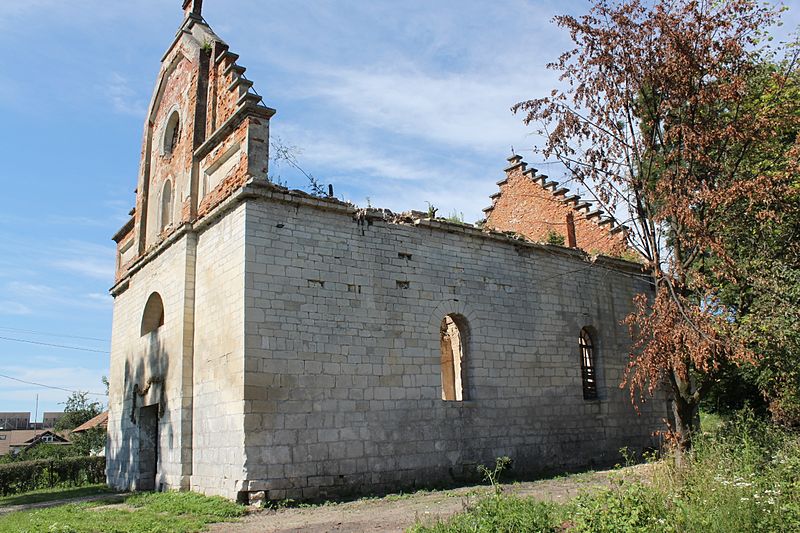
The parish church of St. Valentine was built in 1822-1856, on a hill in the center of the village, and was the fourth in a row, after the previous wooden churches that were located on this site. The first mention of a Roman Catholic parish in Rakivka dates back to 1598, and most likely the first wooden church already existed then. Most likely, it was damaged during the Turkish-Tatar invasion in 1620-1621 and stood empty for a long time and was not restored.
In 1704, the Jesuits dismantled the remains of the old church and built a new wooden church in its place. During one of the visits to Rakivets, the church was already described as old and in the process of complete destruction. In 1746, the Jesuits, together with Benedictine nuns, hired a craftsman named Marcin Laseczko to build a new church identical to the previous one. In 1774, the choirs of this church had a 6-voice positive organ (without pedal) painted black, but it was damaged.
At the beginning of the nineteenth century, the church was already in such a bad condition that in 1810 it was sealed and closed, and by 1822 the church building was dismantled, and the first stone for a new shrine was laid in its place. In 1856, the church was ready, and on October 5, Archbishop Luke Baraniecki of Lviv performed the rite of consecration of the church. In 1880, during another fire, the church was severely damaged, but in a short period of time it was rebuilt to its present appearance.
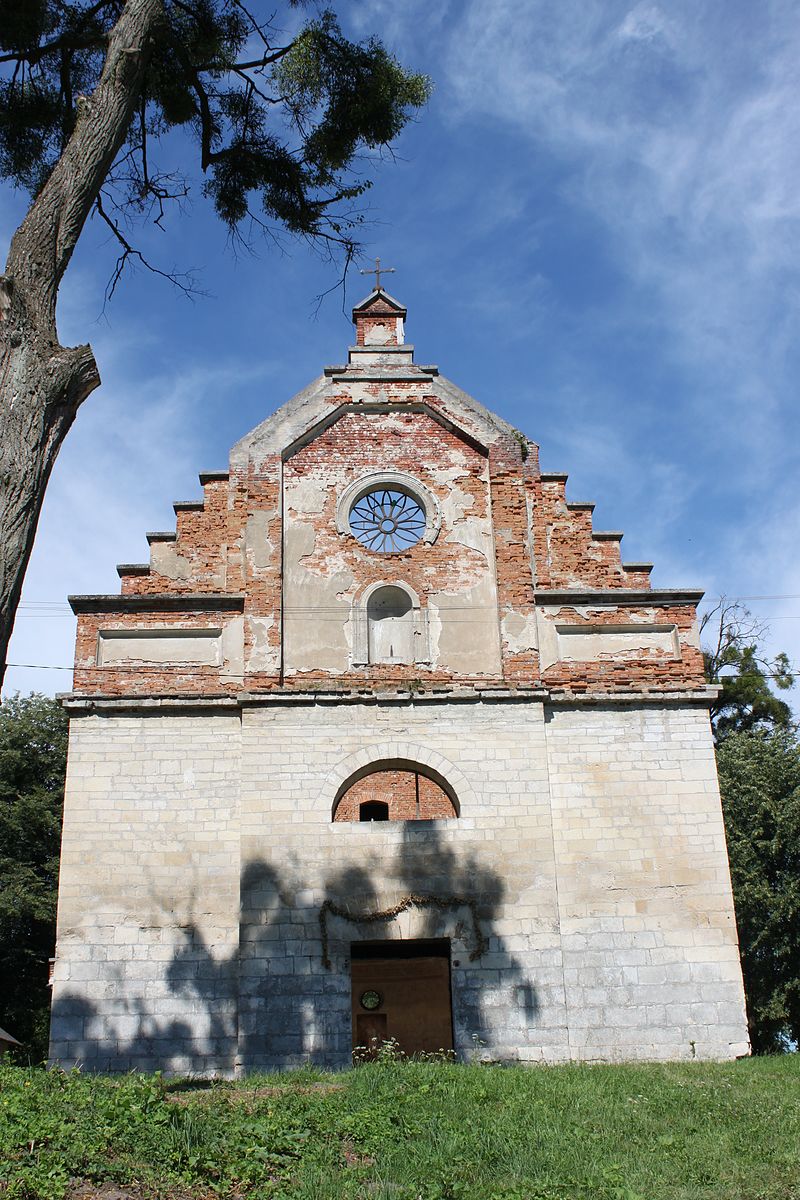
The temple is built of hewn limestone stone with brick gables. The church has a rectangular nave (nave) with an upper and lower sanctuary (presbytery), which is closed by a semicircle of the apse. The façade is three-tiered with a round window (rose) with lace ornamentation enriched with richly colored stained glass windows. The sanctuary has a sacristy (sacristy) on the south side. The exterior walls of the church are smooth, unpainted, and have no architectural decor; only the main façade has a slightly protruding risalit, topped with a brick stepped pediment. The roof is gable, and an openwork signature with a cross was installed on the roof crest, which collapsed along with the roof and was completely destroyed in 2013. The cross is now kept in the local church of the Intercession of the Blessed Virgin Mary. In the upper part of the pediment is a niche where, until 2015, there was a plaster (alabaster) figure of the Immaculate Conception of the Blessed Virgin Mary. The figure was made in 1893 by the famous Polish sculptor of Italian origin, Victor Zacchi.
The figure of the Mother of God stood over the village as a silent witness to all the historical events that took place here. The figure, in part of the right side of her face, was shot in the godless times of communism, and she was missing her right cheek. The entire surface of the figure was in disrepair, there were many damages to the sculpture, two holes in the head, one on the back under the shoulder blade, the arms fell off, the ball on which the Virgin stood was split in two. The body of the sculpture was filled with an abandoned hornet's nest.
In order to prevent the complete destruction of this work of sacred sculpture, the local Greek Catholic community in February 2015, on its own, managed to begin conservation measures to preserve it. On October 14, 2015, on the feast of the Intercession of the Blessed Virgin Mary, the Rakivtsi community greeted the restored figure of the Virgin Mary in a procession and solemnly welcomed it back to Rakivtsi. Currently, the figure of the Blessed Virgin Mary is stored in the local Greek Catholic church, awaiting the restoration of the pediment of St. Valentine's Church to return to its place.
The bell tower, as a separate building, stood next to St. Valentine's Church and was a three-bay brick structure. In 1895, a new organ made by Jan Sliwinski's factory was installed in the church, with 6 voices. During the First World War, the church lost all of its bells, metal parts of the organ, and a silver cup to requisition (from the 1919 statement of losses). In 1946, after the church was closed and the Poles left the village for their historic homeland, most of the interior was destroyed and burned. Some of the surviving images, including the images of St. Valentine (by Otto Edward Borzemski, ca. 1930) and St. Joseph (by Władysław Rossowski, ca. 1909), were later moved from the church to the Greek Catholic Church of the Intercession of the Blessed Virgin Mary, where they are still kept today.
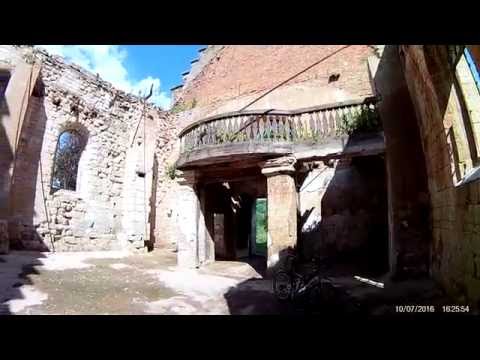
It is said that the church of St. Valentine also had a miraculous icon, which local Poles took with them to Poland to save. Since 1952, the church was used as a collective farm warehouse, which was used to store mineral fertilizers, spare parts for machinery, paper, or other needs of the collective farm. From the 1980s to the present day, the church has been empty and in disrepair. Because the roof was damaged and leaking, the rafters rotted and the vault collapsed, and in 2013 the roof completely collapsed along with the signature and cross. The Greek Catholic community managed to save some of the tiles that covered the roof. Bushes and trees have grown into the walls of the church. The brick shields are damaged. Inside, the walls are damaged, and on the floor there are remnants of plaster, broken tiles, rotted wooden rafters and structures of the fallen roof, brick lumps, stone, soil, and all overgrown with bushes.
The best preserved part of the church is the sanctuary (presbytery), where you can see an old painting, and on the occasion of the 160th anniversary of the church, a reproduction of the image of St. Valentine, the original of which is located in the Church of the Intercession of the Blessed Virgin Mary, was installed there. In the middle of the church, in the main nave on the right side of the main arch, you can still see the wooden roof that remained from the destroyed wall cauldron, and at the entrance to the church you can still see the dilapidated wooden choir. The plebeian room, which is located near the church, is well preserved.
On June 20, 2013, at the XXIV session of the Lviv Regional Council of the VI convocation, a decision was adopted under No. 797 "On Approval of the Regional Program for the Development of the Cultural Heritage Protection in Lviv Region for 2013-2015." In accordance with this decision, monuments were identified that are not used or are used inefficiently, and require urgent emergency and repair and restoration work (Appendix 2), including the Church of St. Valentine in the village of Rakovets, Pustomyty district, Lviv region. The regional budget even allocated funds for the entire period of work. So far, nothing has been done. The church continues to deteriorate and is awaiting urgent intervention in order not to disappear altogether.
The local Greek Catholic community is taking care of the shrine as best it can and is trying to save this architectural monument of national importance (protection number 480) from complete disappearance. In 2016, on the eve of the 160th anniversary of St. Valentine's Church, parishioners of the Greek Catholic Church of the Intercession of the Blessed Virgin Mary cleared the church premises of construction and other debris so that they could enter the church and pray, and also arranged the territory adjacent to the church.
On the occasion of the 160th anniversary of the church's consecration, the relics of St. Valentine, the patron saint of the church, were brought from the Italian city of Terni, where the saint is buried. On June 26, 2016 - All Saints' Sunday, which, according to the church calendar, fell on the first Sunday after Pentecost, the local community, led by the village head of Rakovets, solemnly welcomed the relics of the Holy Martyr Valentine, brought from Italy by the Salesian Fathers, in a procession at the beginning of the village. The provincial superior of the Salesian Fathers, Father Karol Manik, solemnly handed over the relics of the saint to the local Greek Catholic parish for veneration and storage.
A prayer service was held in the Church of St. Valentine, and then the relics of the Holy Martyr Valentine were transferred in procession to the Church of the Intercession of the Blessed Virgin Mary, where, with the blessing of Metropolitan Ihor (Vozniak) of Lviv, they were exhibited for veneration by the faithful, along with the other relics of the Holy Martyrs Theodore, Vincent, Justin and Christian.
Now pilgrims come to Rakovets to pray and ask for intercession from the holy martyrs Theodore, Vincent, Justin and Christian, as well as from St. Valentine, who is the patron saint and healer of the sick, mainly from epilepsy.
Church of the Intercession of the Holy Virgin
The wooden parish church of the Intercession of the Blessed Virgin Mary, built in 1904 by the famous Ukrainian architect Vasyl Nahirnyi, probably on the site of an older church. The church is located near the center of the village, on a hill that turns into a slope. The architecture of the church is cruciform in terms of one-story. It consists of a square-shaped nave with a square nave with shortened, equally wide side frames and a faceted altar, which is located one step higher, with attached sacristy.
An open-air porch is arranged above the entrance to the church, protected by a gable roof that breaks the porch that surrounds the church. The inscription above the door reads the year of the church's foundation, 1904. The eaves around the church are supported by short releases of the crowns of the log cabins and attached brackets. The walls under the canopy consist of bare logs, and above the canopy they are covered with vertically shingled boards and platbands. The nave's quadrangle is completed by a tall light octagon covered with a dome with a crown on top.
In general, the church has six domes: one large and five small domes. To the east of the church there is a wooden square two-tiered bell tower covered with a pyramidal tent roof with three bells. There is also a cemetery near the church.
In the early 1960s, the church was finally closed. In early 1980, it was promised that a branch of the Lviv Art Gallery would be established in the building and that major repairs would be made, but these promises were not realized. In 1988, the communist authorities still did not repair the church building. Therefore, the parishioners of the villages of Rakovets and Novosilok decided to start repairing the spiritual shrine on their own. In addition, the so-called exposition of the art gallery never actually worked for a single day, and the faithful had to go to worship as far as Khorosn. For a long time, people wrote letters from the community to the highest party officials of the Soviet Union demanding the resumption of services in the Rakovets church, but received the final answer that it was inappropriate to register the religious community and its church. Finally, by hook or by crook, the authorities convened a village meeting, at which the then secretary of the district party committee said that the church in the village was inactive because it had been deregistered. But even after this verdict, the believers continued to worship in the church. Then the church was sealed. This next measure of the communist authorities did not stop people. The community of Rakivets, with the support of the community of Novosilka, continued to insist on the opening of their church.
On January 15, 1989, the church was finally opened. The community celebrated this event with great joy and spiritual enthusiasm. The first Divine Liturgy was held in the newly opened church. On August 20, 1991, the Greek Catholic religious community and the parish church of the Intercession of the Blessed Virgin Mary in Rakivets village were registered.
The unique artistic value of this church is represented by the iconostasis, the altar, the kyvot (gift box) and its interior decoration, the wooden canopy over the altar, wooden candelabra and paintings in the sanctuary, and other images in the church. Artists Theodore Hrynevych, Volodymyr Voloshynskyi, and Mykola Zhovnir created the wall paintings of the church, and the latter built a school on his own, which he soon headed. Several of the icons in the church came from the church of St. Valentine.
On the left side of the church now stands the figure of the Mother of God, which stood in a ruined state on the pediment of St. Valentine's Church until 2015, and after urgent conservation measures were taken to preserve it, the local Greek Catholic community solemnly placed it here on October 14, 2015, on the feast of the Intercession of the Blessed Virgin Mary. The figure of the Mother of God will now be kept in the church until the main pediment of St. Valentine's Church is restored and strengthened and safe conditions are created for its return to the niche of the main pediment of the church.
The church houses the relics of the Holy Martyr Valentine, as well as the relics of four other Holy Martyrs: Theodore, Vincent, Justin, and Christian, which were found in 2013 by Salesian fathers in the church's sacristy, in three marble quadrangular slabs where the relics were inserted. Probably, these marble slabs with the relics of the holy martyrs were once on the three altars of the Church of St. Valentine.
The holy relics of the martyrs, with the blessing of the Metropolitan and Archbishop of the Lviv Archeparchy of the UGCC, were solemnly exhibited for veneration by the faithful on June 26, 2016, All Saints' Sunday.
On October 14, 2015, on the feast of the Intercession of the Blessed Virgin Mary, His Grace Bishop Venedikt, Auxiliary Bishop of the Lviv Archeparchy, during his pastoral visit to the Greek Catholic parish of the Intercession of the Blessed Virgin Mary in Rakovets, which has been under the care of the Salesian Fathers since 2013, celebrated the Hierarchical Divine Liturgy and delivered a sermon. On the occasion of the church holiday, His Eminence also consecrated a new large cross and a church square, which the parish community paved in front of the church entrance.
Because of its artistic value and the presence of the relics of five holy martyrs, the Church of the Intercession of the Blessed Virgin Mary in Rakovka is a landmark for many pilgrims. On the territory of the church (near the cemetery) there is a tomb where the former Bishop of Vasylkiv of the UOC-KP, Vicar of the Kyiv Eparchy Pankratii (Taras Volodymyrovych Tarnavskyi, 13.04.1964 - 27.08.2009) rests in eternal sleep. At the bottom of the tombstone is an inscription: "I am the resurrection and the life. Whoever believes in me, though he dies, will live." (John 11.25).
Monuments of monumental art
- Memorial to the Fighters for the Freedom of Ukraine.
- A monument to the soldiers from the village who died in the war of 1941-1945.
Cultural events
Every year, on the feast of the Transfiguration of the Lord, Rakovka hosts the international folklore festival "Rakovetsky Perezvony". The festival's original entertainment is Cossack performances, and the most interesting event is the initiation of men from the crowd into Cossacks. The Rakovets Chimes did not forget about our native Ukrainian cuisine. Everyone could taste dumplings, Cossack kulesh, Transcarpathian bograch and barbecue. At the festival's fair, you can buy fragrant honey from different apiaries and products of folk artists - handmade clay jugs, Havarets ceramics, paintings (painted, embroidered, beaded), charming jewelry, etc. The real epicenter of attention for fans of folk crafts were wicker amulets - motanka dolls.
On August 13-14, 2016, the Honey Savior festival was held in Rakovka. The festival program included a prayer service and blessing of bee products (near the chapel of St. Michael the Archangel), a bee products fair, honey and honey drinks tasting, contests and quizzes.
The budget-forming enterprise of the Rakivtsi village council is a gas station (560th km of the Kyiv-Chop highway). There are three hotel and restaurant complexes. The village has street lighting and updated road infrastructure. The monument to the soldiers who died in the war of 1941-1945 was restored on a voluntary basis. The central high-voltage line Dobrotvir-Hungary and the Dashava-Lviv gas pipeline pass through Rakovets.


Accommodation in Rakovets, with:
Do hotels and cottages in Rakovets offer Hutsul hot-tub bathing to their guests?
If you are interested in venues with Hutsul hot tubs in Rakovets, take a look: Homestead "Lisnika"
Planning to grill a barbecue and spend time with friends outdoors in Rakovets?
If you are interested in venues with a gazebo in Rakovets, take a look: Hotel Complex "Paitash"
Is air conditioning in the room or cottage your main requirement for staying in Rakovets?
If you are interested in accommodation with air conditioning in Rakovets, take a look: Hotel Complex "Paitash"
Looking for a cottage with a sauna and a plunge pool or tub in Rakovets?
If you are interested in venues with a sauna and a plunge pool or tub in Rakovets, check out these options: Hotel Complex "Paitash", Homestead "Lisnika"
Which hiking trails pass through or near Rakovets?
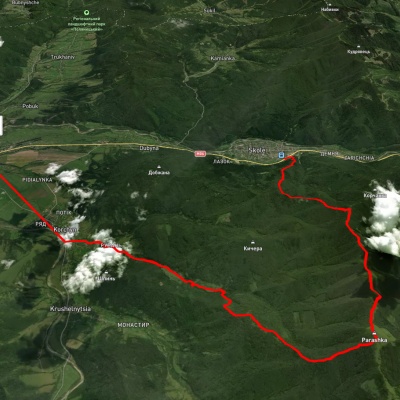
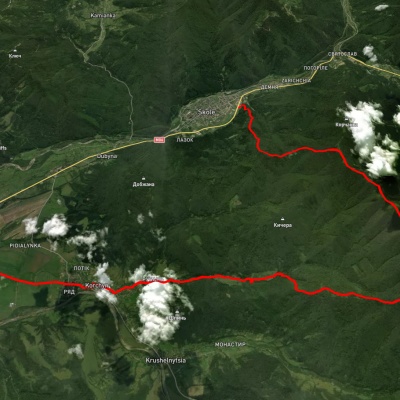
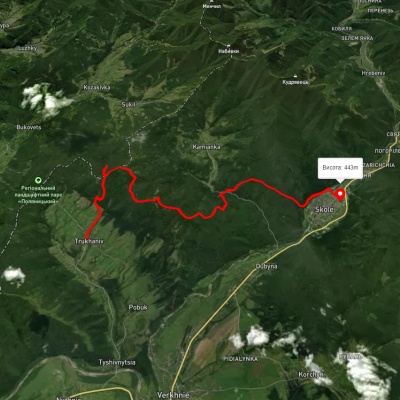
We suggest these hiking trails through or near Rakovets: Skole, via Mount Parashka, Hurkalo Waterfall and Korchyn village to Verkhnie Synovydne village, Skole, via Mount Parashka, Hurkalo Waterfall and Korchyn village to Verkhnie Synovydne village, Trukhaniv village, via Mount Kliuch, Lake Zhuravlyne and Kamianka Waterfall to Skole, Skole, via Mount Parashka, Hurkalo Waterfall and Korchyn village to Skole, Kamianka village, via Mount Lopata, Skole and Mount Parashka to Krushelnytsia village, Korchyn village, via Hurkalo Waterfall and Mount Parashka to Krushelnytsia village