Potocki Palace, Chervonohrad
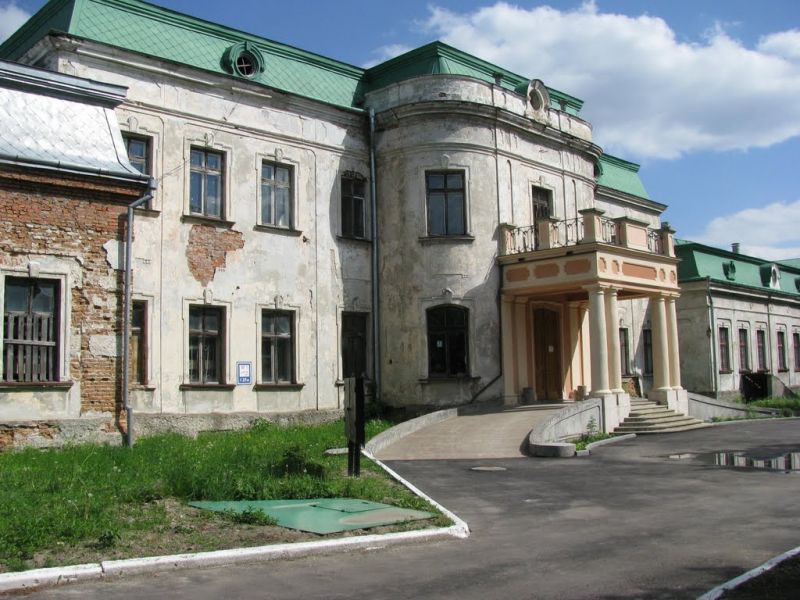
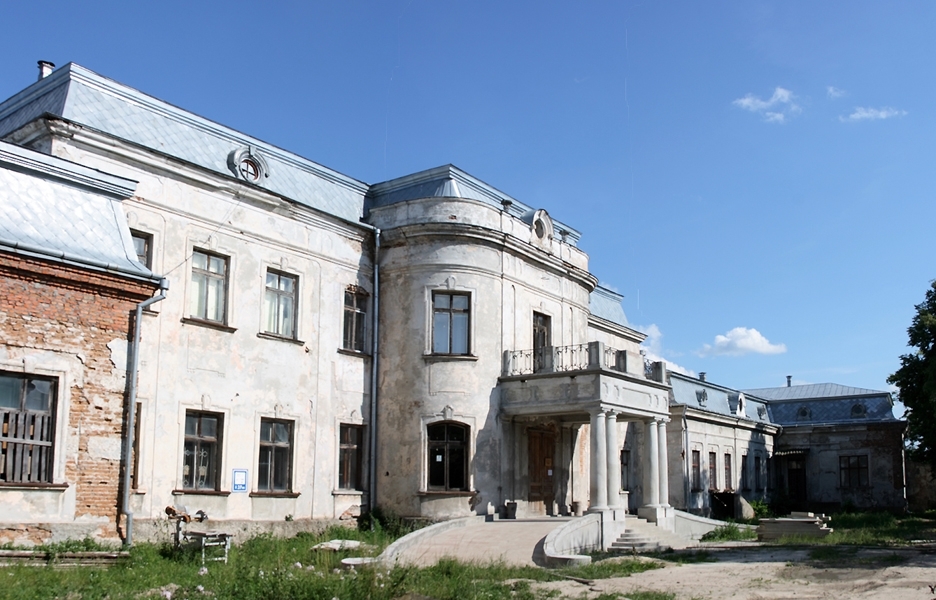
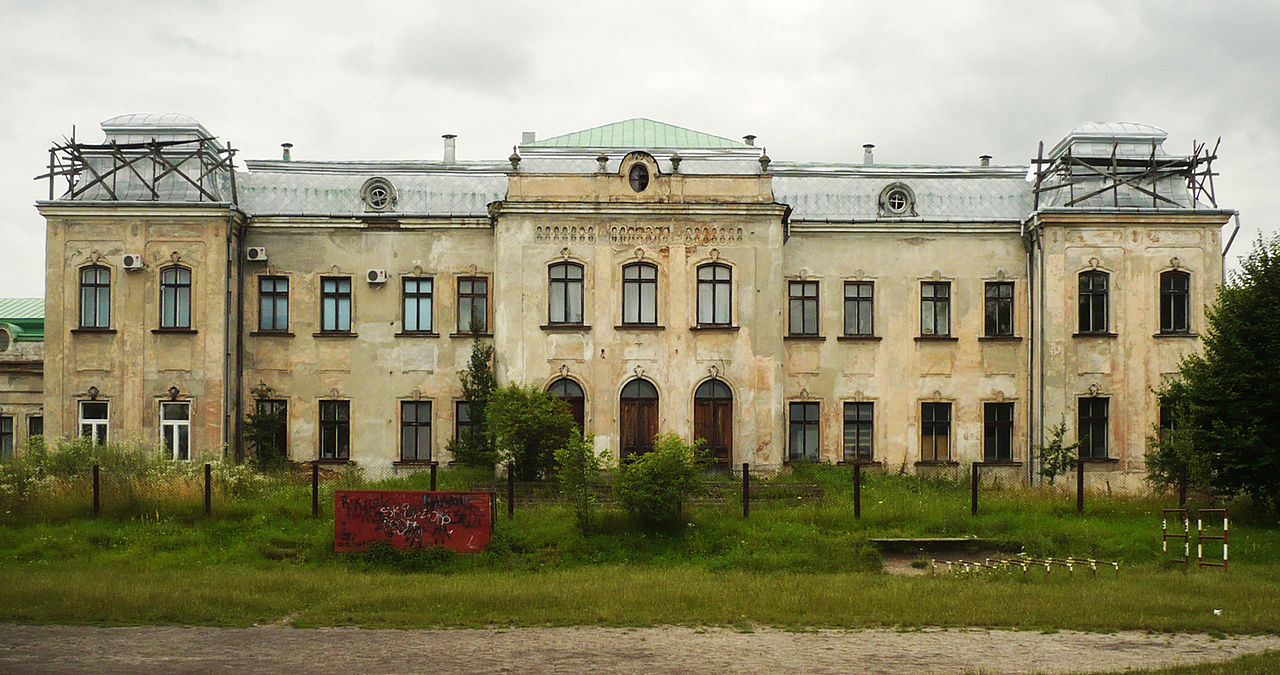
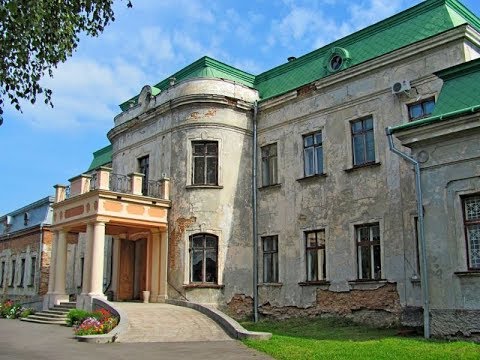
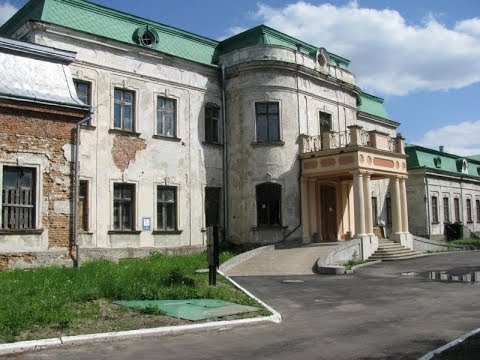
The KrytynopolskyiPalace (also called the Potocki Palace in Chervonohrad ) is an architectural monument of local importance in the city of Chervonohrad (formerly Krytynopol), Lviv region. The mining town of Chervonohrad, formerly known as Krytynopol, is located 72 km from Lviv. It was named in honor of the wife (Khrystyna) of the city's founder, Felix Kazimierz Potocki.
In 1756-1760 (according to other sources, 1756-1762), F. S. Potocki (grandson of Felix Kazimierz Potocki) rebuilt the Krytynopol estate of F. K. Potocki into a French-style palace and surrounded it with a park. All this was done with great pomp and expenditure of considerable money and energy. The palace park of over 6 hectares was similar to Versailles, with many canals, artificial waterfalls, and fountains. The park and the palace were designed by Pierre Rico de Tirregaille.
At the time of Voivode Potocki:
- the Solokia River flowed through the park and made it extremely picturesque. The Solokia and Bug rivers surrounded the palace and formed a natural defense
- The palace was covered with shingles on the entrance side and straw on the rest, as it was believed at the time that straw retains heat better. In 1904, part of the roof was covered with tin, and part remained covered with shingles.
In 1856, after a fire, the palace was partially rebuilt, and the facade was changed, but the palace retained its general features. During the First World War, Russian troops significantly destroyed the palace from the inside - they tore out windows, doors, stairs, destroyed fireplaces, etc.
The castle had ballrooms, concert halls, and theater halls (smaller and larger). The house closest to the palace housed the castle kitchen and the palace servants' quarters, while the other house was occupied by the gardener, the housekeeper, and other middle-class government officials. Nobles and senior government officials occupied separate houses. The house near the palace housed the administration of all Potocki's estates. Behind it was a brewery, a distillery, and the barracks of his own army were located opposite. The voivode had several dozen cannons in Krytynopol Castle alone, which was a lot at the time, and other estates had a large number of cannons. When Poland was divided, all of this was confiscated by the Austrian government on September 14, 1772. In addition to artillery, the voivode's army consisted of infantry, cavalry, and other troops. At the entrance to the castle there was a guard house where a part of the army was constantly stationed. When Potocki left or entered the castle, the armed troops saluted him to the sound of bugles and tambourines. Some of the castle's premises were occupied by stables, carts, and other outbuildings. The palace originally had a wooden palisade, which was later replaced by a stone wall.
The court of the voivode was as large as the royal court, with the same system of distribution, governments as the fiefdoms, and consisted of the best nobles. The voivode's court consisted of 30 nobles, all of whom were gentry. The marshal of Potocki's court was Volodymyr Chetvertynskyi, and the secretary was Karol gr. Serakowski was the secretary.
Artists visited and worked in the palace: Stanisław Stroinski, Franz Smugłowicz, Marcello Bacciarelli, Pomponius Batoni, and others. They painted a number of portraits of the Potocki family, including his portraits in a kunta and in knightly armor. Later, S.S. Potocki took a large number of paintings by famous masters to his palace in Tulchyn.
After the first partition of Poland (1772), the palace became part of the Austro-Hungarian Empire and lost its importance and grandeur.
From the end of the eighteenth century, the palace was owned by Catherine Kossakowska, who once met Emperor Joseph II here during his visit to Galicia. After her death, the estate changed hands several times.
F. S. Potocki's only son, Stanisław Szczęsny Potocki, did not want to live under Austrian rule and moved his residence from Krytynopol to Tulchyn. In Tulchyn, he built the largest palace of the time and laid out a park around it similar to Krytynopol. The ideas of the park in Krytynopol were also borrowed by S.S. Potocki for the foundation of Sofiyivka in Uman.
The palace consisted of two courtyards and a park. The entrance to the first courtyard was from the city market through a low wrought-iron gate on stone pillars, which was slightly moved forward in the French style. The first courtyard had two more small gates on the sides of the entrance. The entrance to the right gate led to the wagons, and the left gate led to the greenhouses and flower gardens.
Opposite the first gate, in the depths of the first courtyard, was the entrance to the palace through the second brick gate, which had a clock tower in the middle and houses for the castle garrison on the sides. Opposite the second entrance gate was the palace itself.
The second castle courtyard looked like a hexagon close to a square. All this space was completely built up around it. All the buildings were dominated by a two-story palace, the side extensions of which smoothly transitioned into the general buildings of the castle.
To the right of the hexagonal courtyard were large stables built in the form of a square, and to the left - in a seven-sided pattern - kitchens with rooms for servants. The palace itself consisted of a central two-story part and two side parts with mansard roofs. The middle part of the palace was decorated in the Rococo style.
The park was surrounded by a canal with water. The canal also directed the Solokia River to the park, which supplied water to the gateway system, which in turn supplied water to four fountains and ponds that decorated the parterres. The river also supplied water to the waterfall and flowed into the huge Neptune fountain pond.
In front of the palace, there were large flower beds in the form of a terrace. The terrace was decorated with a wrought-iron balustrade around it. There were fountains in the middle of the two flower beds. Behind the terrace was a large rectangular parterre, behind which was a long Grand Canal surrounded by columns and fountains. The canal ended with a Dutch lock system that regulated the water level in the canals. To the right of the large canal was the Neptune fountain, and to the left were two smaller ponds. Next to one of them, a pavilion surrounded by a balustrade with flowerpots stood on a terrace. In the middle was an Italian terrace with a belvedere. The main balustrade was decorated with arcades.
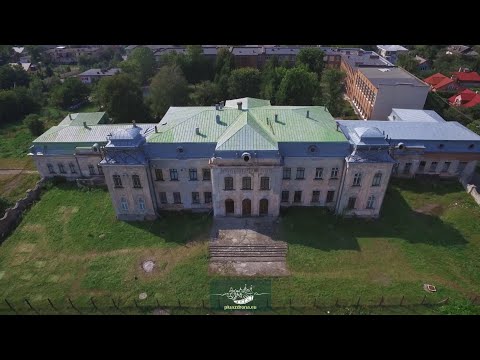
In the early twentieth century the castle was gone. Nowadays, the castle does not exist either, and only the palace remains in a deplorable state. Therefore, one of the priority tasks is the restoration of the palace, which would give it value as a tourist attraction.
The empty halls of the palace preserve the memory of a tragic love story. The young Count Stanisław Potocki was in love with Gertruda Komarowska. But his parents dreamed of another party for their son. The couple got married in secret. Gertrude was expecting her first child. But the count's young wife was kidnapped by order of his father and taken to a monastery. They tried to muffle the girl's screams with a pillow, and the poor woman suffocated. According to another version, she was strangled on purpose. The body of the count's beloved was thrown into an ice hole.
After her death, Stanisław tried to commit suicide. Stanislav was later married twice. The first time he married Józefina Mnieszczek. After her death, the count married the courtesan Sophia de Witt for the second time out of love. In her honor, Stanisław founded the famous Sofiivka arboretum in Uman. But after the count's death, a portrait of Gertrude was found on his chest...