Polish Church, Truskavets
According to research by scientists, the territory of Truskavets was inhabited as far back as Kyivan Rus or even in the pre-Christian period. Numerous finds dating back to the 3rd-6th centuries serve as proof of this. Some of the weapons found in the area suggest that Truskavets used to serve as a battlefield between the Carpathian tribes and the Roman legions.
Nowadays, the age of Truskavets is calculated from the date of the resort's foundation, which is in no way true. In addition to the exact date of the city's foundation, the origin of its name is unknown. Some speculate that it is a modification of the Polish word for strawberry.
The unusual name is not the last influence of the Poles on the local area. As you know, Truskavets is rich in its monuments, the most valuable of which is the Polish Church.
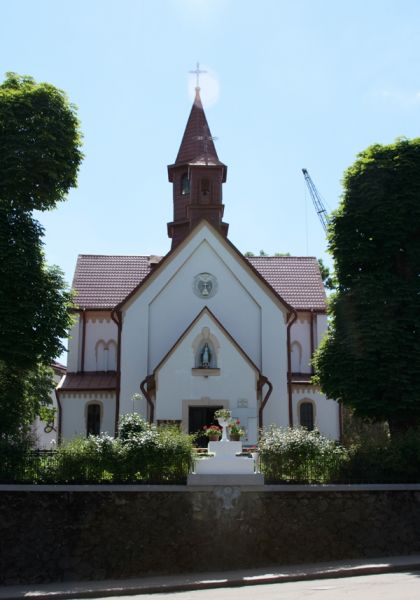
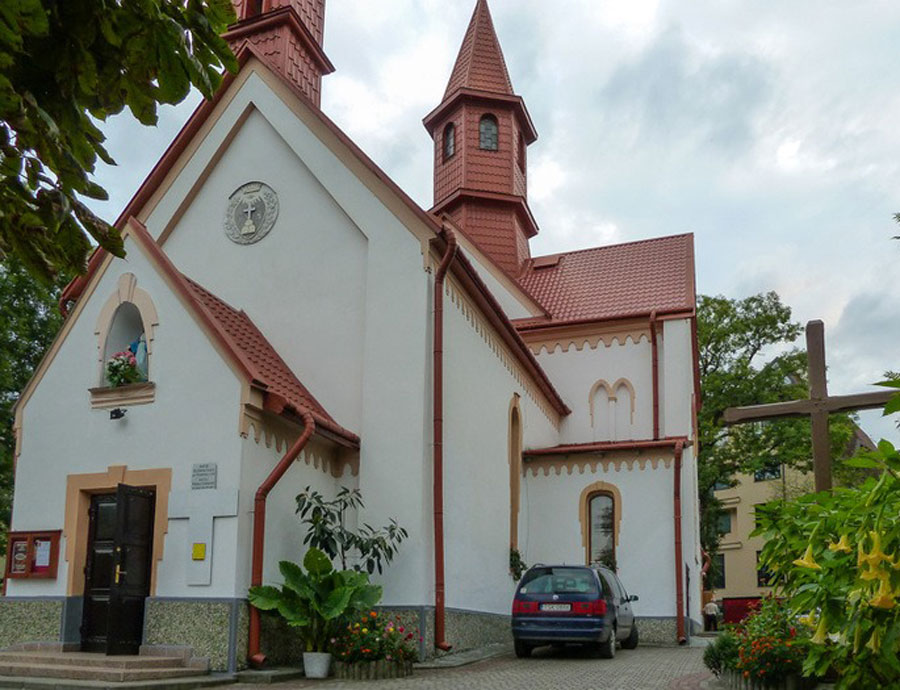
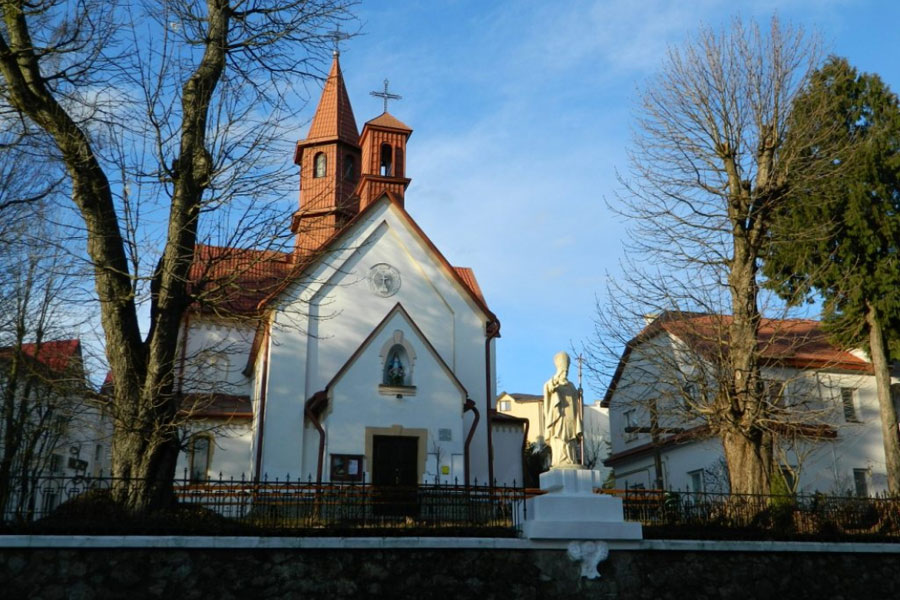
TheChurch of the Assumption of the Blessed Virgin Mary is a Roman Catholic neo-Gothic church in Truskavets, Lviv Oblast. It is an ancient spiritual center, a historical and architectural monument of Truskavets, which is distinguished by its beautiful interior. Poetry is often read here and wonderful organ concerts are held. Church services are held in two languages: Ukrainian and Polish. The outer territory of the church is planted with incredibly beautiful vegetation, and there are benches everywhere, allowing you to relax and think about God.
Originally, the Roman Catholics of Truskavets belonged to a parish in Drohobych. In 1827, a joint . For the gentry, the founders of the resort, the church was a spiritual center, a place to relax and communicate with God. But in 1858-1860, a seasonal chapel of St. Kunegunda (the patron saint of mines and salt pans in Poland) was built in Truskavets at the expense of Polish vacationers, designed by architect Adolf Kuhn and supervised by builder Adam Berski. The small chapel, with a capacity of 30-40 people, was consecrated by Bishop Adam Jasinski of Przemyśl. In 1909, a courtyard was created near the chapel, enclosed by a wooden fence, stone stairs were built, and several terraces were constructed connecting the church to the park.
In 1912-1913, a larger and higher neo-Gothic part was added to the chapel. On July 11, 1914, the expanded sanctuary was consecrated by Bishop Joseph Sebastian Pelczar. A parish exposition was established on May 1, 1925, although this decision was made on May 27, 1909, but due to lack of funds it could not be implemented. A stone statue of the Mother of God was installed in front of the church, made by the sculptor Cyprian Godebski. During the First World War, the church was destroyed inside, the ceiling and roof burned.
The church was rebuilt and landscaped in 1933-1934, and in 1935-1936 the parish house was built according to the design of Tadeusz Jarosz. On February 5, 1938, the parish was elevated to the rank of an independent parish.
During the Soviet period, the church was first turned into a mineral fertilizer warehouse. All spiritual and artistic values were looted. Later, in the 1970s, after reconstruction caused by a fire, a planetarium was arranged in the church.
After the collapse of the Soviet Union, the church was consecrated and services began to be held here. The first service was held on the steps of the museum, which was still in operation. It was already 1991. In 1994, the building was returned to the Roman Catholics. The church began to be restored in 1996, designed by architect Yulia Hryshchenko. In 2002, Cardinal Marian Jaworski consecrated the restored Church of the Assumption of the Blessed Virgin Mary.
The parish of the Church of the Assumption of the Blessed Virgin Mary in Truskavets is served by the Redemptorist Fathers of the Congregation of the Holy Redeemer, with Father Krzysztof Szczyglo as its rector.
The church was built in the style of historicism with elements of neo-Gothic. It is a brick building, plastered, on a stone foundation, cruciform in plan, one-nave, with a pentagonal apse.
The presbytery is oriented to the west. The transept is adjoined on both sides by a square vestibule and a treasury, and in front of the nave on the east is a square entrance hall - a krukhta.
The church is covered with cross vaults with massive profiled ribs. The main façade is crowned with a triangular pinnacle. The side walls of the church are pierced by semicircular windows with profiled frames and crowned with a profiled cornice. On the crest of the gable roof above the nave is a signature, crowned with an octagonal dome.
In the interwar period, altars were installed in the church: in 1921 there were six altars, and in 1927 there were seven.
A special feature of the church is the organ, which not only accompanies regular services but has become an integral part of the cultural and artistic life of Truskavets. The organ was purchased in 1915 and manufactured in the Polish city of Poznan.
Organ music evenings are held in the church three times a week: Tuesday, Friday, and Sunday. In the short period of peace between the two greatest wars in human history, the Austrian Prime Minister and his wife, the President of Estonia, and even the President of Turkey, who became a patron of Truskavets because of his friendship with Raimund Jarosz, the mayor of Drohobych and owner of the resort, came to listen to the organ.
From 1921 to 1939, famous musicians and singers from all over Europe performed at organ evenings in the church, introducing vacationers to high art. It is gratifying that today this tradition has been restored. Three times a week - on Tuesday, Friday, and Sunday - the church hosts organ music evenings that attract vacationers and heal their souls as much as the famous Truskavets "Naftusia" heals the body.
Accommodation around Polish Church, Truskavets:


Which trails pass by Polish Church, Truskavets?
We suggest these hiking trails through or near Polish Church, Truskavets: Korchyn village, via Hurkalo Waterfall and Mount Parashka to Krushelnytsia village, Kamianka village, via Mount Lopata, Skole and Mount Parashka to Krushelnytsia village, Sopit village, via the Sopit polonynas to Sopit village, Korchyn village – Hurkalo Waterfall, Skole, via Mount Parashka, Hurkalo Waterfall and Korchyn village to Skole, Skole, via Mount Parashka, Hurkalo Waterfall and Korchyn village to Verkhnie Synovydne village

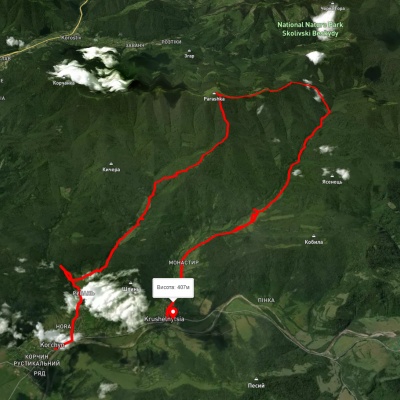
Korchyn village, via Hurkalo Waterfall and Mount Parashka to Krushelnytsia village
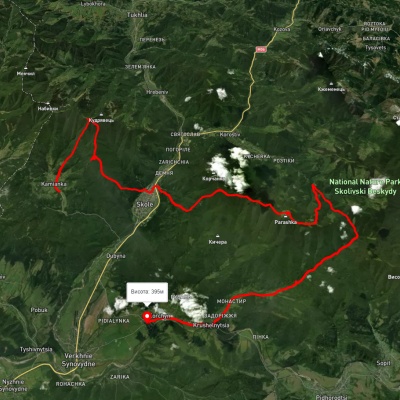
Kamianka village, via Mount Lopata, Skole and Mount Parashka to Krushelnytsia village
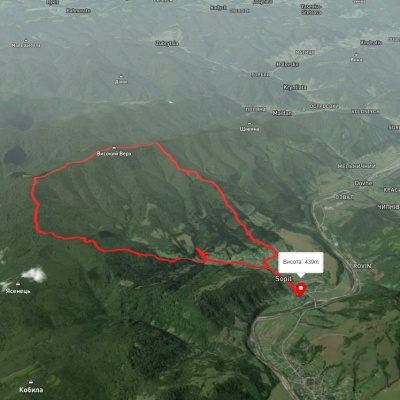
Sopit village, via the Sopit polonynas to Sopit village
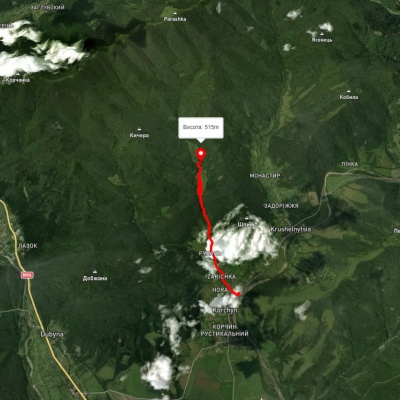
Korchyn village – Hurkalo Waterfall