"Pidhirtsi Castle Pidhirtsi
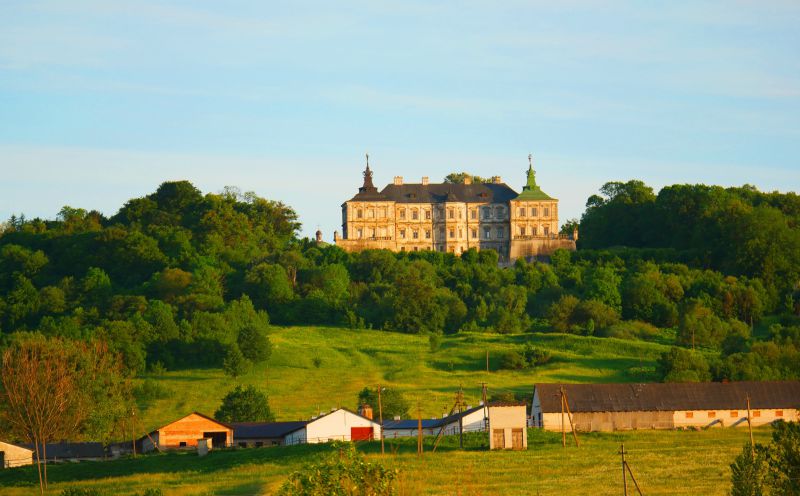
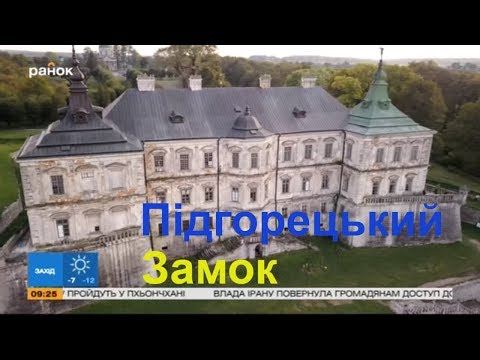
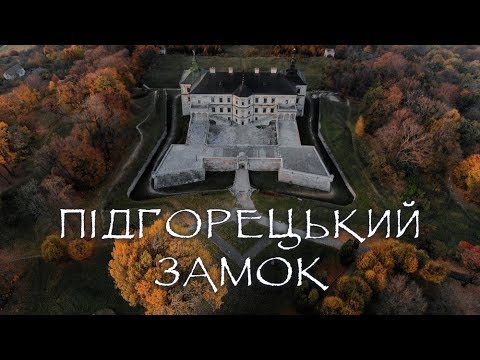
Pidhirtsi Castle is an architectural monument that is an example of a combination of a Renaissance palace and bastion fortifications. Together with Olesko and Zolochiv castles, it forms the Golden Horseshoe of Lviv Region tourist route.
There were fortifications on the site of the present castle dating back to 1530. In 1633, they were bought from the Pidhirtsi family by Crown Hetman Stanisław Konietspolski. The new fortress was designed by Andrea del Aqua (who developed the project of a baroque two-story palace) and Guillaume Levasseur de Beauplan (who is the author of the fortifications). The castle was built in 1635-1640.
To get to the citadel, one had to go through a large gate with two columns, which has been preserved to this day. In addition, when Pidhirtsi Castle was owned by the Koniecpolski family, an Italian park was laid out in front of it. It is a pity that it has not been fully preserved to this day. However, you can still see the large linden tree under which Bohdan Khmelnytsky rested.
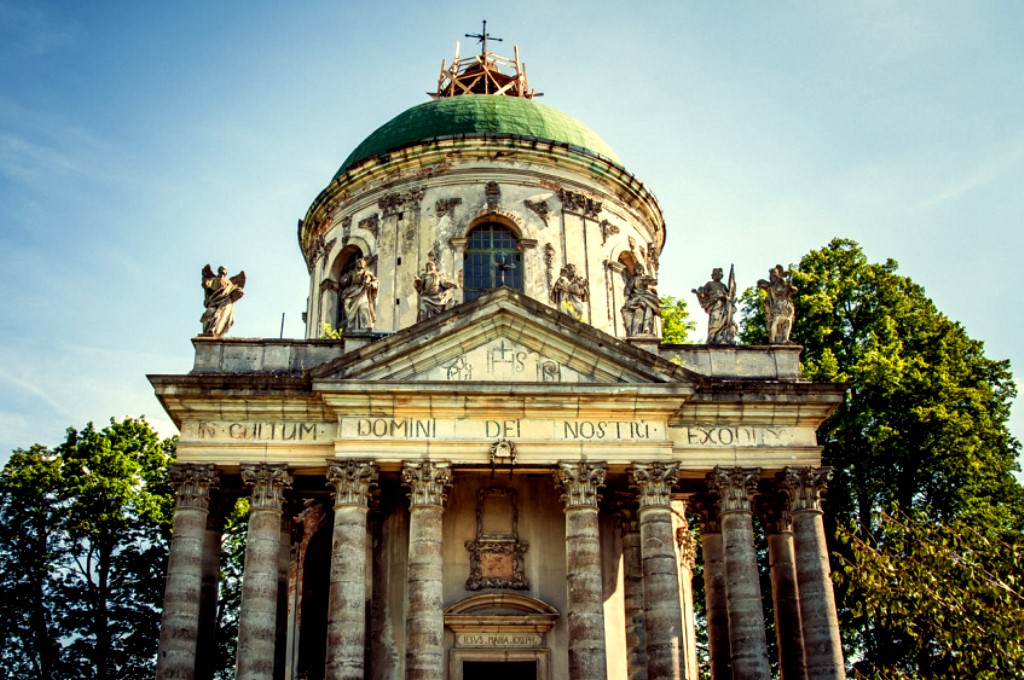
The palace reached its peak during the reign of Wacław Żewuski, who was a great connoisseur of art. He collected unsurpassed collections of paintings, books, and weapons. A printing house, a theater, and an orchestra operated in the castle, and various high-profile entertainments were held there. He also ordered the construction of the Hetman's Inn, a courtyard where both the lord's servants and ordinary travelers could stay. At this time, a church was built, which served as a family burial ground.
The Pidhirtsi Castle experienced the most troubles in the 20th century. During the First World War, it was looted by the Russian military, and later the headquarters of the 5th Corps of the Austro-Hungarian Army was stationed here. Until 1939, the castle housed a private museum of the Sanguszko princes. When the Second World War broke out, the prince saved part of his collection, which ended up in São Paulo, Brazil.
In 1940, the castle in Pidhirtsi was transferred to the Lviv Historical Museum. However, a few years later, in 1949, a sanatorium for tuberculosis patients was set up within its walls, which operated until the collapse of the Soviet Union.

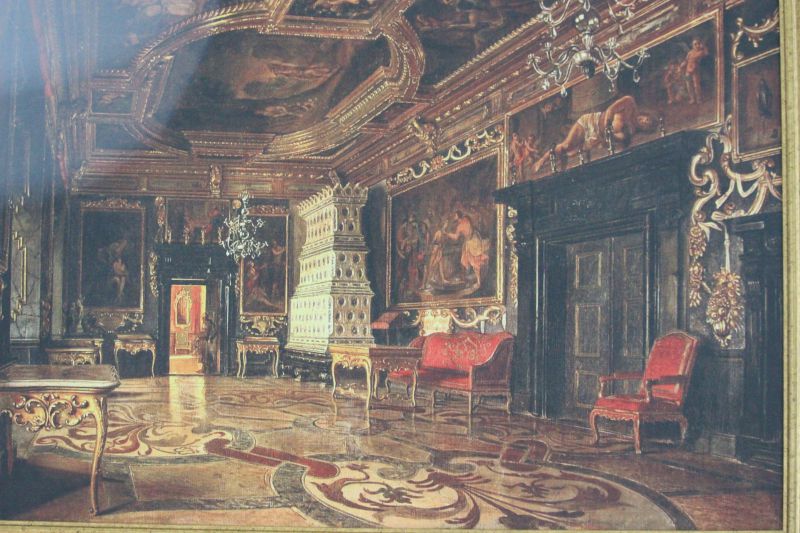
Currently, repair and restoration work is underway in the halls with unusual names: Chinese, Golden, Knight, Green, Mirror, Mosaic. You are not allowed to go inside. The valuables that were in the castle were transferred to the Lviv Art Gallery. In the future, it is planned to restore the interior decoration, return all the things to their place and open a museum of interiors within the castle walls.
There is a legend associated with the period of the Zewuskis' rule. It says that Prince Wenceslas hated his wife and ordered her to be buried alive in the castle walls... Sometimes you can hear her crying or see her white silhouette in the photo. The story of the alchemist Severin Zhevusky (son of Prince Wenceslas) is also fascinating. Some people believe that many of his treasures and priceless achievements are hidden underground. And the alchemist himself, or rather his shadow, often invites visitors to the treasury.
If you want to get to the castle by your own car, you should drive along the Kyiv-Chop highway. Near the town of Brody there will be a turn to Zolochiv. You can also get there by public transport - by bus "Brody-Zolochiv", you need to go to the stop "Pidhirtsi".
Opening hours: Tuesday-Friday - from 10:00 to 17:00, Saturday-Sunday - from 11:00 to 18:00 (cash desk is open until 16:00), Monday is a day off.