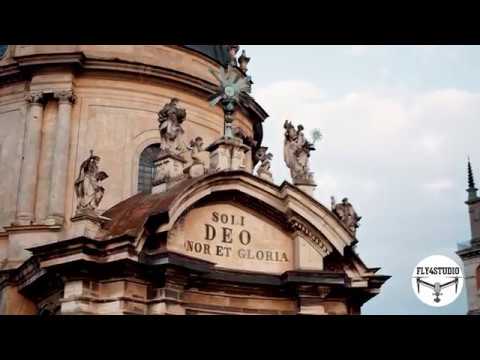
Dominican Church (Church of the Holy Eucharist of the UGCC), Lviv
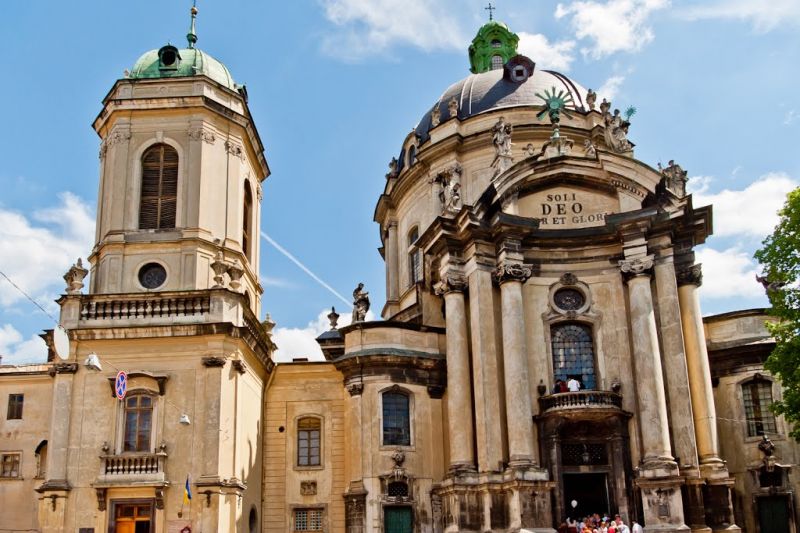
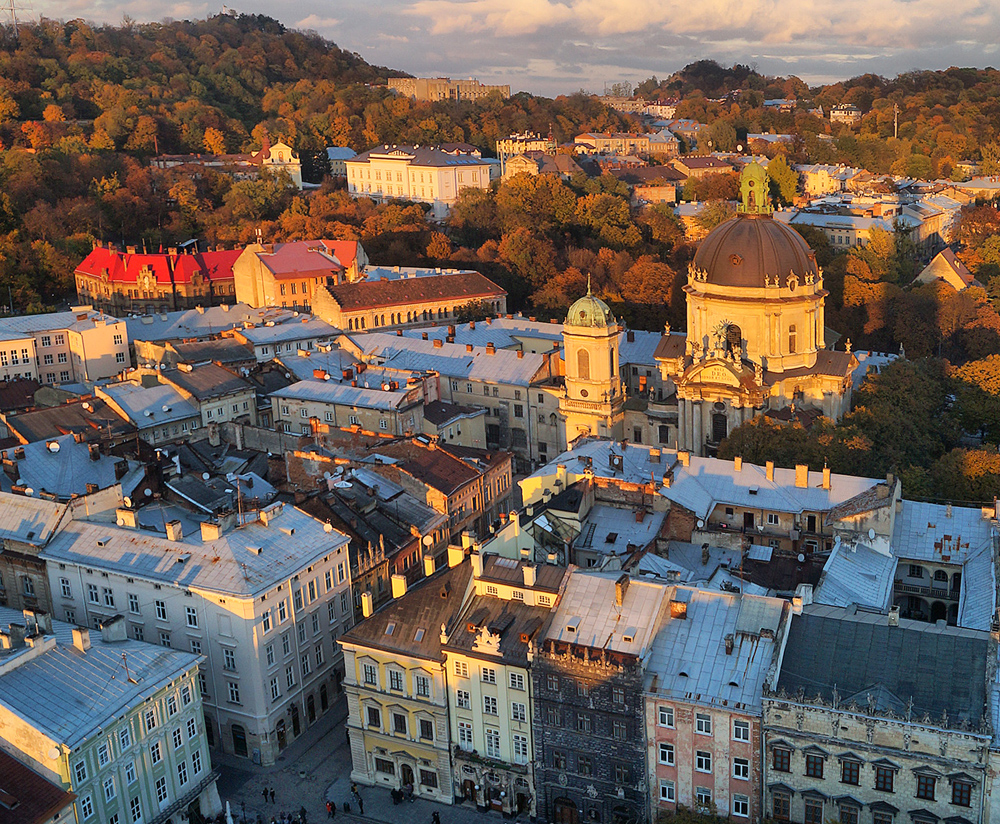
In the central part of the legendary city of Lviv stands one of the most famous and vibrant temples of the city - Church of the Holy Eucharist (formerly the Church of the Body of Christ and the Dominican Monastery) - a Greek-Catholic church in the central part of Lviv, in the area of UNESCO World Heritage Site; a national architectural monument of significance.
According to ancient documents, on the site of the modern temple stood the palace of King Leo I. His wife, Konstancja, was a Catholic, so the chapel of Peter and Paul, which was in the palace, was handed over to her by the king. Later, the chapel passed from Konstancja to the Dominican order.
The Dominican Order is one of the oldest Catholic orders. It was founded in Toulouse by the monk Dominic in 1214 to combat heretics. The monks of this order were to renounce money and property and live on alms. They studied theology and established educational institutions. The centers of the Dominicans became Paris and Bologna - the largest university cities. The Dominican order expanded its activities in many countries around the world, including Ukraine.
After the ancient Rus' temple was handed over to the Roman Catholics, a new large nave was added to it, so the old premises from the princely times became the altar part (presbytery). Thus formed, the new Gothic church became Dominican and was named the Church of the Body of Christ in 1407, while the altar part retained the dedication to St. Peter and Paul. The funds for construction were mainly provided by the townsman Mykola Benko and his wife Anna from Zhabokryky. According to other sources, it was built by the builder Mykola Chekh by the mid-14th century, possibly using the walls and foundations of the princely palace and chapel. Its scheme was drawn at the end of the 16th century by the Dominican traveler Martin Gruneweg.
In 1604, Jan Swoszowski, together with his first wife - Małgorzata de Konary (Konarska) - "bequeathed" the village of Birky for the altar of the Dominican church in Lviv. He also funded the chapel of the Mother of God, which was dismantled. Due to cracks in the vault, the church was demolished in the mid-18th century (in 1745 or 1748) along with the baroque chapel funded by J. Swoszowski.
A. Raizinger was one of the first to publish photographs of the sarcophagi from the undergrounds of the Dominican church. In 1749, under the project of engineer and architect Jan de Witte, the foundation of the new Dominican church was laid; the funds were provided by the Grand Crown Hetman Józef Potocki (who laid the cornerstone and was the main founder of the construction), Mykola Vasyl Potocki (who allocated 236,000 zlotys; his mother was buried here). The construction was overseen by Martin Urbanik, and from 1764 - Christopher Muradovich.
The facade was completed by Sebastian Fesinger, who began work in 1764 on the stone statues that were to crown it. He also created the wooden carved polychrome structure of the organ (lat. moles organarius), which later burned down.
By 1764, the construction was mostly completed, but after fires on August 26, 1766 (caused by the negligence of Matviy Miller while painting the organ) and in 1778, work resumed. In 1865, under the project of architect Julian Zakharevich, a 4-tier bell tower was added to the church. In 1895, the lantern on the dome was rebuilt, and from 1905 to 1914, the interior was restored, with work carried out under the projects of architects Alfred Zakharevich and Józef Sosnowski, with Dr. Alexander Cholowski participating as a "conservator". The crypt was also planned to be restored, but the war prevented this. Later, during the Soviet era, the temple was restored in 1956-1958.
Franciszek Rusyan in 1749 appealed to the Pope with a request, after which on July 1, 1751, the icon of the Mother of God was solemnly crowned with the participation of the Latin Archbishop of Lviv Mykola Vyzhytsky, with funds provided, among others, by the Kyiv voivode Stanisław Potocki.
Before World War II - the temple of the Roman Catholic monastery of the Dominican order. During the Soviet era, the church and the monastery cells were turned into warehouses, and from 1973, these buildings housed the Museum of the History of Religion and Atheism. In the 1990s, the temple was handed over to the UGCC, and it was consecrated in honor of the Holy Eucharist.
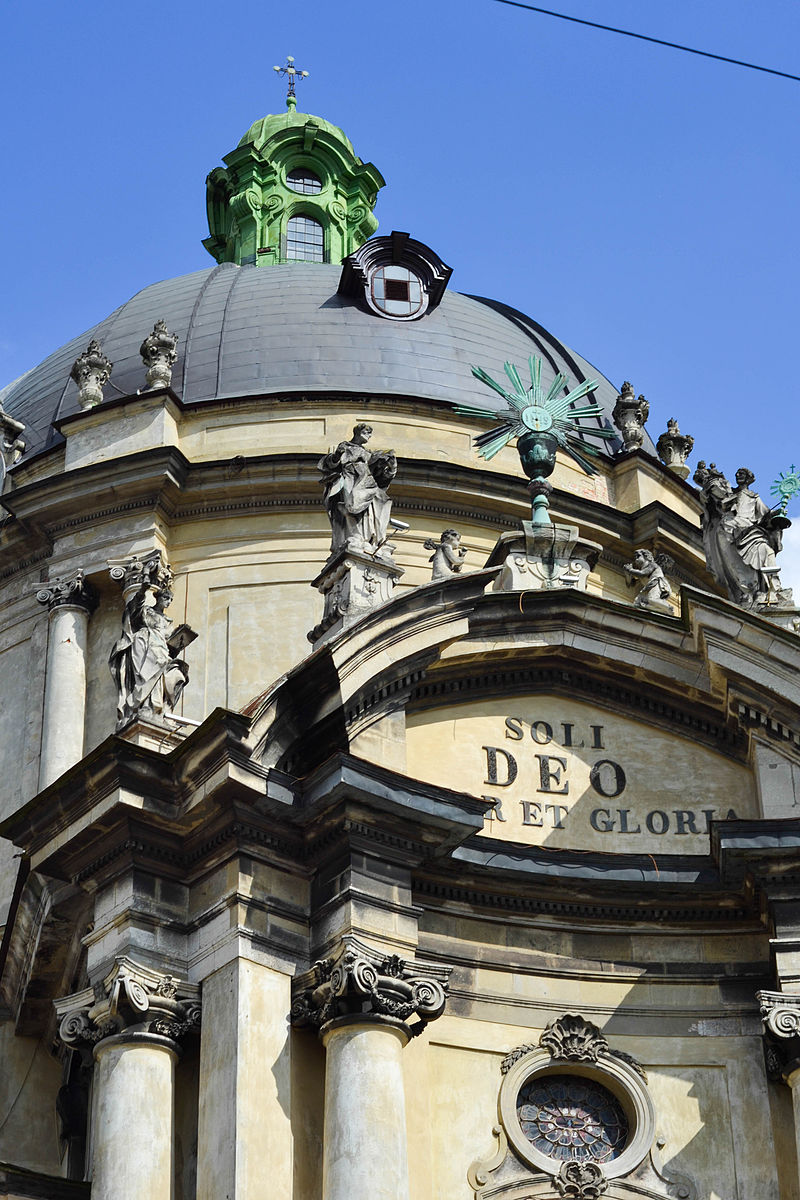
The Dominican church in Lviv is a magnificent architectural monument of late Baroque in the Western European style. Made of stone, in plan it depicts an elongated cross with an oval central part and two bell towers on the sides. The church is elevated by a huge elliptical dome. Massive paired columns support the galleries and boxes, decorated with wooden statues made by Lviv sculptors of the second half of the 18th century. Above the galleries are the columns of the drum that support the dome. Under the dome of the church is a Latin quote from the First Epistle to Timothy: "Soli Deo honor et gloria" ("To God alone be honor and glory").
You will be struck by the building's mystical pathos. Above one window, you will see the coat of arms of the Dominican order - under the crown on the Bible lies a dog with a torch in its mouth.
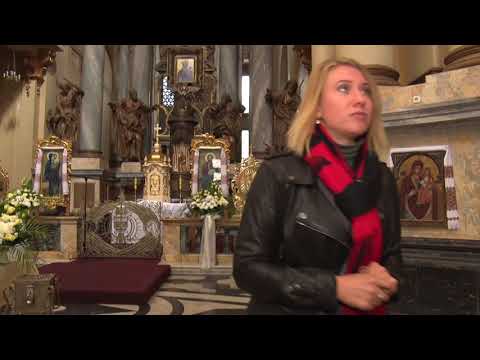
Under the huge dome of the church are wooden sculptures of Dominicans, among which you will see the figures of Saints Dominic and Augustine. The sumptuous exterior of the church harmonizes with its luxurious interior.
Several chapels adjoin the main nave of the church:
- St. Anthony (first on the right) with an icon of the saint by the Lviv master Garra from 1838.
- In the name of Christ with a memorial plaque of Dr. Tadeusz Julinski (?-1885, author Tomasz Dykas), on the other side - poetess Maria Bartusiuna (?-1885) with a bust by Wiśniewiecki and a poem by Lenartowicz; has a pseudo-Rococo altar with carving "Heart of Jesus" by Wiytovich (1912);
- Chapel of St. Jacek with an icon by M. Jabłoński, is a vestibule to the next;
- Chapel of the Potockis (also of the Mother of God of Jacek, pol. Panny Matki Jackowiej), built after 1764; according to M. Orłowicz, one of the first buildings with signs of classicism in Lviv, the funds for construction were provided by M. V. Potocki;
- Building of the monastery cells, rebuilt anew in 1556–1621 and restored after the fires of 1766 and 1778. The building is stone, rectangular in plan, three stories high, with two inner courtyards, with a corridor planning system typical for monastery buildings and arched ceilings;
- Chapel of St. Vincent with an icon by M. Jabłoński;
- Chapel of St. Dominic with an old icon in a new pseudo-Rococo altar with an Empire-style tombstone of Countess Józefa Borkowska (?—1811) by Thorvaldsen;
- Chapel of St. Thomas with an icon by M. Jabłoński, Rococo carving of Christ the Merciful.
Since 1972, the buildings of the monastery and bell tower housed the Museum of the History of Religion and Atheism, now there is the Museum of the History of Religion and the creative association "Dzyga", art café "Kvartyra 35" and café "Pid klepsydroiu". Only after the proclamation of Ukraine's independence did services resume in the cathedral, and today the Dominican cathedral functions as the Ukrainian Greek-Catholic Church of the Holy Eucharist, which enjoys special popularity among locals and tourists. Every year in January, the all-Ukrainian carol festival "Velyka Kolyada" is held here, which was initiated in 1999.
The Dominican church in Lviv has witnessed many events. In the square in front of it, in 1559, real battles for a bride took place. The magnate Lukasz Gurka staged a theater of military actions in front of the church, demanding the return of Halysza Ostrożska, who at that time was one of the richest heiresses of the Polish-Lithuanian Commonwealth. The girl hid in the monastery, while the persistent groom bombarded the temple.
As a result of such "courtship", trade in Lviv stopped for several weeks. The enraged king ordered the shooting in the city to cease; the waterway leading to the church was cut off, and soon the siege of the temple ended. Lukasz Gurka still managed to win Halysza Ostrożska.
The Dominican church in Lviv is located in the historical center of the city. From Rynok Square, you turn onto Virmenska Street, walk to its very end, and turn onto Ivan Fedorov Street. Here, at Museum Square, you will see the huge Dominican church. Next to the monastery is the Russian quarter of ancient Lviv, dominated by the Russian Assumption Church and the Korniakt Tower. Directly adjacent to the monastery cells is the Royal Arsenal.