Church of St. John the Baptist, Sambir
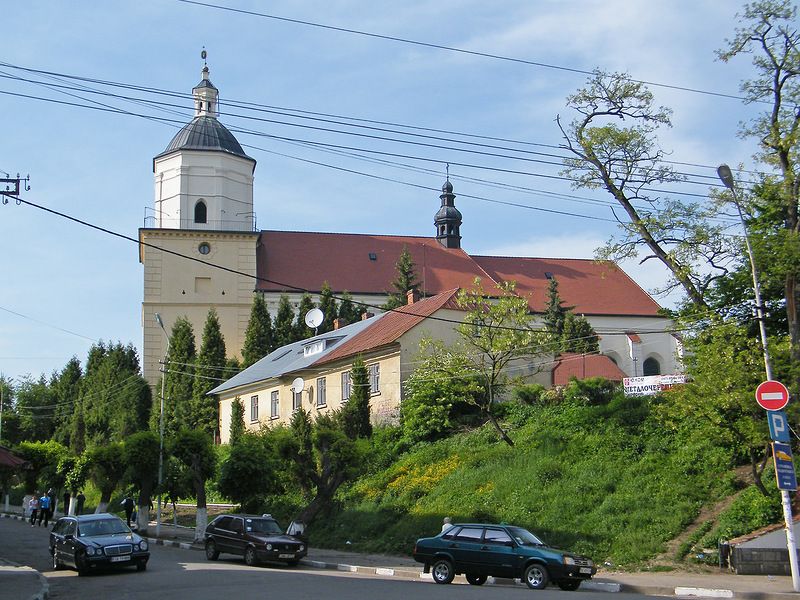
The Churchof St. John the Baptist (also the Church of the Martyrdom of St. John the Baptist) is a Latin church in the city of Sambir, Lviv region. It is active and subordinated to the Sambir Deanery of the Roman Catholic Church in Ukraine. It is the tallest and oldest building in the city. The Church of St. John the Baptist is a 16th-century architectural monument of national importance, protected by the state, No. 398.
In the XIV century, there was a Roman Catholic parish with a small wooden church built around 1370. After the Tatars attacked Podillia and Galicia in 1498, this church burned to the ground. In the mid-16th century, construction began on a new stone church designed by Polish architect Józef Tarnowczyk. The inscription "1530" has been preserved on the facade of the church, so this year can be considered the year the construction of the shrine began. The construction work lasted quite a long time and ended in 1573-1574 with the erection of the church's vault. The newly built church was consecrated by Archbishop J. Solikowski. However, already in 1637 the church suffered from a large fire that destroyed the tower and the vault, and only the side naves survived. By 1642, the church was completely rebuilt, and in 1664 it was re-consecrated by Bishop S. Sarnovsky.
In 1846, the church burned again, this time the fire destroyed the roof and significantly damaged the vaults over the choir; after the fire, the church was rebuilt again. In the 1880s, the building was decorated and restored: in 1886-1887, metal grilles were installed on the cornices, in 1889 the side naves were restored, in 1893 the narthex was restored, and the artist J. Tabinsky painted the main nave. In 1923, stained-glass windows were installed in the windows, and in 1929 the choirs were painted.
From 1864 to 1865, Bishop Joseph Pelchar, who was recognized as a saint by the Catholic Church, served in this church.
After the Second World War, the church remained in operation, and Father Kazimierz Monczynski worked here. Since 1990, the Church of St. John the Baptist has been cared for by the Resurrection Fathers of the Resurrection of the Holy Cross Congregation and the nuns of the Franciscan Sisters of the Family of Mary. In 2001-2002, the church building was restored again.
The church building is constructed of brick and stone, and architecturally belongs to the basilica type of churches: it has three naves, consists of a square main volume, elongated choirs with a faceted apse, and a massive bell tower located on the western façade. The symmetry of the building's plan is somewhat broken by a room attached to the north side of the choirs and a semicircular tower between the bell tower and the northern side nave, which has stone stairs to the choirs and upper floors of the bell tower. The walls of the church are fortified with buttresses. The bell tower is square in plan, consists of four tiers, the last of which is octagonal, and ends with a helmet-shaped dome with a lantern.
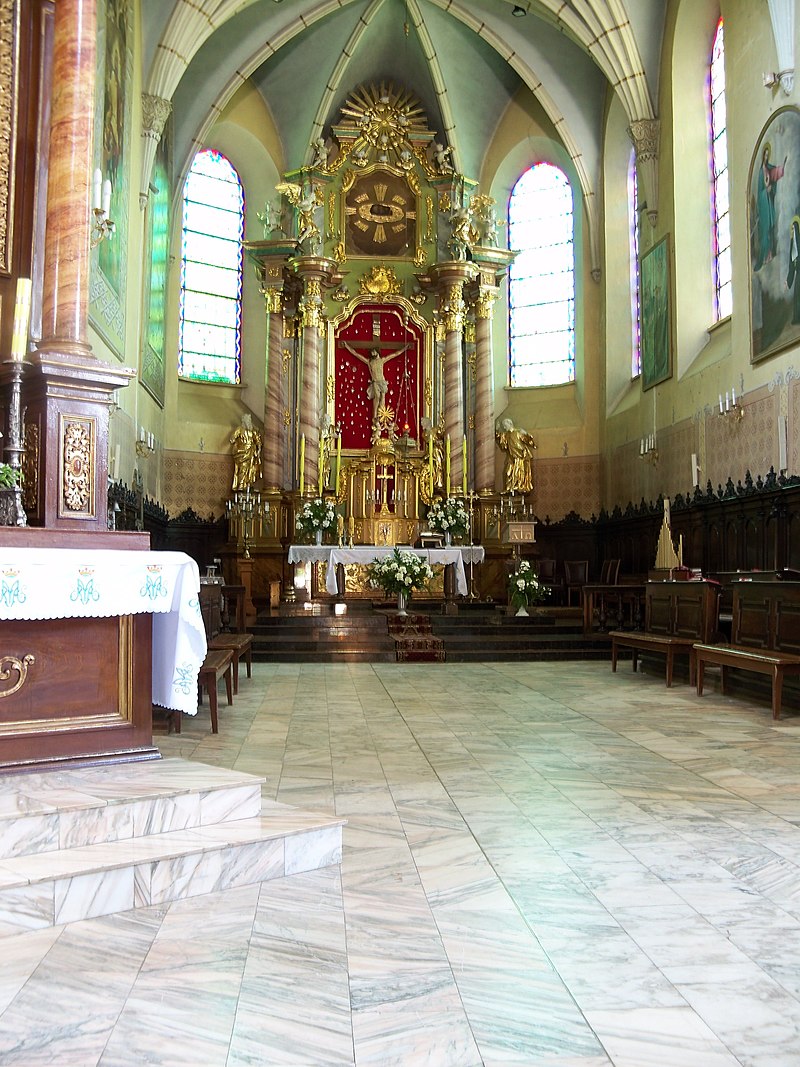
The church was built for a long time, in two stages, so its architecture combines Gothic and Renaissance features. The oldest part of the building, built in 1530-1565, is the choir with a side room, and its design retains elements of the Gothic style: starry vaults with stone niches, lancet windows and arches, and Gothic doors of the side room. The main three-nave volume of the church was built after a fire in 1637 and has features of Renaissance architecture: a cylindrical vault with arches in the main nave and a cross vault in the side naves. The stucco décor of the main nave also belongs to the same period.
Near the church stood a one-story parish house, which housed a Polish parish school. In 1715-1727, a brick building was built on the site of the old school building, which has survived to this day. It now houses the Boykivshchyna Museum. In 1990-2000 a new parish house was built near the church.
There was a hospital at the church that existed until the early nineteenth century.
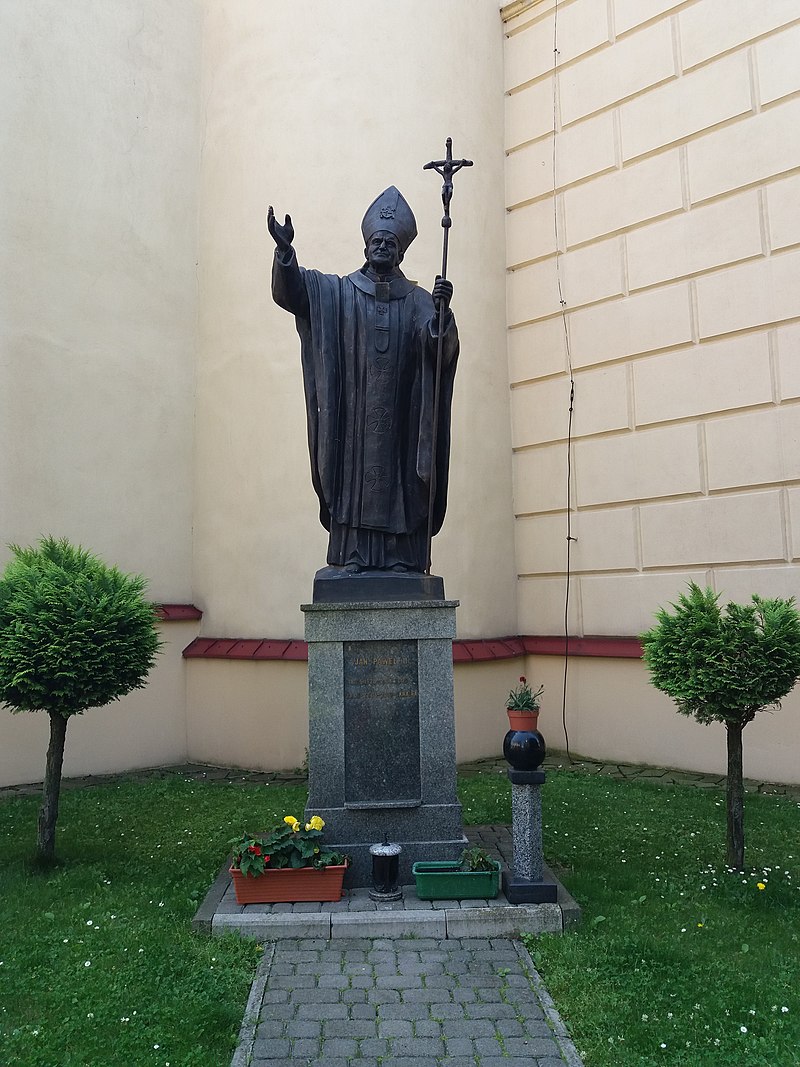
A monument to Pope John Paul II was erected in front of the church.
Now in front of the church visitors are greeted by a stone Pope John Paul II. The monument was erected in 2007. The monument was consecrated by Bishop Marian Buchek on May 18, 2007. It is also known that from 1864 to 1865 Bishop Joseph Pelchar, who was recognized as a saint by the Catholic Church, served in this church.
Nearby hiking trails near Church of St. John the Baptist, Sambir:
Which trails pass by Church of St. John the Baptist, Sambir?
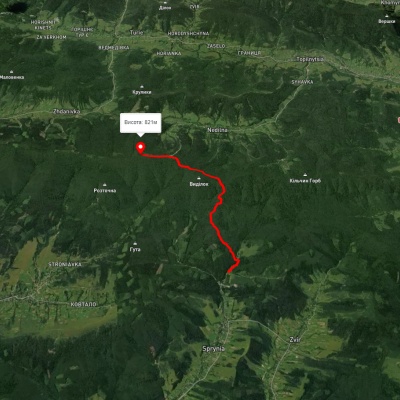
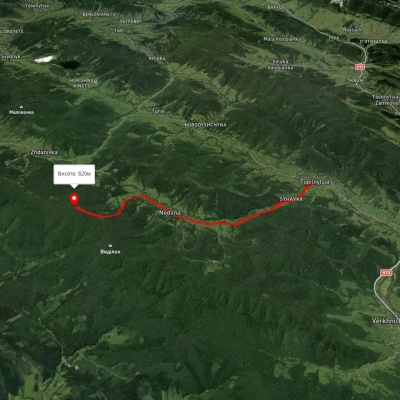
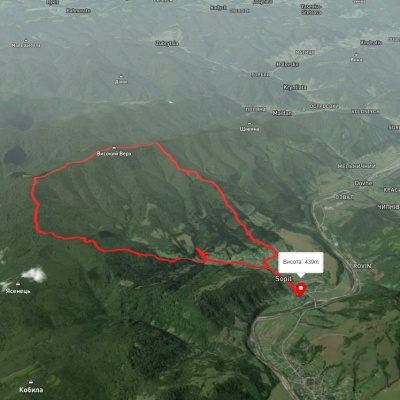
We suggest these hiking trails through or near Church of St. John the Baptist, Sambir: Sprynia – Chapel – Tower of Memory, Nedilna – Tower of Memory, Sopit village, via the Sopit polonynas to Sopit village, Kamianka village, via Mount Lopata, Skole and Mount Parashka to Krushelnytsia village, Korchyn village, via Hurkalo Waterfall and Mount Parashka to Krushelnytsia village, Skole, via Mount Parashka, Hurkalo Waterfall and Korchyn village to Verkhnie Synovydne village