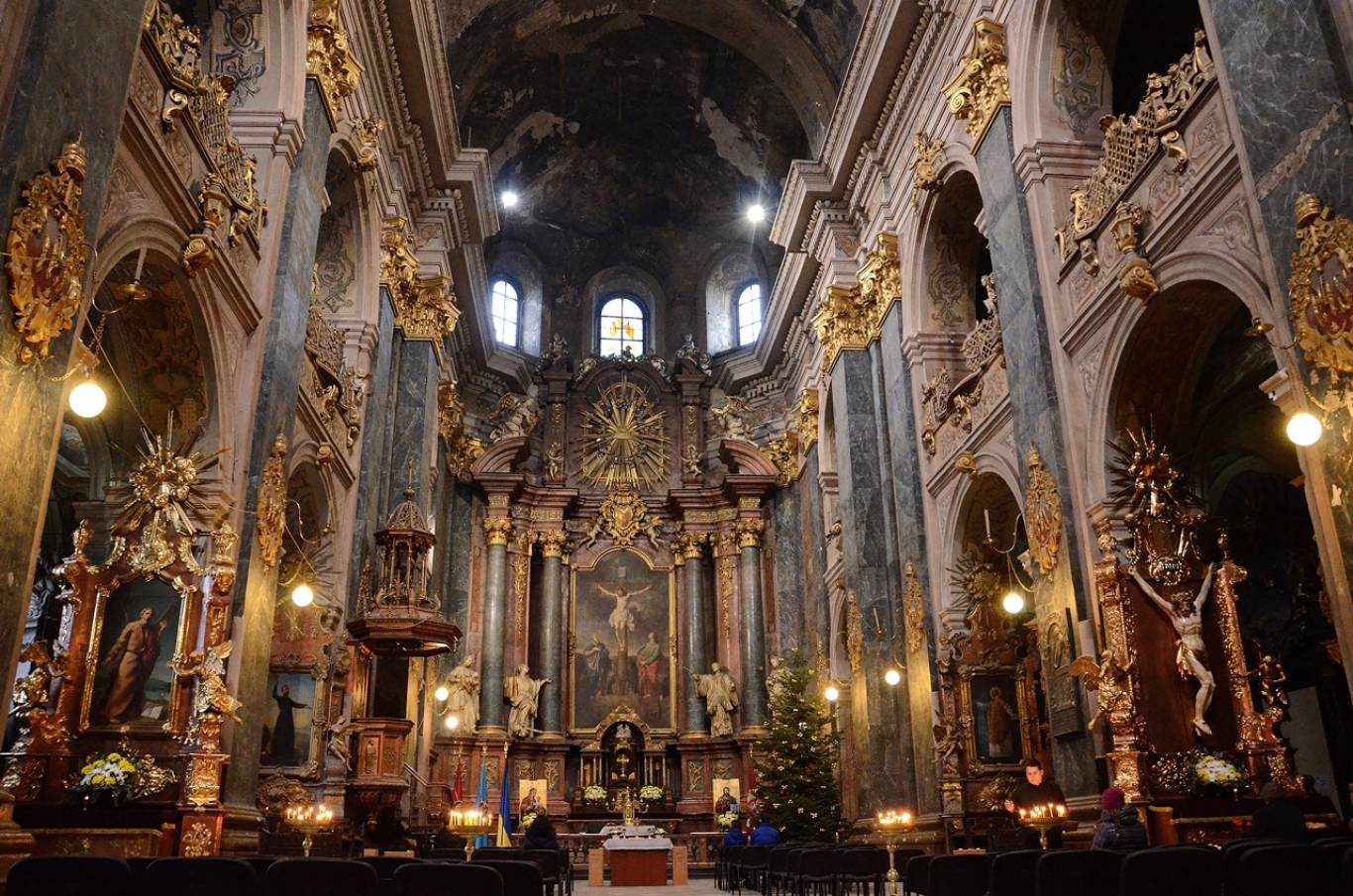
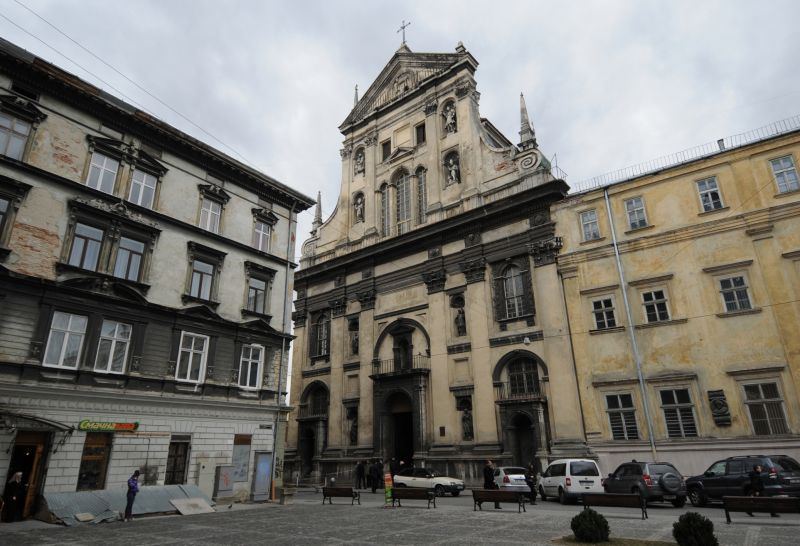
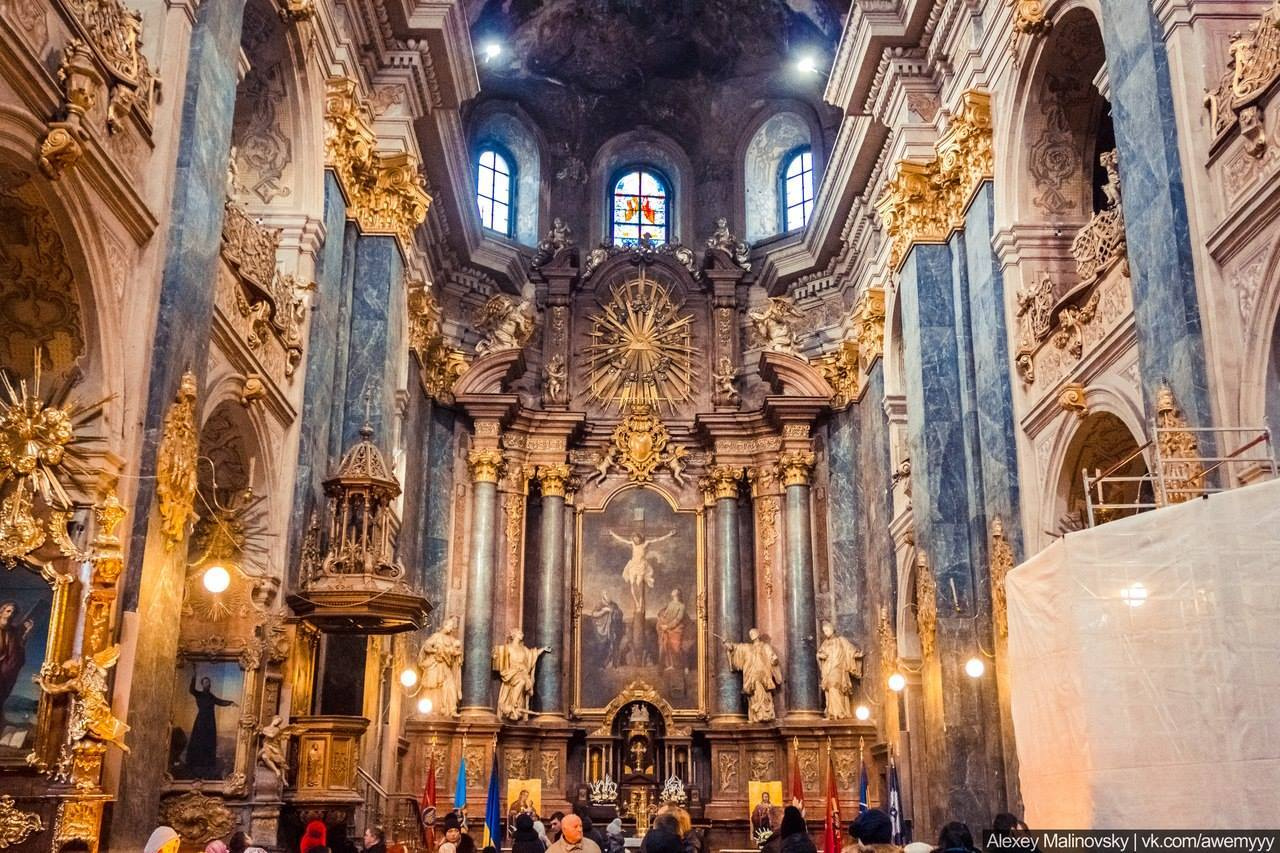
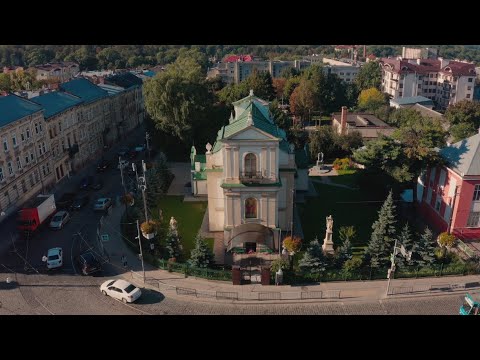
Church of the Holy Apostles Peter and Paul
Today, when passing by the Church of Sts. Peter and Paul in Lviv, most people do not realize how interesting the history of this church was. What does the church have to offer? But the first impression is sometimes wrong. Digging deeper into the history of the shrine, which is more than one hundred years old, you are surprised at the famous people the walls remember, how many people historically bowed their heads and knees before the preserved iconostasis.
On October 13, 1648, during the Liberation War against the Polish occupation of 1648-1654, under the walls of the Church of the Holy Apostles Peter and Paul, to the right of the church, lived Rahom Kh Tugay Bey in the household of Khmelnytsky, as reported by the scribe Samiilo Kushevych, who was a Catholic patrician of Lviv who negotiated with Hetman Bohdan Khmelnytsky. Other documents say that Cossack field guns occupied the neighborhood of the Pauline monastery (the present-day Church of Peter and Paul). 660 St. Peter and Paul's Church is rebuilt and given a Baroque style, the presbytery is extended, as a result of which the length of the church reached 24 m with a width of 11 m, vaulted ceilings are raised and a gable roof is arranged.
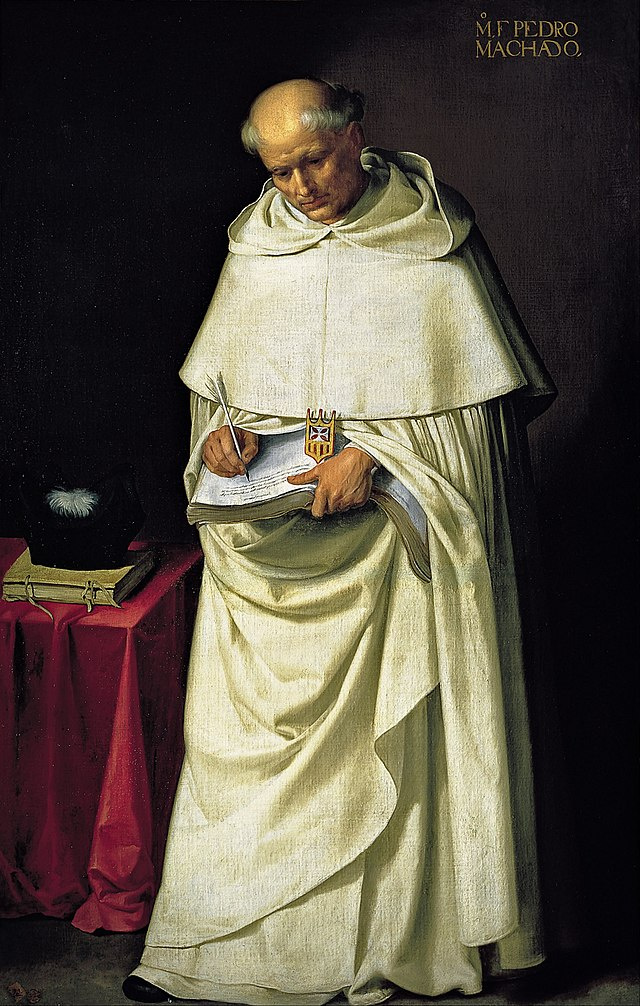
In1750-1786, for 36 years, St. Peter and Paul's Church was subordinated to a monastic order (an association of monks in the Catholic Church who prayed and worked). In the middle of the 18th century they arrived in Lviv. In 1756 there were four monks of this order at the church. In 1762, the Paulines began building their monastery, which was completed in 1776, with permission from the Lviv magistrate in 1753. The monastery had a "u" shape and was attached to the western façade wall with its northern wing. The number of Pauline monks in the church was small.
 1764 - the local archbishop forced the Pauline monks to take over parish duties. The Roman Catholic community was then extremely small, and in 1786 the church was transferred to the Ukrainian parish of the Church of the Exaltation of the Holy Cross. Since then, the church has ceased to be used by the Latins. 1777 - the temple was robbed: the criminals took all the silver items, in 1780 it was re-consecrated. In 1798, a narthex with a three-tiered bell tower was added according to the project of the famous European architect Clement Fesinger. The outstanding artist Luka Dolynskyi painted icons for the iconostasis.
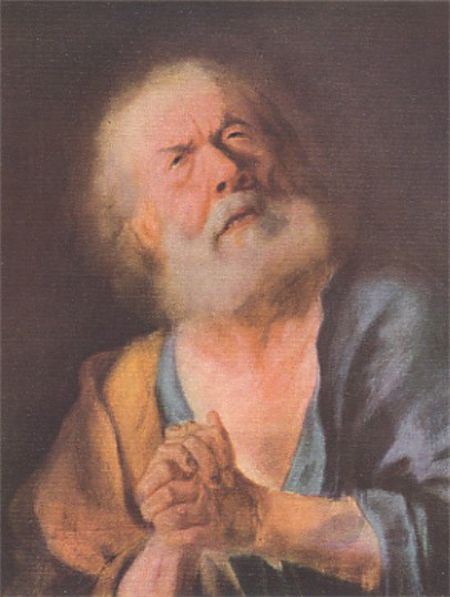
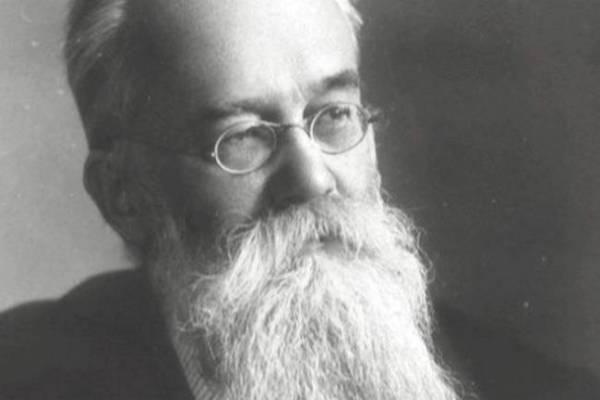
1799 - an iron shield with the coat of arms of Bishop Petro Bilyansky was placed on the facade as a memento for future generations. After his death, the bishop was buried in an underground crypt under the church altar. 1887-1891 - stone carved sculptures of Saints Peter and Paul (5 m in height) were installed at the expense of the church's rector, historian and theologian Fr. 1896 - The world-famous historian and first president of Ukraine Mykhajlo Hrushevsky got married in the church. 1900 - Hrushevsky baptized his daughter Catherine in St. Peter and Paul Church. 1920 Two wooden church pews with narrow seats and high backs were made for the church and installed along the walls in front of the iconostasis.
 1922 - The Ukrainian Art Circle "Vidbudova" of prominent artists commissioned by the church painted the church from the inside. To this day, only the altar has survived from those paintings. 1927 - with the permission of the Metropolitan Oratory, the church government sold 2 morgues of its ejection field to the Vlasna Hata cooperative for 10,000 zlotys and used the money to buy a stone building for the parish. 1946 - the church returned to the Orthodox faith. 1989 - the then rector, Father Volodymyr Yarema, together with Father Ivan Pashula, proclaimed the withdrawal from the Moscow Patriarchate and the restoration of the Ukrainian Autocephalous Orthodox Church in Ukraine. 2000 - The mortal remains of Patriarch Dymytrii of the UAOC were buried near the southern wall of the church.