Church of the Assumption of the Blessed Virgin Mary, Rudky
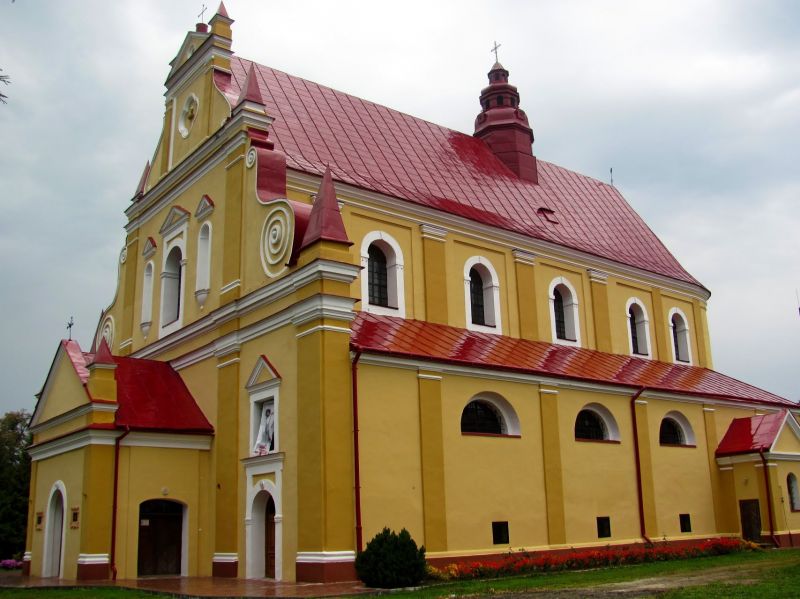
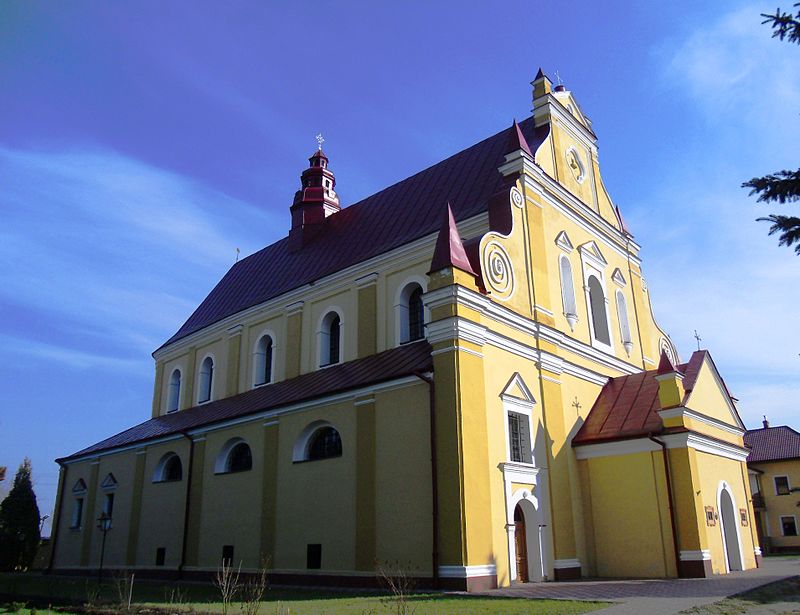
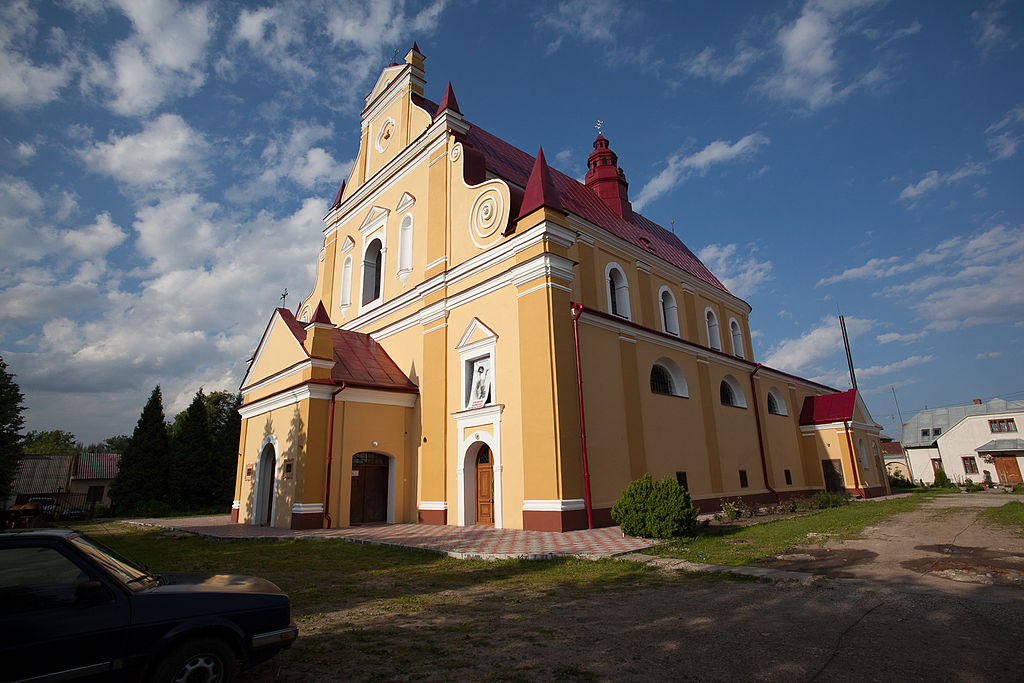
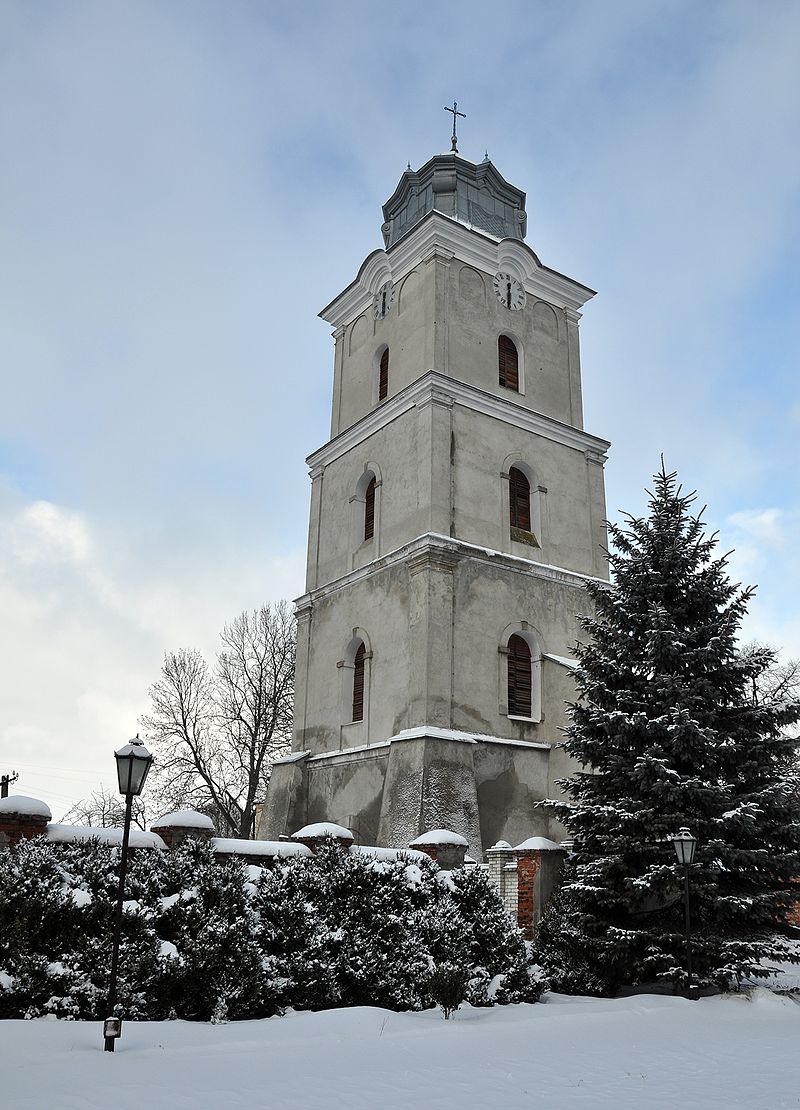
Church of the Assumption of the Blessed Virgin Mary in Rudky (Pol.. Kościół Wniebowzięcia Najświętszej Maryi Panny) - a cult building, a sanctuary of the Mother of God of the Lviv Archdiocese of the Roman Catholic Church in Ukraine in the town of Rudky (now Sambir district, Lviv region, Ukraine).
The history of the Roman Catholic parish in Rudky dates back to the early 15th century. According to legends, the consecration of the first church of the Mother of God in Rudky was performed by the bishop of Przemyśl, Petro Stryhonia Kshostovski, between the years 1435 and 1450. Rudky is located approximately halfway between Lviv and Sambir. Along this route lie Obroshyn and Velykyi Liubin, where one must certainly visit the estate of the Lviv archbishops, the palace of the Jabłonowski-Brunicki family, and dozens of other ancient buildings.
During the Tatar raids in 1450, the temple was burned down. On the site of the burned church, a new church of St. Adalbert was built. In 1550, this church was occupied by Arians for several years. At the turn of the 16th and 17th centuries, thanks to Jerzy Madaliński, the lord of Rudky, the ruined sanctuary was taken back from the heretics and handed over to the Catholics.
In 1612, when the Tatars and their allies ravaged Ruthenia and Podolia, hetman Stefan Potocki lost the battle at Sasowy Rog, and himself was captured; at that time, the village of Zheleznytsia along with the local temple was burned down. The nobleman Jerzy Churillo found in the ruins of the burned temple a miraculously saved icon of the Mother of God (type of Odihria) and transported it deep into the land. During the transport of the image, the horses stopped in front of the church in Rudky and, as the message conveys, were forced by the whip, did not want to go further, which was recognized as the will of the Mother of God herself. Then the icon was placed in the main altar of the Rudky church.
In 1675, the church and the presbytery were burned again, fortunately, the image miraculously did not burn again. Over time, a new wooden sanctuary was built.
Due to the fact that the Rudky church was set on fire several times by raiders, there was a danger of the miraculous image being burned. It was also believed that the wooden sanctuary was too poor for the valuable treasure of Mary, so as early as 1655, the construction of the present brick temple of the Assumption of the Blessed Virgin Mary in the Baroque style began, the completion of which, after many interruptions, was finished in 1728.
During the construction of the church, its founders included among others: Jędrzej Stano, Michał Urbański, Andrzej Michałczewski, Jan Sobieski from Sobieszyń (who rests in the local crypt). The sanctuary was consecrated in 1741.
For centuries, the Rudky church gathered countless faithful, as reported by the chronicles of the parish and the cult of the Marian icon. Among the notable personalities, kings Jan Kazimierz, Michał Wiśniowiecki, and Jan III Sobieski prayed before the Mother of God.
Thanking Mary for Her wonderful, over 300-year presence in Rudky, on July 2, 1921, St. Józef Sebastian Pelczar, the bishop of Przemyśl, crowned the image with papal crowns. The ceremony was attended by many clergy and a several-thousand gathering of faithful from both Catholic rites. The testimony of this fact is a stone plaque placed in the wall of the presbytery of the church, which remains there to this day.
In the crypts of the side chapel of the Rudky church rest the remains of the world-famous Polish playwright Count Aleksander Fredro and members of his family. Be sure to visit the village of Vyshnia, neighboring Rudky, where the family estate of the Fredro family is located, with a palace and a large park. From the Fredro family comes the mother of Metropolitan Andrey Sheptytsky - Sofia. In the village, there is another outstanding monument of national significance - the wooden church of Sts. Kuzma and Demyan, unfortunately spoiled by an unsuccessful "Euro-renovation".
In the spring of 1946, the Rudky church was closed, instead, the image was taken to Poland (to Przemyśl). After 22 years, the then metropolitan of Kraków, Cardinal Karol Wojtyła, together with the bishop of Przemyśl, Ignacy Tokarczuk, re-crowned the Marian icon as the Queen of Bieszczady with a location in Jasien. In 1992, the image was stolen and to this day it has not been found.
During the Soviet regime, the church served as a warehouse and a fertilizer storage, and a veterinary pharmacy was made in the sacristy. The permanent residents of the church were primarily flocks of pigeons. The roof of the sanctuary, especially above the side naves, was seriously damaged, so during the rain, water destroyed the walls and floor of the building. The church's equipment was used for secular purposes. The coffins and remains of the Fredros were also desecrated.
On May 13, 1989, the Holy Mass was celebrated again in the Rudky church. A month after the opening, on the day of the sanctuary's feast (July 2), the parish received its first pastor, Fr. Gerard Liryka, a native of nearby Mostyska.
The faithful, together with the priest, began the restoration of the church and the proper arrangement of the premises. It must be acknowledged that this last required great determination because the hostility of the authorities and the local environment constantly accompanied the Rudky parishioners.
Thanks to the zeal of the faithful, among various works, the church was restored externally, and the internal whitewashing was dried multiple times. The wooden structure of the roof and the roof itself were put in order. The bell tower was solidly restored. Along with this, the premises of the sanctuary were properly fenced, and on the territory near the church, a chapel of the Mother of God was built, which once existed there.
In 1990, the bodies of Aleksander Fredro and other members of his family were reburied. Their graves are located in the crypt, in the Chapel of the Holy Trinity, to the left of the main altar.
On November 11, 1995, a copy of the miraculous image of the Mother of God, created in Toruń, returned to Rudky. The image was brought into the church and consecrated by the Latin Archbishop of Lviv, Marian Jaworski. The ceremony was attended by many faithful and clergy of both Catholic rites. On July 2, 1996, the icon of the Mother of God was solemnly crowned by Archbishop M. Jaworski. This same hierarch, in 2003, reactivated the Marian sanctuary in the Rudky church.
The current church has three naves. In the undestroyed main altar, which is funded by a Lviv resident, Pavlo Pyatkovskyi, there is the miraculous image of the Rudky Mother of God. There are 8 side altars, of which four are in their original state. On the left side, there is the original pulpit from the second half of the 17th century in the shape of a boat. Near the altar of the Lord's Cross, in the wall, there is an authentic stone from the Holy Mount Golgotha.
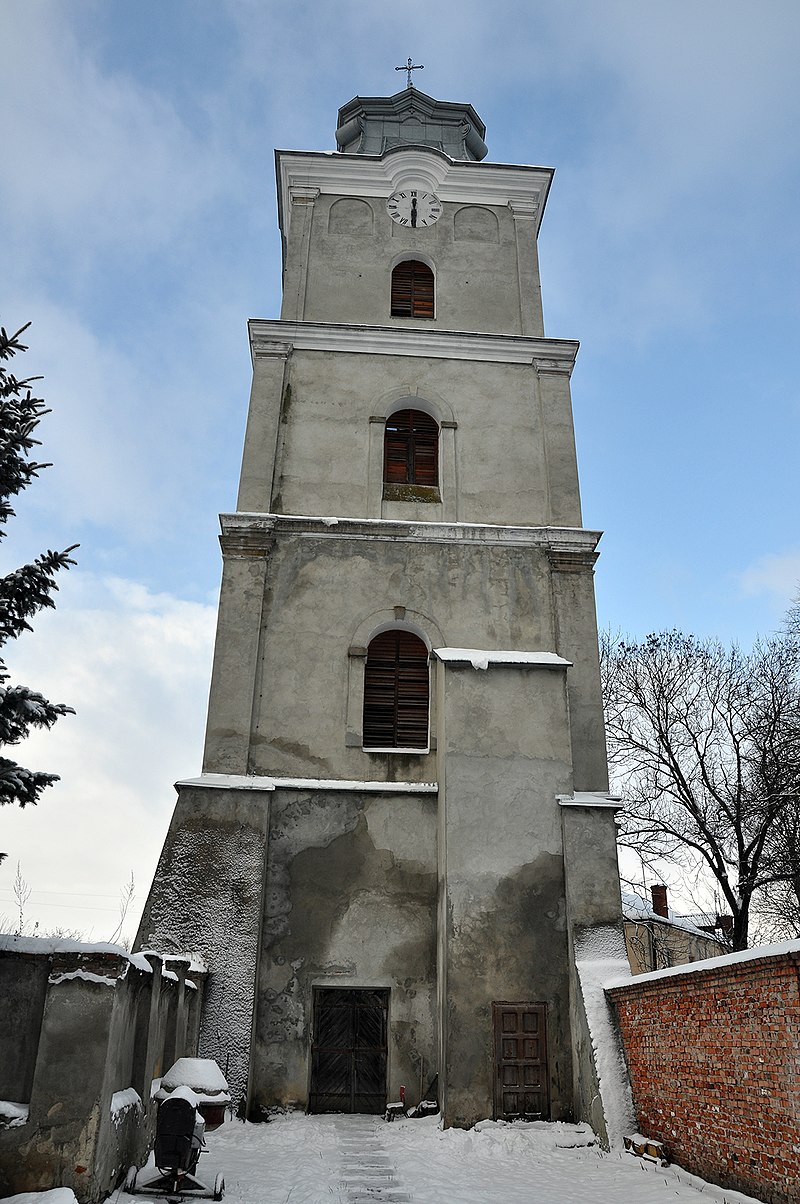
Next to the church, there is a bell tower built in the 18th century, which once had a large clock and three loud bells, of which one has survived. However, a full inspection of the bell tower is somewhat hindered by surrounding extensions.
The Roman Catholic parish in Rudky includes the following localities: Rudky, Benkova Vyshnia, Khlopchytsi, Dolobiv, Luki (Konyushky Semenivski), Mykhailovychi, Nyklovychy, Novosilky, Poberizhnye (Yatvyahy), Pidhaychyky. Today, the parish has approximately half a thousand faithful who live in the above-mentioned localities, so the process of restoration work on the Rudky church is slow, requiring a lot of patience and generosity from donors.
In the town, you can also see the town hall, the museum of liberation struggles, as well as a large, but unfortunately quite neglected, dendrological park.
Like the churches of St. Martin (Semenivka), the Holy Trinity (Ustia-Zelene), and St. Lawrence (Radymno), the building is distinguished by modest linear architectural divisions.
Video 2
 Рідне місто РудкиTanya Ruslabudova
Location on the map
Comments
Nearby attractions
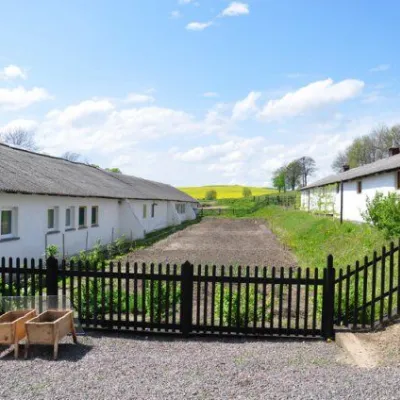 SightEliza's farmLviv region15 km from Church of the Assumption of the Blessed Virgin Mary, RudkyThe farm is located in the village of Dmytrovychi, Lviv region. It is equipped in accordance with European standards of traditional farming.
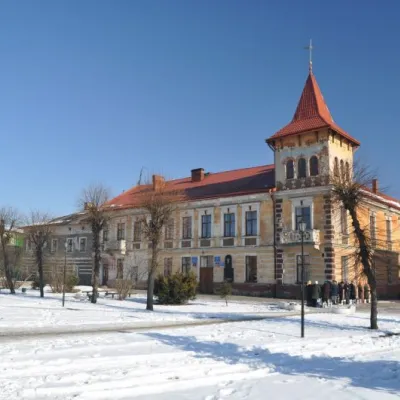 MuseumHistorical Museum, Sudova VyshniaSudova Vyshnia17 km from Church of the Assumption of the Blessed Virgin Mary, RudkyThe Sudova Vyshnia Museum of History and Local Lore was established to familiarize tourists with the history of the place.
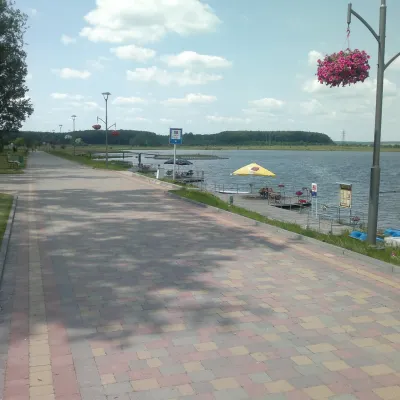 LakeUniatychi ReservoirUniatychi33 km from Church of the Assumption of the Blessed Virgin Mary, RudkyUniatychi Reservoir lies by the village of Uniatychi in Drohobych district, not far from Drohobych. It was built in 1972 on the Bar, a tributary of the Tysmenytsia in...
Craft nearby
All craft places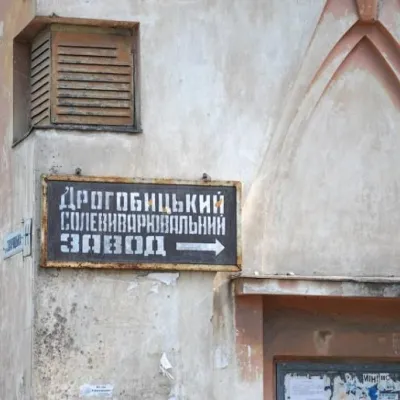 Craft producersDrohobych Salt Works, DrohobychDrohobych34 km from Church of the Assumption of the Blessed Virgin Mary, RudkyDrohobych Salt Production Plant (State Enterprise "Drohobych Salt Production Plant", Drohobych salt works, Drohobych salt mine) is the oldest currently operating salt...
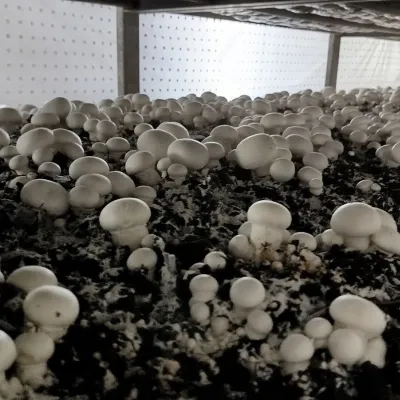 Eco farmsBorovyk Mushroom Farm (Champiland), BoryslavBoryslav40 km from Church of the Assumption of the Blessed Virgin Mary, RudkyBorovyk is a family mushroom farm in Boryslav, a few kilometres from the spa towns of Truskavets and Skhidnytsia.
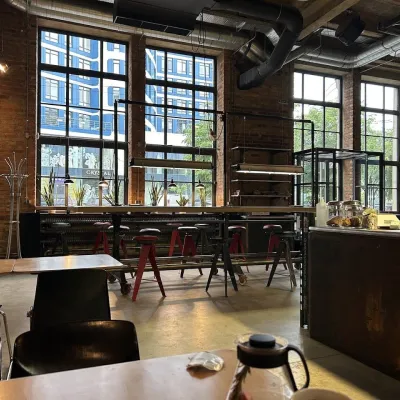 Craft shopsSvit Kavy Roastery & Cafe, LvivLviv41 km from Church of the Assumption of the Blessed Virgin Mary, RudkySvit Kavy Roastery & Cafe at 59 Kulparkivska Street is the roasting plant of Svit Kavy ("World of Coffee"), one of Lviv's best-known coffee brands, with a café right...
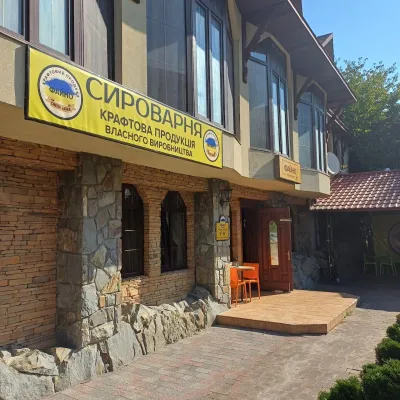 Cheese dairies & pasturesFaino Craft Cheese Dairy, TruskavetsTruskavets41 km from Church of the Assumption of the Blessed Virgin Mary, RudkyFaino Craft Cheese Dairy is a small family cheese dairy with its own cheese shop on Stebnytska Street in Truskavets.
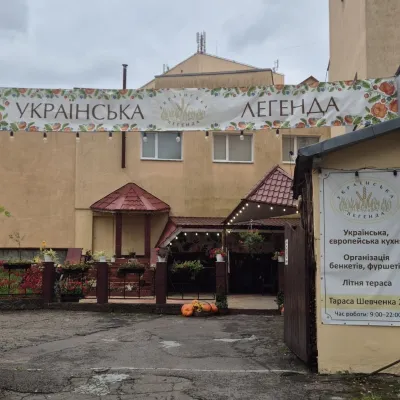 Koliby & Hutsul cuisineUkrainska Lehenda Restaurant, TruskavetsTruskavets42 km from Church of the Assumption of the Blessed Virgin Mary, RudkyUkrainska Lehenda (“Ukrainian Legend”) is a cosy Ukrainian-cuisine restaurant in central Truskavets at 23 Tarasa Shevchenka Street.
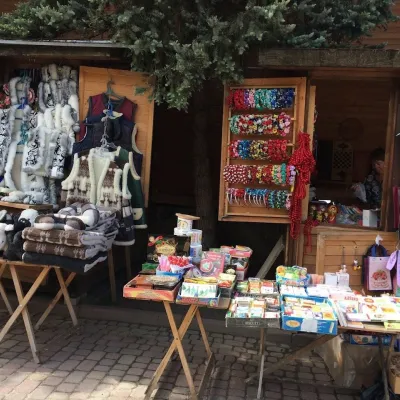 Markets & fairsVernisazh Souvenir Market, TruskavetsTruskavets42 km from Church of the Assumption of the Blessed Virgin Mary, RudkyVernisazh souvenir market is a line of wooden pavilions and stalls on Yuriia Drohobycha Boulevard in the very centre of Truskavets, between the Resort Park and the...