Nevytske
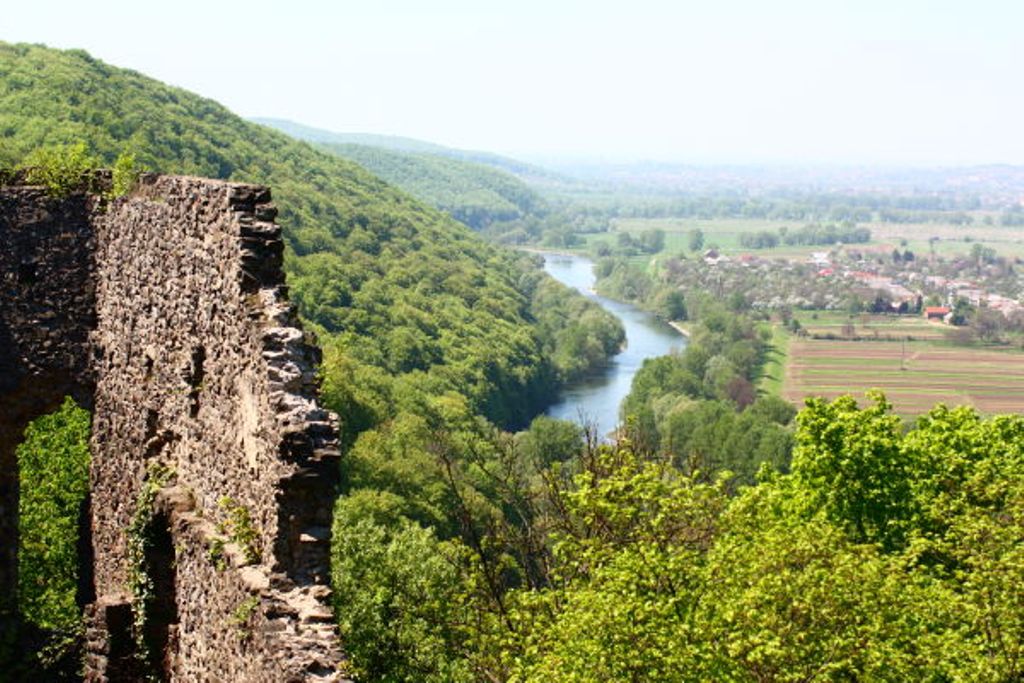
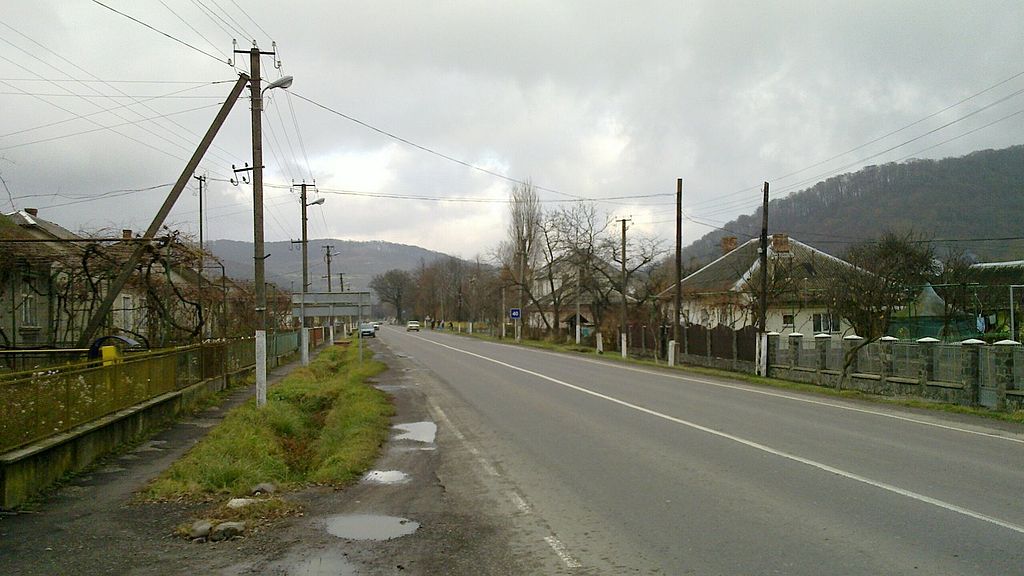
Thevillage of Nevytske is located in the Uzhhorod district of the Zakarpattia region on the Uzh river. It is located at a distance of 12 km from Uzhhorod. People have inhabited the area since ancient times, as evidenced by the findings of stone axes (Neolithic period, 4,000 BC), jewelry and weapons (Bronze Age, 2,000 BC), ceramics and things of later times.
The village is known in charters and other written sources under the names: "Nevicke" (Hungarian) and "Neviţche" (Romanian). Apparently, the village was founded before the 13th century, and it is from this village that the nearby castle could have received the name Nevytskyi. In the northern part of the village in the 70s of the last century, a burial ground with signs of corpse burning was discovered. The human remains were kept in clay urns.
The burial mound dates back to the VI-V centuries BC. Not far from it is the Tepla Yama tract, the name of which has survived to this day from the ruler of the underworld, Yama. Probably, the name of the village is best associated with the ancient deity Nava or Neva, which symbolizes the unknown. By giving a bride in marriage, a kind of ignorance was created for her in her new life, which in our time has been transformed into the word "daughter-in-law" (one who does not know her future).
From the third quarter of the 14th century to the end of the 17th century the village belonged to the Druget family's Nevytsky domain. The first direct mention of the village dates back to 1427, when peasant farms were taxed from 17 ports. In 1599, there were 30 peasant farms in Nvytyske, which gave grounds to consider it a medium-sized settlement.
In 1691, the property of the Druget family passed into the hands of Count Mykola Vercheni. An interesting document has been preserved from this time - a description of the former Drugety estate, called in historical literature the 1691 urban plan. It contains a lot of information about the life of the villagers of Nevytske. At that time, there were 13 families with allotments and 4 families without allotments in the village. In addition, there were 19 deserted farms, whose owners fled during feudal strife from brutal feudal oppression and unbearable extortion, and especially from military looting in 1680-1690. According to the urbar, the residents of Nevytske owned 61/4 tekas of land (10-12 kobyls or golds each): 12 peasants had 1/2 allotment each, and one had 1/4 allotment. At the same time, 17 allotments were empty and inhabited by settlers.
The peasants' duties consisted of various monetary and in-kind extortions and free labor. The serfs paid twice a year a cash rent (about 2 florins), three times a year the so-called dry tavern (a tax on those who did not buy alcohol from the lord's tavern, later extended to all peasants), a "cantor's money" (a tax on the maintenance of the clerk, a half-hearted clerk), and other fees. In addition, they had to give the lord 12 chickens, 12 eggs, 1-2 geese, 1 itza of butter, 1/2 itza of honey, a tenth of a pig or cow, a ninth of the harvest and wine, etc. The serfdom was equal to 3 days in two weeks. The peasants cultivated the landlord's land, transported grain and other products to Uzhhorod, etc.
After the defeat of the liberation war of 1703-1711, a fierce reaction ensued, and famine broke out, causing many of the peasants of Nevytske to flee. According to the census of 1720, only 18 families with land and 2 families of new settlers lived in the village. They had 103 kobyls of arable land and some hayfields. In 1738, a church parish was established. Now the peasants were forced to cultivate the priestly land (10 kobliks), as well as pay 1 vintage of grain, not counting the high fees for church services (from 1/2 to 4 florins).
Hardships prevailed in Nevytske in the late nineteenth and early twentieth centuries. Lack of medical care led to a high mortality rate; out of 70-80 children born, 20-25 died. During the Verkhovyna Action in Transcarpathia, a folk economic school was opened in the village, and in 1902 a primary school was opened, which was attended only by children of wealthy villagers. There were no cultural institutions in the village. In 1903, there were 707 inhabitants in the village of Nevytske. A number of wealthy peasants had been engaged in gardening, horticulture, etc. since the late nineteenth century.
The occupation of the village by bourgeois Czechoslovakia put an end to the hopes and aspirations of the workers. The peasants of Nevytske continued to have little land. Most of them owned 1-2 hectares of land, and only a few owned 4-6 hectares. The largest landowners in the village were two peasants who owned 10 hectares of arable land, a garden, and hayfields. 20 hectares of the best land belonged to the church.
Many of the villagers of Nevytske could not live off their farms, and so they became seasonal and permanent workers on the railroad, road builders, builders of the Uzhhorod-Nevytske drainage canal, employees of the Onokivska power plant, Kamianytsia quarries, and a crushed stone factory. In the spring of 1921, unauthorized seizures of landowners' and the state's land began in Zakarpattia. On July 5, 1921, they began to seize meadows and pastures. The leaders of the action were former prisoners of war M. Zhelezko, Y. Karbovanets, and others.
The picturesque surroundings of Nevytske, which are part of the Kamianytsia State Reserve, were turned into a recreation area for Uzhhorod workers and employees. In a few minutes, a comfortable bus takes Uzhhorod residents to the vicinity of the Nevytsky castle, to the bank of the cool Uzh river, which behind the dam creates a magnificent lake with beaches and a boat station. Many tourists come here. A suspension pedestrian bridge was built across the Uzh River and a new transport bridge was completed.
The building and towers of the Nevytsky castle were rebuilt. All of this has greatly increased the flow of tourists, making this wonderful area even more attractive and charming. The rebuilt building houses a museum, library, cinema, and rest rooms equipped in medieval style. The face of the village has changed, and more than 120 houses have been built and radically rebuilt.
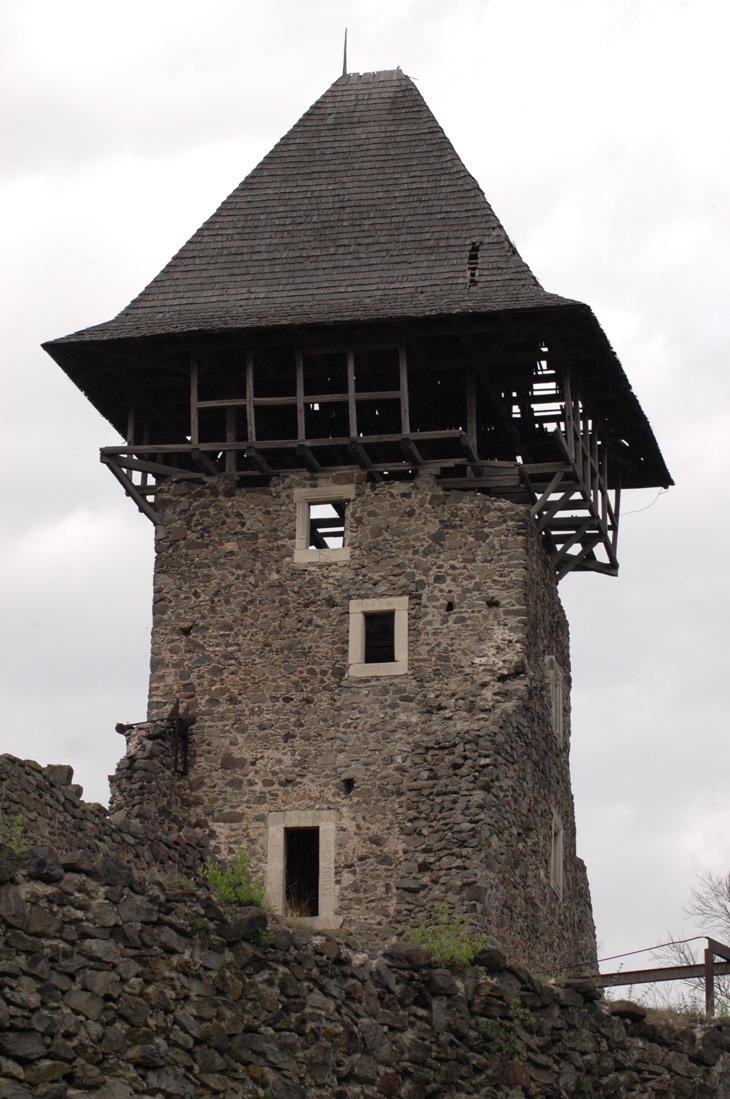
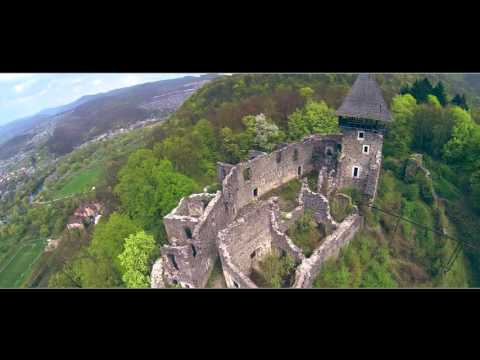
There are several written references to the Nevytsky Castle, which was built on a mountain 125 meters above sea level in the narrow valley of the Uzh River, dated 1266, 1274, and 1288. At that time, it was considered the castle of the Ung comitatus and belonged to the Hungarian kings.
The castle took part in various feudal wars, passed from one magnate to another, and was owned by counts. With the loss of its former military importance, it began to decay. It has been partially preserved to this day. The castle walls are currently under conservation. Today, Nevytskyi Castle is on the balance sheet of the Kamianytsia village council.
The village of Nevytske has gained a good reputation in the Uzhhorod district for introducing new customs and rituals.


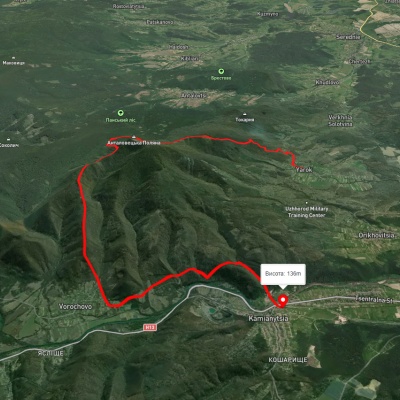
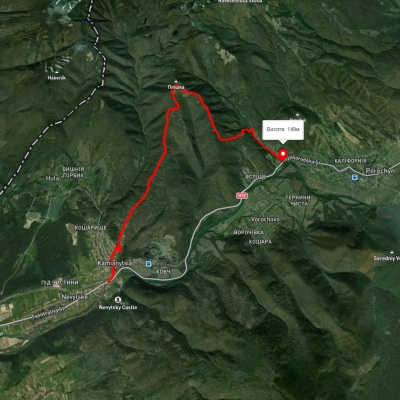
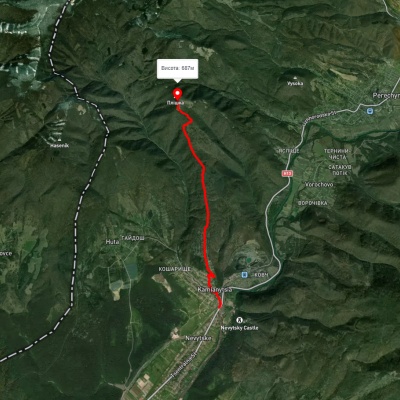
Which hiking trails pass through or near Nevytske?
We suggest these hiking trails through or near Nevytske: Yarok village, via Antalovetska Poliana to Nevytske village, Kamianytsia village, via Mount Plishka to Perechyn village, Kamianytsia village – Mount Plishka, Kamianytsia village – Mount Plishka – Kamianytsia village, Vorochovo village, via Antalovetska Poliana to Kamianytsia village, Perechyn village, via Antalovetska Poliana to Kamianytsia village