Massarivska Kamianytsia, Lviv
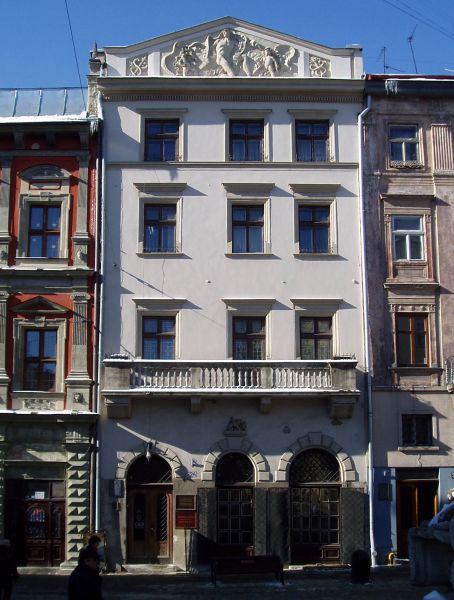
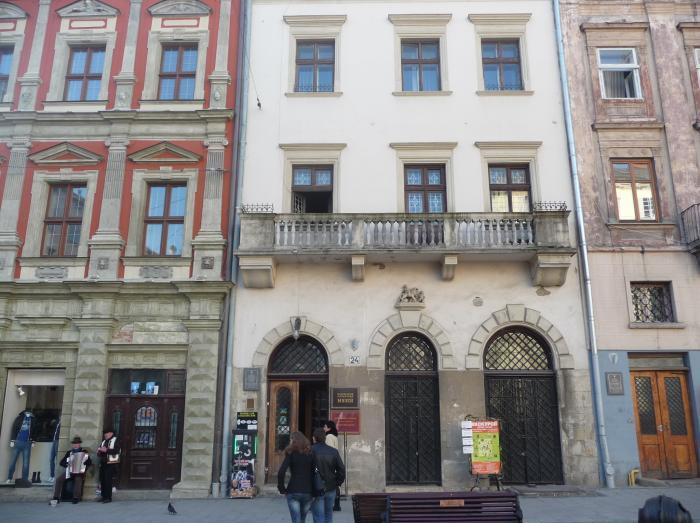
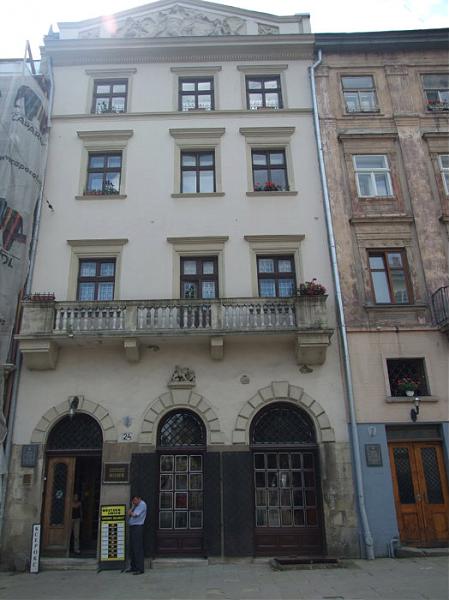
TheMassarivska House is a building No. 24 on Rynok Square in Lviv, built in the 16th century. It belonged to the Scholz family and was called Giblowski, and later, when Antonio Massari inherited it as a vineyard for his wife, it became known as Massarivskyi. In memory of A. Massari in the XX century, an image of a winged lion was placed on the staircase. In the second half of the seventeenth century, the house became the property of Councillor Gordon, a Scotsman by birth (he became a city councillor in 1665). In 1707, the Muscovite Tsar Peter the Great stayed here three times when he came to Lviv for negotiations with the Polish gentry. He also met with a delegation of the Lviv Stavropegian (Assumption) Brotherhood in this building.
The Massarivska Kamianytsia is a building that reflects the character of Lviv to the fullest extent possible. The building has witnessed many historical vicissitudes. Its walls provided shelter to the Lviv counselor Gordon. All these events took place in the Massarivsky stone not by chance. This building has always been shrouded in an inexplicable mystery that has lived in it since its construction.
At the beginning of the XX century the house was reconstructed: the fourth floor was added, a bas-relief was installed on the attic (author 3. Kurchinsky). In 1946 the house was transferred to the Historical Museum. It was planned to organize a historical museum named after Peter I. For this purpose, the residents of four apartments were relocated. Today the building houses the departments of archeology and medieval history.
The alterations changed the interior of the building. However, the few fragments that remain on the ground floor suggest that it was very beautiful. The remains of a hypocaust have been preserved in the beer hall.
The Venetian Antonio Massari, who received this house as a dowry, tried to preserve the interior decoration and at the same time give the building an Italian charm. As a result, in the 16th century, the townhouse became one of the most beautiful and adapted buildings in the city. The remnants of the decor and medieval heating system, which are still visible today, preserve the memory of this.
The final transformation of the Massari House took place in the early 20th century. In 1920, a winged lion, a symbol of Venice, appeared on the steps, and the building itself grew to 4 floors. The building is brick, plastered, stretched into the depths of the site, four-story, with old foundations, Gothic vaults and framing of the first floor windows.
The building is four-story, brick, plastered, and elongated in plan from east to west. The entrance portal and the ground floor windows have a semicircular ending; on the upper floors, they are rectangular, with profiled stone frames. Above the lower level of the façade is a balcony with a stone balustrade. Above the façade there is a developed cornice and a triangular pediment decorated with an allegorical relief by the sculptor Z. Kurczynski (1920). The foundations and vaults of the ground floor retain elements of late Gothic construction, while the interior layout and some elements of decorative decoration are typical of the Renaissance.
Today Massarivska Kamianytsia belongs to the Lviv Historical Museum, and one of the city's most mystical objects, the weather vane, is kept there.
Massarivska Kamianytsia is located on Rynok Square, 24, next door to the Belsky Kamianytsia and Heppner Kamianytsia.