Kamianytsia Mykolaievychivska, Lviv
Lviv is attractive for its unique architecture. One of these monuments is Kamianytsia Mykolaivychivska. "Kamianytsia" means a stone house, this name came from the medieval cities of Europe. Such a structure provided for the placement of craftsmen's premises at the bottom and living rooms on the upper floors. Lviv is the custodian of unique buildings of the Renaissance and Baroque periods.
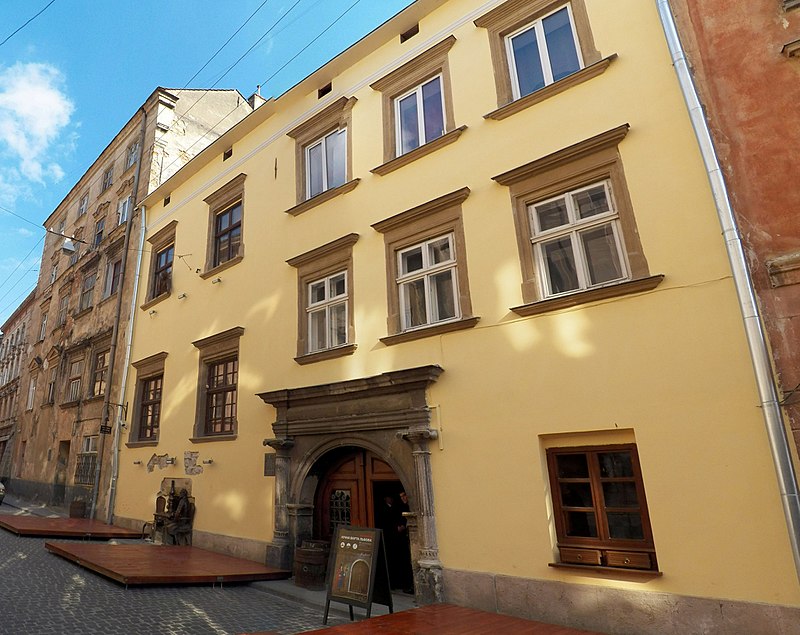
Mykolaivychivska Kamianytsia (conservation no. 142) is a residential building of the XVI-XVII centuries, an architectural monument of national importance (protection no. 322). It is located in the historic center of Lviv, on Virmenska Street at 20. It is the most valuable monument of residential architecture on the street.
The Mykolaivychivska House is very well preserved to this day. The building was constructed in the mid-16th century, most likely in the 1550s, according to a project by the Italian architect Peter of Lugano (Peter the Italian), who arrived in Lviv in 1543. In 1630-1631 the house was called the Pavlicka Mykolaiova House, in 1641-1701 it was called the Pavlivka M. House. Since 1703 it belonged to a burgher named Hadzevych, as of 1712 it was two-story, and in 1734 it was rebuilt using half-timbered structures. In 1767 the house was mentioned under the name of the Mykolaiovychovska Kamianytsia.
In 1866, the wall of the house adjacent to house 22 was in a state of disrepair; the following year it was restored by the builder Józef Engel. In 1898, the architect Ivan Levynskyi carried out another reconstruction of the house, preserving its original structure and elements of the old architecture. At that time, the house already had three floors.
As of 1871, the house was owned by Clementine Witting, in 1889 by Albina Frankowska and Helena Tarnawiecka, in 1916 by Sarah Bodek, and in 1934 by Hana Erischhof.
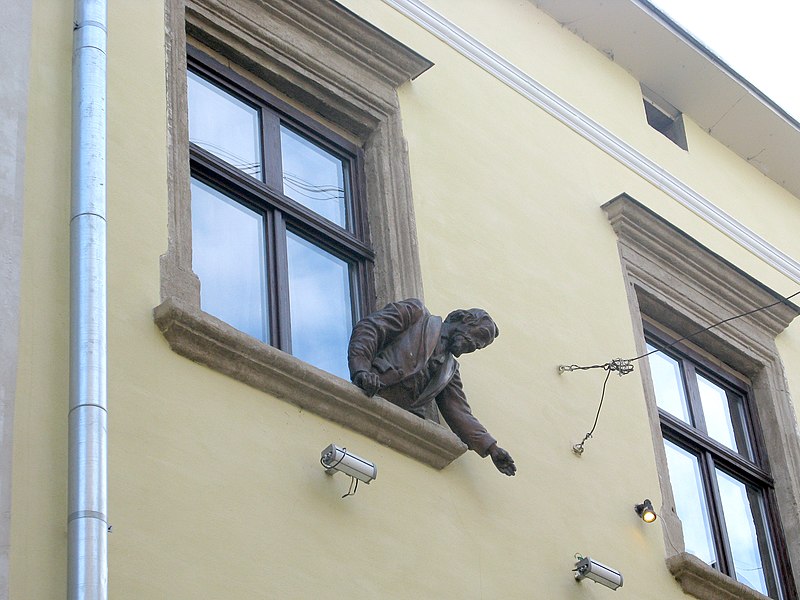
On November 28, 2008, one of the first establishments of the !FEST restaurant chain, the Gas Lamp Restaurant Museum, dedicated to the invention of the kerosene lamp in Lviv, was opened in the building. Sculptures of the inventors, Jan Zeg sitting at a table and Ihnatii Lukasevych looking out of a window, were installed near the building (sculpted by sculptor V. Tsisaryk). In 2010-2011, the facade was restored.
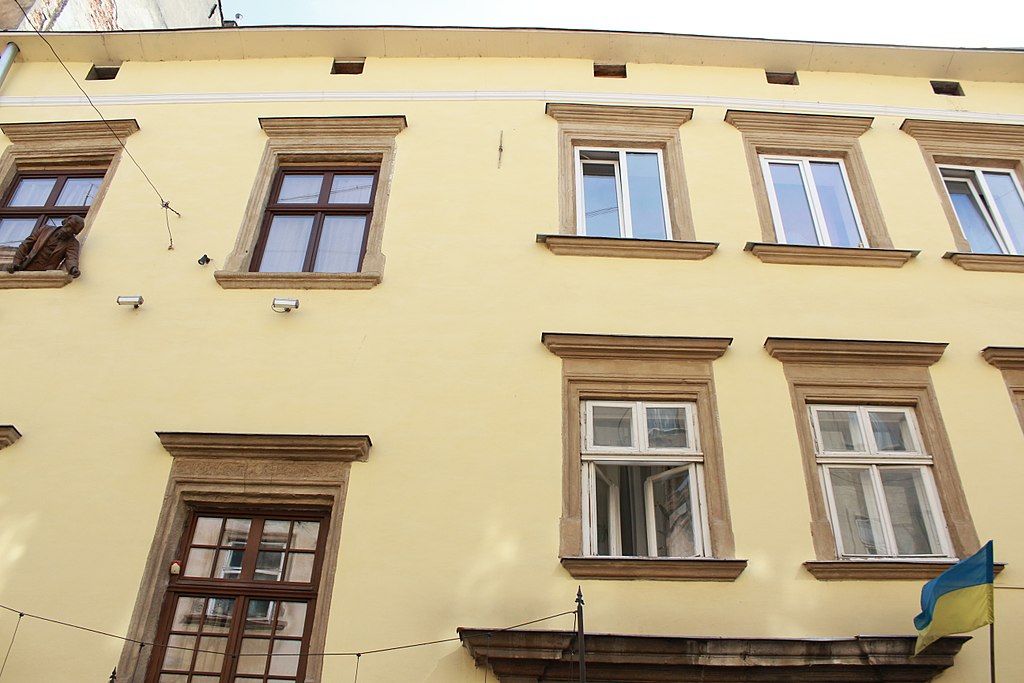
The building is three-story, brick and plastered. The façade is asymmetrical, with five windows located at different levels, which may be the result of the union of two neighboring houses. The windows are rectangular and decorated with platbands and straight sandriks.
The main architectural detail of the house is its entrance portal, the oldest Renaissance portal in Lviv. Laconic in form, expressive, without unnecessary decor, the stone portal consists of a wide squat arch with two columns on each side, and a developed entablature. The columns of the portal are original, as they combine features of the Doric and Tuscan orders, are decorated with a low acanthus-shaped girdle, typical of the Corinthian order, and end with simplified Ionic volutes. The faces of the column pedestals are decorated with partially lost diamond-shaped inserts. The entablature has Baroque features and was apparently added later. The portal houses a wooden gate, probably from the late nineteenth century, decorated with voluminous diamond rustications in the lower panels and wrought-iron grilles in the form of vertical rods, ending in lushly opened flowers.
To understand the city, plunge into its history and feel the spirit of the past, you need to see the Kamianytsia Mykolaivychivska with your own eyes. Nearby is the Monument to the inventors of the kerosene lamp.