Crests
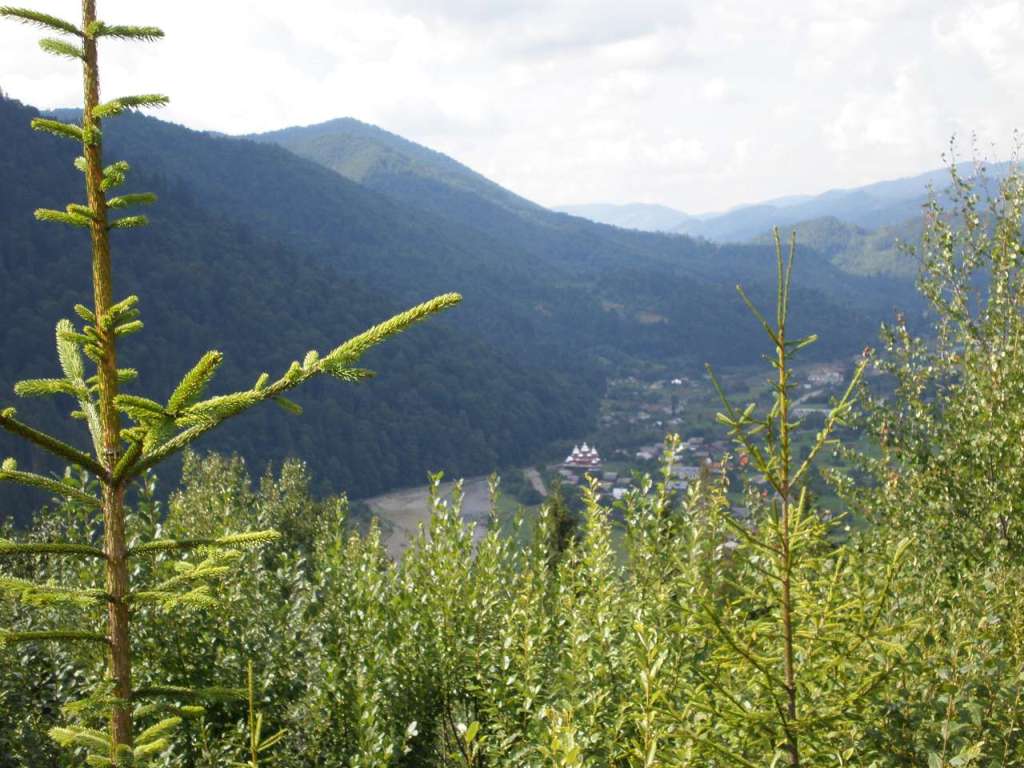
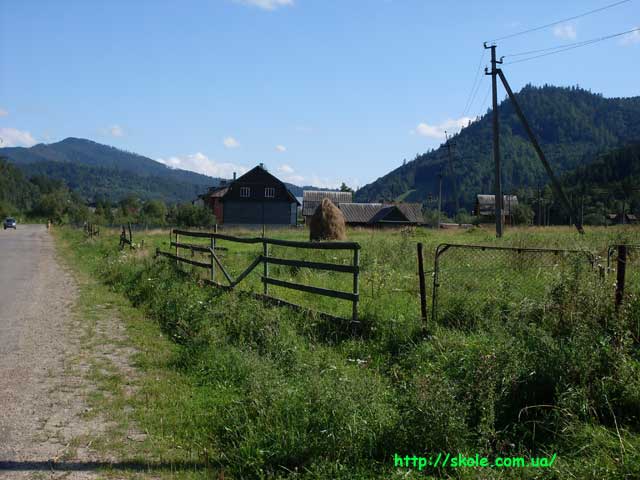
In the village of Hrebeniv, the vacation will take place at an altitude of 500 meters above sea level. Hrebeniv is a climatic resort located 6 km from Skole andthe village was first mentioned in the research of the Polish historian and ethnographer Jablonski in 1589. This date is also mentioned in the list of Galician parishes of the 12th-17th centuries. In the 16th century, Hrebeniv belonged to the possessions of the Ostroh princes, later the possessions passed to the Potocki.
Remember that in the days of Kyivan Rus, the river valley was the route to Hungary. The road went from Sviatoslav through the territory of modern Hrebenove, Tukhli, and Yalynkuvate and further over the pass. The current inhabitants of the Skole Beskydy are well aware of this road. The army of Prince Sviatoslav Volodymyrovych retreated along it, fleeing from Sviatopolk I in 1015. At the entrance to the village, a battle took place in which Prince Sviatoslav was killed, and therefore the valley was named in his honor. On the river bank there is a mound - the grave of the prince.
Here are four versions of the origin of the village name:1. The village is surrounded by mountain peaks that have a dome-shaped form, as if surrounding the valley and the village with a crest. This is where the name "Hrebeniv" comes from.2. According to another version, the name of the village of Hrebeniv comes from the "ridges" of sand and stones on the river Opir.3. From Skole, Hrebeniak, possibly Hrebin, came to this area. He founded the village, which was called "Hrebeniv".4. The fourth version about the origin of the village is connected with Sviatoslav. All the dead were buried in a battle at the entrance to the village, and since the words "burial" and "burial" are identical. Hence Hrebeniv, the place where the soldiers are buried.
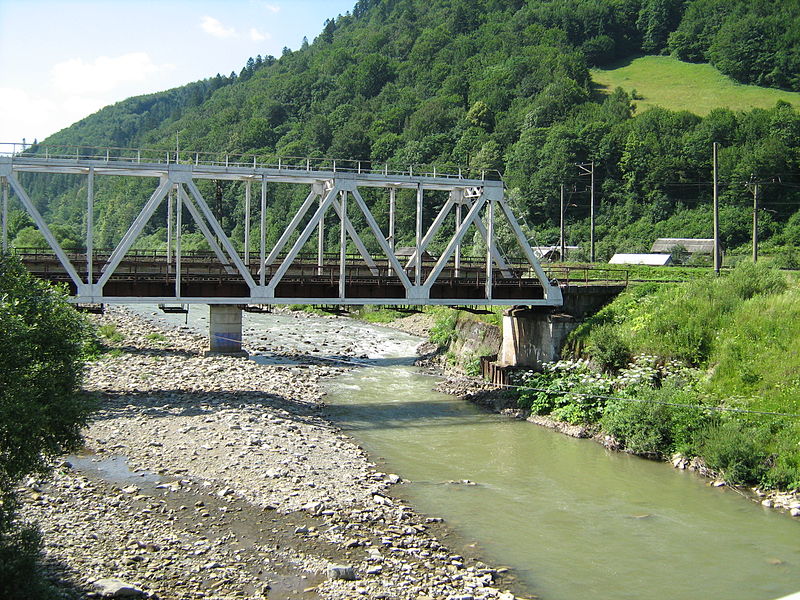
Not far from Hrebeniv, on the right bank of the Opir, behind the railroad bridge, is the grave of Prince Sviatoslav Volodymyrovych. During the archaeological excavations, many things and tools were found, as well as the remains of weapons from the eleventh and twelfth centuries. Among the architectural monuments are a 1929 villa and the Church of the Annunciation of the Blessed Virgin Mary. Metropolitan Andrey Sheptytsky once held spiritual studies and lectures in this villa. The church itself was built by architect Lev Levynskyi to replace a wooden church that burned down in 1923. The church is located near the right bank of the Opir River. There are also mineral springs nearby, the largest of which is located in Zelemianka. To the west of the village there is a protected tract (forest) of local importance Holovetske.
Hrebeniv developed in the 20-30s of the 20th century, when a resort was founded on the basis of local mineral waters. The village was decorated with vacationers' cottages, forest plantations were arranged, beaches were equipped, and streets were improved. About 2500 people rested and were treated at the resort during the season. The resorts were rented to private owners, among whom the Shmaters brothers stood out. In 1906, they opened a sanatorium on Zelemianka, based on the brine waters of a spring. Having built beautiful and comfortable boarding houses, Jovzhi Shmatera invited highly qualified doctors to work there, and employed many people from Hrebeniv. Here one could not only take therapeutic baths, but also have a good rest. In 1912, 200 spa guests were treated here. In 1906, the mineral water was analyzed in the laboratory of the Austrian Pharmacists' Union in Vienna and its high value was recognized. At the same time, chemists established the great value of the waters of the Poray spring. The waters of Zelemianka were studied again in 1926 by Heinrich Rubenbauer, an associate professor of medicinal chemistry at Lviv University, and were recognized as similar to Ivoshch. Not only musculoskeletal ailments were treated here, but also diseases of the nervous system. However, during the First World War, the Austrian authorities requisitioned the sanatorium for some time, turning it into a rehabilitation center and a climatic resort for the wounded. However, under Polish rule, Shmaterivka, as a health resort, was once again owned by the Shmater sons and accepted everyone for treatment. In 1936, 150 baths were given to the sick here daily. The economic development of the village was also associated with the cultural and spiritual upsurge. Educational work was launched in Hrebeniv. It was coordinated by the local Prosvita house. There was a reading room that was opened in 1898. It existed until 1938.
The railway station of the Lviv-Stryi-Skole-Mukacheve line is located in Hrebeniv; all suburban electric trains and some passenger trains stop at the station. The road to Slavske, a famous ski resort, also passes through the village. Hrebeniv lies in a narrow valley of the Opir River. From here it is convenient to climb several peaks of the Zelemianka ridge (mountains Zelemin, Plishka, Kudryavets, Lopata, Na Benki). Green tourism is developing rapidly in the village, and there are several recreation centers. The village is just beginning to develop as a resort. New hotels are appearing, old ones are being rebuilt, and green tourism estates are inviting visitors. The nearest ski lifts are in Slavske.
You can get to Hrebenove by train from Lviv-Mukachevo (the 2nd class carriage is very comfortable) or Lviv-Lavochne, or by minibus from Lviv-Skole-Slavske. The distance from Lviv is 112 km.
Hrebenivka village council - (03251) 3-72-81. Mountain Search and Rescue Service of Slavske village, 10 I. Franko St. - (03251) 4-21-02, (097) 493-44-12.
Radon sources in the village of Hrebeniv
Most of the village of Hrebeniv is located on the right bank of the Opir River, where three large streams flow into it - Zelemianskyi, Dzhenenskyi and Hrebenivskyi. There are mineral springs in the village. The largest of them is located in the Shmaterivka tract. There used to be a balneological resort here.
In the nineteenth century, hardworking, energetic young men came to Skole district. They liked not only the picturesque landscapes, but also the beautiful women from Hrebeniv, one of whom one of the brothers married and stayed here forever. Having found healing springs at the foot of the Zelemianka and Zeleminia, Jovzhy Shmater built comfortable and beautiful boarding houses, invited highly qualified doctors to cooperate, and created jobs for many residents of Hrebeniv and Skole."The main attraction of the village of Zelemianka is the Health and Bathing Facility located at the mouth of the Zelemianka stream to the Opir, also known as Shmaterivka. It exploits a powerful mineral spring located there, whose water contains iodine, bromine, iron, and radon. The facility has a boarding house with 80 furnished rooms in 7 villas located in the facility's park. Bathing facilities include 8 cabins with 16 baths. The institution receives visitors from May to September, the boarding house - all year round. During the summer season, there is one doctor on duty, the other one travels from Skole. The cost of spa bathing services is 4 zlotys, children under 10, doctors with their families, and members of the Polish Tatranski Society are free of charge," one of the archival documents says.
The Hrebeniv Carpathian healing waters were known throughout Western Europe. Beautiful cottages and villas received hundreds of vacationers who came to the Ukrainian Carpathians from everywhere for treatment. Hrebeniv had restaurants, sanatoriums, boarding houses, tennis courts, an orchestra, bakeries, barbershops, a confectionery, and a library.
In 1906, the mineral water was analyzed in the laboratory of the Union of Austrian Pharmacists in Vienna and its high medicinal value was recognized. This was confirmed again in 1926 at Lviv University by Associate Professor Heinrich Rubenbauer. Musculoskeletal and nervous ailments were treated at Zelemianka.
The Patriarch of the Ukrainian Greek Catholic Church, Metropolitan Sheptytsky, consecrated the Church of the Annunciation of the Blessed Virgin Mary in Hrebeniv, built in 1927-1928. The Metropolitan was greeted by the entire Boyko community of Hrebeniv and the surrounding area. The Metropolitan and other clergymen repeatedly visited the sanatorium-villa "Zeleny" for treatment and spiritual retreats.
Today, the Three Brothers family estate is located on this site.
Рекомендуємо відвідати в Crests


Маршрути поблизу Crests
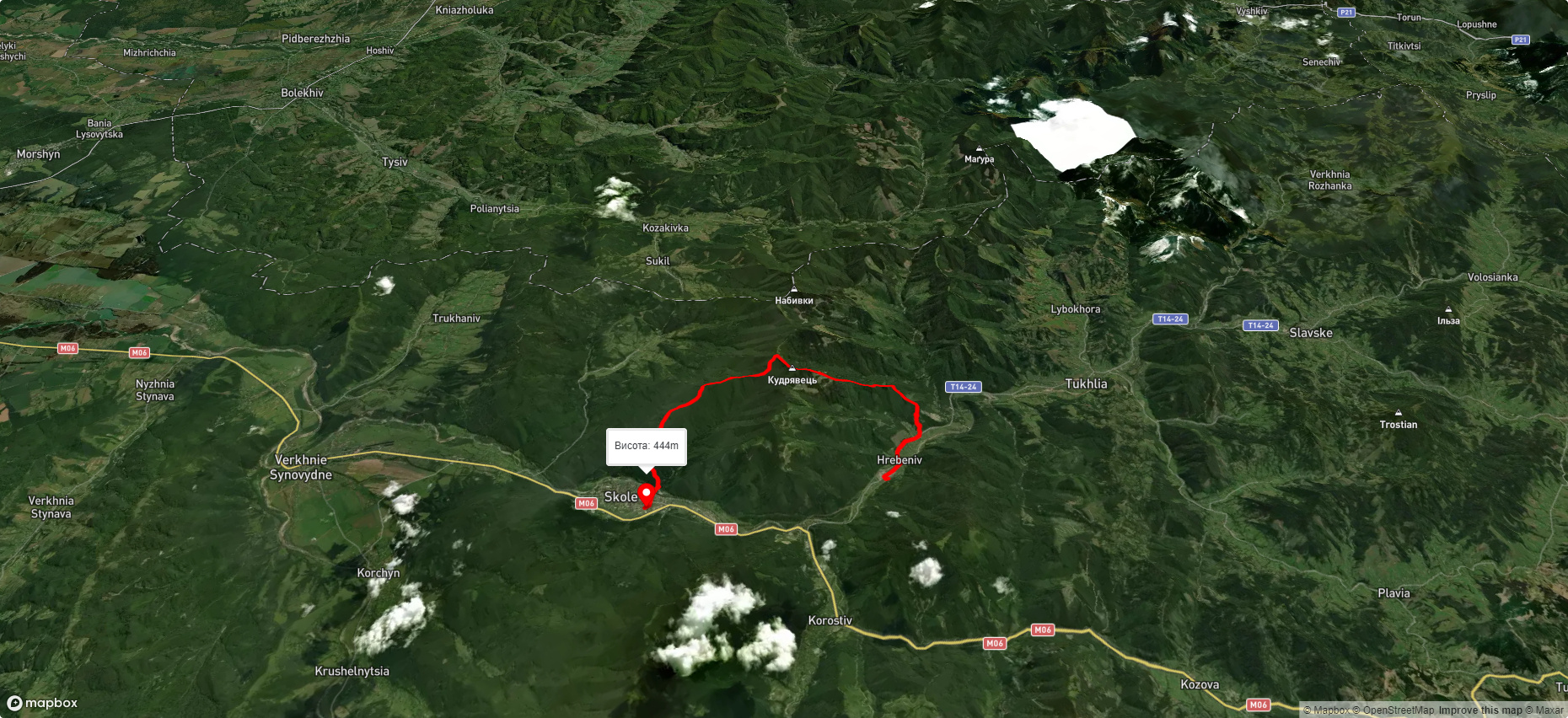
Які туристичні (пішохідні) маршрути проходять через/біля Crests?
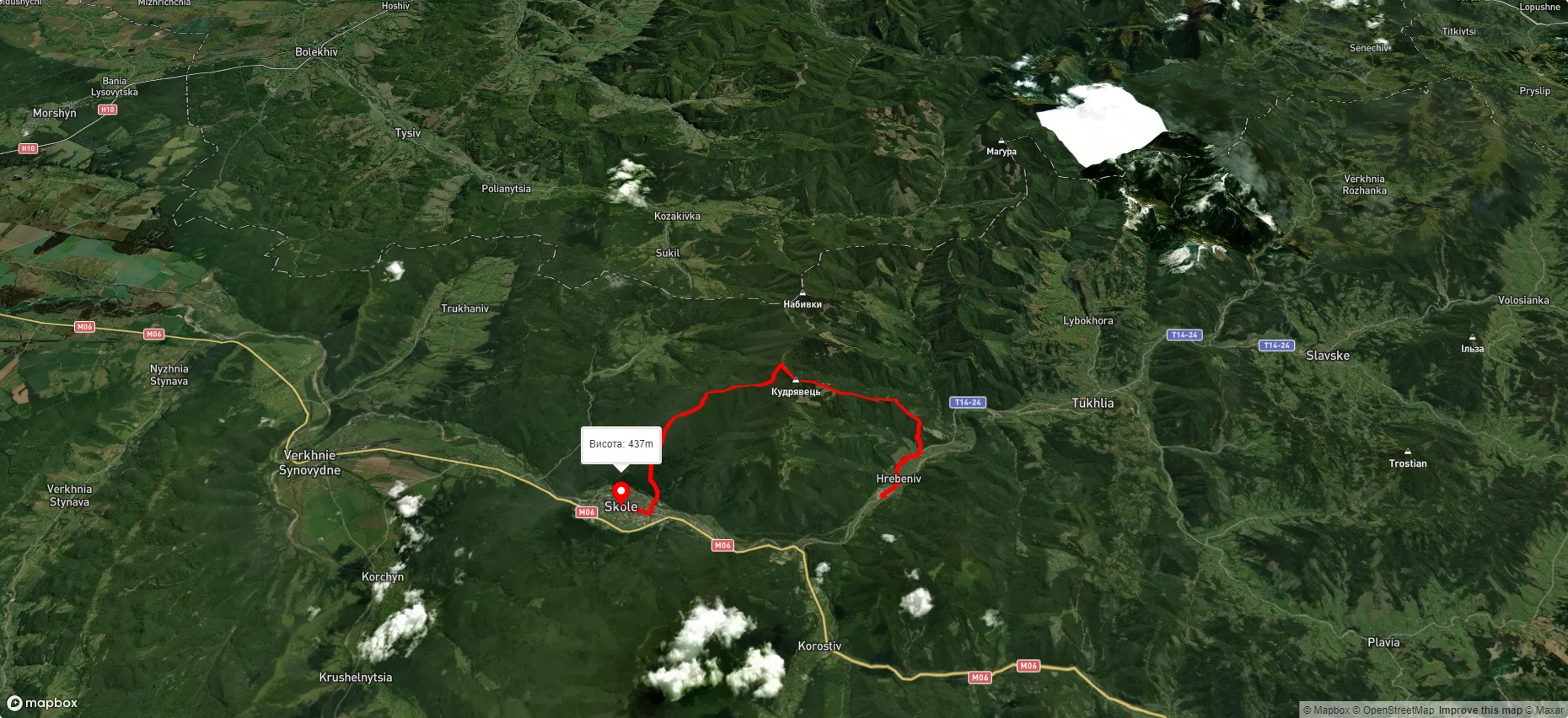
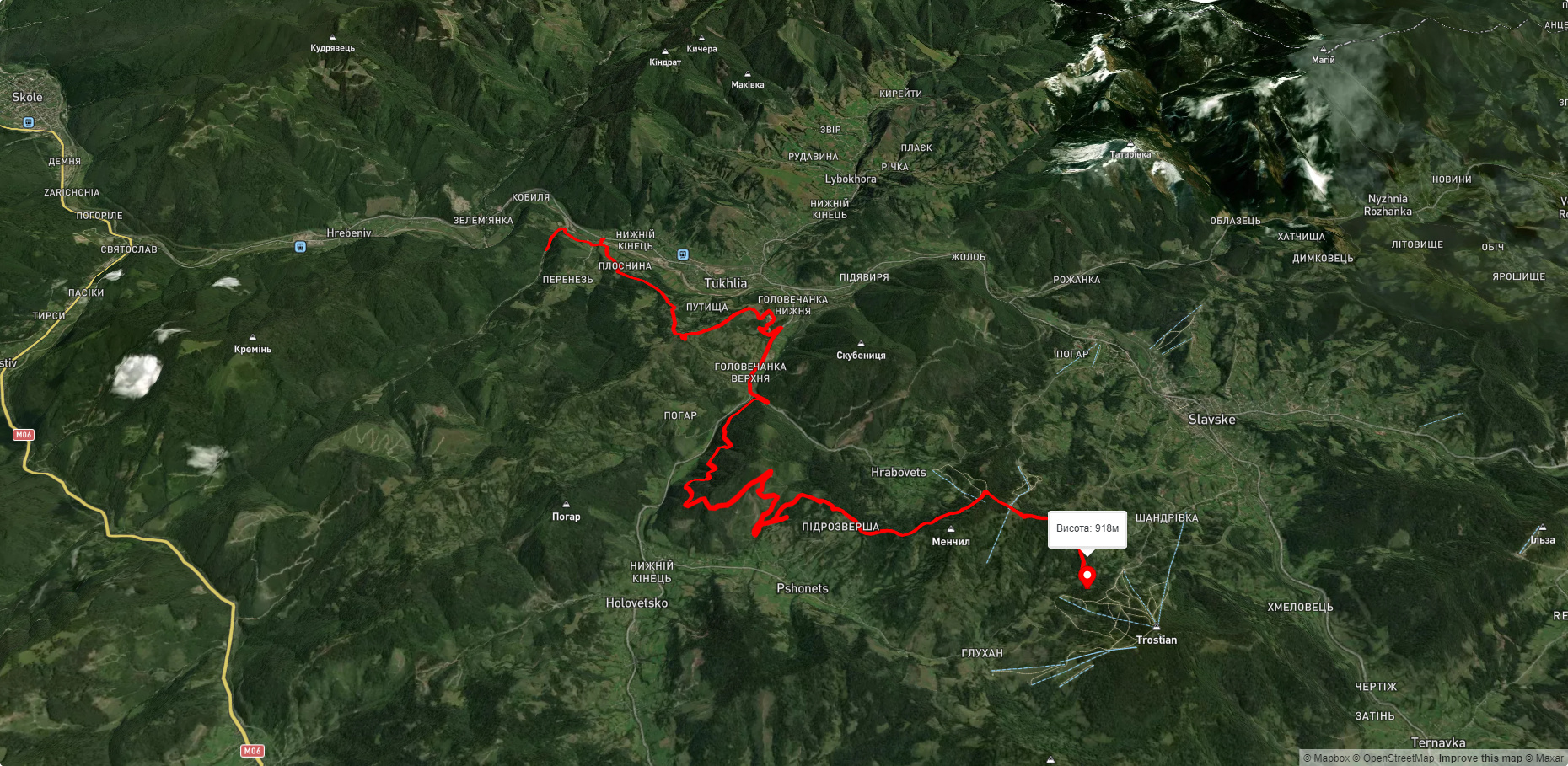
Пропонуємо пройти такі туристичні (пішохідні) маршрути через/біля Crests: с. Гребенів, через с. Кудрявець, с. Лопата до м. Сколе, с. Гребенів, через г. Кудрявeць, г. Лопата до м. Сколе, с. Тухля, через г. Маківка до смт. Славське, м. Сколе, через г. Кудрявець, г. Лопата до м. Сколе, м. Сколе, через г. Лопата, вдсп. Кам'янка до с. Дубина, м. Сколе – г. Лопата – м. Сколе