Church of St. Mary of the Snows, Lviv
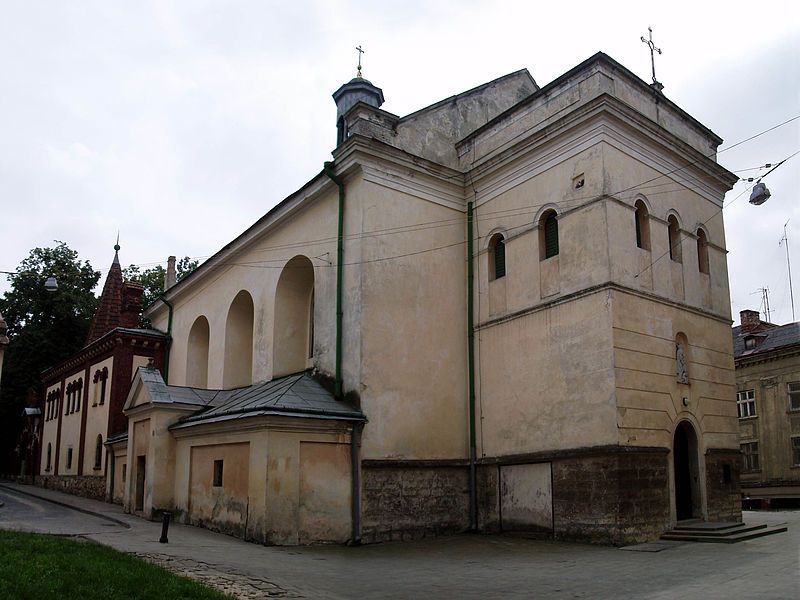
TheChurch of Our Lady of Perpetual Help is a Greek Catholic church in Lviv, at 2 Snizhna Street. The former Latin Church of the Blessed Virgin Mary of the Snows. It is one of the oldest churches in the city, built by German colonists in the XIV century on the site of an older wooden church from the XIII century. The first written mention dates back to 1352. The dedication of churches to Mary of the Snows has its origins in the story of the apparition of the Virgin Mary in Rome in 358, when she appeared to three people at once. The Virgin promised to give a childless couple a son, and in return the faithful were to build a church. Snow was supposed to be a sign of the place where the church was to be built.
It was first mentioned in 1344. A number of researchers suggest that the church was built in the 13th century. Volodymyr Vuytsyk believed that the church was originally made of wood, and in 1350 it was rebuilt of stone. It is known that in 1359 it already had the status of a parish church. A document from 1358 shows that the church had owned a mill on the Poltva for a very long time. This document confirms that the church had long existed at that time (possibly earlier than the time of its first mention in 1344).
According to Ivan Krypiakevych, it was the church of the Germans of Lviv, and the first parish of the Roman Catholic Church in the city operated under it. In 1415 the parish was moved to the Latin Cathedral, and the church became a branch church. One of the cathedral vicars and later canons took care of the church. In the XIV-XV centuries, Lviv was surrounded by a defensive wall, and the church, which was outside of it, was surrounded by its own 2-meter thick wall. There is almost no information about the interior decoration of that time. Only the transfer of the old pulpit from the cathedral in 1697 is known. There are mentions of some icons. The church was rebuilt twice after the fires of 1623 and 1683. In 1685, the newly arrived Spanish trinitarians applied to the magistrate with a request to transfer the abandoned church. However, the council and the chapter opposed the request, and the monks founded their own monastery in the city center. Archbishop Konstanty Lipski contributed to the reconstruction of the church.
In 1750-1751, Stanisław Stroinski made fresco paintings. Around the same time, the church was thoroughly re-equipped: six altars, pews for canons, prelates, and believers, and a confessional were installed, all in Baroque style. In 1763 Lviv and its suburbs were divided into six parishes, and the church became the center of one of them. The parish included the northern part of the Krakow suburbs, as well as the villages of Klepariv, Holosko, and Bryukhovychi. In 1775, the church was granted the status of a collegiate church, the third after Stanyslaviv and Zhovkva. The capital consisted of three canons and three prelates. However, in 1780, all colleges were liquidated by a decree of the emperor. In the same year, Archbishop Ferdinand Kicki consecrated the church anew. In the eighteenth century, a one-story organist's house was added to the north wall of the nave.
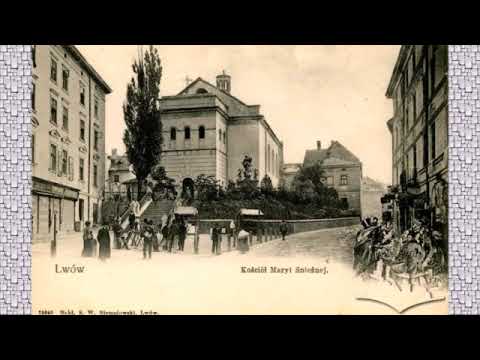
In 1888-1892, the church was reconstructed according to the design of Julian Zacharewicz. The wooden vault was replaced with a brick one, and a plebeiania with a low tower, its own separate entrance, and a fence from Snizhna Street was added. The outbuildings were made in the Neo-Romanesque style with unplastered brickwork. During the reconstruction, the old altars were removed and new ones were made, and Stroinsky's paintings were destroyed. The windows of the 1890 presbytery feature stained-glass windows by the Tiroler Glasmalerei und Mozaik Anstalt company. The metal grilles at the main entrance were made by Jan Daszek's company according to Zacharewicz's design. The choir has an organ by the Lviv company of Jan Sliwinski. Externally, it was decorated in a neo-Gothic case, had two manuals, and 14 registers (7 in the first manual, 3 in the second, and 4 in the pedal). On April 9, 1891, Jan Sliwinski personally tested the organ, followed by invited musicians in the presence of members of the city council and music lovers. Experts noted that the instrument, like a piano, allowed performing compositions at a fast pace. In 1893, the painter Edward Lepshy created 7 paintings in the Neo-Gothic style that imitated mosaics. The subjects are taken from the Gospel: "The Meeting of Mary and Elizabeth," "The Annunciation," "The Presentation of the Gifts of the Three Kings to the Child," "The Flight to Egypt," "The Presentation," "Jesus Teaching in the Temple," and "The Pieta." During the First World War, the church was not damaged, but in 1916 the Austrian authorities requisitioned three of the four bells for military use. The restoration of the church and the plebeian was carried out in 1929 with the participation of Witold Rawski and Michał Łuzhetski.
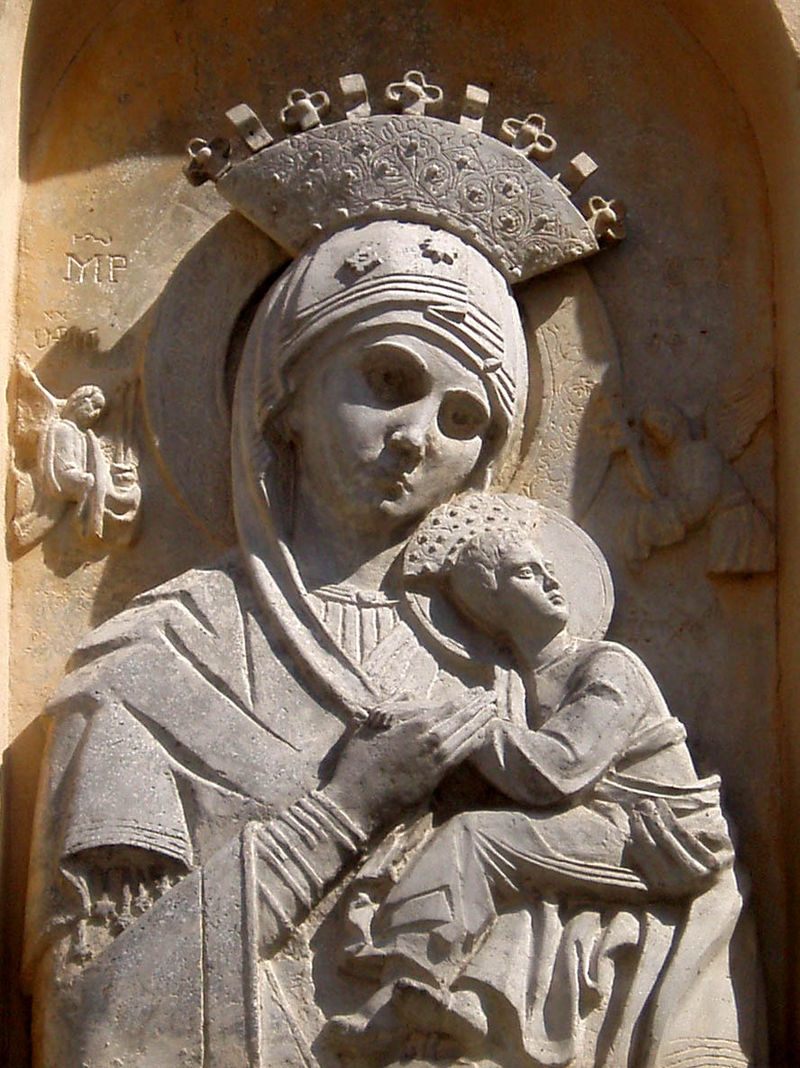
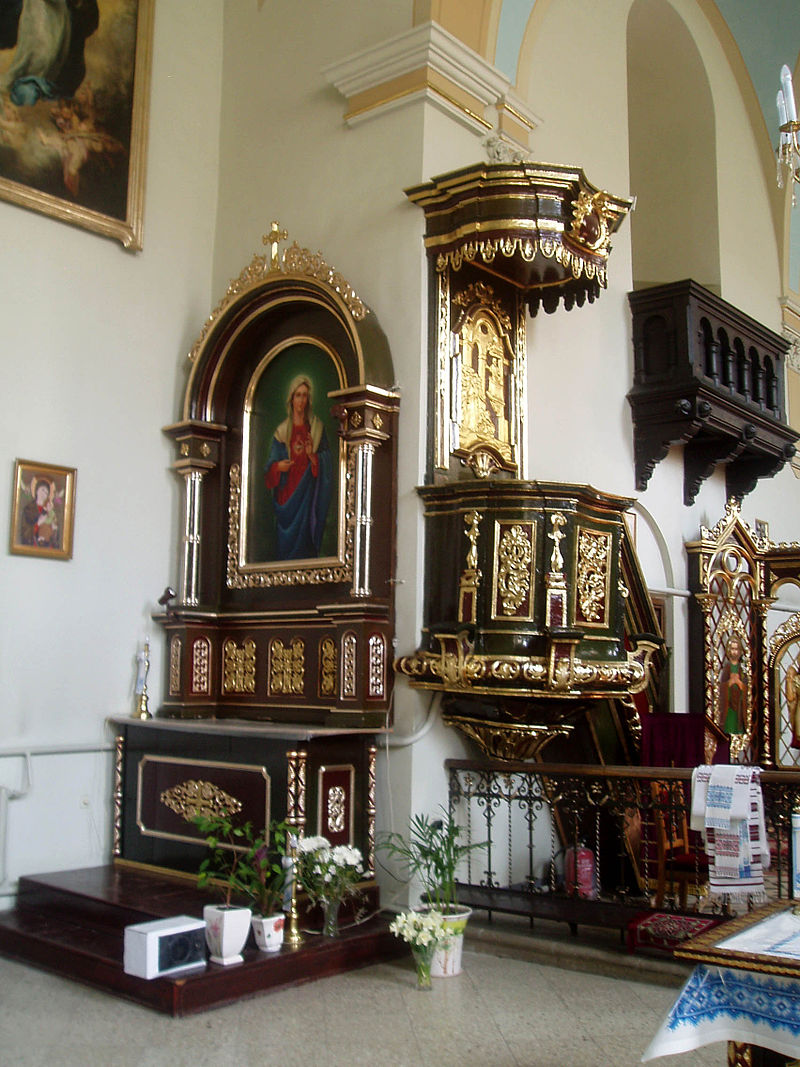
After World War II, the church continued to function. On April 12, 1951, it was closed and the parish was liquidated. Part of the interior decoration was destroyed, and part of it was transferred to other churches, as well as to the Museum of Religion and Atheism and the Historical Museum. A warehouse was organized in the church. In the 1960s, the sculpture of the Mother of God that stood in front of the entrance (originally from the missionary monastery in the Zhovkva suburbs) was destroyed. A number of art historians (in particular, Zbigniew Hornung[a]; Jan Juliusz Ostrowski does not exclude his attribution) attribute it to John George Pinsel. Attached to the walls of the church are the wire stretches of the electric line of the tram launched on Gonty Street in 1950. As a result, eight years later it was necessary to inspect and strengthen the foundations, walls, and repair the roof. Since 1988, the museum of photography has been located here. In 1995, the church was transferred to the Redemptorists of the Ukrainian Greek Catholic Church and consecrated as the Church of Our Lady of Perpetual Help. The church was renovated. The main altar was restored, and two side altars and an iconostasis were created. A relief depicting the Mother of God of Perpetual Help was installed on the facade above the entrance. A nineteenth-century icon (image) of the Mother of God's Ascent to Heavenly Glory, which was located here before World War II, was returned from the Transfiguration Church.
Thechurch is located on a hill and is oriented on the east-west axis with an entrance from the east. The main façade faces Zvenyhorodska Square, and a staircase on the axis with the main entrance leads from Zvenyhorodska Square down to Prince Yaroslav Osmomysl Square. On the north side, Snizhna Street runs close to the building. From the south, a small area near the church is bounded by Honty (formerly Kostelna) Street, which runs well below the level of the church. From the side of this street, the site is fortified with a reinforced concrete wall with piles.
The church is built of brick on a stone foundation. The walls are two meters thick. The plan is simple, single-nave, basilica-type with an elongated presbytery and a triangular abbey. The nave is adjoined by a square, two-tiered narthex, which may be a remnant of an ancient, later dismantled tower. The nave has a cylindrical vault with a cavity. The vault is divided by arches into three strands. The first arch of the nave is occupied by a brick emporium with a wooden balustrade. The emporium is supported by a triple semicircular arcade. On each side of the nave there are 3 windows with semicircular finials. The presbytery is three-stranded, slightly lower than the nave. A two-story plebeian was added to the north and east, which covered two windows of the presbytery, resulting in two decorative wooden balconies opening into the interior in the places of the former windows. A one-story former organist's house is attached to the nave from the north along almost the entire length of the nave. The roof over the nave and presbytery is gable, the roof over the abbey is faceted, and there is a high signaling tower above the nave.
The churchcan be reached by private car via the highways M06 (E40) (Kyiv - Zhytomyr - Novohrad-Volynskyi - Lviv - Stryi), M09 (E372) (Rava-Ruska - Zhovkva - Lviv), M12 (Ternopil - Lviv), M11 (E40) (Przemysl - Horodok - Lviv), M10 (Radymno - Yavoriv - Novoyavorivske - Lviv). In the city, follow Lychakivska, Volodymyr Vynnychenko, Maksym Kryvonos, and Ivan Honta streets to the Church of St. Mary the Virgin.
By public transport by rail to Lviv, and then to the city center to the Teatralna stop, from which it is one block down Ivan Honty Street to the Church of Our Lady of Perpetual Help.