Banking Quarter, Ivano-Frankivsk
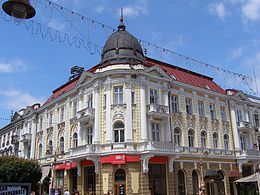
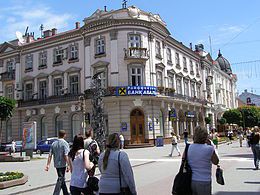
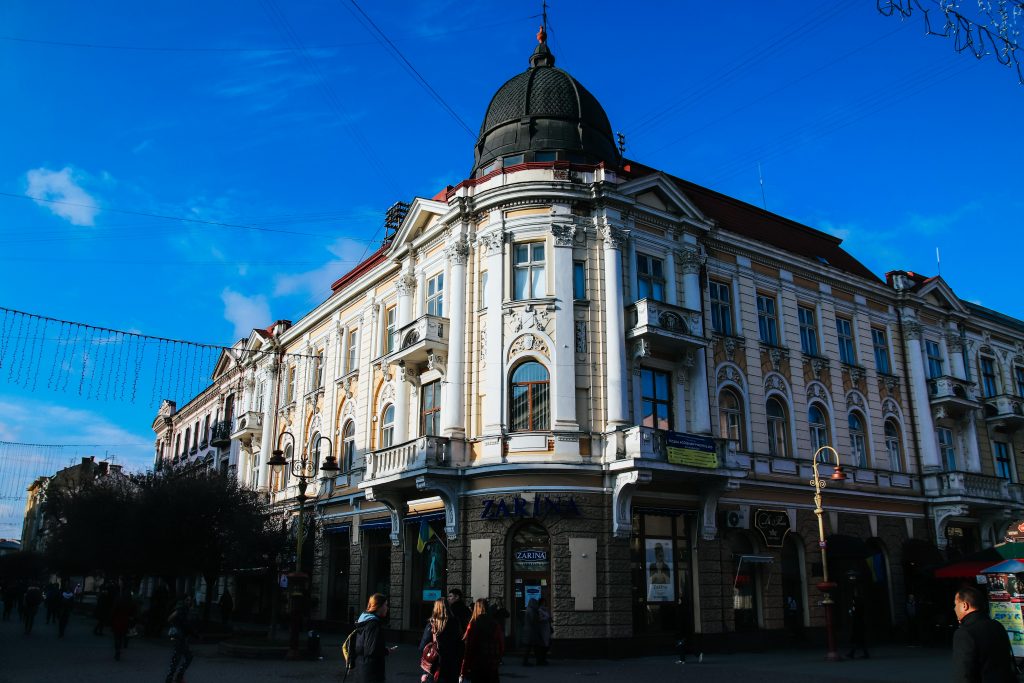
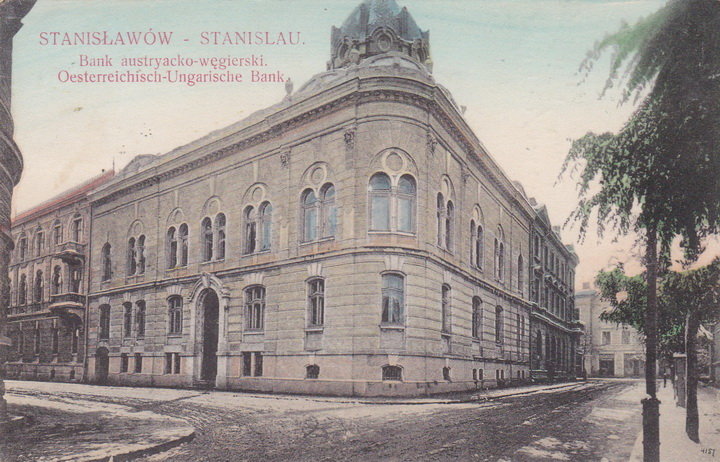
An interesting architectural monument called the Banking Quarter can be seen in the center of Ivano-Frankivsk. As it turns out, Banking Quarters can be found not only in Frankfurt, Geneva, or Zurich, but also in Ukraine.
The building is formed by four houses that are tightly adjacent to each other in the shape of a square. These houses can be considered one of the city's business cards.
In the very center of the city, on the famous Stometrivka street , a plot of land had been empty for a long time, probably just waiting for its architect. Finally, in 1896, construction began on a coffee shop commissioned by restaurateur Heinrich Bass. It was the first of four buildings that formed the Banking Quarter of old Stanislaviv.
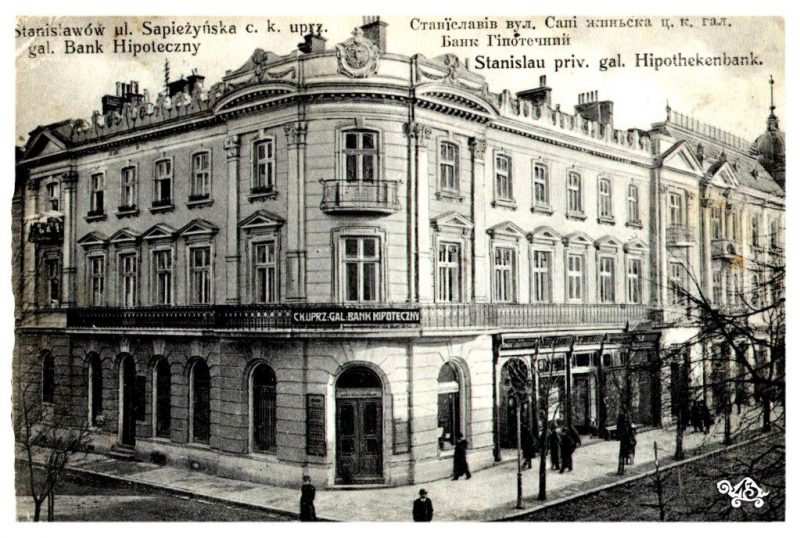
Behind the elegant arcade on the ground floor was the Union coffee shop, which was very popular with the townspeople until 1912, when the old confectioner died and the building was sold to a mortgage bank. It was renovated and the second floor was decorated with an openwork balcony. It is in the form of a mortgage bank that you can see this house on old postcards. Subsequently, branches of various banks were located in the Bass house, and today it is Raiffeisen Bank Aval.
A little further on Stometrivka is the so-called Leon Graver House, built by engineer Jan Kudelski in 1905. The building housed residential apartments, and on the ground floor there were businesses, including a shop of the famous Singer sewing machines, a pharmacy, a porcelain and glass shop, and a hairdresser's shop that Frankivsk residents can still remember. Today, the main department of architecture and urban planning is located here, as well as the Life:) customer service center.
In the same year, 1905, thebuilding of the Austro-Hungarian Bank was erected on the corner of the modern Hrushevskoho Street. The newspapers of the time did not fail to mention this outstanding event. "Kuryer Stanisławowski" wrote that "the newly built building of the Austro-Hungarian Bank branch is a decoration of the city. Its creator, Jan Kudelski, can be proud of the work of his hands and talent."
With the change of states, the institutions that occupied the building changed at different times: after the Austro-Hungarian bank, a Polish bank, then the USSR state bank, and the National Bank of Ukraine. In 2003, the building was sold to Raiffeisen Bank Aval. In a strange way, history returned to where it began: an Austrian bank started and an Austrian bank ended.
And next door, at the corner of modern streets. Hrushevskoho and Shashkevych streets in 1907, a beautiful three-story townhouse appeared , built by doctor Apolinariy Liakhavets. Although this building has never housed any financial institutions, it completed and formed the Banking Quarter in Ivano-Frankivsk, and is considered one of the city's architectural gems for good reason. Today, some of the bank offices are located here.
It is not for nothing that the quarter is called the banking quarter.
Since Ivano-Frankivsk's Banking Quarter was built in the late 19th and early 20th centuries, its architecture is dominated by modern and eclectic style. For example, the bank and Graver's house are topped with rounded domes and decorated with sharp-angled roof windows.
The former Austro-Hungarian Bank is a unique building in the city. It is interesting that experts find Renaissance features in its architecture: shutters, columns, and decorative ornaments resemble a Renaissance palace.
The buildings are in good condition, except for a bit of peeling plaster. Although, like all historic buildings in Ukrainian cities, the Banking Quarter has a problem with plastic windows and shop windows. Brightly colored advertising signs also create a certain dissonance in the appearance of the buildings.
It is the Banking Quarter that is home to the oldest bookstore in Ivano-Frankivsk. It was opened in 1912 on the ground floor of the Bass House. Later, the store was bought by the famous publisher Myroslav Samoverskyi, who founded the Ukrainian Bookstore in the building during the German rule. After the war, the tradition continued, and the Bukynist store, which was opened in Soviet times, operated until recently.
On the second or third floors of the townhouses, there were usually residential apartments. But the Austro-Hungarian Bank had an operating room on the second floor. Below it, on the first floor, the bank director lived. There were also apartments for the deputy director, courier, and watchman.
It turns out that Graver's house was planned as a modern building with four floors, electricity, and an elevator. But then everything happened in the best traditions of modern construction companies, when they promise one thing and deliver something completely different. Thus, Graver built only three floors, and without an elevator. However, instead of gas lamps, electricity was installed, and thus this is the first residential building in Ivano-Frankivsk with electric lighting.
For some time, Dr. Liakhavets's house symbolically housed a dental "studio" and a café-confectionery. In Soviet times, a popular cafe called Troianda operated here.
The banking quarter is located in the very center of Ivano-Frankivsk. You can easily see it on the right side if you walk down Nezalezhnosti Street towards Vicheva Square. Or from the railway station by bus #60 and walk for a minute.
Location on the map
Comments
Places to stay nearby
All stays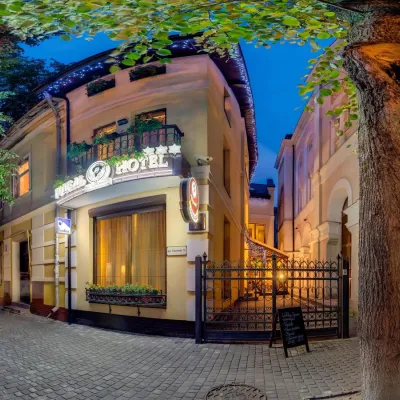 HotelHotel "Pid Templ'em" Ivano-FrankivskIvano-Frankivskunder 1 km from Banking Quarter, Ivano-FrankivskWi‑FiNearby: Potocki Castle 300 mCity Lake 1.7 km
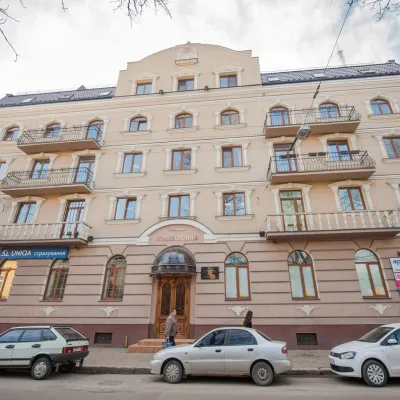 HotelHotel "Stanisławów" Ivano-FrankivskIvano-Frankivskunder 1 km from Banking Quarter, Ivano-FrankivskBreakfastWi‑FiNearby: Potocki Castle 700 mCity Lake 1.3 km
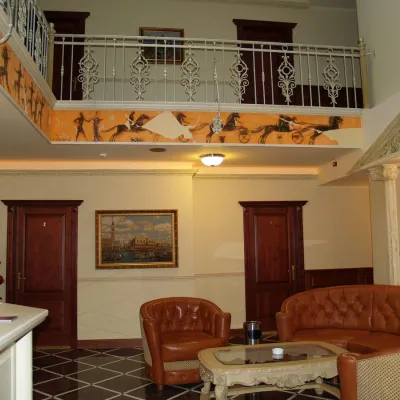 HotelHotel "Atrium" Ivano-FrankivskIvano-Frankivskunder 1 km from Banking Quarter, Ivano-FrankivskBreakfastParkingWi‑FiNearby: Potocki Castle 200 mCity Lake 1.7 km
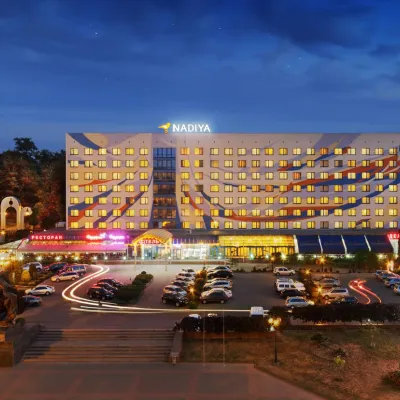 HotelHotel "Nadiya" Ivano-FrankivskIvano-Frankivskunder 1 km from Banking Quarter, Ivano-FrankivskSPABreakfastBBQNearby: Potocki Castle 800 mCity Lake 1.9 km
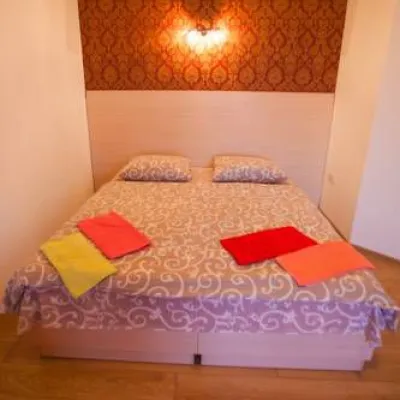 HotelApartments "Yak vdoma na Zaliznychniy" Ivano-FrankivskIvano-Frankivskunder 1 km from Banking Quarter, Ivano-FrankivskParkingWi‑FiNearby: Potocki Castle 800 mCity Lake 2.6 km
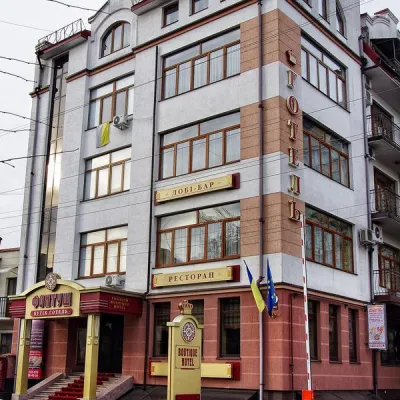 HotelBoutique Hotel "Fontush" Ivano-FrankivskIvano-Frankivsk1 km from Banking Quarter, Ivano-FrankivskKitchenParkingWi‑FiNearby: City Lake 700 mPotocki Castle 1.5 km
Nearby attractions
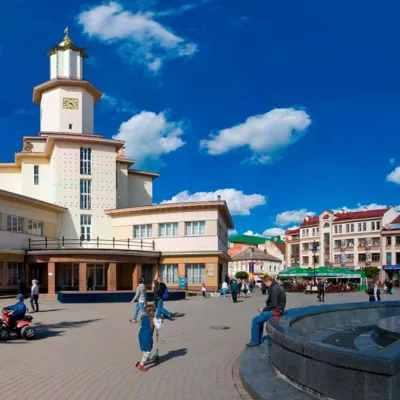 MuseumIvano-Frankivsk Museum of Local LoreIvano-Frankivskunder 1 km from Banking Quarter, Ivano-FrankivskThe most common way to get to know Ivano-Frankivsk is from its central part, where one of the city's most magnificent buildings, the Town Hall, which houses the Ivano...
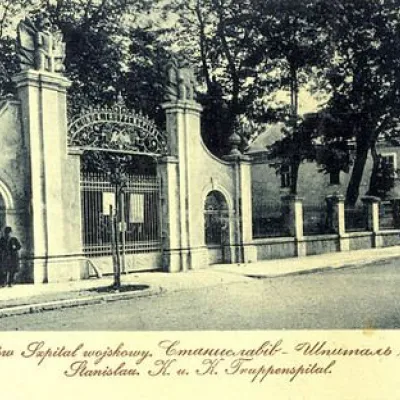 CastlePotocki Castle, Ivano-FrankivskIvano-Frankivskunder 1 km from Banking Quarter, Ivano-FrankivskThePotocki Palace is an architectural and urban planning monument of historical significance in the city of Ivano-Frankivsk.
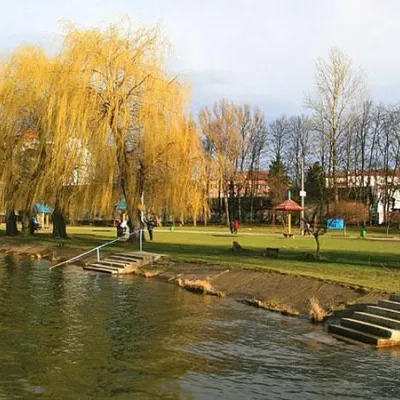 LakeCity Lake, Ivano-FrankivskIvano-Frankivsk1.6 km from Banking Quarter, Ivano-FrankivskThe City Lake(also known as the StanislavskeSea ) is the largest artificial lake (pond) in the city of Ivano-Frankivsk.
Craft nearby
All craft places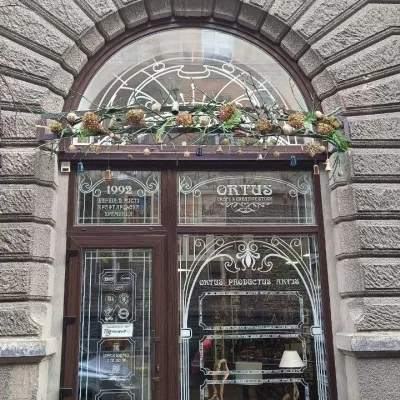 Craft shopsOrtus craft and souvenir shop, Ivano-FrankivskIvano-Frankivskunder 1 km from Banking Quarter, Ivano-FrankivskOrtus is a small but densely packed shop of craft products and souvenirs in the very heart of Ivano-Frankivsk, at 9 Mykhaila Hrushevskoho Street.
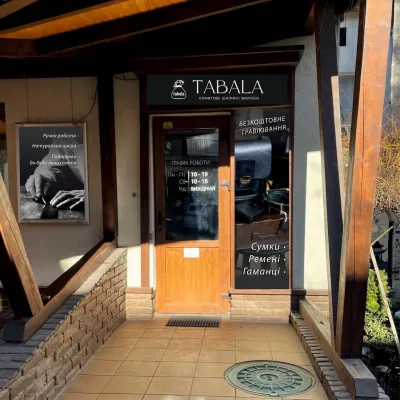 Craft shopsTABALA handmade leather workshop-shop, Ivano-FrankivskIvano-Frankivskunder 1 km from Banking Quarter, Ivano-FrankivskTABALA is a tiny workshop-shop of craft leather goods in central Ivano-Frankivsk, at 37 Nezalezhnosti Street.
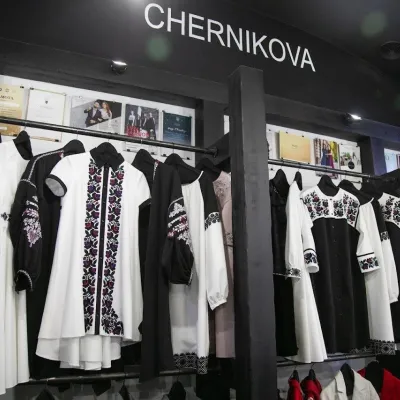 Craft shopsCHERNIKOVA designer ethno-fashion shop, Ivano-FrankivskIvano-Frankivskunder 1 km from Banking Quarter, Ivano-FrankivskCHERNIKOVA is the shop of Ukrainian designer clothing by Ivano-Frankivsk designer Liubov (Liubtsia) Chernikova, located in the Bastion fortress gallery in the very...
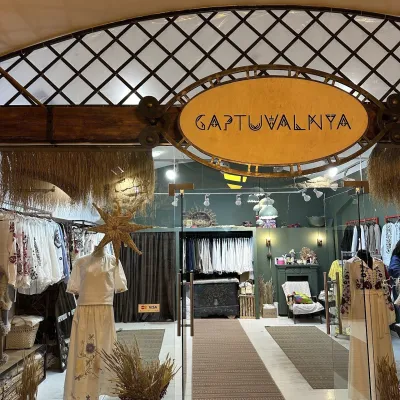 Craft shopsGaptuvalnya embroidered-fashion store, Ivano-FrankivskIvano-Frankivskunder 1 km from Banking Quarter, Ivano-FrankivskGaptuvalnya is a Ukrainian brand of embroidered clothing whose flagship store is in the Bastion gallery in Ivano-Frankivsk.
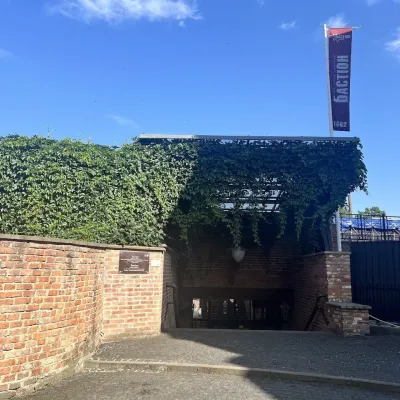 Craft shopsBastion Fortress Gallery – Ukrainian makers’ shops, Ivano-FrankivskIvano-Frankivskunder 1 km from Banking Quarter, Ivano-FrankivskThe Bastion Fortress Gallery is one of the most atmospheric places in Ivano-Frankivsk for an unhurried walk and for finding gifts made in Ukraine.
 Theme parksUnderhill Earth History Park, PidhiriaPidhiria21 km from Banking Quarter, Ivano-FrankivskUnderhill Earth History Park is a large open-air theme park in the village of Pidhiria near Bohorodchany, about 25 km from Ivano-Frankivsk, right at the foot of the...