Armenian Church, Ivano-Frankivsk
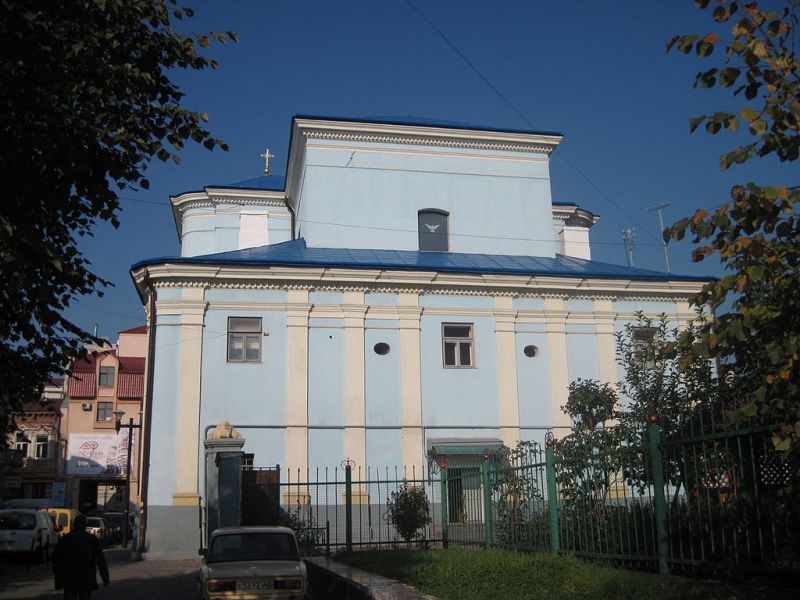
The Armenian Church or Armenian Church of the Immaculate Conception of the Most Holy Virgin Mary (popularly called the "Blue Church") is an architectural monument of national importance (Armenian architecture) in the city of Ivano-Frankivsk. Today it is the Cathedral of the Intercession of the Blessed Virgin Mary of the Ivano-Frankivsk Diocese of the Orthodox Church of Ukraine. The church is located in the very center of Ivano-Frankivsk near Rynok Square at 6 Virmenska Street.
Historical literature continues to debate whether this sacred building should be called a church or a church. The Armenian Apostolic Church is one of the oldest in Europe. It is a special religious branch that belongs neither to Orthodoxy nor to Catholicism. In the middle of the seventeenth century, the Armenian Archbishop of Lviv accepted the union with Rome. Based on this, some historians call all Armenian buildings in western Ukraine churches.
Jan K. Ostrowski states that Z. Hornung hypothesizes that the author of the Armenian Church project could have been Johann (A.) Schilzer (Schultzer).
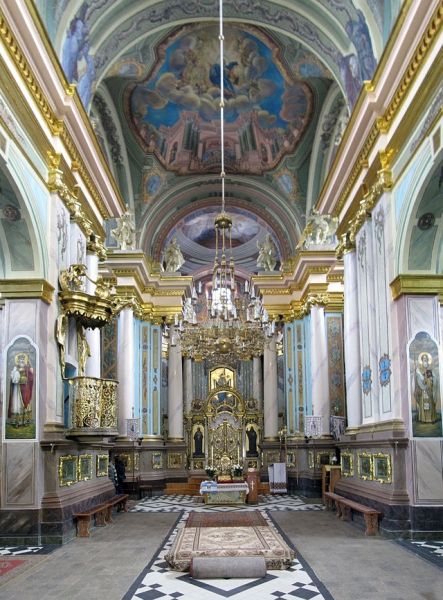
The Armenian Church is basically an example of the Baroque style. The church is a brick, three-nave basilica with a transept. The middle nave and the transept are of the same height, the side naves (at present) are much lower. The main façade is concave with a triangular pediment, flanked by two round towers. The building is divided along the perimeter by Ionic pilasters and crowned with a cornice.
The church is covered by a semicircular vault with arches, the central volume is covered by a dome without a drum, which rests on support pillars with the help of supporting arches and sails.
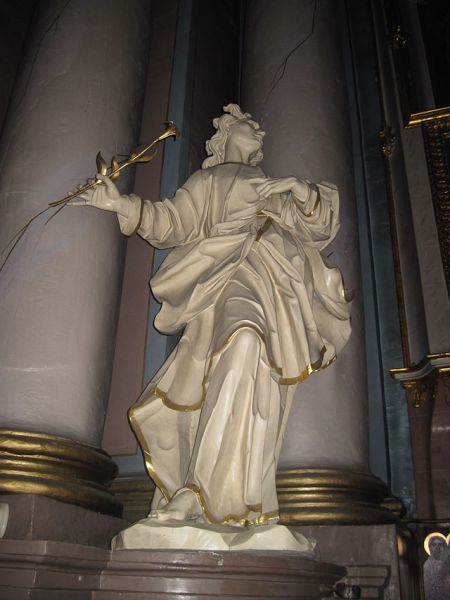
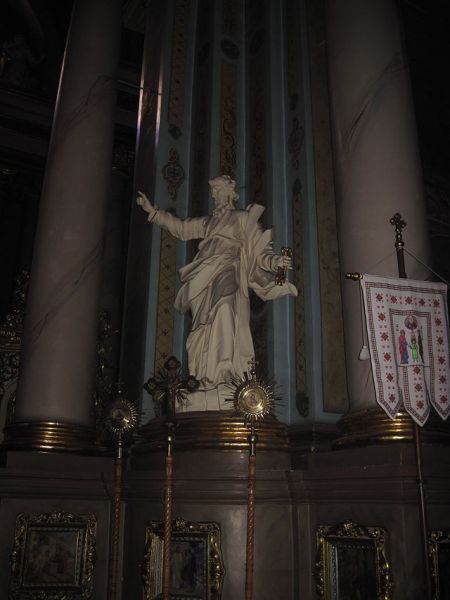
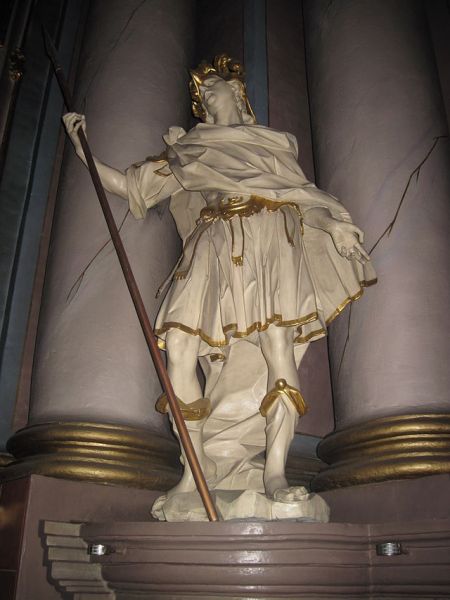
The interior of the church was decorated in the Ionic order, as well as with a wooden sculpture apparently belonging to the carver M. Polejowski, and frescoes on the walls by Jan Solecki, placed on the cornice of the central altar and transept. The altar plate Khachkar, made in the Armenian style, which is located in the center of the altar, attracts attention.
On June 17, 1700, the Armenian Church was consecrated by Lviv Archbishop Deodat Nersesovych.
The first known reconstructions were carried out in 1811 and 1829. During a fire in 1868, the building was severely damaged. After an unsuccessful restoration in 1869, its appearance changed significantly. The two round towers flanking the main façade were made lower, two entrances were walled in, and the Baroque silhouette helmets that completed them became bell-shaped. The appearance of the pediment changed, the small tower that crowned the roof disappeared, rectangular windows appeared instead of a row of semicircular windows, and their Baroque framing was eliminated. The entrances to the underground crypts that held the remains of prominent Armenians were also bricked up.
Another restoration of the church was carried out in 1919-30. In particular, the portal was reconstructed, and a stone fence with gates was erected according to the design of architect S. Treli.
The church was built in the mature Baroque style. It looks like a brick three-nave basilica with a transept. The interior mural was painted by J. Solecki, a follower of the 18th-century monumentalist S. Stroinskyi. S. Stroinsky. The transept paintings are dominated by multi-figure scenes in a landscape setting with elements of Baroque architecture, draperies, and cartouches. The mural is made using the "dry fresco" technique.
For centuries, the church has been famous for its miraculous image of the Blessed Virgin Mary, which dates back to the 17th century. It was one of the most famous in the Polish state, along with the images of Our Lady of Czestochowa and Ostrobramska. The last rector took the image to Poland in 1944, and it is now housed in the Peter and Paul Cathedral in Gdańsk. A copy of the image is installed on the church's steeple.
During the reign of communist atheism, the church was closed in the 1960s and used as an art studio. In 1962-65, a dissident artist, future winner of the Taras Shevchenko State Prize of Ukraine, Opanas Zalyvakha (1925-2007), lived in the rear rooms and was arrested here. After renovations in 1970, a museum of the history of religion and atheism was opened in the church. In 1990, the church was returned to the faithful. Today it is the Holy Intercession Cathedral of the Ukrainian Autocephalous Orthodox Church.
To the right of the entrance, on December 13, 1999, a memorial plaque to Mstyslav (real name: Stepan Skrypnyk; 1898-1993), Patriarch of the UAOC, church and public figure, nephew of S. Petliura, was unveiled and consecrated.
In fact, there is no square of this name in the city. The UAOC diocese appealed to the city executive committee to name the square in front of the church after Mstyslav, but due to its small size, the proposal was not accepted.
Since the founding of Stanyslaviv, the Armenian community has had a great influence on its life. The Armenians owned an entire city block, where they built their first wooden church in 1663-1664.
Soon the church got its own miraculous icon. Dominik, the clerk of the Armenian community in Stanislaviv, ordered a copy of the Czestochowa icon of the Mother of God from a 70-year-old iconographer named Daniel. This image hung in his home and he often prayed before it. Dominik's eyesight was very poor, but over time his vision was fully restored. The painter attributed this to the miraculous power of the image and gave it to the church.
Already in the church, on August 22, 1742, the Mother of God "wept real tears." On the same day, in the presence of a large gathering of people, the service began, which lasted 44 hours. After that, the image became famous for many miracles. People were cured of epilepsy, blindness, arthritis, and many other diseases. In honor of the appearance of the miraculous image, on the initiative of the Armenian brotherhood, it was decided to build a stone building of a majestic church. Today there is a copy of this icon on the steeple of the church.
The owner of the city was the great crown hetman Józef Potocki:
- On May 28, 1743, he solemnly laid the cornerstone of the future stone Armenian church with a carved inscription: "Thrice blessed to the Most Holy Mother of God, stone, city, and soul together under the feet of a virgin."
- On June 24, 1748, he issued a charter for the church and affixed its seal.
However, the money was not enough and the walls began to be erected only five years later. In order to speed up the construction, Józef Potocki issued a universal decree, according to which the Jewish community had to pay 1000 zlotys annually for the construction of the Armenian church until its completion. Thus, for 15 years, the Jews financed the construction of the main temple of their fierce competitors in the Handel business. The Armenians were in no hurry to complete the construction work, and the church was consecrated on August 22, 1763.
The ceremony was attended by Lviv Armenian Archbishop Jacob Stefan Augustynovych, who called the new building the Church of the Immaculate Conception of the Most Holy Virgin Mary. The murals were painted by the famous Polish artist Jan Solecki. The altars were decorated with magnificent figures of saints by the sculptor Matvii Poleiovskyi. However, even after the construction, there was a lack of funds - the church stood without exterior plaster until 1800.
The late eighteenth and early nineteenth centuries were a time of hardship for the city's Armenian community. Its number still did not exceed 500 people, and after the mass emigration of Armenians to Hungary, there were very few Armenians left. Due to the lack of parishioners, the Armenian church quickly fell into disrepair and remained closed for 1811-26. Things went better under the pastor Antony Borkowski, who resumed services and carried out a partial restoration (1829). It is worth mentioning that in 1803 the Armenian Brotherhood of St. Gregory deposited 69,808 zlotys in a Lviv bank. The annual interest was 175 zlotys, and this amount was enough to pay the priest's salary.
During the famous "Marmulade Fire" (1868), the Armenian Church burned down. Many residents of Stanyslaviv of different faiths and nationalities contributed to its restoration. In 1870, the restoration was completed, but the building changed its appearance somewhat. The two side towers became much lower, the signature disappeared, and the shape of the domes changed: the baroque silhouette helmets were replaced by bell-shaped domes; the pediment also became different in configuration, and the small tower that crowned the roof disappeared.
During the First World War, a Russian artillery battery was encamped in the churchyard. The Germans spotted where the fire was coming from and covered the area with their guns. As a result, the facade of the church was damaged, and the ceiling was pierced in many places.
After the First World War, the parish priest Franciszek Komusiewicz managed to get the government to recognize the church as a historical and architectural monument and managed to secure funds for restoration. During the restoration work, the roof was covered with galvanized tin and the domes with copper. The frescoes and altar sculptures were also restored. The marble and alabaster figures were made in the workshop of Marian Antoniak, who was a well-known sculptor of tombstones. The technical supervisor of the restoration work was the "father" of the Stanislavivska Town Hall, architect Stanislav Trelya. In general, these restoration works lasted from 1919 to 1930.
On May 30, 1937, the coronation of the Miraculous Image of the Mother of God took place. The ceremony was attended by the primate of Poland, Cardinal Głąd, and 17 bishops representing the Roman Catholic, Greek Catholic, and Armenian churches.
In May 1946, many Poles and Polonized Armenians left Ukraine. They took with them to Poland the Miraculous Image, which is now in the Church of Saints Peter and Paul in Gdańsk. The "orphaned" church building was given to the Russian Orthodox Church, which stayed there until the late 1940s. After that, artists' workshops were located there. It was here that a statue of the Motherland was made for the Soviet soldiers' mass grave on Lepkoho Street.
Between 1962 and 1965, the famous artist Opanas Zalyvakha lived in the church.
Since 1971, the church has had a new "owner", the Museum of Religion and Atheism, for which the monument was partially renovated and adapted to the needs of the museum. Its exposition included many interesting exhibits, and the "basement of the Inquisition" was especially luxurious, probably not inferior to the Museum of Torture in Kamianets-Podilskyi.
A little later, the area in front of the church-museum was "decorated" with a rocket, which, according to the guidebook of the time, "symbolized the eternal desire of mankind for knowledge, for light, for happiness." There were even rumors in the city that it was a real rocket module that astronauts used to train on, although in reality it was just a model made at a locomotive repair plant. What the Soviet government really intended to "symbolize" with this model is unknown, but the rocket was a well-known place in the city because of the draft beer shop that did a brisk trade near the rocket year after year. When the building regained the status of a religious building (1990), the rocket was taken to the backyard of an industrial enterprise, where it became scrap in the open air.
In 1990, the building was transferred to the Russian Orthodox Church, but in 1990 its rector, Fr. Stepan Abramchuk, moved to the Ukrainian Autocephalous Orthodox Church. At the same time, the church received the official name of the Intercession Cathedral of the UAOC. The new owners repainted the church blue, the heraldic color of the Mother of God.
In 2008, a scandal broke out involving the Armenian Church. The church was undergoing restoration at the time, and the media reported that craftsmen were painting over the frescoes of Jan Soletsky.
In 2010, the restoration of the Armenian Church was completed. Anyone can enter the church and compare the preserved old murals with the restored ones.
Location on the map
Comments
Places to stay nearby
All stays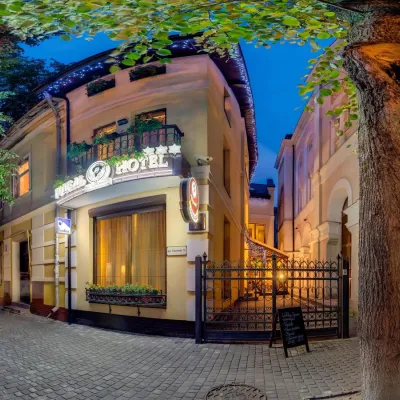 HotelHotel "Pid Templ'em" Ivano-FrankivskIvano-Frankivskunder 1 km from Armenian Church, Ivano-FrankivskWi‑FiNearby: Potocki Castle 300 mCity Lake 1.7 km
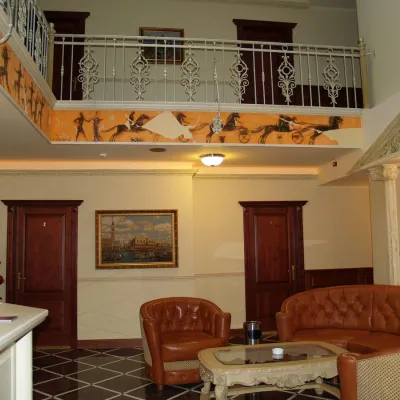 HotelHotel "Atrium" Ivano-FrankivskIvano-Frankivskunder 1 km from Armenian Church, Ivano-FrankivskBreakfastParkingWi‑FiNearby: Potocki Castle 200 mCity Lake 1.7 km
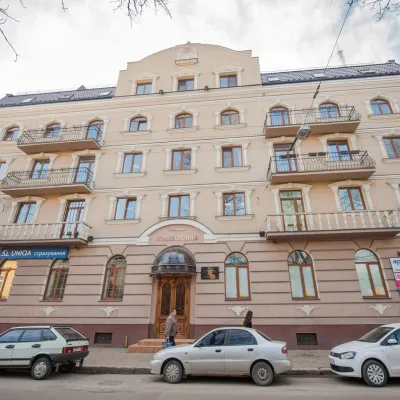 HotelHotel "Stanisławów" Ivano-FrankivskIvano-Frankivskunder 1 km from Armenian Church, Ivano-FrankivskBreakfastWi‑FiNearby: Potocki Castle 700 mCity Lake 1.3 km
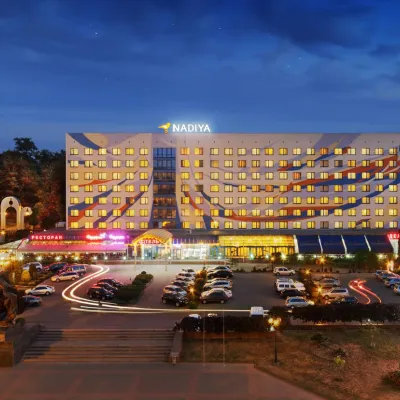 HotelHotel "Nadiya" Ivano-FrankivskIvano-Frankivskunder 1 km from Armenian Church, Ivano-FrankivskSPABreakfastBBQNearby: Potocki Castle 800 mCity Lake 1.9 km
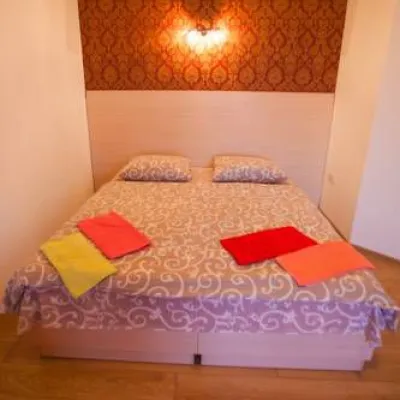 HotelApartments "Yak vdoma na Zaliznychniy" Ivano-FrankivskIvano-Frankivskunder 1 km from Armenian Church, Ivano-FrankivskParkingWi‑FiNearby: Potocki Castle 800 mCity Lake 2.6 km
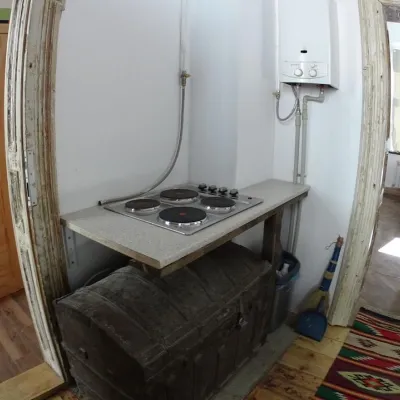 HotelHostel "MIF" Ivano-FrankivskIvano-Frankivskunder 1 km from Armenian Church, Ivano-FrankivskKitchenParkingWi‑FiNearby: Potocki Castle 700 mCity Lake 2.6 km
Nearby attractions
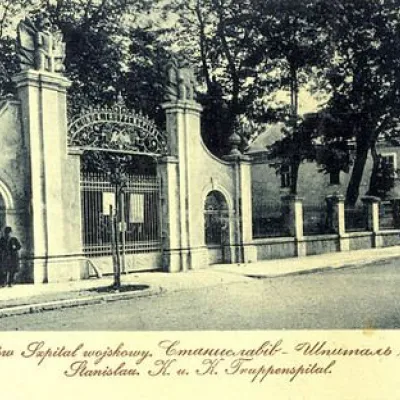 CastlePotocki Castle, Ivano-FrankivskIvano-Frankivskunder 1 km from Armenian Church, Ivano-FrankivskThePotocki Palace is an architectural and urban planning monument of historical significance in the city of Ivano-Frankivsk.
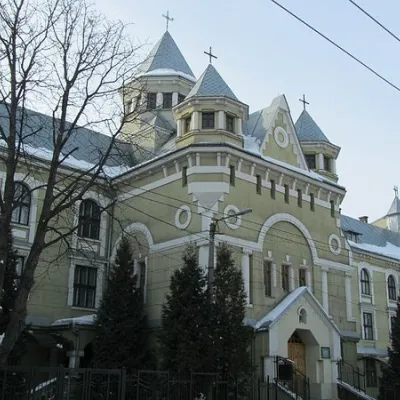 ArchitectureSt. Joseph's Monastery of the Basilian Sisters, Ivano-FrankivskIvano-Frankivskunder 1 km from Armenian Church, Ivano-FrankivskThey became known as the Basilian Sisters. In 1899, a Polish railroad engineer, Oleksandr Osostovych, donated his small house on Zabolotivska (Vasylianok) Street to...
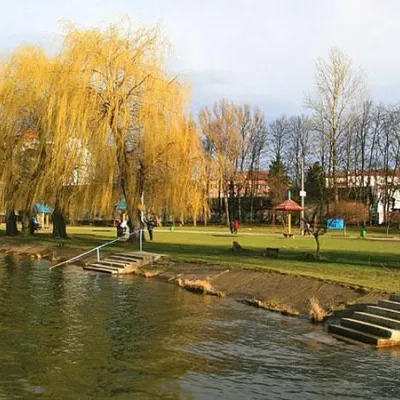 LakeCity Lake, Ivano-FrankivskIvano-Frankivsk1.8 km from Armenian Church, Ivano-FrankivskThe City Lake(also known as the StanislavskeSea ) is the largest artificial lake (pond) in the city of Ivano-Frankivsk.